

This post may contain affiliate links. When you purchase something through these links, I receive a small commission that helps me create this blog’s content. There’s no extra cost to you. Read my privacy policy to learn more.
Published: 1/21/2025
An Introduction to the Boundary Waters Canoe Area
If you grew up in the Midwest with a grandpa or other outdoorsy male who loved to fish, chances are, you heard him mention the Boundary Waters Canoe Area Wilderness (or BWCAW) at least once.
If you live outside of North America, maybe you’ve heard of vast swaths of wilderness in the northern part of the continent where you paddle across lakes, carry all your gear across portage trails between lakes, and camp in tents under the stars. If you want a canoe trip experience in the United States, you head to the Boundary Waters on the Canadian border in northern Minnesota.
But what are the Boundary Waters and why does this stretch of 1 million acres of forest and lakes immediately impassion so many of its visitors? In fact, as a lifelong Minnesota resident who owns a canoe outfitter on the Gunflint Trail outside of Grand Marais, I’d go so far as to say many individuals make taking an annual Boundary Waters canoe trip part of their personality.
In this post, I’ll break down all those nagging questions about the Boundary Waters including what it is, where it is, how it differs from a national park, why you should consider visiting, when you need a permit and how to get one, when to visit, and how to figure out if a canoe trip is right for you.
By the end, I bet you’ll be convinced to start planning your first-ever canoe trip. Let’s jump right in and start answering all your BWCAW FAQs!
An Introduction to the Boundary Waters Canoe Area Wilderness
What is the Boundary Waters?
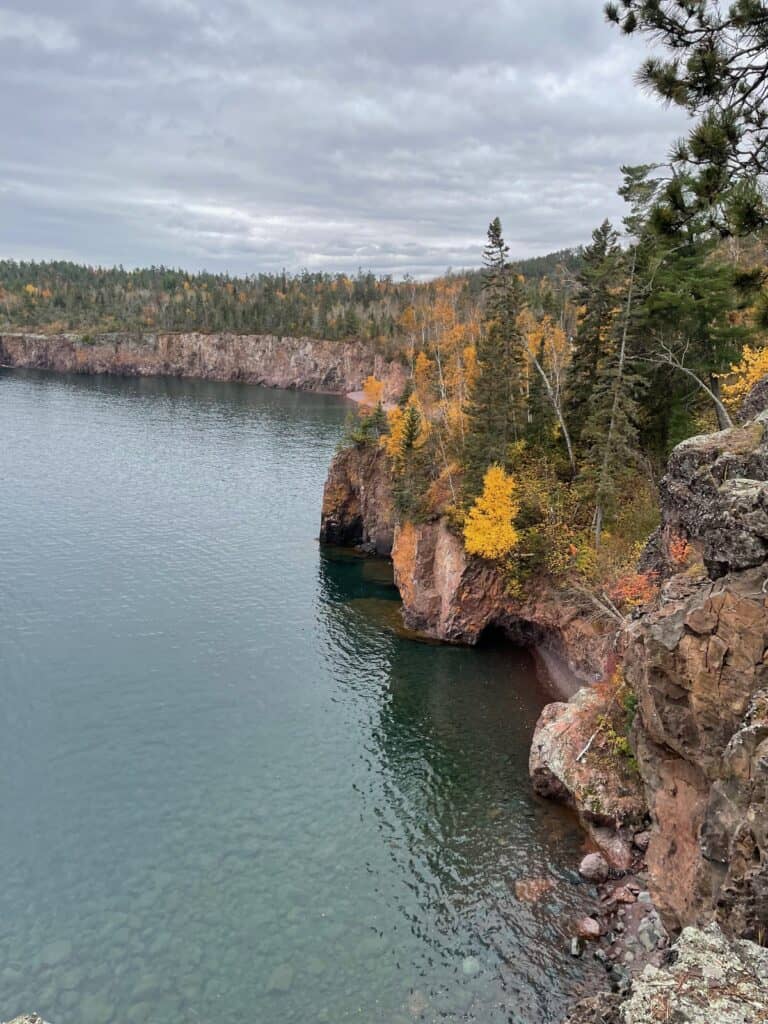
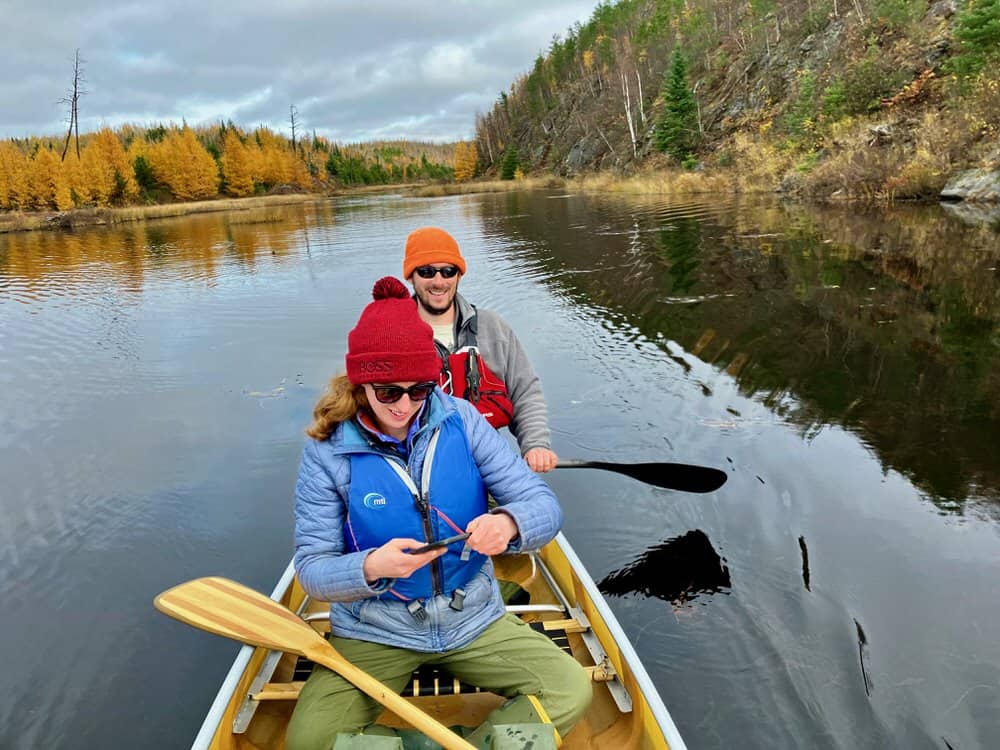
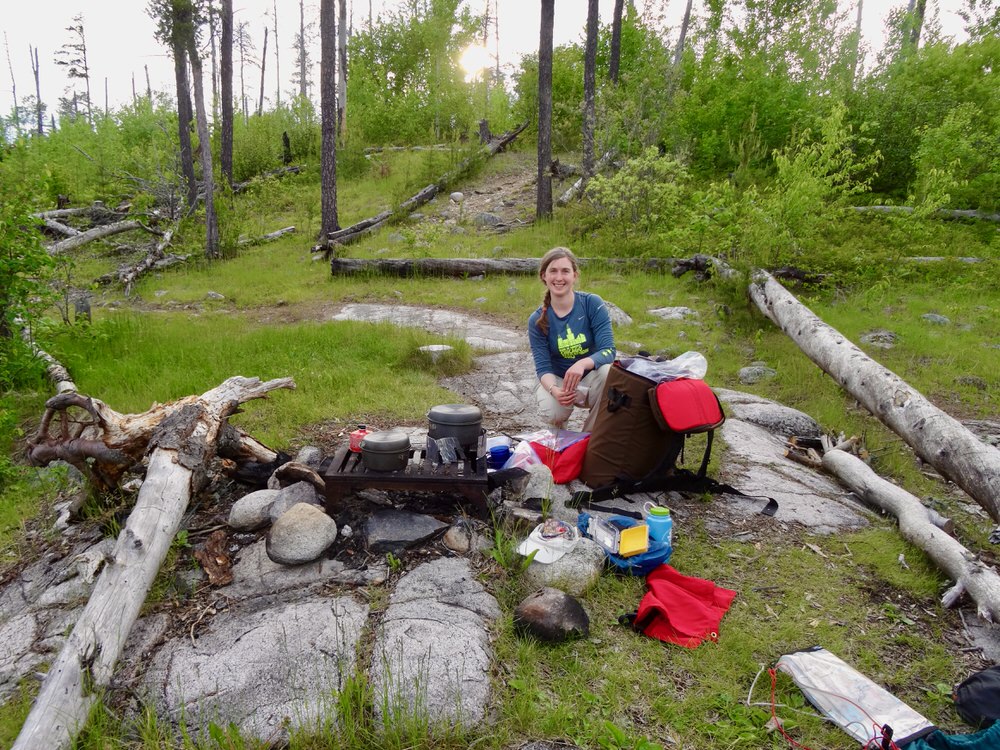
The Boundary Waters Canoe Area Wilderness is a million-acre tract of public land containing more than 1200 lakes along northeastern Minnesota’s Canadian border. Portages -aka, lightly maintained trails – connect these lakes. Most Boundary Waters lakes have at least one campsite – equipped with a fire grate and latrine – which campers use on a first-come, first-served basis.
To move around the Boundary Waters, you load all your gear into a canoe, paddle across a lake or down a creek to a portage. At the portage, you pick up all your gear and canoe and carry it to the next lake. This form of travel harkens back to how Native peoples like the Ojibwe and Cree and the French/Canadian Voyageurs moved through the northern landscape.
The Boundary Waters is the United States’ premier destination for multi-day canoe trips. Michigan’s Sylvania Wilderness offers a similar experience on a smaller scale: 18,000 acres vs. the Boundary Waters’ 1 million acres. In Canada, you can find endless canoe adventure, especially in Quetico and Algonquin Provincial Parks.
Internationally acclaimed for its natural beauty, the Boundary Waters attracts anglers, canoeists, and those seeking a peaceful wilderness camping retreat. This tract of lakes and forest is a Minnesota must-see, but it’s not without unique challenges for even experienced outdoor adventure travelers.
BWCA or BWCAW?
You’ll often see people referring to the Boundary Waters as the BWCA, although the correct abbreviation is BWCAW. That “W,” signifying “wilderness,” is an important piece of the Boundary Waters’ identity.
Although the Boundary Waters’ woods and waters have existed for millennia, it took decades of legislative action in the 1900s to create the federal wilderness area we know and love today. You learn more about the legal formation of the Boundary Waters Canoe Area Wilderness in this podcast that I produced in 2013.
The “W” was officially added to the abbreviation in 1978 when President Jimmy Carter signed the Boundary Waters Canoe Area Wilderness Act. However, many old timers still refer to the Boundary Waters as the BWCA. To be fair, I do think the four letter abbreviation does roll off the tongue a little better . . . .
Where is the Boundary Waters Canoe Area Wilderness?
The Boundary Waters Canoe Area Wilderness is located inside the Superior National Forest.
The Boundary Waters has three separate units:
- 1) The Vento Unit accessed from the east side of the Gunflint Trail and the end of the Arrowhead Trail in Hovland. This section included popular lakes like Clearwater, Duncan, Pine, and East Bearskin.
- 2) The largest “main” section of the Boundary Waters that stretches from Gunflint Lake all the way to Ely and Crane Lake
- 3) The La Croix unit in between Burntside and Vermillion Lakes. This small unit is home to Trout Lake.
In general, people access the Boundary Waters either from the east side via Lake Superior’s North Shore and Grand Marais or the west side via Ely and Echo Trail.
Drivetimes to Boundary Waters west side (Ely/Echo Trail)
Duluth to Boundary Waters west side: 2 hours
Twin Cities to Boundary Waters west side: 4 hours
Chicago to Boundary Waters west side: 9 hours
Drivetimes to Boundary Waters east side (Grand Marais/Gunflint Trail)
Duluth to Boundary Waters east side: 3 hours
Twin Cities to Boundary Waters east side: 5 hours
Chicago to Boundary Waters east side: 11 hours
What Makes The Boundary Waters Special

So what keeps people coming to the Boundary Waters again and again?
- First and foremost, many people come because the Boundary Waters for the peace and quiet. Far removed from the urban landscape, people often feel calmer and more creative in the wilderness area, making it a favorite haunt of artists, writers, and those looking to escape high stress professions.
- In 2023, the wilderness area was awarded “Quiet Park” status by Quiet Parks International.
- Folks throw around the term “pristine wilderness” a lot when they talk about the Boundary Waters. It really isn’t” humans have been traveling, living, and working this landscape for centuries. However, it is a rare corner of the world where you can still drink water straight out of deep lakes without filtration, if you’re comfortable with that.
- The timeless feel of the Boundary Waters is enhanced by federal wilderness regulations that prohibit motor usage. You won’t hear the whine of a chain saw and motor boats are strictly limited to a few large lakes on the edge of the wilderness area. Even aircraft must fly at least 4000 ft above the Boundary Waters. (If you see a plane lower than this, it’s probably a U.S. Forest Service plane either on its daily wildfire reconnaissance flight or assisting in a wilderness search and rescue.)
- Many visitors come for the chance to see some of North America’s most elusive wildlife including moose, grey wolf, Canada lynx, mink, otter, and pine marten. Other common animal sightings in the Boundary Waters include common loons, bald eagles, ruffed grouse, red fox, and beaver. Of course, don’t forget about the ubiquitous campsite menaces: chipmunks and red squirrels.
- With no streetlights for miles, you’ll be amazed at how many stars you can see from your campsite on a clear night. This unparalleled stargazing earned the Boundary Waters the designation as an International Dark Sky Sanctuary in 2020.
- Other points of interest include waterfalls, amazing vistas, and historic artifacts like remains of trapper cabins.
- Many, many people come to the Boundary Waters for its excellent fishing. While the fishing definitely doesn’t live up to the world class fishing found in the Canadian’s equivalent of the BWCAW – Quetico Provincial Park – skilled anglers still do very well for themselves in the Boundary Waters fishing for lake trout, northern pike, smallmouth bass, and walleye.
- Boundary Waters rules and regulations prohibit people from gathering in groups larger than 9 people and 4 watercraft at any point inside the wilderness. The small group travel creates a unique bonding experience and develops a real sense of teamwork.
- You can’t just run to the store if you forget to pack something on your Boundary Waters canoe trip. For some people, that mandatory resourcefulness is part of the appeal.
- If you think moving through a untouched wilderness purely of your own volition sounds tough, you’re right! A Boundary Waters canoe trip comes with significant physical and mental challenges. While it can be difficult (and even downright unpleasant!) in the moment, most Boundary Waters campers end their trips feeling empowered and competent.
 The Boundary Waters is NOT a national park
 The Boundary Waters is NOT a national park
Managed by the U.S. Forest Service, I think many people expect the Boundary Waters to be a slightly wilder national park. But this is no White Sands or Dry Tortugas; it’s a wilderness!
While national parks center around relatively small, but extraordinary landscapes, what makes the Boundary Waters unique and special is its vast wildness.
The Forest Service maintains portages and campsites to keep them useable, but they do let nature run its course. If a beaver dam floods a portage, you might get wet feet (and shins). Expect narrow, rock strewn portage trails sometimes impeded by down trees or thick brush. And yes, if a wildfire ignites somewhere in the BWCAW, you might need to adjust your route.
Beyond the iconic “Boundary Waters Canoe Area Wilderness” signs at the border to the wilderness area, there are no signs in the BWCAW. Boundary Waters visitors depend on their own navigation skills. With no cell service or a speedy way for first responders to reach distressed campers, BWCAW visitors should expect to get themselves out of any emergencies.

When’s The Best Time To Go on A Boundary Waters Trip?
While the Boundary Waters are open year-round, canoe trip season runs from when lakes start opening up in early to mid-May through mid October.
- Overnight camping permits, reserved on a first come, first served basis through recreation.gov are required from May 1 – September 30.
A Year in the Boundary Waters
January: Winter lake trout season opens. Summer canoe trip overnight camping permits become available on the last Wednesday of the month at 9 a.m. CST.
February: Dead of winter. Peak winter camping.
March: Prime lake trout ice fishing. Often sunny and windy as seasons start changing. Winter camping ends.
April: Mud season. The melt begins. Small rivers and some lakes make open up.
May: All lakes have open water by the final third of the month, but water temps are dangerously cold. Boundary Waters permit season begins on May 1. Weather can be volatile.
June: Bugs peak. Fishing is at its best. The days are long.
July: Boundary Waters visitors start to increase. Weather is generally pleasant with water warm enough for swimming.
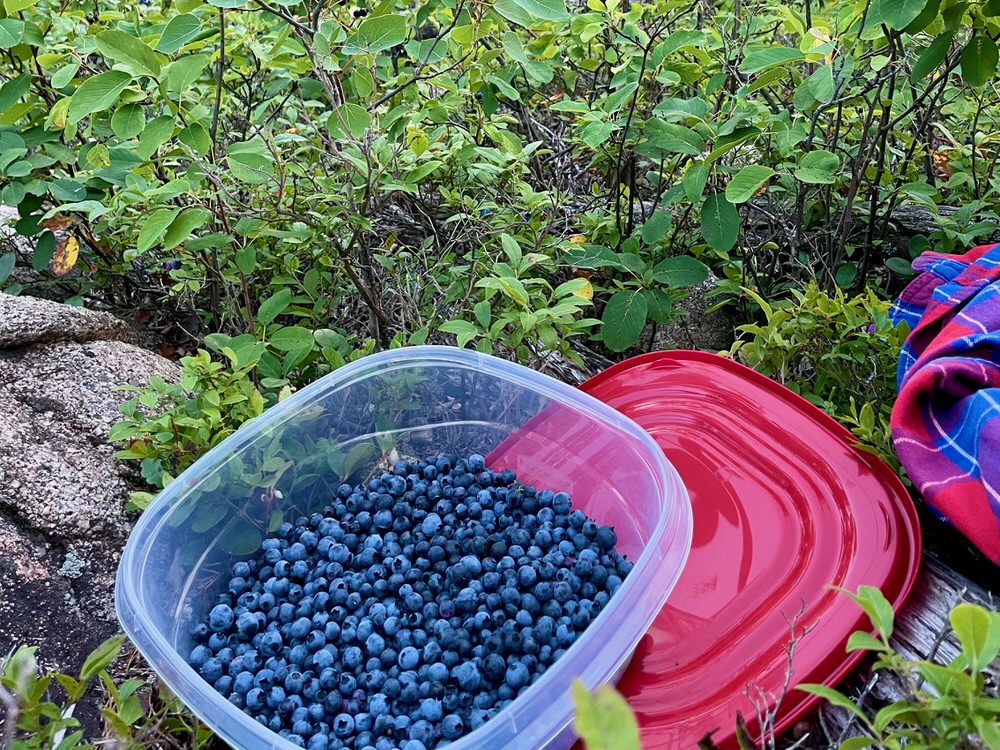
August: The busiest time in the Boundary Waters. Water is at its warmest and blueberry crop is at its peak. Weather can start to turn autumnal in the final week.
September: Temps and visitors start to drop off. Fall colors start to turn in the middle of the month. Short days and cool, bug-free evenings.
October: Overnight camping declines drastically as the weather turns rainy and the days get shorter and shorter. Fall colors generally peak during the first week.
November: Weather turns wintery. Ice begins to form.
December: Early ice (and possible ice skating!) Very quiet in the Boundary Waters, although some visitors do hiking day trips around the holidays.
Other considerations about when to visit:
- If you want to fish lake trout, go immediately after ice out or as late in September as possible.
- To avoid crowds, skip Boundary Waters high season in late July through late August. Keep in mind, wild berry season, the best summer weather, and ideal swimming temperature correlate with BWCAW high season.
- Bugs like mosquitoes and black flies (aka, gnats) peak in June.
- Many people like the quietness of September trips and fall in the Boundary Waters is beautiful, but days are short and temperatures can be chilly.
Like all things Boundary Waters related, you can have a fantastic trip no matter when you visit, but do some research so you know what to expect.
Is A Boundary Waters Trip Is Right For You?
Before committing to a BWCA canoe trip, carefully consider your answers to these five questions:
- Do you like being outdoors?
- Are you comfortable on self-guided adventure and do you trust yourself or someone else in your group with navigation?
- Do you like the idea of going off the grid?
- Do you have stamina and can you tolerate moderate physical discomfort?
- Are you okay with things not going to plan?
If you answered in the affirmative, a Boundary Waters trip sounds right up your alley!

Conclusion: Why You Should Definitely Go on a Boundary Waters Trip
Many people come to the Boundary Waters experience great fishing for walleye, bass, pike, trout. Other Boundary Waters visitors want to see wildlife in their natural habitat. For most, disconnecting from technology and stripping life down to the bare essentials is the real draw.
In late July and early August, the Boundary Waters offer unparalleled wild berry picking and swimming. No matter why you choose to visit the Boundary Waters, you’ll be treated to unreal stargazing as well as beautiful sunrises and sunsets.
But beyond the region’s scenic, solitary appeal, Boundary Waters trips are often very personally rewarding. There’s no denying that BWCA canoe trips can be challenging. Many people walk away with increased self-confidence and the rewarding sense of “hey, I didn’t know I could do that!” These trips create meaningful connections with others and memories you’ll never forget.
 |
 |