This post may contain affiliate links. When you purchase something through these links, I receive a small commission that helps me create this blog’s content. There’s no extra cost to you. Read my privacy policy to learn more.
Published: 1/25/2025
What To Do in Minnesota’s Boundary Waters Canoe Area Wilderness
If you’ve heard of the Boundary Waters Canoe Area Wilderness, but have no idea what you actually do there, this post is for you!
I’ve spent my entire living adjacent to this federally designated wilderness in northeastern Minnesota. In fact, my “day job” is owning and operating a Boundary Waters canoe outfitters on the Gunflint Trail outside of Grand Marais. I’ve spent countless hours (and days) camping and exploring the BWCAW‘s waters and woods so I can break down what the fuss is all about.
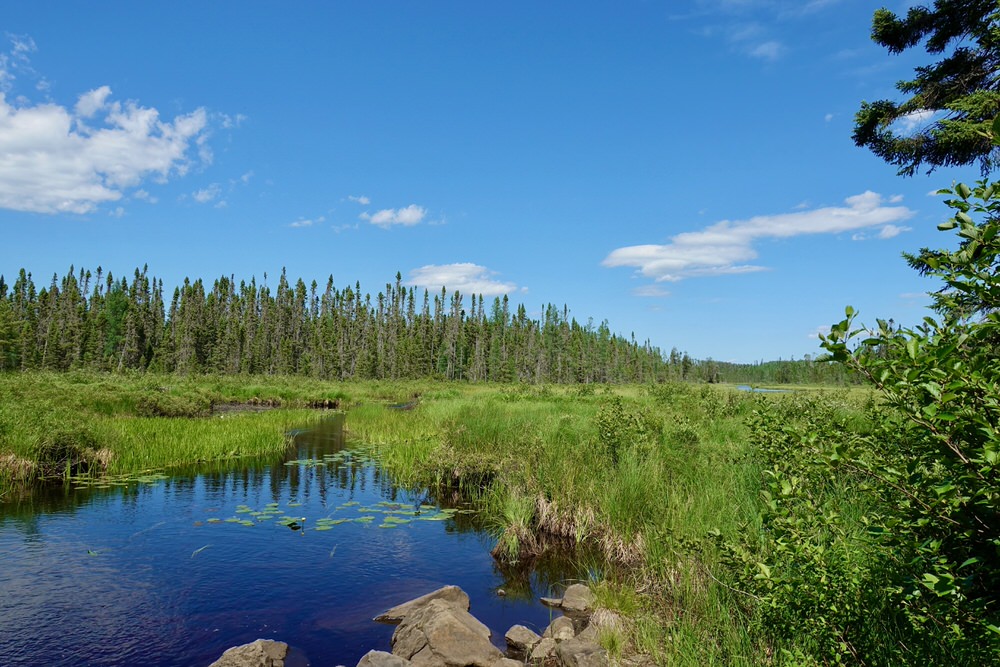
Made up of forest, lakes, rivers, streams, and some of the oldest rocks in the world, the Boundary Waters is a 1-million acre wilderness inside the Superior National Forest. The best way to move through the thick boreal forest is in a canoe. While an overnight canoe camping trip is the most popular Boundary Waters activity, don’t discount what you can experience in a day.
There are so things to do in the Boundary Waters beyond canoeing. You could go on a guided fishing trip, hike to the highest point in Minnesota, forage for wild blueberries, take an overnight hiking trip, or explore waterfalls and other points of interest. In the winter you can winter camp, cross country ski, snowshoe, or even go on a dog sled ride.
Whether you can’t wait to paddle for miles or you hate the idea of sleeping on the ground, I’ll highlight the best ways for you to experience the Boundary Water. Just know, this forest is rugged and untamed. A love of the outdoors and a willingness to be physically uncomfortable from time to time are critical to a good time in America’s most popular wilderness area.
Let’s get into what to do in the Boundary Waters!
10 Fun Boundary Waters Activities
1) Go on an overnight canoe camping trip
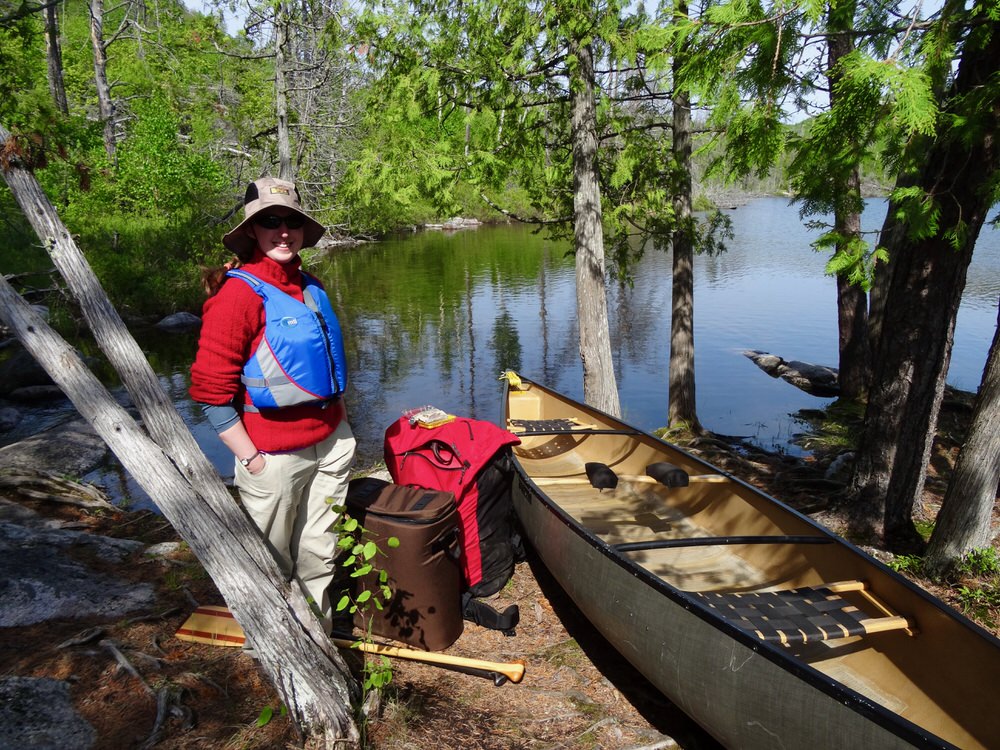 Far and away, the most popular Boundary Waters activity is an overnight canoe camping trip. Dozens of entry points around the wilderness area allow you to tailor your canoe trips to your interests and travel style. Once you’re inside the BWCAW, you can stay in as long as you like. Most people do a four day/three night trip, although a week-long canoe trip isn’t uncommon either.
The bast majority of Boundary Waters camping trips are self-guided. If you do want a guided trip, check out Ely Outfitting Company or Border Lake Tour Company.
To move through the Boundary Waters, you paddle yourself and your gear across lakes and then portage – that is, carry all your stuff and canoes over narrow forest paths – to the next lake. You have more than 2000 campsites (available on a first come/first served basis) to choose from. It truly would take the better part of lifetime to cover all the navigable canoe routes in the BWCAW.
Many people focus their canoe trips on fishing. Others come for the scenic beauty and seek out waterfalls and vistas. Popular BWCAW camping activities include swimming, wildlife viewing, playing games, perfecting camp meals, journaling, watching sunsets, and generally soaking up time together in this quiet place disconnected from phones and internet.
While you can camp year-round, the canoe camping season runs from ice-out (sometime between late April – mid-May depending on the winter) through mid-October. Since summer overnight camping permits are limited by a quota system, it’s a good idea to start planning your Boundary Waters canoe trip several months in advance.
2) Take a day trip
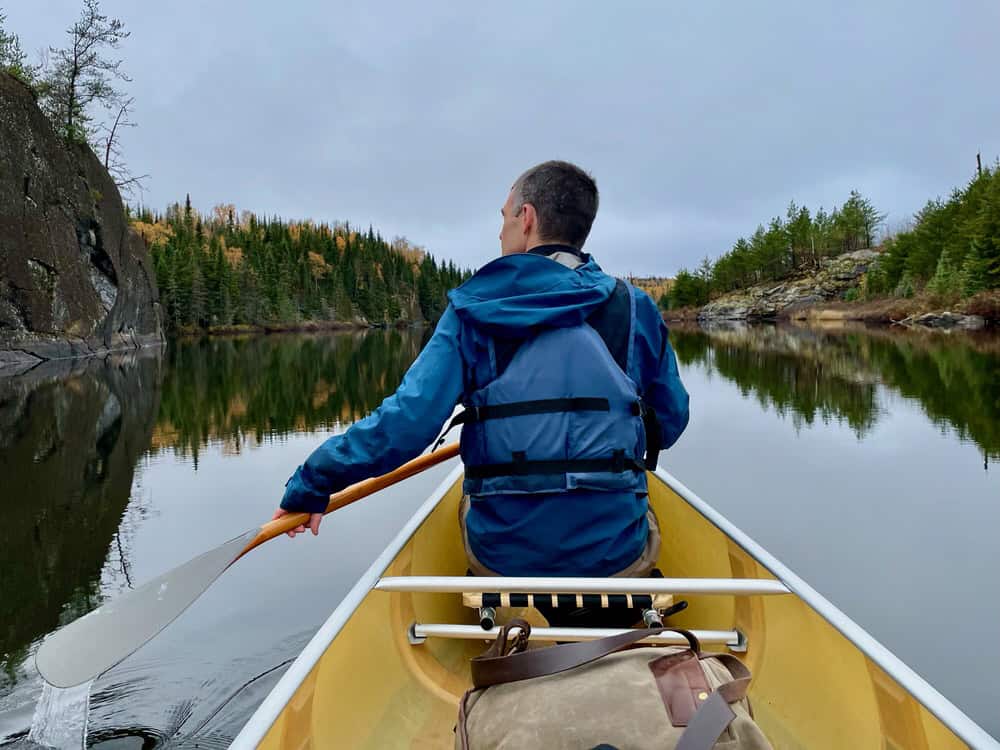 Many people think an overnight canoe trip is the only way to experience the Boundary Waters. However, if you feel uneasy in a canoe or don’t love the idea of camping, consider taking a Boundary Waters day trip. Since I live right next to a couple BWCAW entry points, I greatly prefer day trips over overnight camping. (Sorry, not sorry: my bed is comfy!)
There are truly endless possibilities for day trips into the Boundary Waters. Some of my favorite Gunflint Trail BWCAW day trip options include paddling to the Seagull Lake Palisades, doing the Snipe Lake Loop, hiking to Sock Lake via the Border Route Trail, and discovering beautiful Clearwater Lake.
While you won’t necessarily get as deep into the wilderness on a day trip as you would on a multi-day adventure, trust me, you can cover a lot of ground in a single day.
Since you only need to schlep your canoe and a day pack over the portages you move quite quickly. It’s actually pretty common for my partner and I to do what many people would consider a multi-day trip in just a handful of hours.
3) Climb to the highest point in Minnesota
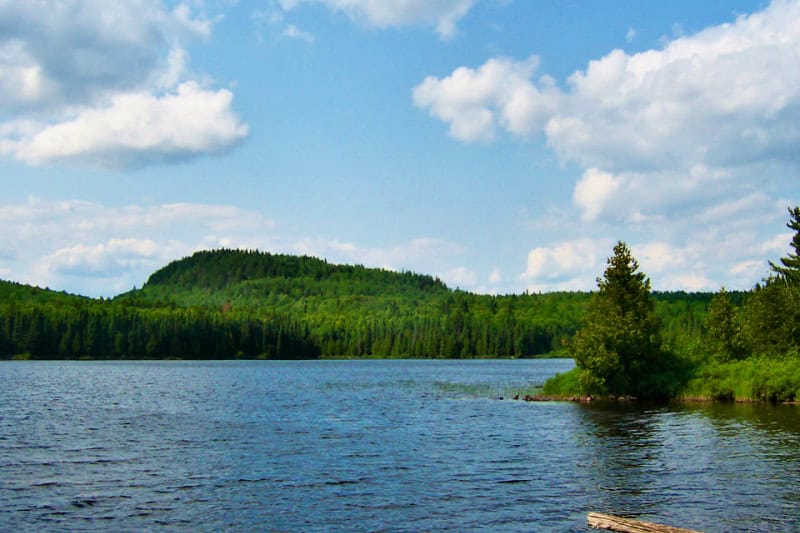
Ironically, for many people the one and only time they’ll ever enter the Boundary Waters Canoe Area Wilderness is on a hike. Eagle Mountain is the highest point in Minnesota and located inside the BWCAW. It’s an extremely popular day hike in Cook County located just north of Lutsen, Minnesota on Lake Superior’s North Shore.
Despite the name, Eagle Mountain is really just a 2301’ hill. (Yes, it is shorter even than Ireland’s famed Croagh Patrick.) The view from the top is pretty, but not spectacular. However the hike’s superlative description really draws in even lackluster hikers. I mean, who doesn’t want to climb the state’s highest mountain?!
While some will disagree, I don’t think this is a very difficult hike. However, it’s a 7-mile roundtrip hike and traversing any seven miles by foot is no joke. The parking lot is located at about 1600’ so the trail is a nice gentle uphill until you reach Whale Lake. From there you have a steep, but relatively brief ascent to the top.
Good hiking boots will really increase your enjoyment of this hike. The trail is very rocky and you’re often picking your way around roots and rocks. It’s also low and swampy where you actually enter the Boundary Waters on the hike (around the one-mile mark) and this section sometimes floods.
Pro tip: If you don’t feel doing the final push to the top of Eagle Mountain, consider going as far as scenic Whale Lake at the base of the hill. This is about a 6-mile round trip hike and takes you to what I consider the prettiest part of the trail. You’ll also get a nice view of Eagle Mountain from the lake’s shore.
4) Go for a hike . . . . a long hike
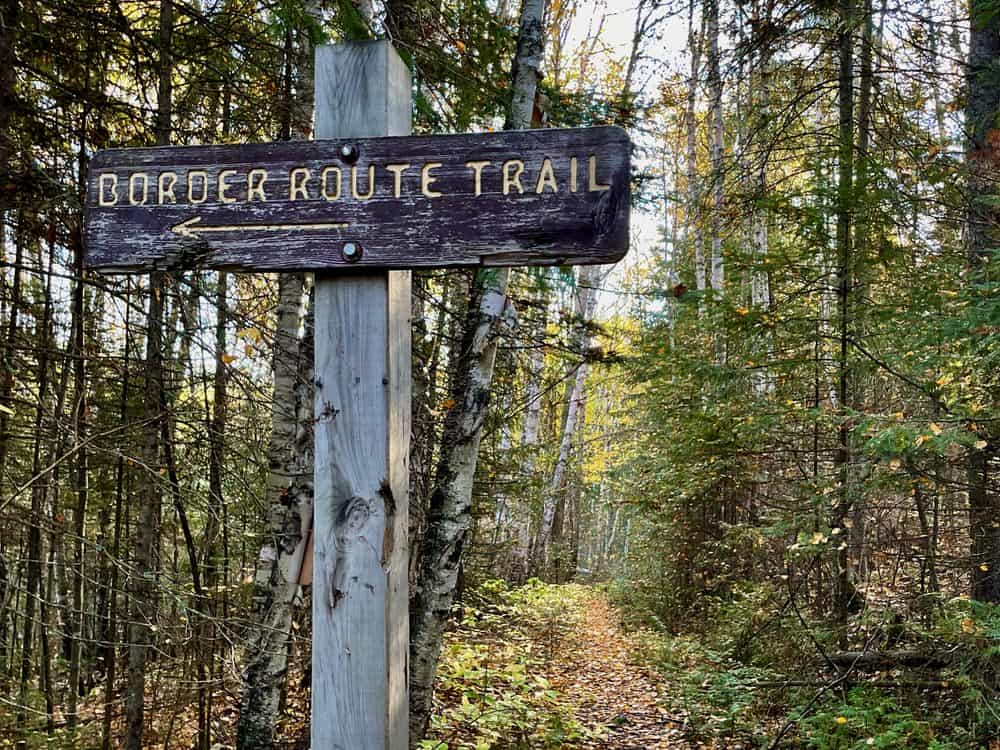 It’s fairly common for people to want to do some hiking during their Boundary Waters canoe trip. However, it’s not as easy to go for a hike in the BWCAW as you might think. Sure, you can hike into the Boundary Waters in several places (case in point above: Eagle Mountain) but most of these trails don’t intersect with popular canoe routes.
Of course, there are plenty of exceptions to this rule. For example, you could hike to the top of the Clearwater Palisades on your canoe trip. On Seagull Lake, the 1.75 mile (one way!) portage trail to Paulson Lake offers a great hike with excellent vistas overlooking Seagull Lake and the surrounding wilderness.
However, the Boundary Waters is home to several long-distance hiking trails suitable for overnight backpacking trips. The longest BWCAW trails are the 42-mile Kekekabic Trail which runs between the upper Gunflint Trail and Snowbank Lake near Ely and the 65-mile Border Route Trail which starts at the Gunflint Trail and ends north of Hovland.
Other long-distance trails in the Boundary Waters include Snowbank Lake, Pow-Wow, Angleworm, Sioux-Hustler, and Norway.
But when you consider the relative ease that you can move through the rugged Boundary Waters landscape by throwing everything into the bottom of a canoe, it’s easy to see why this isn’t a big hiking destination. The most popular time to hike in the Boundary Waters is in the spring or fall when there’s no foliage and the trails are easier to follow.
5) Have a guided fishing adventure
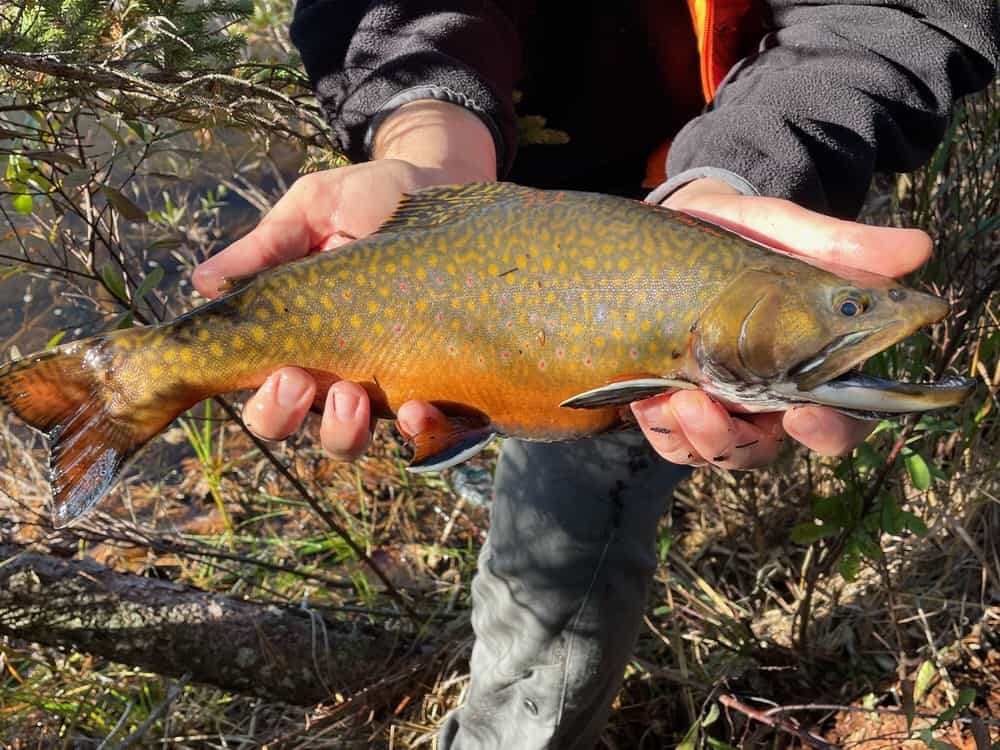 Most people think of the Boundary Waters as an angler’s paradise. Indeed, these wilderness lakes teem with popular game fishing species like lake trout, northern pike, smallmouth bass, and walleye.
But the Boundary Waters aren’t always a novice angler’s paradise. As a canoe outfitter, a very common misconception I see among visitors is a belief that walleye and bass are in all Boundary Waters lakes. (They definitely are not!) Sadly, it can take years to learn all the ins and outs of fishing the Boundary Waters. Lake structure, fish populations, and appropriate lures: there’s a lot to learn!
One way to curb fishing disappointment is to head out with a fishing guide. These guides, like Seagull Creek Fishing Camp or Gunflint Wilderness Guide Service can take you out on beautiful Boundary Waters lakes like Saganaga Lake at the end of the Gunflint Trail. They’ll also tailor your day to your desires whether you want to target walleye, lake trout, or have a multi-species day.
This is definitely one of the more expensive ways to experience the Boundary Waters. But if you can’t imagine going to the Boundary Waters and not catching a fish, I nudge you to seriously consider it.
6) Go winter camping
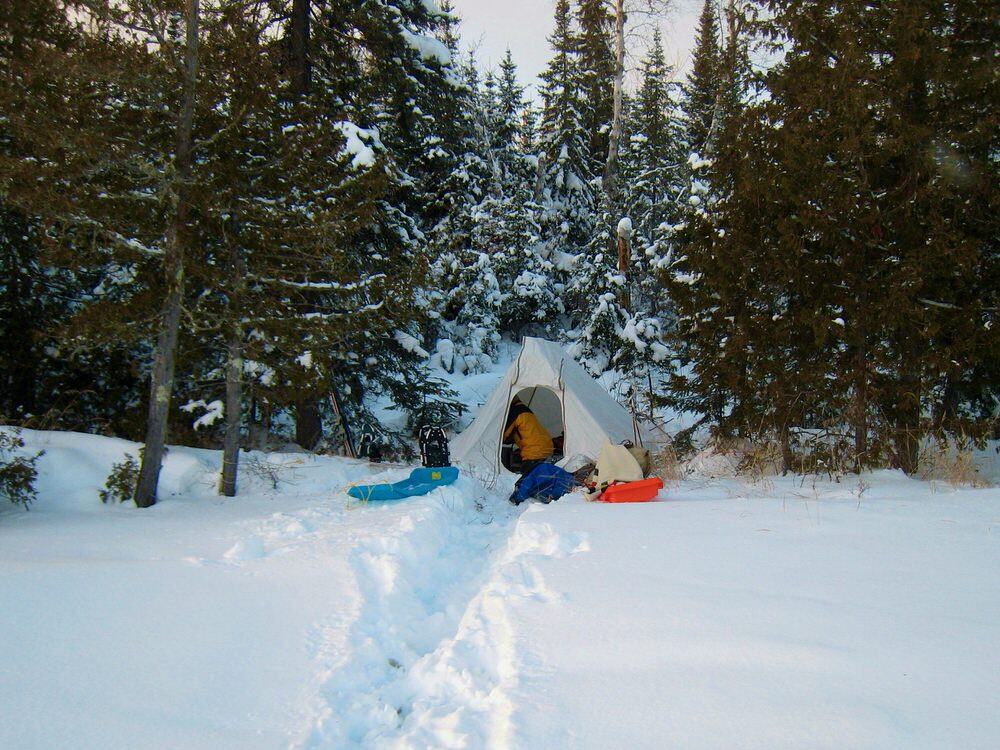 To be honest, winter camping is a very popular activity to photograph in the Boundary Waters. But despite all the photographic evidence, winter camping is not very popular. Like . . . at all.
Winter camping requires a lot of specialized gear and a voracious appetite for being outside even in the harshest conditions. If you make a miscalculation with your equipment or struggle to start a fire, your fun camping adventure can turn life threatening very quickly.
If you’re interested in winter camping, I strongly recommend teaming up with an experienced winter camper for your first trip. There are some great BWCA facebook groups and forums for this.
Because of the limited interest, most canoe outfitters don’t rent any winter camping. However Piragis in Ely and Sawtooth Outfitters in Tofte can set you up with tents, stoves, sleds, and other winter camping essentials.
Personally, a winter day trip into the Boundary Waters by backcountry ski or snowshoe is my favorite way to experience the Boundary Waters’ longest season.
7) Enjoy spectacular stargazing
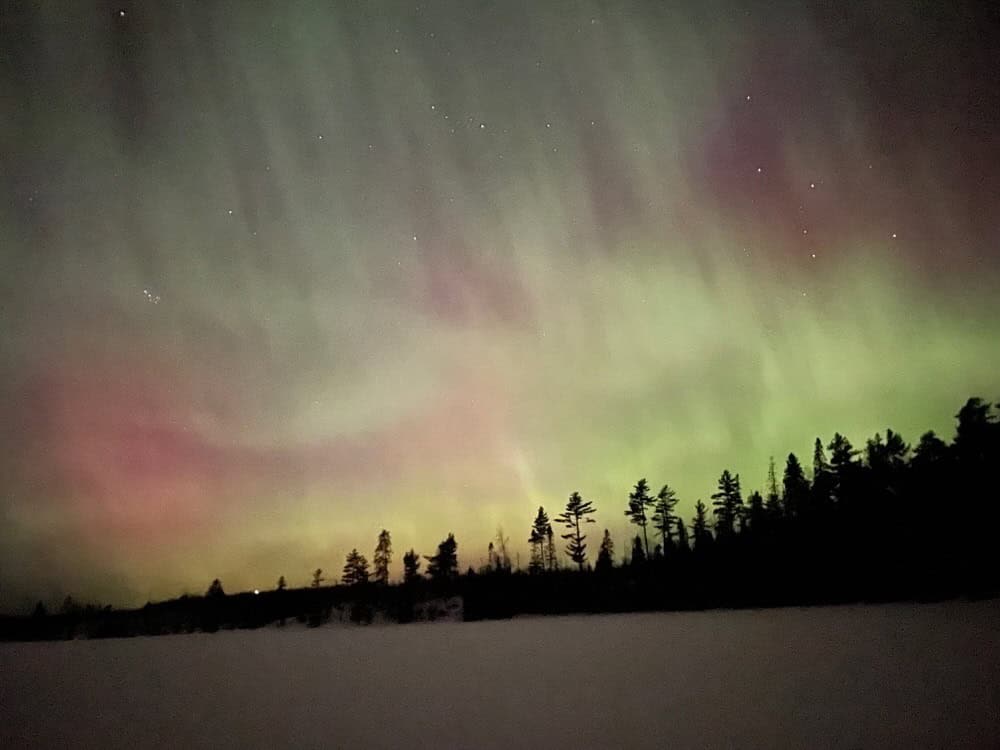 Far removed from streetlights and other light pollution, the Boundary Waters is the perfect place to learn your star constellations. Many first-time visitors are astounded by the sheer number of stars visible from their campsite. In fact, in 2020, DarkSky International designated the Boundary Waters as an International Dark Sky Sanctuary.
If you’re an avid stargazer, you might consider visiting the Boundary Waters for a special solar event like the annual Perseid meteor shower in August or a solar or lunar esclipe.
Although much more difficult to time, you have a decent chance of seeing the aurora borealis (northern lights) in the Boundary Waters. In my experience, the most dramatic aurora shows occur during the winter or very late at night.
8) Discover places connected with the Boundary Waters’ human history
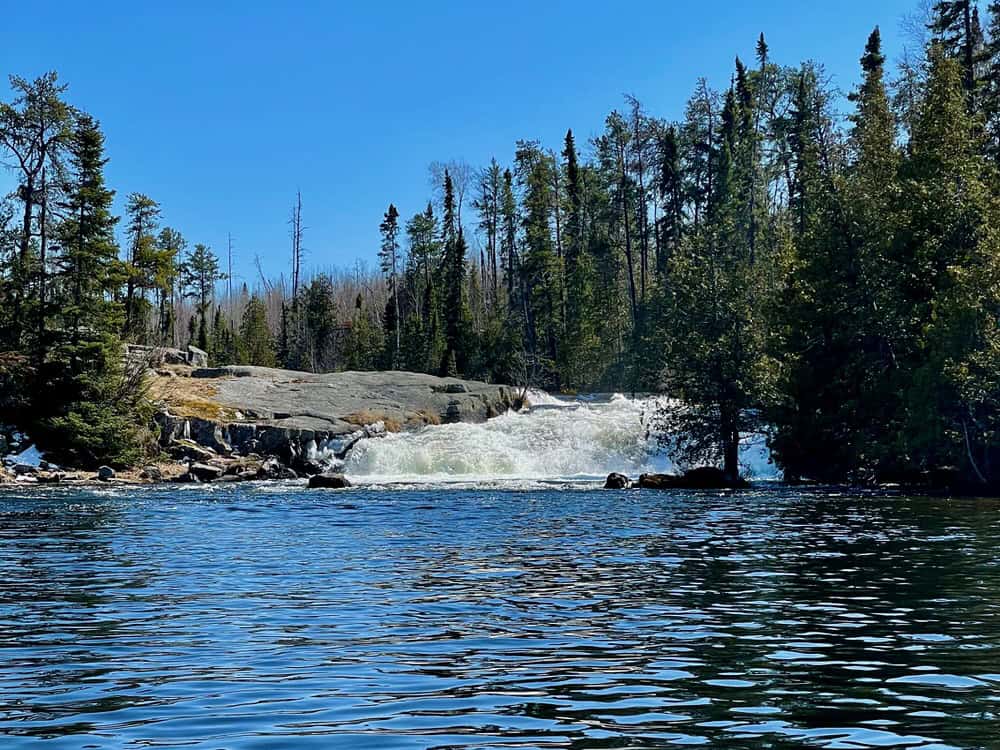
The Boundary Waters have a pristine, untouched air, but the thick forest hides a rich human history. People have been moving through this area since the Paleoindian era. Well into the 1900s, the land was logged and mined before the 1964 Wilderness Act and subsequent 1978 Boundary Waters Canoe Area Wilderness put in today’s protections.
But if you look carefully, you can catch glimpses of the humans who preceded us in these woods. Trash piles, overgrown roads, and abandoned resort sites dot the Boundary Waters landscape. Remember, if you do happen upon an artifact during your travels, leave it undisturbed.
Here are some favorite Boundary Waters human history spots:
- Hegman Lake pictographs. These cliff paintings located north of Ely off the Echo Trail are thought to be 500 – 1000 years old.
- Benny Ambrose homestead campsite on Ottertrack Lake. Benny was one of the final residents of the Boundary Waters. He was especially known for his gardens. On the Canadian side of the lake, there is a plaque remembering Benny.
- Wildwood Resort campsite on Seagull Lake. The lilac bushes in the middle of this spacious campsite on the northwest part of the lake give away the site’s busy past.
- Visit the Root Beer Lady’s home on the Isle of Pines on Knife Lake. Dorothy Molter spent almost her entire adult life on these remote islands. In her later years, she became known for selling her homemade root beer to passing canoeists. You can learn more about her life at the Dorothy Molter Museum in Ely.
- Did you know that the location of today’s Minnesota/Ontario border was selected because it was believed to be the most common route used by the French Canadian Voyageurs? Any time you paddle a Boundary Waters canoe route like the Granite River that takes you along the international border, you’re following in the footsteps of these hearty tradesmen.
9) Go dog sledding
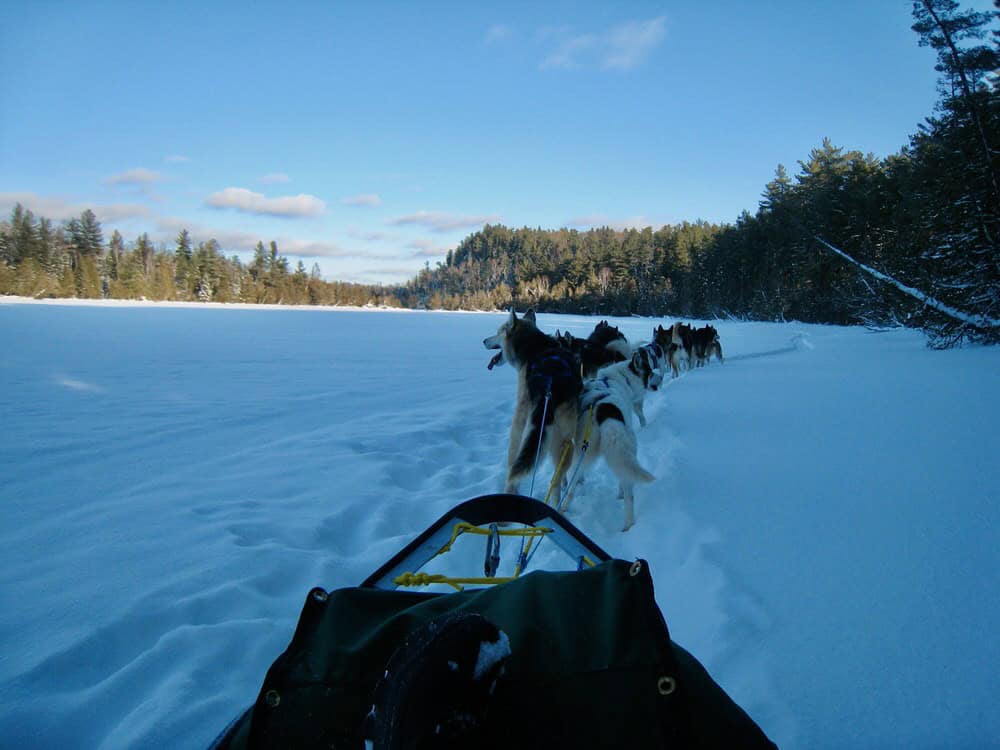 The Boundary Waters Canoe Area Wilderness is probably the only wilderness area in the continental United States to be patrolled by dog sled team. The U.S. Forest Service uses the dog sled program to check Boundary Waters permits (yes, you still need a self-issued permit even in the winter) and haul in supplies for campsites and portages.
Several area businesses including White Wilderness Sled Dog Adventures and Wintergreen Dog Sled Lodge offer dog sled rides in the Boundary Waters. It’s truly one of the most magical and memorable ways to move through the frozen Minnesota forest.
If you’re not interested in going on a dog sled ride, but want to see dog sled teams in action, check out the John Beargrease Sled Dog Marathon and the Gunflint Mail Run. These two annual dog sled races don’t actually go through the Boundary Waters, but they travel through the Superior National Forest very close to the Boundary Waters’ border.
10) Pick wild berries
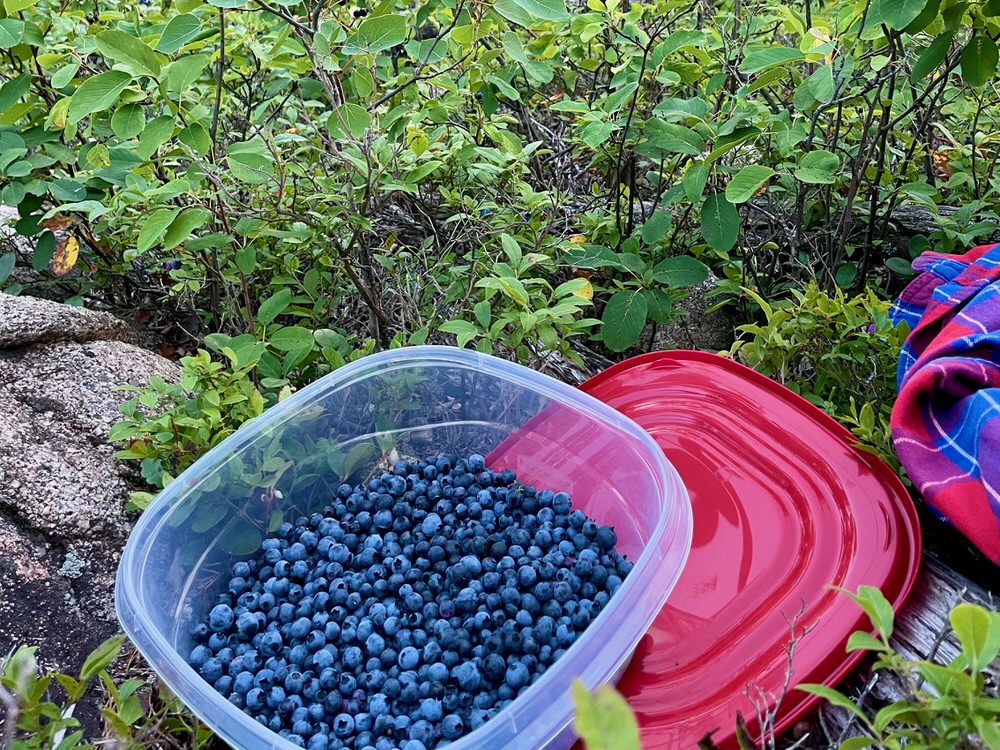 While Boundary Waters regulations prohibit you from damaging any living vegetation, you absolutely can pick any edible berry you find. Among the BWCAW’s most tasty offerings are blueberries, raspberries, strawberries, thimbleberries, and saskatoons or juneberries.
There are a few unspoken rules about picking berries in the wilderness:
- Make sure you know what the berry is before you put it in your mouth!
- Pick only what you and your group can eat.
- Leave some berries on each plant for the wild critters and also to help the plants regenerate.
One of my very activities in the Boundary Waters is picking wild blueberries. Blueberries ripen in late July. The crop usually lasts well into August. You’re most likely to find these delicious berries on south facing hillsides. The plants especially flourish in areas recently burned by wildfire.
To be honest, most of my blueberry picking happens on Superior National Forest land outside of the official boundaries of the wilderness area. However Blueberry Hill on the Chik-Wauk Museum and Nature Center grounds is technically inside the Boundary Waters and is indeed, a very good place to pick blueberries.
Conclusion: How To Get The Most Out of Your Boundary Waters Experience
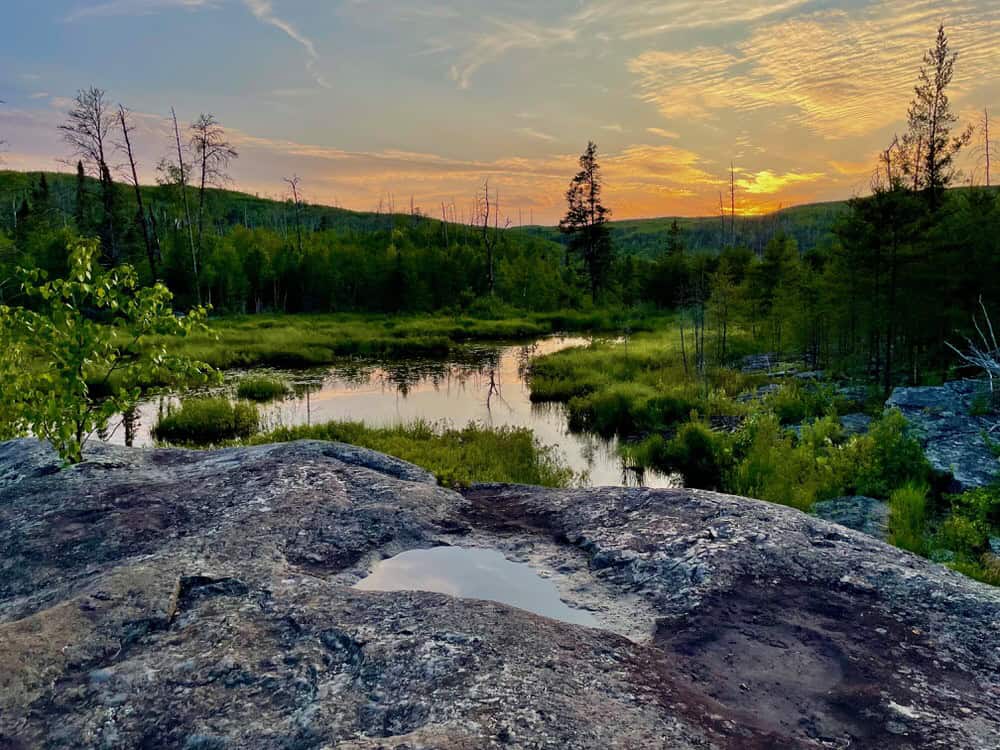 If you thought you had to go camping or canoeing to enjoy the Boundary Waters Canoe Area Wilderness, I hope I’ve opened your eyes to the wide variety of things to do in this special Minnesota wilderness.
An overnight canoe trip is no doubt the best way to truly submerse yourself in the area’s woods and water. However, Boundary Waters day trips often take you to amazing Boundary Waters sites like stunning vistas, waterfalls, or place connected with the area’s deep human history. If fishing’s your top BWCAW priority consider spending the day with a professional guide.
Don’t want to wet a paddle? A hike to the top of Eagle Mountain not only takes you up the highest point in Minnesota but also into the Boundary Waters wilderness just south of Brule Lake. You could also go on an overnight backpacking trip on one of the BWCAW’s long distance hiking trails like the Kekekabic or Border Route Trails.
Other unique Boundary Waters activities include picking wild blueberries, taking a dog sled ride through the winter forest, or catching a northern lights show.
Whatever your outdoor travel style, there’s a way to explore the Boundary Waters that right for you and your group. I hope I’ve inspired you to consider a trip to northern Minnesota to see this special wilderness area. The Boundary Waters are truly for everyone!
 |
 |