This post may contain affiliate links. When you purchase something through these links, I receive a small commission that helps me create this blog’s content. There’s no extra cost to you. Read my privacy policy to learn more.
Published: 11/16/2023
What You Need to Know About Sleeping Giant Provincial Park in Winter
No matter what time of year you visit Thunder Bay, Ontario, you can’t miss Sleeping Giant Provincial Park.
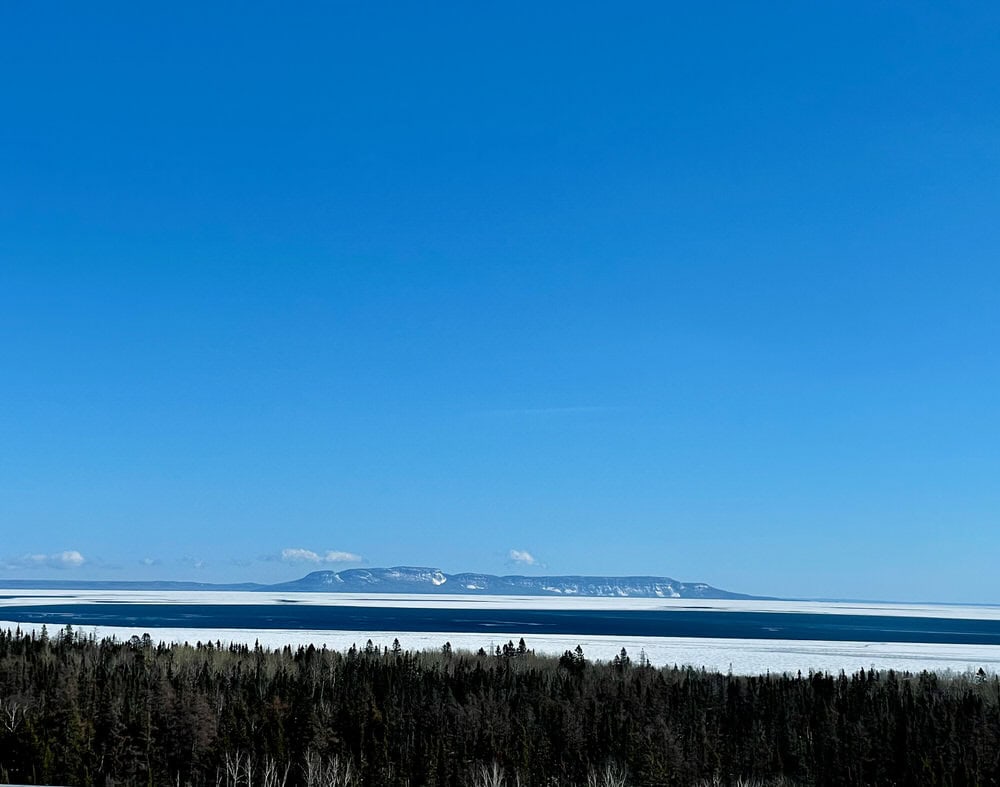
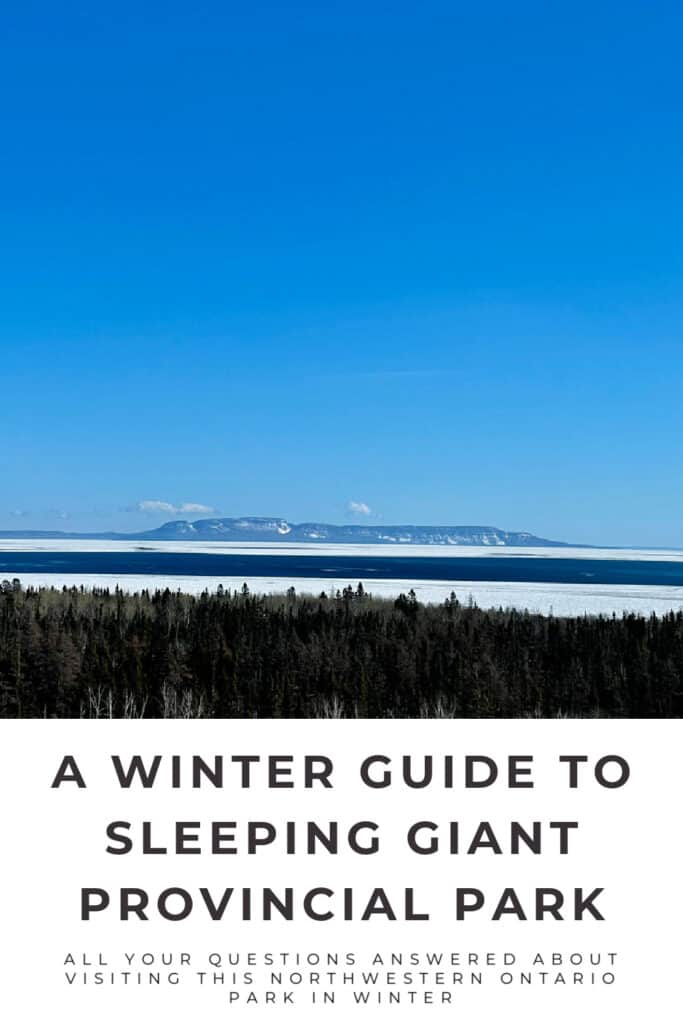
Seriously, this dramatic mesa formation that resembles a giant sleeping on its back dominates the Thunder Bay horizon.
But despite my many trips to Thunder Bay, I’d never actually visited Sleeping Giant Provincial Park on the Sibley Peninsula. On my latest trip to Thunder Bay in February 2023, I decided it was time to change that. Even though it was the depths of winter, a visit to Sleeping Giant couldn’t wait any longer. I wasn’t quite sure what you do in Sleeping Giant Provincial Park in winter, but I was going to find out!
This well-known northwestern Ontario provincial park is very popular in warm weather months. However, visitors drop off precipitously once snow flies. I discovered that this quiet, beautiful season at Sleeping Giant Provincial Park has its limitations, but is still well worth a visit.
If you’re headed to Sleeping Giant Provincial Park in winter, I’ve rounded up everything I learned during my cold-weather visit. I’ve got you covered with a complete winter visitor guide that includes the best winter things to do, tips for winter visitors, and a full rundown of what’s closed in Sleeping Giant in the winter.
About Sleeping Giant Provincial Park
Located about an hour outside of Thunder Bay, Ontario, Sleeping Giant Provincial Park covers 94-square miles on the Sibley Peninsula which juts out into Lake Superior. The park formed as Sibley Provincial Park in 1944 and was renamed Sleeping Giant Provincial Park in 1988. The park draws its name from the series of tall basalt mesas that line up to resemble a giant sleeping on its back. The tallest point on the peninsula is 1847 ft!
At the very tip of the peninsula, outside the park boundaries, you’ll find the small community of Silver Islet. An island also called Silver Islet sits in Lake Superior just south of this community. This island was once home to one of the most successful silver mines in the world. If you’re wondering why the peninsula’s called “Sibley,” it’s because Alexander Sibley was the president of the Silver Islet Mining Company.
While the mine only operated for 13 years in the late 19th century, the Sibley Peninsula remains a true northwestern Ontario treasure. In fact, Sleeping Giant was voted one of the Seven Wonders of Canada in 2007.
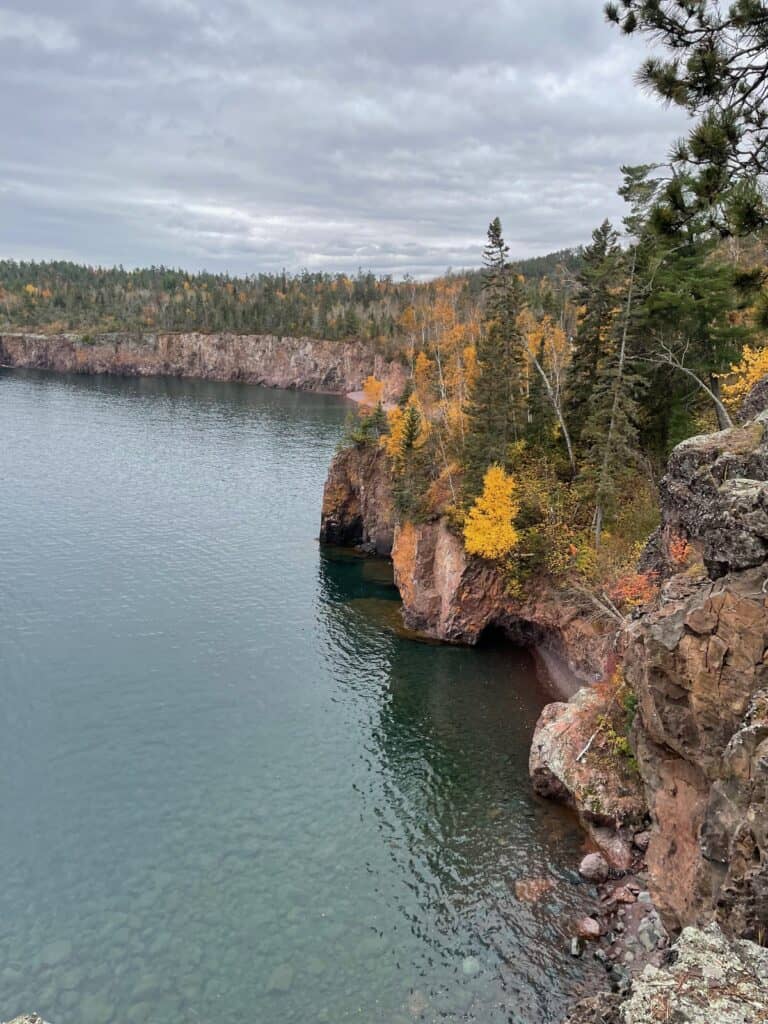
Sleeping Giant Provincial Park offers outdoor recreation opportunities year-round, including camping, more than 100 km of hiking trails, biking, bird watching, and more. However, the biggest draw to the park is its scenic beauty and fantastic Lake Superior vistas.
The Legend of the Sleeping Giant
Why is there a giant sleeping in the middle of northern Lake Superior with a silver mine at its feet?
Prior to white settlers in the area, the local Ojibwe discovered the silver vein accessed at Silver Islet and started mining it. During this time, the Ojibwe god Nanabijou – sometimes said to be the Spirit of Deep Sea Water – watched over the people and advised them to never reveal the mine’s location. Secrecy was imperative since the neighboring Algonquin and Sioux were jealous of these riches.
For years, the Ojibwe closely guarded their secret, but eventually a Sioux scout snuck into the Ojibwe camp and learned the mine’s location. After a night of drinking with Europeans at a nearby trading post, the Sioux scout accidentally let slip that he knew where the Ojibwe silver mine was. Upon learning that white men were in on the Silver Islet mine location, Nanabijou turned to stone and collapsed where he stood.
How To Get to Sleeping Giant Provincial Park
From Thunder Bay: Follow the Trans-Canada highway (Hwy 17) northeast, then turn onto Highway 587 towards Pass Lake. You’ll officially enter the park about 5 miles past the small Pass Lake community. However you won’t really find any amenities until you reach the Marie Louise Campground area about 26 miles down the peninsula.
Sleeping Giant Provincial Park Hours
Sleeping Giant Provincial Park is open 365 days a year and is open for day use every day from 8 .a.m – 10 p.m. EST
Keeping reading for a full list of what’s closed at Sleeping Giant in winter at the bottom of this post.
Tips for Winter Visitors to Sleeping Giant Provincial Park

Buy your day pass ahead of time and print it off
Regardless of what time of year you visit Sleeping Giant Provincial Park, you need to purchase a day use pass. Based on my research before our visit, I planned to do this at the Joeboy Lake Fee Station, which is the first pay station you pass as you enter the park.
However, when we drove up to the Joeboy “pay station” through five inches of unplowed snow, we didn’t find an actual pay station. It turns out the information I’d read about purchasing a park pass in winter was out of date!
The self-service pay stations where you could pay using cash or credit card had been replaced by a bulletin board with a QR code. When you scan the code, you’re directed you to the Ontario Parks website to buy your park pass online.
Despite the challenges of limited cell service, we managed to get our day pass. Things got a little trickier when we read that we were supposed to display our pass on the car’s dashboard. Believe it or not, I don’t have a printer installed in my car and I didn’t even have a pen and paper handy so we could write down the pass number. Left with no other choice, we ignored this instruction and hoped for the best.
You can easily avoid this situation by simply buying your Sleeping Giant day pass online before you visit. Since you can purchase your day use pass up to five days in advance, next time I’ll purchase and print out my pass at home. That way when I enter the park, all I have to do is slap the day pass printout on my dashboard.
Don’t expect everything to be plowed
Since there are year-round residents in Silver Islet, the community at the very tip of Sibley Peninsula, the main route through Sleeping Giant Provincial Park, Hwy 587, is plowed all winter long. However, probably because of the low winter traffic, the rest of the park is plowed out at a much slower pace.
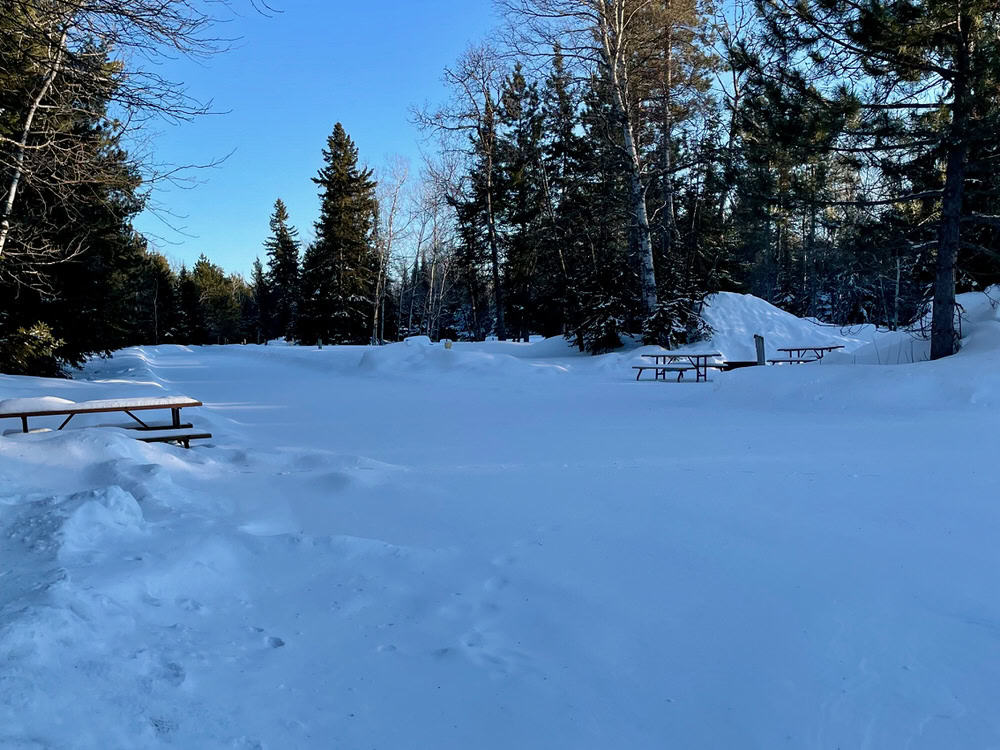
When we visited about 24 hours after a snowstorm had dropped about 5 inches of fluffy snow on the Thunder Bay area, we found many unplowed parking lots and park roads. However, both the parking lot by Marie Louise Campground and the Kabeyun Trail were plowed.

Expect it to be very quiet
During our entire time at Sleeping Giant Provincial Park we saw a whooping one other car. Park buildings were all unstaffed and locked up tight. With limited cell service and no nearby amenities, plan to be self-sufficient during a winter visit to Sleeping Giant. Make sure you have at least half a tank of gas before you turn down the Sibley Peninsula. It’s also a good idea to have some snacks, water, and extra clothes along.
Want to hike to the Top of the Giant? Go early in the winter
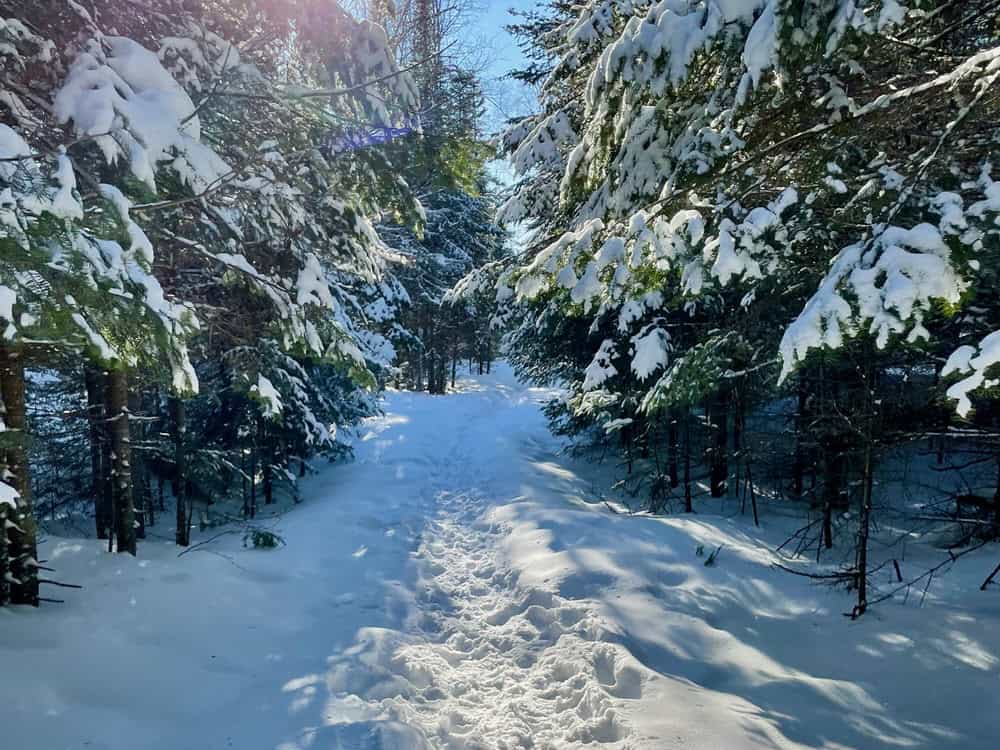
Sleeping Giant Provincial Park never officially closes any of its hiking trails. It does however convert several summer hiking trails into groomed cross-country ski trails. But even if the hike is “open” in the winter, you’ll find that winter snow accumulation renders many popular Sleeping Giant trails impassible in deep winter.
In ideal conditions (aka summer) it can take 6-10 hours to hike to the Top of the Giant. In the winter, this hike is often impossible. There are plenty of accounts online of foiled attempts to hike to the Top of the Giant through deep snow.
If you want to see the breathtaking Sleeping Giant views with a snowy backdrop, plan to do the hike in November or early December before snow really piles up. This isn’t a popular winter hike, so you should expect to break trail the entire way. By January, you’ll probably be wading through knee-deep snow, making the arduous hike downright unbearable.
While I don’t recommend it, if you want to attempt this hike in deep winter, you’ll definitely want snowshoes and an early start. I’d also keep a close eye on the weather forecast before embarking on the hike. And remember, while Sleeping Giant is long ways from Alaska, limited daylight is definitely a concern in winter. Don’t attempt a 10-hour hike when there’s only 8 hours of daylight!
Best Things to do at Sleeping Giant Provincial Park in winter

Go cross-country skiing
If you want to get some favorite spots in Sleeping Giant Provincial Park like Thunder Bay Lookout in winter, the only way to get there is on cross-country skis. With more than 50km of groomed cross-country ski trails, the park is known for its world class nordic skiing. During the winter, you can even circumnavigated Marie Louise Lake with an 18 km ski trail.
Stay in a cabin
Sleeping Giant offers five fully-equipped housekeeping cabins overlooking Marie Lake Louise year-round. These 3-bedroom cabins can each accommodate up to 6 guests and have a two-night minimum stay in the winter. (On long weekends, a three-night stay is required.) If we’d been spending a little more time in the park, I definitely would have stayed in one of these cabins!
Hike to the Sea Lion

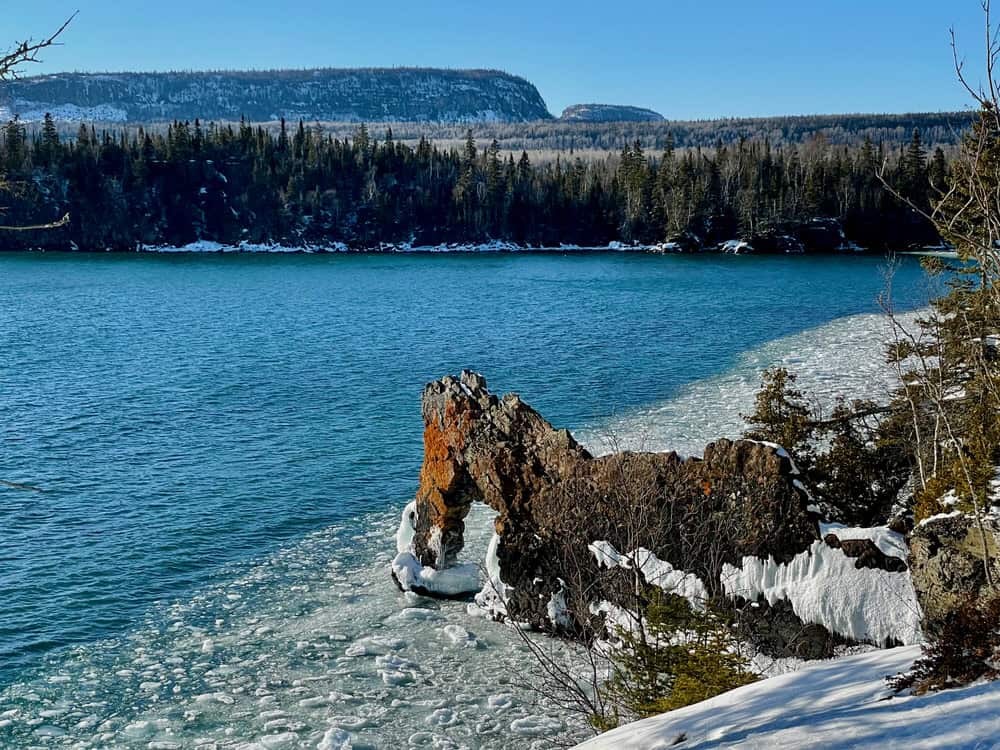
Probably the most popular winter hike at Sleeping Giant, this short .8 mile hike takes you to the Sea Lion rock formation along the Lake Superior shoreline. Just park in the Kabeyun Trail parking lot and follow the path down to the lake.
Winter hiking
If you want to do some winter hiking in Sleeping Giant, you’ll find the most trails at the southern tip of the Sibley peninsula. I’d say your best bet in the Kabeyun Trail, which runs along the southern shore of the peninsula and eventually meets up with the Top of the Giant Trail. It’s easy to access and receives a fair amount of tread since the start of the trail accesses the popular Sea Lion rock formation.
Go ice skating
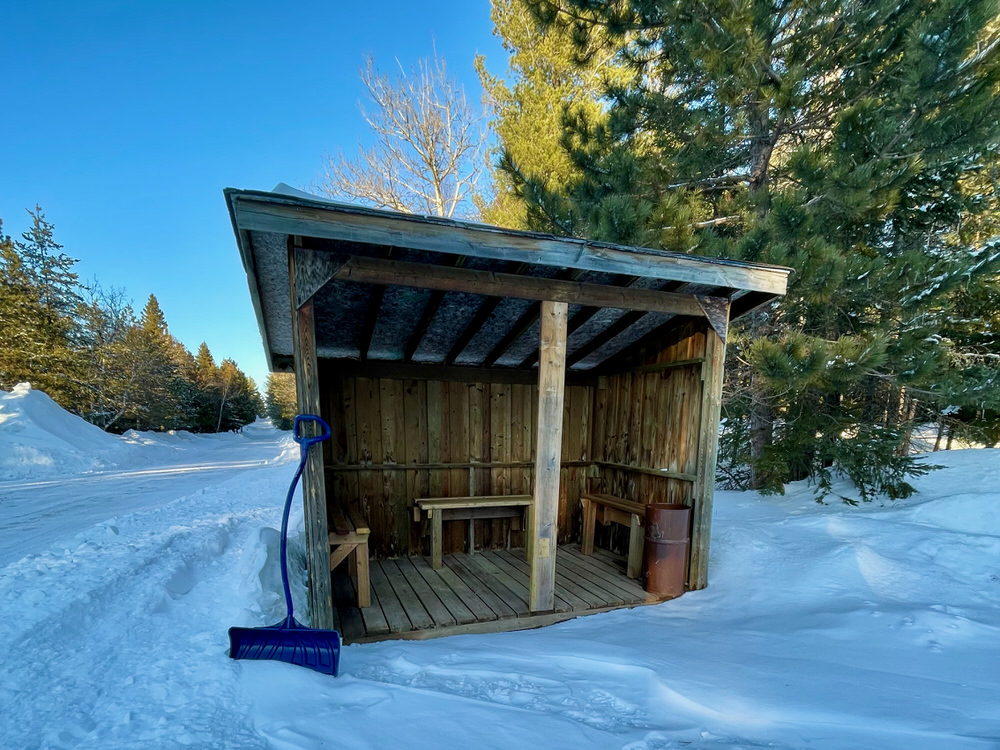
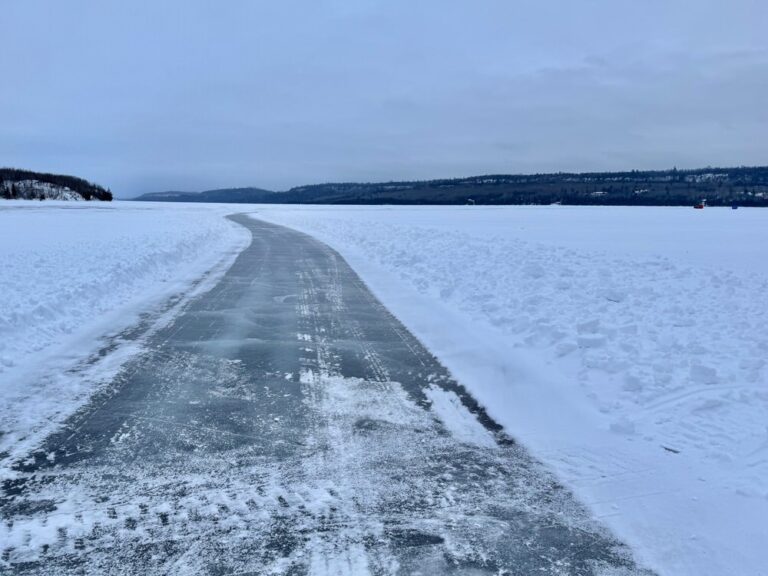
Sleeping Giant Provincial Park maintains a 300 metre long skating trail at campsites 85-96. Anecdotally, the skate trail is in the best condition in early winter. While we located the skating trail, we found it under 5 inches of snow and 300 metres is a lot of ice to shovel. Next time!
Drive through Silver Islet
While the major draw for visitors to the Silver Islet community – the Silver Islet General Store – closes in mid-October, you can still drive through the small community. Many of the 19th century silver miners’ original buildings still stand here. If you want to learn more about the history of silver mining in Silver Islet before your visit, definitely check out Elinor Barr’s definitive book on the subject: Silver Islet: Striking it Rich in Lake Superior.
Take a sunset photo over Marie Louise Lake

You’ll get a great sunset view of the Sleeping Giant where Highway 587 briefly runs along the edge of Marie Louise Lake. If there’s an actual pullout along the road, it was definitely drifted over during our visit and the parking lot for the nearby picnic area was unplowed. We ended up getting our photos by stopping in the middle of the highway. From a safety standpoint, I don’t recommend this, but as the only two people in the entire park, we felt pretty safe.
Snowshoe
If the snow’s too deep for you to comfortably hike, snowshoes will help you continue to explore the park’s extensive network of hiking trails. Popular trails for snowshoeing in Sleeping Giant are Middlebrun Trail, Sawyer Bay, and the Kabeyun Trail to Tee Harbour.

Ice fish
There are a number of small lakes on the Sibley Peninsula and you can ice fish in any of these lakes as long as you have a license and follow Ontario fishing regulations. Marie Louise Lake is the largest lake in Sleeping Giant Provincial Park. If you’re feeling lucky, drill a hole through the ice, drop a line, and see if you can catch a perch!
Attend the Sleeping Giant Loppet
Held the first Saturday of March, this cross-country ski race event offers skiers of all abilities the chance to participate in a variety of races from the 8 km Mini-Loppet to 50 km races. The following day, a Fat Bike Loppet is held in the park.
Camp in the backcountry
Want to go winter camping in Sleeping Giant Provincial Park? You’re in luck! The park offers 27 backcountry sites that can be reserved year-round.
What’s closed at Sleeping Giant Provincial Park in winter
For being such a well-known and popular Ontario park, we were surprised by how the park seems to fall off even locals’ radars in the winter. When we stopped at the Terry Fox Memorial visitor information center, the kind lady behind the desk mentioned that she thought there might be some winter hiking at Sleeping Giant during the winter, but she wasn’t really sure what we should expect.
Since it’s difficult to get a straight answer on what’s opened and closed in Sleeping Giant Provincial Park in the winter, I decided to create a definitive winter closure list based on my observations.
Sleeping Giant Provincial Park Winter Closure List
Marie Louise Lake Campground – This 200+ site campground is open from mid-May until mid-October. However, the campground remains the hub of activity at Sleeping Giant in the winter. It’s still where you access the five rustic rental cabins and it’s also where you’ll find the ice skating loop.
Visitor centre and park office – These two buildings both close after Thanksgiving weekend (Canadian Thanksgiving is the second Monday in October) and reopen in the spring.
Comfort stations – You won’t find any running water at Sleeping Giant (unless you stay in one of the cabins), but there are pit toilets in all major parking lots. It doesn’t hurt to have a little TP in your pocket, just in case the latrine supplies are running low.
Silver Islet amenities – You can still drive through the Silver Islet community, but don’t expect anything to be open. Silver Islet General Store closes in mid-October.
Marie Louise Drive – This road which circumnavigates Marie Louise Lake is turned into an 18 km ski trail in the winter.
Road to Thunder Bay Lookout – This road is converted into a groomed ski trail.
Pickerel Lake Trail -This hiking trail is converted into a groomed ski trail.
While the trails to the Sleeping Giant aren’t actually closed in the winter, depending on winter conditions when you visit, you may find that deep snow has ostensibly closed all trails around the actual Sleeping Giant.
Wrap-up: Visiting Sleeping Giant Provincial Park in winter
A very quiet, but magical, experience awaits you at Sleeping Giant Provincial Park in winter. Although many park amenities are closed for the long, snowy winter, you’ll still find plenty of things to do. In fact, you might want to pack your car full of skis, skates, and groceries and plan to stay a few nights in one of the park’s rustic cabins. If you’re based in northern Minnesota, it’s a fantastic winter getaway.
Regardless of how long you plan your winter visit to Sleeping Giant, you’re in for beautiful views, fun hikes, and a ton of cross-country skiing opportunities. Snow cover truly makes this provincial park all the more enchanting. If you’re in the Thunder Bay area this winter, don’t miss your chance to soak up the deep stillness and peace of Sleeping Giant Provincial Park in winter.
 |
 |