

This post may contain affiliate links. When you purchase something through these links, I receive a small commission that helps me create this blog’s content. There’s no extra cost to you. Read my privacy policy to learn more.
Last Updated: 1/13/2025
How To Go on Your First Boundary Waters Trip
If you want to go on your first ever Boundary Waters canoe trip this summer, but don’t know where to begin, you’re in the right place!
As a lifelong resident of northeastern Minnesota, I’ve been helping people create unforgettable Boundary Waters trips for nearly two decades. I even own a Boundary Waters canoe outfitter business on the Gunflint Trail outside of Grand Marais.
It’s one thing to know you want to explore the Boundary Waters Canoe Area Wilderness (BWCAW) and another thing to actually visit this vast tract of federally designated wilderness in northern Minnesota. Even if you’ve been on canoe trip before, it can feel pretty daunting to put together a trip if you haven’t been in charge of the planning before.
But despite how overwhelming and yes, a little, scary, canoe tripping in the Boundary Waters sounds, it’s really very easy to visit. There’s a reason this is the most popular wilderness area in the United States. Regardless of your age, background, or physical abilities, I can assure you, there’s a way for you to enjoy the Boundary Waters.
In this post, I’ll break the process of creating a perfect Boundary Waters trip down into 8 easy steps. I’ll also give you a planning timeline to keep you (and the rest of your group) on track. I’ll demystify how BWCAW permits work, share common trip planning stumbling blocks to avoid, and even drop some truths about some light BWCAW gatekeeping.
(Just to make sure we’re on the same page, this guide refers to planning overnight camping trips inside the Boundary Waters Canoe Area Wilderness. If sleeping in a tent and heaving your gear over a rocky portage trail isn’t your idea of a good time, I’ve got you covered with Gunflint Trail BWCAW day trip and hikes options.)
So let’s jump right in and start creating the Boundary Waters trip of your dreams!
Step by Step Boundary Waters Trip Planning Guide

1. Start group discussions
Remember all those friends who said they were interested in going on a canoe trip with you? Now’s the time to reach out!
As an outfitter, I can assure you that this first step might seem easy, but is actually hardest. We call it the “herding cats” stage. Keep in mind that Boundary Waters rules and regulations strictly limits group sizes to no more than 9 people and/or 4 watercraft.
Late autumn is a great time to reach out to any potentially interested friends. That way you’ll all have time to mull over potential canoe routes and trip dates well before permits become available on the last Wednesday of January.

2. Select your trip dates and canoe route
Once you have a decent idea of who’s going on the trip with you it’s time to:
- Choose your trip start date
- Decide on your canoe route
You’ll need to decide both of those before you can purchase the Boundary Waters permit that allows you to camp overnight in the wilderness. From May 1 – September 30, the U.S. Forest Service sets a number (quota) of how many overnight groups can enter the wilderness through each specific entry point each day.
Consider getting your entire group together a couple times to discuss potential trip routes. What a super fun winter dinner party opportunity!
Check out these resources to help you and your group select a canoe route:
- I highly recommend someone in the group read Robert Beymer’s Boundary Water Canoe Area guidebooks. These two books provide a perfect introduction to every single Boundary Waters entry point and gives you great route suggestions.
- You can also find this information poking through bwca.com’s trip report archives, on the Boundary Waters reddit, or in Facebook groups.
- Or just call a Boundary Waters outfitters. These businesses are happy to provide trip advice. Most outfitters’ websites list several canoe route suggestions. Often 15 minutes on the phone with an outfitter can save you two weeks of increasingly confusing (and conflicting) internet research.
 How do you select a BWCA canoe route?
 How do you select a BWCA canoe route?
You need to answer one major question when selecting a Boundary Waters canoe route: what do you want to do on your trip?
Specifically . . .
- Do you want to base camp a couple lakes in from your entry point?
- Is fishing important?
- Do you want to avoid portaging at all costs?
- How do you feel about big water (aka, large lakes)?
- Do you want to move every day?
The answers to these questions naturally narrow down route possibilities for your group. It’s important to prioritize because it’s rare, if not basically impossible, for a Boundary Waters route to perfectly align with all of your trip desires. It’s all a give and take, so take the time to determine your group’s Boundary Waters route dealbreakers before committing to an entry point.
Once you have some ideas about canoe routes, play around on the Paddle Planner website to get sense of how long it might take your group to do the route and if there are any specific lakes or other points of interest (i.e. waterfalls, vistas, etc.) that you might want to explore on your trip.
3. Designate trip leader and set up recreation.gov account
 Boundary Waters trips work best when they’re collaborative, but at the end of the day, someone needs to be in charge.
Once you have an idea of where and when your group will visit the Boundary Waters, it’s time to decide on a trip leader. This person doesn’t need to be the most experienced camper or outdoors person. They simply need to be the person who’s going on this trip come hell or high water.
Why You Need A Boundary Waters Trip Leader:
For your Boundary Waters permit to be valid, the trip leader, or someone listed as an alternate trip leader, must go on your trip.
Once you purchase your permit, you can’t change the name of the trip leader or the alternate trip leaders on your permit. You can still add or change other group members on your permit. You can even remove the trip leader and some of the alternate group leaders from your permit when it’s issued to you as long as one of the leaders originally listed on the permit goes on the trip.
Other than booking the permit and then signing it when you pick it up at a U.S. Forest Service location or outfitter, the trip leader doesn’t have any greater responsibilities than anyone else on the trip.
Set up your recreation.gov account
If you’ve started your trip planning before Boundary Waters permits become reservable, the trip leader will want to set up their recreation.gov account ahead of time.
If you already have a recreation.gov account, log in just to make sure you remember your password.
This will save you a precious minute or two when “Go live” happens at 9.a.m CST on the last Wednesday of January and should increase your chances of booking your first choice of permit.
Note: If you’re using a Boundary Waters outfitters for your trip, they can reserve the permit for you. However, they will still need to set up a recreation.gov account specifically for you using your email address.

4. Reserve Your Boundary Waters Permit
Permits for the upcoming season become reservable on the last Wednesday of January. That’s the first day you can reserve permits, but as long as there’s permit availability, you could buy a permit the very day you want to start your trip.
In recent years, the Boundary Waters have seen a surge in popularity. If you want a popular entry point during high season (late July – mid August) book your permit as soon as you can.
When you book your permit remember:
- You only need one permit (good for the day you enter the wilderness) for your entire group for your entire trip.
- If you have a specific Boundary Waters route you want to do, you might need to be flexible with your starting date to accommodate permit availability.
- Conversely, if you don’t have flexibility with your start date, you will want to have to have 2-3 potential canoe routes in mind in case there isn’t a permit available for your first choice.
- You can adjust the amount of people on your permit up until the moment your permit is actually issued to you at a U.S. Forest Service office or a Boundary Waters cooperator station, like an outfitters.
5. Make canoe outfitter reservations, if using
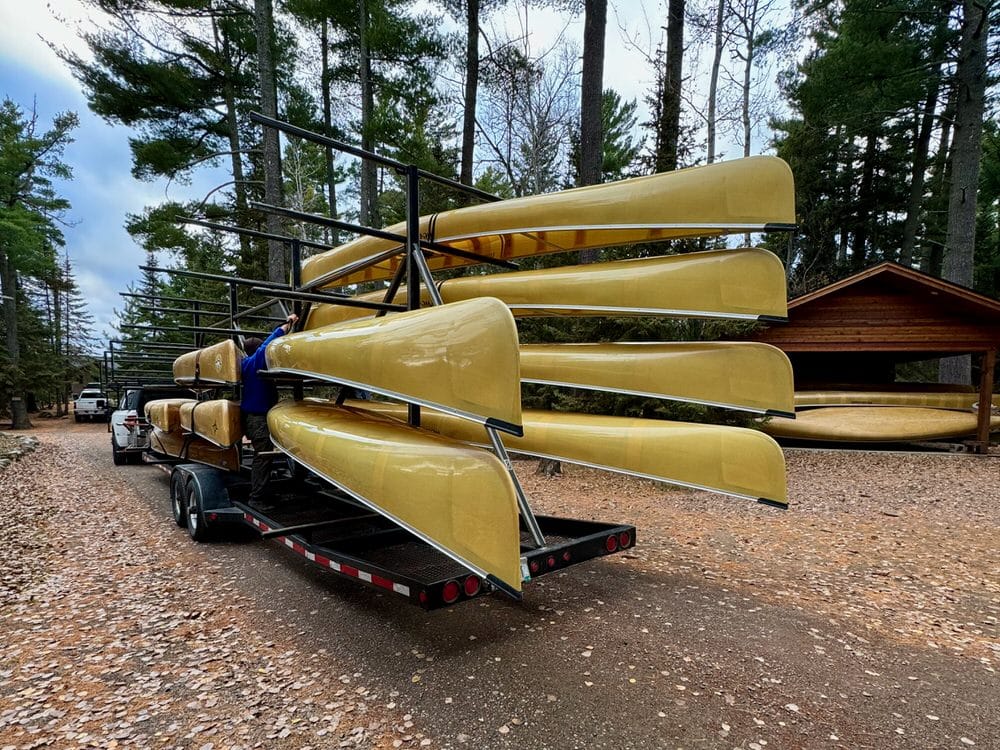 If you don’t own a canoe or have someone you can borrow from, you’ll need to rent canoes. Happily, more often than not, there’s a Boundary Waters outfitters near your entry point that can hook you up with canoe for $35-60 a day depending on the type and model you select.
Reserve your canoe(s) at least six weeks before your trip’s start date. For complete outfitting (where the outfitter provides everything -canoe, gear, food – except personal items like clothing and toiletries), reserve at least two months out.
Another outfitter service you need to reserve well in advance is a bunkhouse for the night before your trip. These simple and affordable accomodations allow you and your group to start your trip first thing the next morning. (An early start is key to finding a good campsite.)
If a bunkhouse isn’t quite right for your group, you could spend the night before at a nearby campground or at a motel in Ely or Grand Marais.
6) Organize and Inventory Your Camping Gear
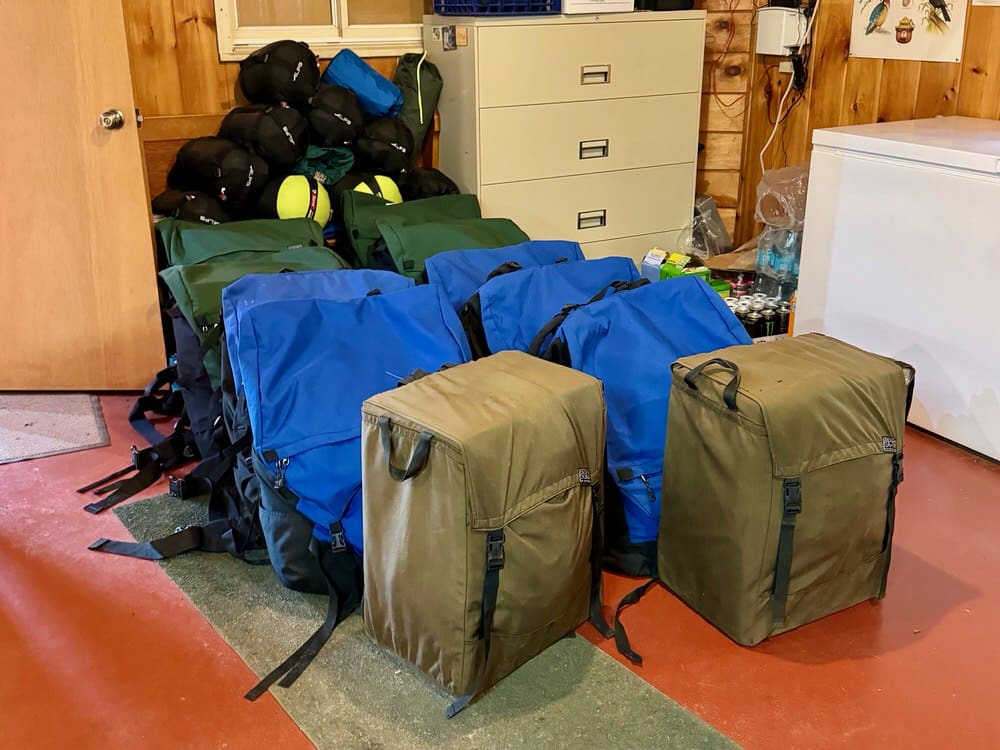 Other than a canoe, paddles, and lifejackets, Boundary Waters canoe trip don’t require any specialized camping gear. If you backpack or car camp, you probably already own most of what you’ll need.
A couple months before your trip, get your group together to inventory all of the camping gear at your disposal. This is the time to figure out if you have enough sleeping bags or large enough tent. Once you have a list of what you need, determine if you want to buy or rent.
You’ll also want to go over your personal gear (outdoor clothing, toiletries, etc.) to see if you need to make an purchases. Consult my Complete Boundary Waters Packing List if you’re not sure what you should be packing!
7) Plan Your Camping Menu
 Meal planning for a Boundary Waters canoe trip is a big task and really warrants its own post at a later date. (Stay tuned!)
To avoid packing way too much food, delegate one person in your group to tackle this task. If you have anyone in your group with dietary restrictions, nominate them!
Start thinking about your trip menu at least a month out so you can order any specialized dehydrated food or have enough time to do your own dehydrating. For pre-made dehydrated meals, I like Good To-Go, Backpacker’s Pantry, and Mountain House brands.
One beautiful thing about Boundary Waters trips is that you can eat lots of fresh food too. Because you only need to carry your food over portages, most Boundary Waters canoe trippers often pack fresh fruit, steaks or burgers for the first night dinner, breads like bagels, and even salad.
8) Mentally prepare for your Boundary Waters trip
 Attitude is EVERYTHING for a successful Boundary Waters canoe trip. I can’t overemphasize how important it is to go into a wilderness trip setting with an open mind and can-do attitude.
This might sound a little corny, but we see people struggle the most with their canoe trip when they fall into one of two camps:
- On one side we haven’t those who didn’t do any research about their trip and find it far more challenging than they expected.
- On the opposite end are those who researched their trip to the point that the trip can’t possibly live up to their expectations.
One technique for mentally preparing yourself for a great Boundary Waters trip is to have an answer to the question: “What will we do if it rains every day?”
The people who have the most amazing Boundary Waters trip year after year are adaptable and go with the flow. No matter how diligently you research and prepare, things can still not go according to plan.
 Ideal Timeline for Planning a Boundary Waters Canoe Trip
 Ideal Timeline for Planning a Boundary Waters Canoe Trip
9-12 months out: Gauge interest among family and friends. Select trip dates and narrow down canoe route options.
5-9 months out (Late January): Book permit and order maps.
2-6 months out: Reserve any necessary canoes and pre-trip lodging (i.e. canoe outfitter bunkhouse). Get the group together to inventory camping gear.
3 months out: Plan trip menu with group. Make any necessary camping food or gear purchases. Make camping menu shopping list.
1 month out: Double check permit and canoe outfitter reservations. Reconfirm commitments from group members.
1 week out: Start packing. Make any last minute purchases and reservation adjustments.
2 days out: Purchase perishable food for trip.
1 day out: Pick up permit at U.S. Forest Service station or Boundary Waters cooperating business (i.e. an outfitter). Arrive at pre-trip lodging. Go over your route, pick up any rented camping gear, and load the group’s entire gear into portage packs.
0 day: Eat breakfast, load canoes, and paddle off on the adventure of a lifetime!
Boundary Waters Trip Planning Mistakes To Avoid
 Boundary Waters Trip Planning Mistakes To Avoid
Make sure you research fishing options before booking your Boundary Waters permit
If you want to fish for a specific species of fish, please for the love of all things holy, make sure those fish actually live in the lakes on your route. Contrary to popular belief, walleyes aren’t native to northeastern Minnesota and many Boundary Waters lakes don’t have a single walleye in them. Save yourself a little heartache and plug lake names in the DNR’s Lake Finder before you book.
Don’t wait to book your permit
A common scenario we see is that someone wants to book a Boundary Waters trip, but they’re not sure what dates will work for everyone interested in the trip. But with the Boundary Waters’ recent surge in popularity, we’re seeing many entry points’ permits fill up by late winter.
Your best bet is to just book a permit for the date that works for you personally. If you wait for everyone to agree, you might miss out on a permit all together. And here’s a little secret: if people really want to go on the trip, they’ll figure out a way to make it work.
Don’t hoard permits
If you’re dealing with indecisive group members, it’s temping to book several permits for different dates with the plan to just cancel the ones you end up not needing. The U.S. Forest Service is pretty hip to this trick. In fact, they reserve the right to cancel permits with overlapping dates. They will reach out if they suspect shenanigans.
And honestly, karma’s a witch, y’all. How would you feel if you couldn’t get a Boundary Waters permit because someone had booked seven permits but only ever planned to use one of them? Since it takes most people months to plan their canoe trip, canceling your Boundary Waters permit two weeks before the trip’s start date is not helpful.
Simply put: commit to one start date and let the chips fall where they will.
Don’t ignore the user education videos
After you reserve your permit, you will be sent links to Parts I and II of the Boundary Waters rules and regulations videos. These videos will answer all your questions about Boundary Waters rules and regulations, including group size limits, specific Boundary Waters regulations like the no glass bottles or metal cans rule, and much more.
Even if you’ve been to the Boundary Waters before, it’s well worth watching the videos for a rules and regulations refresher.
Don’t forget to list alternate group leaders on your permit
Be sure to list at least one alternate leader other than yourself. In the event that you’re unable to go on the trip, this allows the permit to be transferred to that alternate leader without having to cancel and book a new permit.

Best Boundary Waters Trip Planning Resources
The Boundary Waters Canoe Area Wilderness is vast topic that can be discussed ad nauseam. While I’ve done my best to provide a concise overview of trip planning here, it’s impossible to answer all BWCAW questions in one spot.
Here are my favorite Boundary Waters resources if you’re looking to expand your knowledge about this special wilderness area:
- Boundary Waters Canoe Area: Western Region by Robert Beymer
- Boundary Waters Canoe Area: Eastern Region by Robert Beymer If you’ve never set foot in the Boundary Waters before, these are the best guidebooks on the market. I love that they provide a comprehensive overview of every single Boundary Waters entry point and offer many route suggestions.
- Message boards on bwca.com (especially trip reports)
- Boundary Waters reddit
- Tumblehome: A Boundary Waters Podcast Look for episodes about the specific entrypoint/route you’re considering.
- Paddle Planner Love maps? You’re going to love this website which lets you map out your route and helps you research campsites.
- Paddle and Portage – Your best source for current Boundary Waters news.
Conclusion: How To Plan An Amazing Boundary Waters Trip
As you can see, planning your first-ever Boundary Waters canoe trip isn’t nearly as daunting as it might initially seem. I hope this guide gives you both the timeline you need and shows you how easy it is to break the process into bite-sized pieces.
To begin, simply pull together a group of interested individuals, decide on a canoe route and your trip dates and then designate a trip leader to book the official BWCAW permits. Just make sure you avoid any common trip planning mistakes, especially during the permit booking.
Once you’ve reserved the correct permit, you’ll want to reserve any canoes or pre-trip lodging through a canoe outfitter and do an inventory of all the camping gear your group already owns. No doubt, you’ll need to make a few trips to REI or make arrangements to rent some gear.
After you’ve planned a camping menu and done a little research so you know what to expect on your specific canoe route, you’re all set for an amazing Boundary Waters adventure. It really is as simple as that! (If doesn’t feel simple, consult my favorite Boundary Waters resources for a little extra hand-holding.)
I hope this post has empowered you set out on your very first Boundary Waters canoe trip. If you feel stumped when it comes to picking out a canoe route or figuring out another pre-trip detail, please reach out! I truly believe everyone can create a perfect Boundary Waters experience for themselves and their group. I’m more than happy to help with any step in the process.
 |
 |