This post may contain affiliate links. When you purchase something through these links, I receive a small commission that helps me create this blog’s content. There’s no extra cost to you. Read my privacy policy to learn more.
Last Updated: 3/7/2026
Discover Sugarloaf Cove Nature Center & Sugarloaf Point SNA
If you’re a frequent visitor to Minnesota’s North Shore, you’ve driven past Sugarloaf Cove Nature Center countless times. But when’s the last time you actually swung into this inconspicuous parking lot located near the county line between Cook and Lake Counties just south of Schroeder, MN?
As a northern Minnesota resident who’s spent her entire life in Grand Marais/Gunflint Trail area, it took me decades to discover Sugarloaf for myself. Turns out I’d been sleeping on one of North Shore’s best family hikes, a gorgeous Lake Superior beach, and a DNR scientific and natural area (SNA) that showcases some of the oldest geology in the world.
In addition to its natural beauty and significance, Sugarloaf Cove Nature Center features a wide variety of programs and events for all ages at their log cabin interpretative center.
If you’ve never stopped because you weren’t sure what Sugarloaf is all about, I’m here to demystify this often-overlooked North Shore attraction. Let’s dive right into my quick guide to Sugarloaf Cove Nature Center and Sugarloaf Point SNA!
 |
 |
What is Sugarloaf Cove?
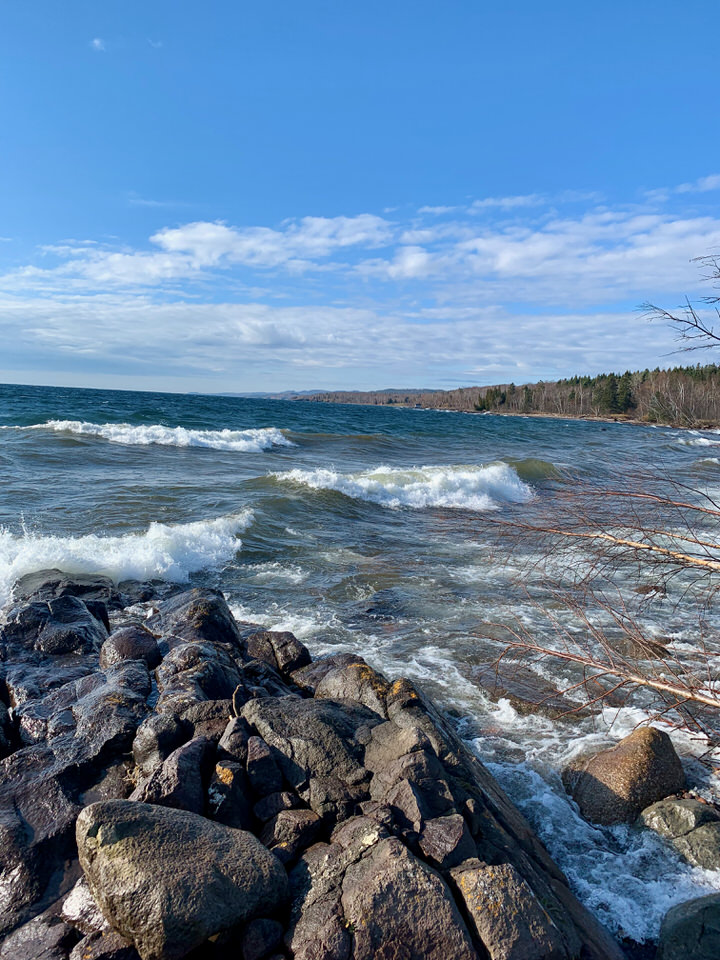
Sugarloaf Cove is 34-acre natural area with a one-mile interpretative hiking trail, a cobblestone Lake Superior beach, a seasonal interpretative center, and a unique geological formative that gives the spot its name. It is managed by a private nonprofit organization.
Although 7-acre SNA on the property is managed by Minnesota Department of Natural Resources, the property is not associated with the Minnesota State Park system.
What makes Sugarloaf Cove special?
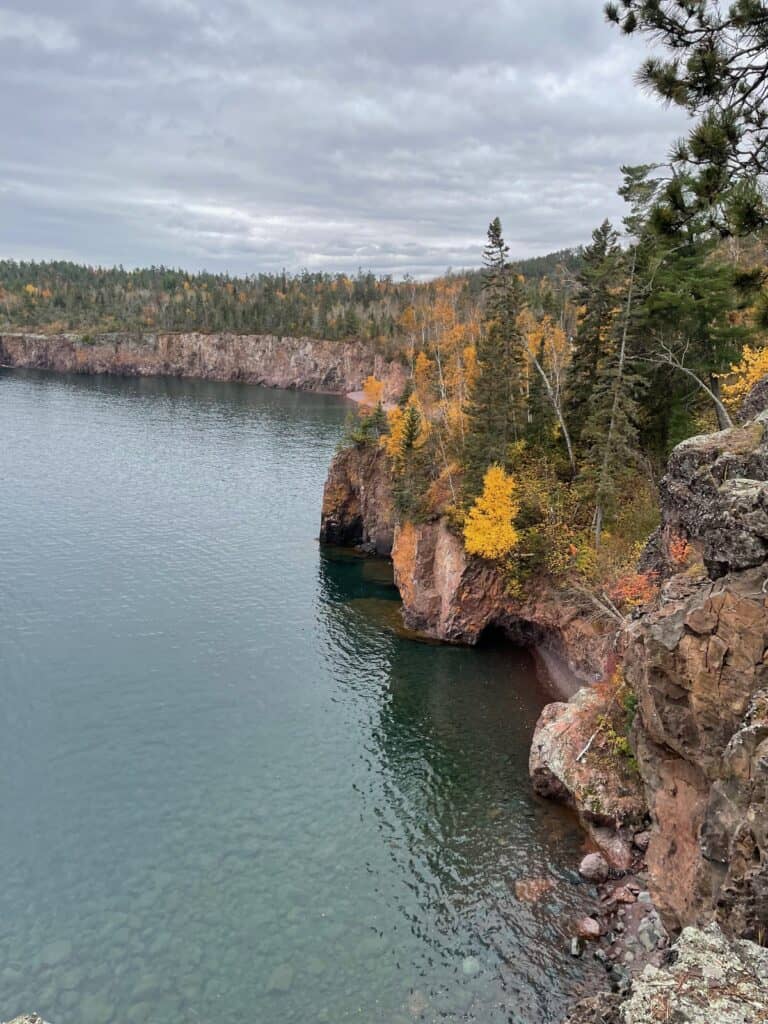
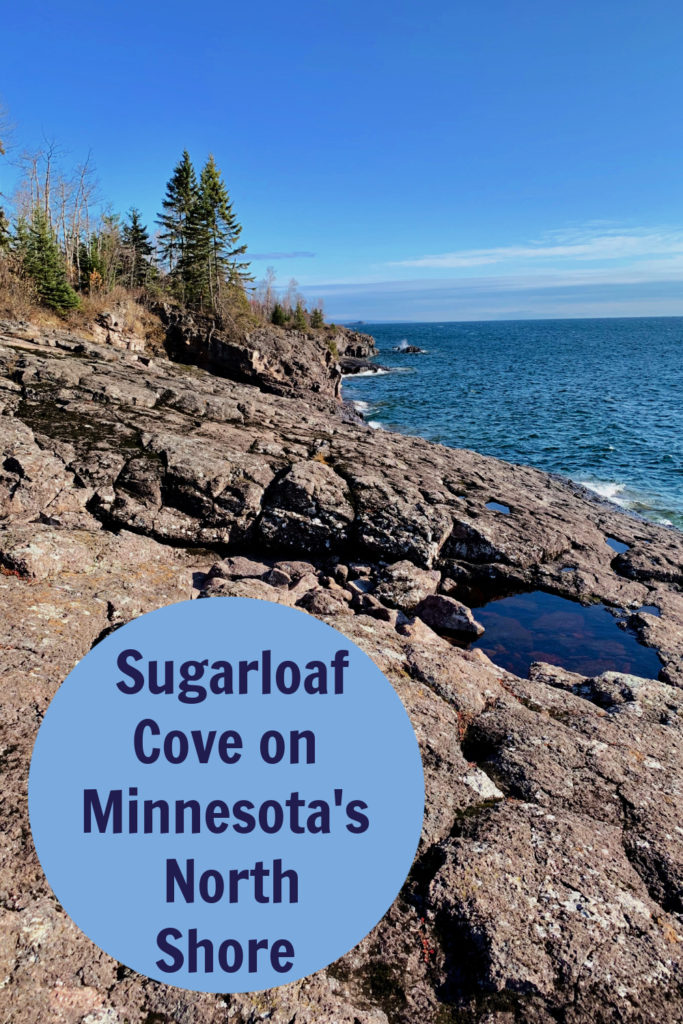
- Sugarloaf is one of the prettiest stretches of Lake Superior shoreline I’ve ever visited.
- The boreal forest in between the parking lot and the beach has been carefully restored to its natural boreal forest habitat to allow native plants and wildlife to flourish. It’s a great place to go birding!
- Some of the rock you’ll find on Sugarloaf Point is 2.7 billion years old, making it some of the oldest rock in the world.
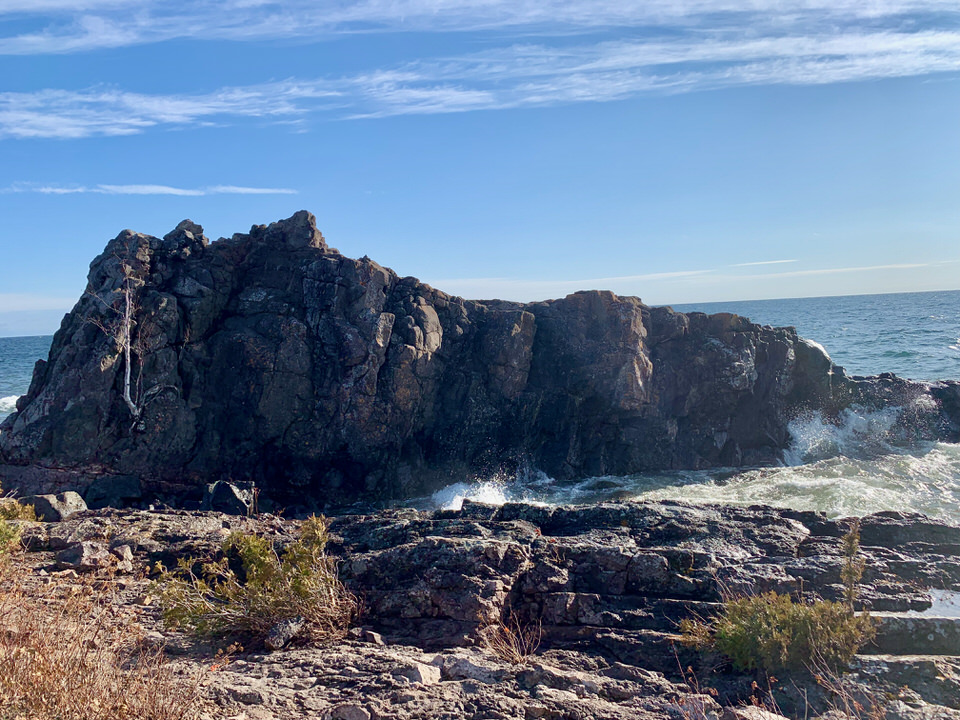
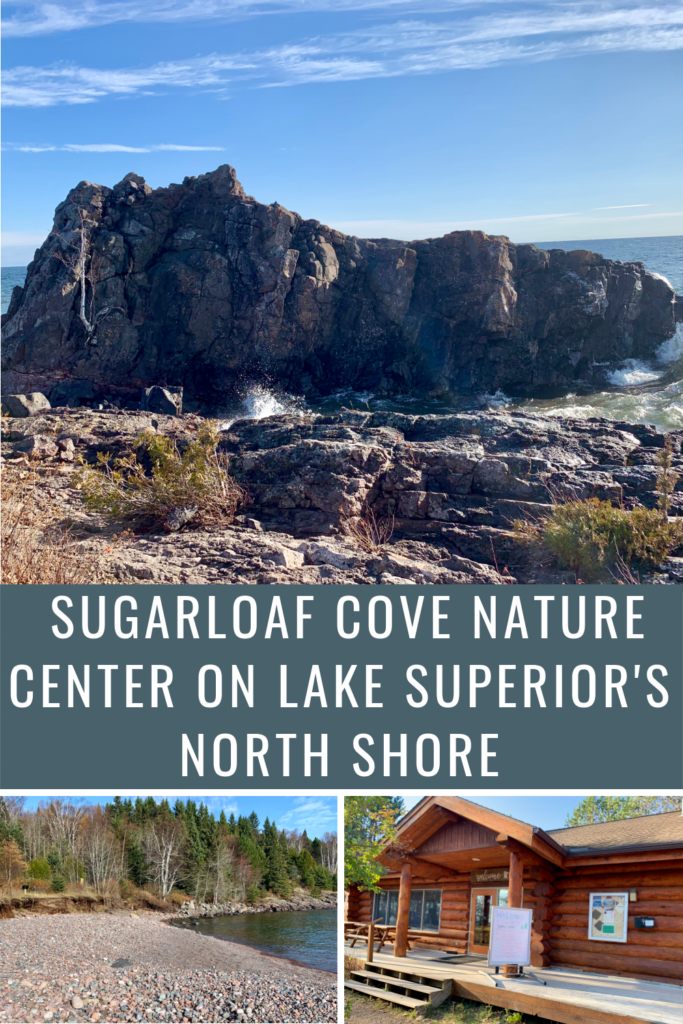
- A gravel bar formed by wave action, known as a tombolo, connects the beach to a spit of land that forms the edge of the cove. At the end of that point, you’ll see the unique rock formation that gives Sugarloaf its name. (Fun fact: Another place where you can see a tombolo on the North Shore is in Grand Marais where a tombolo connects the town to Artists Point and the lighthouse.)
- Sugarloaf is one of only two known North American locations where Golden Dot Lichen (Arthrorhaphis grisea) grows.

History
It might feel like it, but Sugarloaf isn’t an untouched piece of North Shore forest. People have been coming and going on this little spit of land for centuries.
A logging company owned the Sugarloaf Cove property for several decades and used the cove to corral harvested timber before shipping it across the lake to Wisconsin for milling. In fact, my great uncle and his family actually lived at Sugarloaf in 1960s while he worked for that company.
The Sugarloaf Cove we know and love today got its start in the early 1990s when a group of concerned citizens who organized to preserve the land from being developed into a safe harbor. (That safe harbor ended up being established just up the road at Taconite Harbor.) The group focused on restoring Sugarloaf to its former natural habitat after its decades of use as an industrial site.
With the success of restoring Sugarloaf’s habitat, the organization has now expanded to help North Shore property owners preserve and restore property up and down Lake Superior’s shoreline up.

What to do during your visit
Interpretative center
The nature center includes a few exhibits and a small gift shop that primarily features natural history books. This is open daily during the summer season, although hours may be limited in the spring and fall. It’s best to check their website to verify opening hours if you want to include the center in your visit.
Hike
You don’t need to worry about decision fatigue at Sugarloaf. There’s just one hiking trail here. Trail guides for this easy one-mile hike are available in a mailbox next to the trailhead. Just use and return at the end of your visit.
The trail is open year-round, but like with all North Shore winter hikes, you’ll want to use caution and common sense on the trail. Hiking poles and footwear traction like Yaktraks or ice cleats are recommended.

Beach
To me, the beach holds the most appeal at Sugarloaf. You only see a couple small buildings far in the distance making the area feel ancient and unsullied by human meddling. Although it’s a perfect place for a picnic, campfires are not allowed anywhere on the property.
SNA
At Sugarloaf you’ll see a lot of the dark gray basalt you might recognize from other North Shore beaches. This dates back about 1.1 billion years. However, on this particular bit of Lake Superior shoreline, you’ll also find whitish granite and gneiss – some of the oldest rock in the world.
Sugarloaf Point’s geological significance, along with the shoreline’s rich botanical offerings, lead to the Minnesota DNR declaring 7 acres of Sugarloaf Point a Scientific and Natural Area (SNA).
This designation protects the area from camping, campfires, rock climbing, and other naturally degrading activities. The DNR strictly prohibits any collection of plants, rocks, fossils, or natural items in these areas.
Programs and events
The non-profit hosts many different programs throughout the year, from bird banding, nature presentations, and trainings. Check out their calendar of events to see if anything is going on during your visit.
Where is Sugarloaf Cove Nature Center and Sugarloaf Point SNA
Map
Directions and Address
Sugarloaf Cove is located 6 miles south of Schroeder at U.S. Highway 61 at mile marker 73. If you’re driving north on Highway 61, watch for it on the righthand side about 2 miles after passing over the Lake/Cook County border.
Address: 9096 Hwy 61, Schroeder, MN
Driving distances
- Grand Marais to Sugarloaf Cove: 40 minutes
- Two Harbors to Sugarloaf Cove: 50 minutes

If you visit
Operating season
The beach and hiking trail are always open to the public, but no camping is allowed. The interpretative center is daily open, 10 a.m. – 5 p.m. from May – October and closed in the winter except for special events. The center may need to limit hours in the spring and fall so check their website for the most up-to-date hours.
Parking fee
Because Sugarloaf Cove’s in no way associated with the state park system your Minnesota state park sticker doesn’t work here. An independent non-profit operates Sugarloaf and they request a $5 per vehicle donation to park your car and explore the grounds. It’s a small price to pay to ensure the grounds and nature center’s continued maintenance.
Membership options
If you plan to visit multiple times a year or just want to support the work of Sugarloaf, you can become a member. All members enjoy free parking and receive a parking hang tag.
Guidelines
- Sugarloaf Point (where you’ll find the sugarloaf rock formation) is not open to the public.
- The property is open to foot travel only.
- Walk carefully and quietly to avoid slips and trips and to keep from disturbing wildlife or others.
- No dogs or pets are allowed in the SNA area.
- Do not remove any plants, rocks, fossils, or any other natural or historic items
Leave No Trace
Sugarloaf requests that you follow Leave No Trace principles during your visit.
- Before hiking, give your shoes a wipe on the provided boot brushes to avoid unintentionally tracking any invasive species onto the property.
- Leave only footprints
- Walk only on established trails. This is especially important because of the property’s unique and fragile forest vegetation.
- Dispose of any trash properly. If you pack it in; pack it out. Pick up your pet’s waste.
Other nearby North Shore attractions
 |
 |
Unless you’re visiting for a special program or event, you really only need about an hour to explore Sugarloaf Cove. However, you can definitely have a very full day exploring this section of Lake Superior by including some of these favorite North Shore stops:
- Grab lunch or a coffee and pastry from Schroeder Baking Company
- Learn about the area history at the Cross River Heritage Center in Schroeder
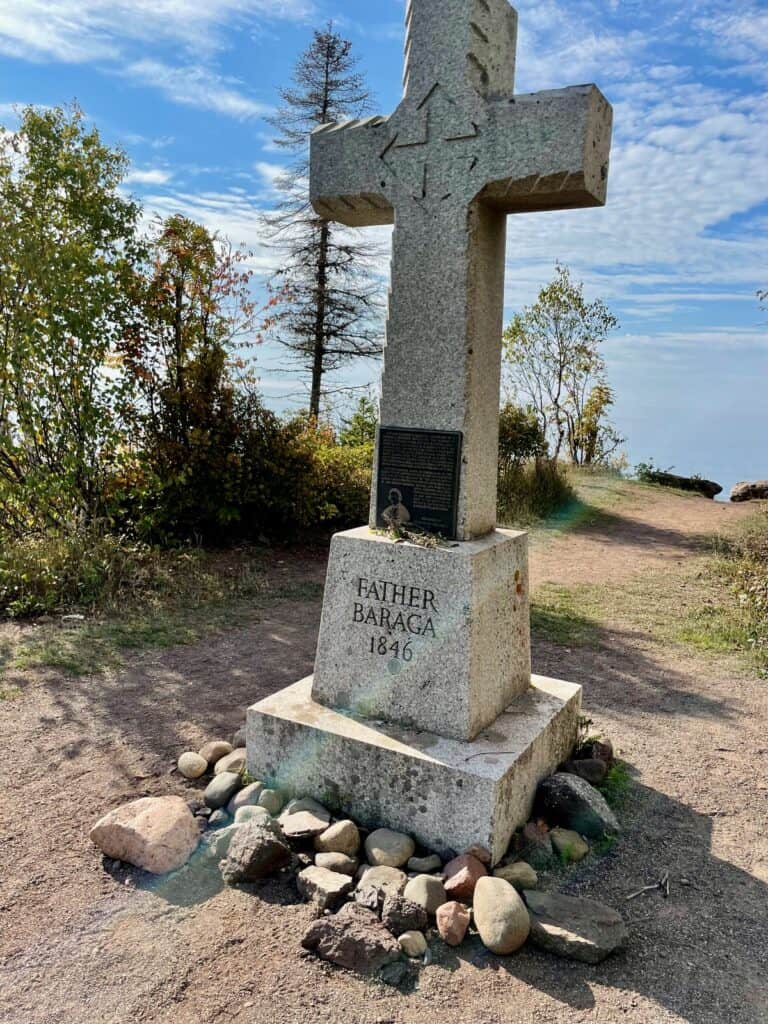
- See Father Baraga’s Cross along Lake Superior near the outflow of the Cross River. (This is a different Cross River than the one located in the Boundary Waters Canoe Area Wilderness. That Cross River flows into the Gunflint Trail’s Gunflint Lake.)
- Take the easy (approximately 1-mile round trip) hike to Caribou Falls from the Caribou Falls Wayside Rest area just south of the Cook/Lake county line.
- Explore the ghost town at Taconite Harbor
- Visit Temperance River or George H. Crosby Manitou State Parks

Conclusion: Sugarloaf is a North Shore must visit
With as tempting a name as Sugarloaf, I’m surprised it takes convincing for so many folks to stop. But then again, all you can see of this special northern Minnesota spot from Highway 61 is a large gravel parking lot.
But if you actually pull in, you’ll find a tract of carefully tended boreal forest and a log cabin nature center. Best of all, the short hike leads you to one of the prettiest beaches on Lake Superior’s North Shore.
Sugarloaf Cove doesn’t demand much of your time, but you’ll probably want to stay a while. The hike from your car to the beach clocks in at about half a mile. If you’re looking to stretch your legs and shake off some road weariness, Sugarloaf Cove is a perfect North Shore pit stop.
 |
 |