
This post may contain affiliate links. When you purchase something through these links, I receive a small commission that helps me create this blog’s content. There’s no extra cost to you. Read my privacy policy to learn more.
Published 1/7/2026
England Food Guide For Your London Visit and Beyond
If there’s one stereotype that really stuck with Americans it’s that British food is bad.
Whenever I go to England, someone always asks me if I’m finding any good foods to eat and seem genuinely shocked when I talk about how delicious English food is.
It’s not wartime England anymore, folks. Freed from the World War II rations that shaped many American soldiers’ impressions of British cuisine, modern London is one of the best food destinations in the world. Thanks to Britain’s massive colonialist footprint, English food has been influenced by far-flung flavors and spices for centuries.
However, when most people think of English food, they think of hearty pub fare like meat pies, roast, andfish and chips. I’m using my knowledge from spending a winter living in London as well as my recent U.K. visit in November 2025 and general love of food to compile a list of the best, most quintessential British foods that fully embody English culture.
While this list focuses mostly on foods you’d order at a restaurant, I’ve also included a separate round up of my favorite U.K. grocery store finds. Not only are these packaged food uniquely delicious – they also make great souvenirs! If you’re not heading to England soon (more’s the pity) I’ve also included a few links to tried and true recipes so you can try them in the comfort of your own home without the flight across the pond.
Here are the English foods you try during your visit. After you’ve eaten your way through this list, I think you’ll be just as big a fan of British cuisine as I am!
And yes, food is a huge reason why I travel. Check out my other food focused posts for:
Boston, MA
Cincinnati, OH
Normandy, France
18 Delicious Traditional British Foods To Try
1. Fish and Chips
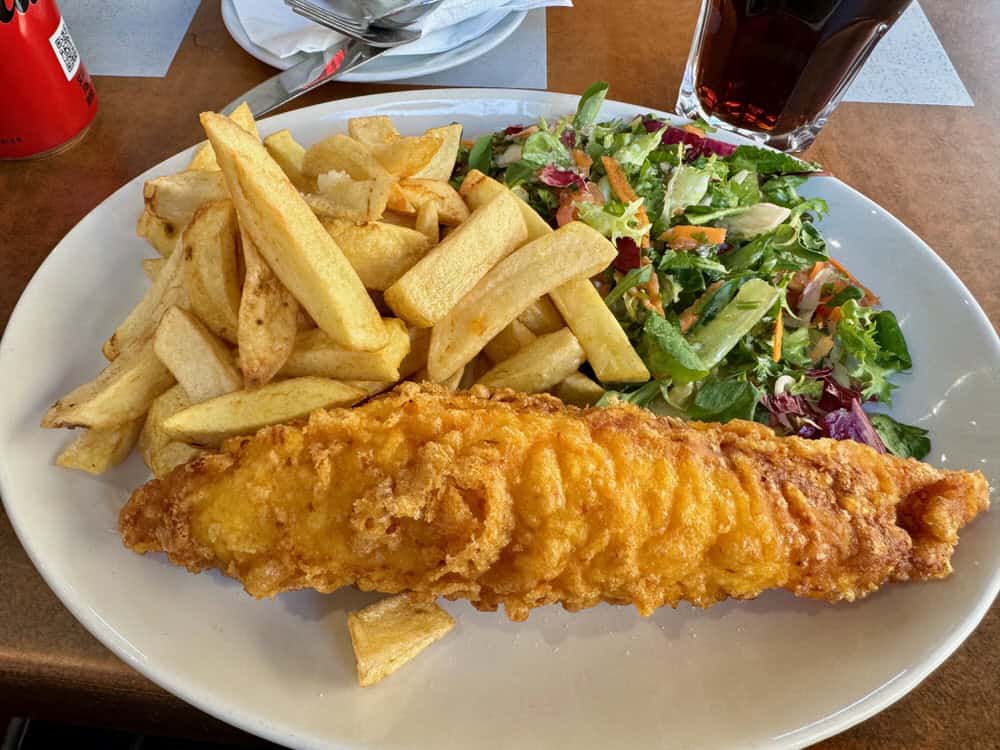
With no part of England more than 80 miles from the coast, so it only makes sense that Brits would know how to make some tasty seafood! The Brits’ penchant for fish and chips is the perfect case in point.
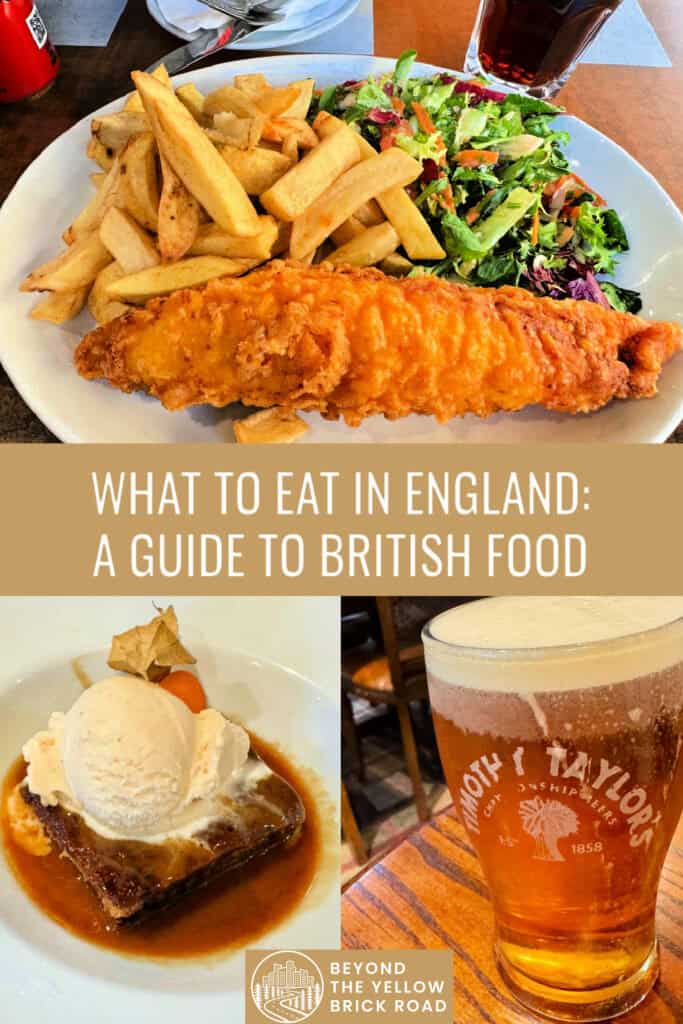
This simple meal of battered fried fish served on a bed of chips, aka French fries, usually comes with tartar sauce, malt vinegar, and a wedge of lemon. Cod or haddock are frequently used for the fried fish component, but other fish options can include halibut, hake, skate, pollock, and plaice.
You’ll often have a small side dish of green goop hanging out on your plate of fish and chips. These are mushy peas! (No, the kitchen didn’t mash up a bunch of green garden peas.) This unique side uses dried marrowfat peas that have been reconstituted and then cooked into a paste. They might look like something a toddler would create with Play-doh, but don’t knock ’em until you try ’em; they’re quite tasty!
We trekked via public river boat into central Greenwich to enjoy our fish and chips at one of London’s best rated fish and chips shops: the Golden Chippy. We loved the crispy fried fish, unsalted chips, and great service. A special treat was the pile of fresh salad on the side!
However, you don’t need to make a special pilgrimage like we did to track down your fish and chips dinner. There’s still at least one of these small takeaway (that’s takeout to Yanks) shop called chippies, on every British high street. In addition to fish and chips, they sell all manner of fast fried food, including burgers, sausages, and sometimes even fried candy bars (especially if you’re in Scotland)!
2. Full English Breakfast
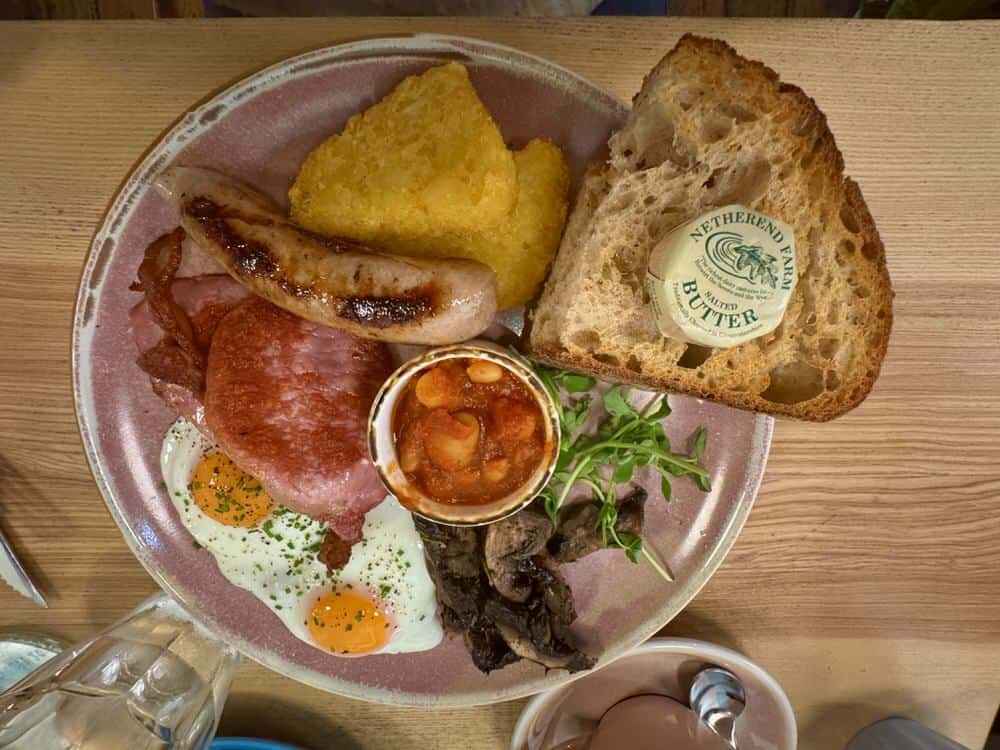
Another extremely ubiquitous meal offering in England is the “full English.”
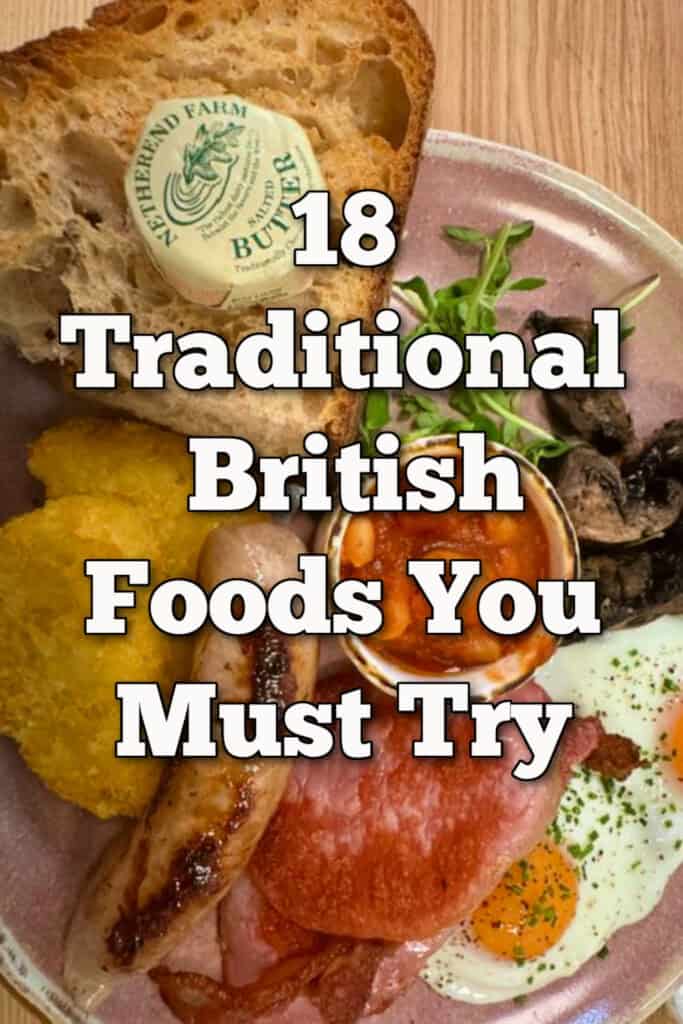
This massive platter of breakfast foods that can include fried eggs, bacon rashers (the English use back bacon which is more like a piece of thick ham than the fat marbled strips we’re used to in the States), sausages, baked beans (often straight from the blue Heinz can), toast, potatoes or hashbrowns, mushrooms, white pudding (a pork fat sausage similar to Cincinnati’s goetta), and black pudding (aka: blood sausage.)
Basically any British Isles restaurant or bed and breakfast offers their own version of a full English. While what components of a full English you’ll get on an given breakfast plate depends on who’s preparing it, in my observations, the staples that you’ll always get on a full English plate are: two fried eggs, toast, bacon rashers, sausage, and baked beans.
Although you’d think this breakfast would have originated with British farmers or miners looking for hearty “stick to your ribs” fuel for a long day of manual labor, the British have only been downing these large breakfasts since Victorian times. It’s a breakfast celebration of the greater food access that came with the emerging middle class.
3. Indian Food
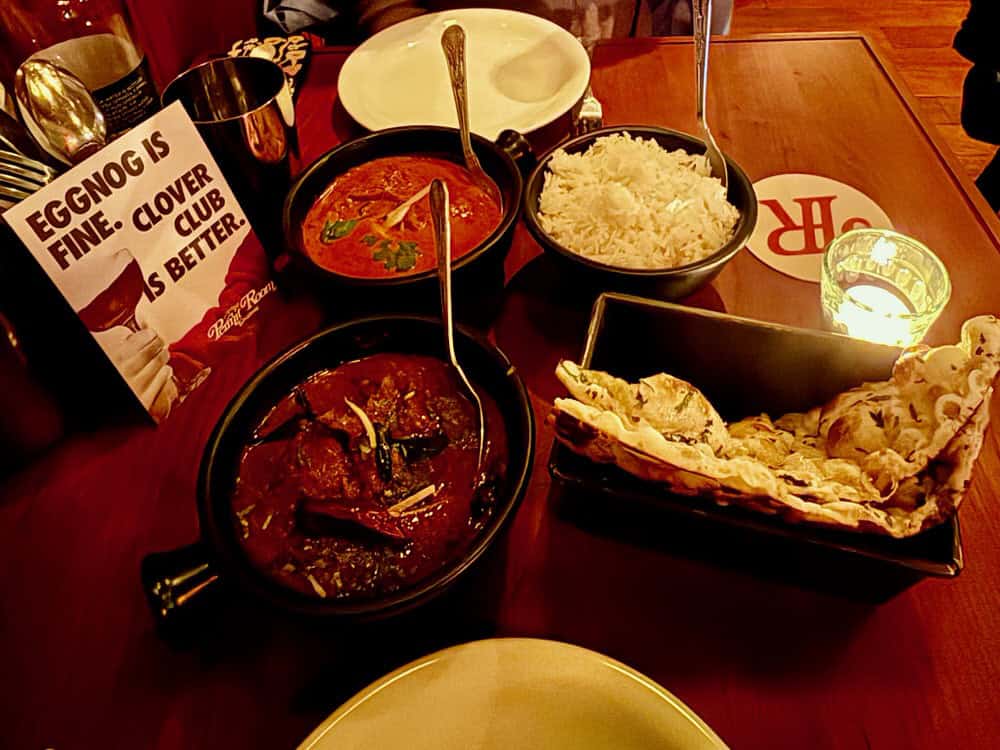
What’s the most British dish you can try in England? Believe it or not, many folks say it’s Chicken Tikka Masala.
One result of Britain’s nearly 200-year occupation of India is a deep love of curries, dals, tandoori, and other Indian delicacies. Brits returning from India put their own spin on the food they’d grown to love. One happy result of those experiments is chicken tikka masala which features yogurt marinated chicken, tomatoes, Indian spices, and cream.
Indian restaurants are ubiquitous in London and greater England. Bradford in West Yorkshire is considered England’s curry capital. Once a textile mill city, Bradford once attracted many immigrants. Although the mills are long gone, some 200 curry houses remain.
Pubs usually have at least one Indian inspired dish on the menu so you never need have to go far to get your fill of curries, samosa, or tandoori chicken.
If you only have time for one Indian restaurant during your time in London, I highly recommend checking out Dishoom Permit Room in the Notting Hill.
4. Pasties
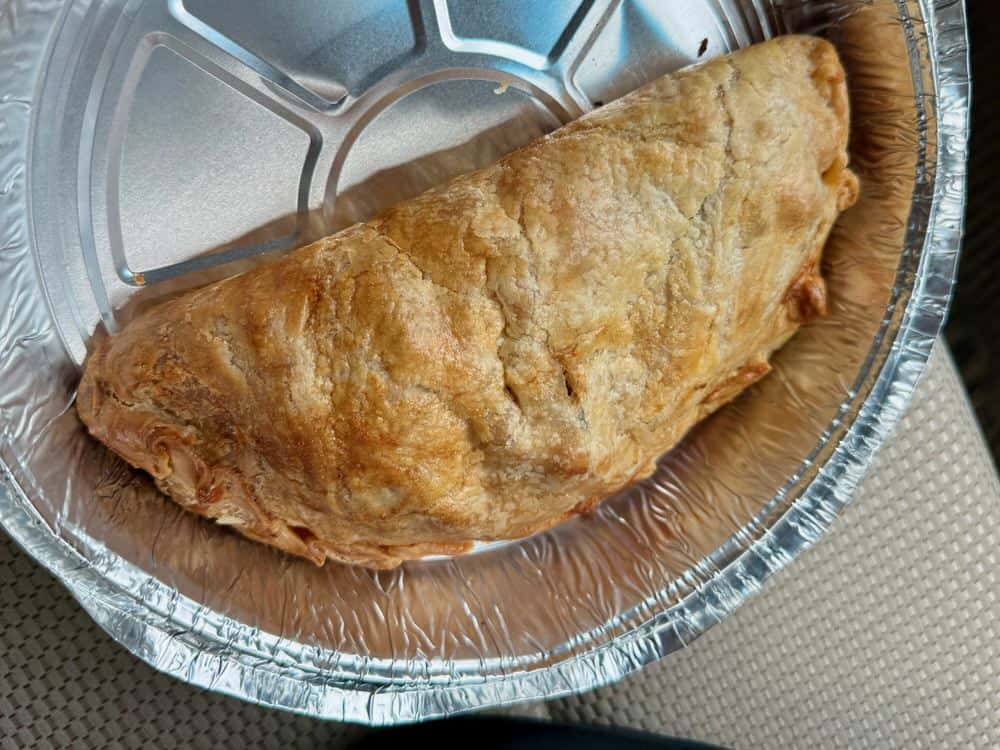
Fun fact: my paternal lineage has a strong Cornish connection. How strong? When I took a DNA test, my results came back with my great-grandmother’s birthplace circled! A happy result is a birthright to my love of Cornish pasties.
Basically a hand pie, a pasty is a single serving meat pie created by folding pastry crust over a filling of beef and root vegetables that’s seasoned with salt and pepper. While potatoes and onions are always part of the filling, there’s an ongoing debate on whether to include rutabagas. (I’m personally very pro rutabaga.) If you’re willing to ditch the traditional, there are endless filling possibilities including cheddar and apple, pork and veg, and so many more.
Pasties were created for Cornish miners’ lunch pails so they could have a filling, compact, warm meal at their midday break. Pasties are pretty incredible at holding their heat. If you buy one fresh from the oven, beware that it will be very, very hot. I had this experience once in Cornwall and I swear it took over half an hour to cool down enough to eat.
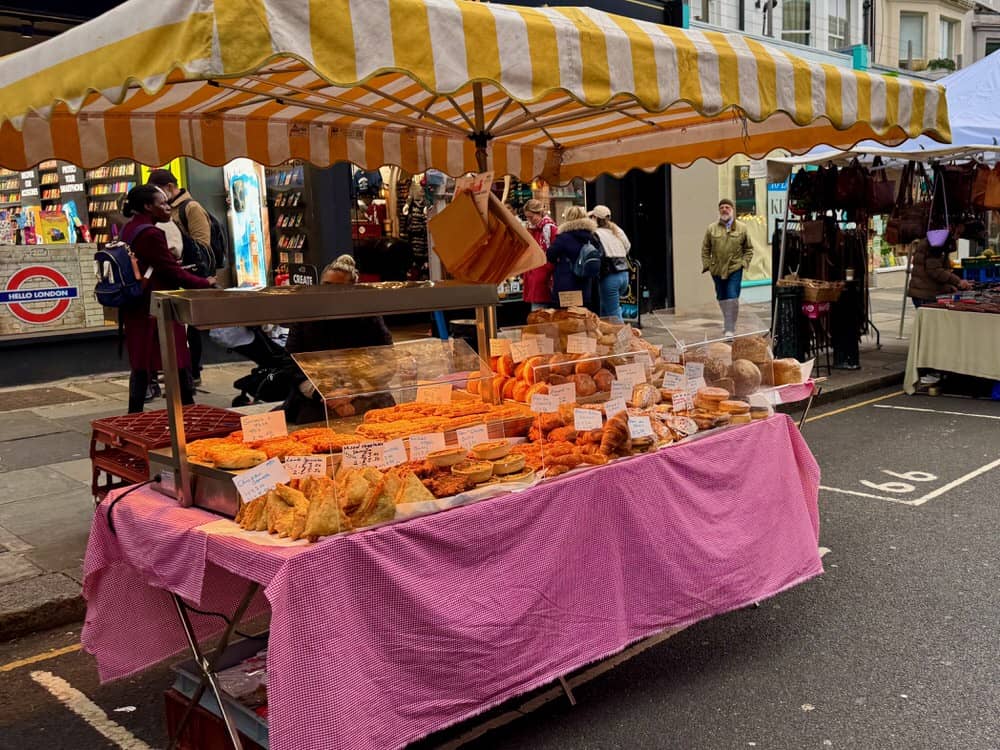
Pasties remain a perfect on the go meal, so it’s no surprise that where you’ll have the easiest access to them in London train stations where chains like The Pasty Shop, peddle them to travelers. Of course, for the best pasties in England, leave the big city behind you and head for rural Cornwall in the beautiful far western reaches of the island.
5. Sausage Roll
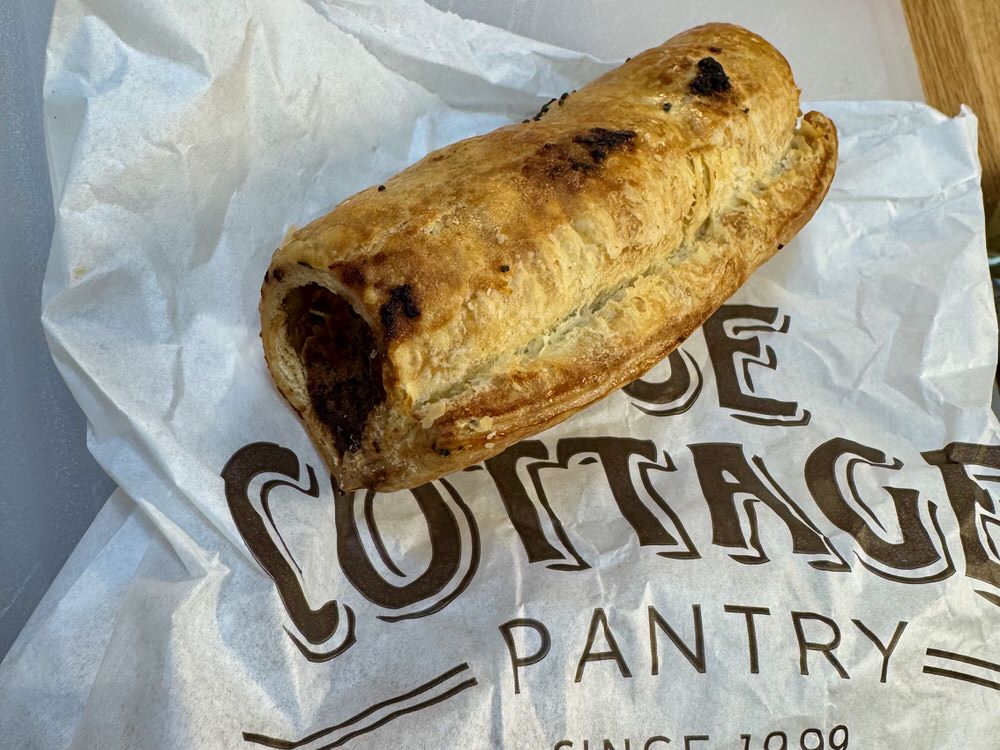
A sausage roll is a very common British pastry that the Brits seem to love to malign. Despite Brits declaring this simple pastry of seasoned pork sausage wrapped in flaky pastry “stodgy” and “underwhelming,” given how much retail space is devoted to sausage rolls in bakeries, grocery stores, and butcher shops, someone in England is clearly enjoying them.
Sadly, I am among those who find this a rather disappointing pastry. What sounds simple to the point of perfection ends up being just greasy and surprisingly lacking in flavor considering its high fat content. If a sausage roll has one thing going for it, it’s that it’s always an appropriate time to eat one, whether it’s breakfast, lunch, or just snacktime.
For an affordable introduction to the sausage roll, I recommend heading to the nearest Greggs. You’ll find this chain bakery on just about every British high street. Famously, they also offer a vegan sausage roll, so no using dietary restrictions to skirt around sampling this British food!
6. Meat Pies
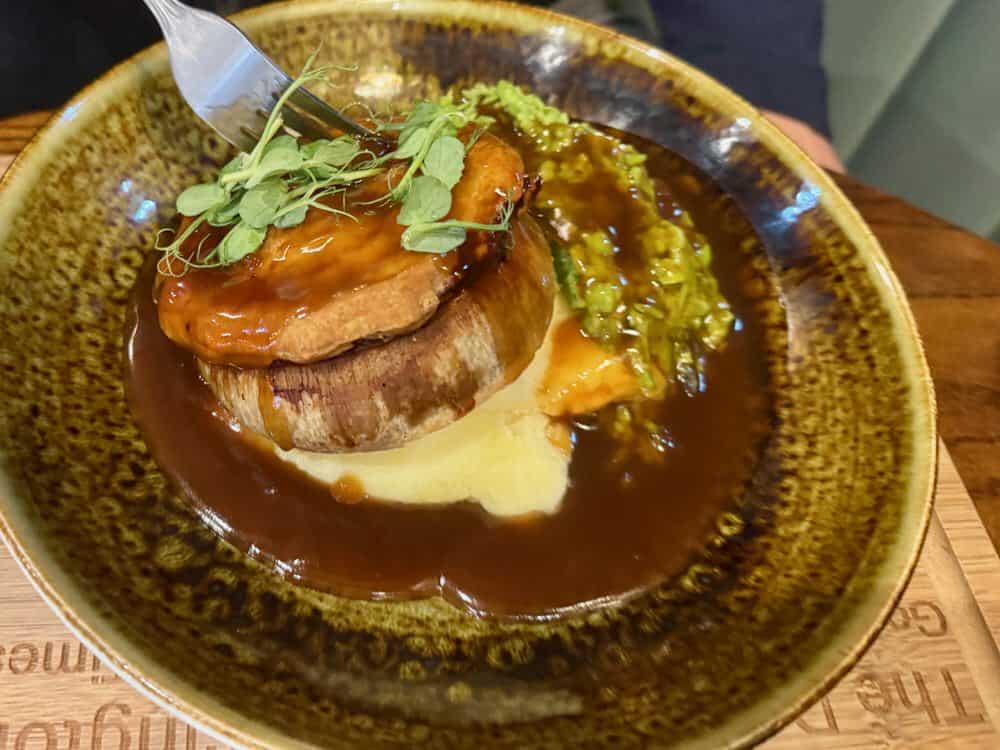
As an American, if I asked you what your favorite pie was, I’d expect an answer like “key lime” or “pecan,” but for a Brit, a typical answer to this question would be “steak and ale.” Let me tell you, as a Yank trying to prepare a Thanksgiving dinner in London, it was a bit of a shock to venture down the “frozen pie” aisle in a British grocery store and find savory pork and steak pies rather than pumpkin and apple!
In England, a pie generally refers to a savory, often individual-sized meat pie. Popular fillings include steak and ale, pork, chicken and mushroom, steak and kidney, and steak and onion, although definitely not cat or vicar! (I dare you not to get “The Worst Pies in London” from Sweeney Todd stuck in your head now.)
The pies often use a hot water crust pastry that’s quite stiff and not especially flaky since it’s more intent on holding the pie guts in than to be the star of the show. (Don’t get me wrong, the crust is still quite savory.) Sometimes the pies are served with a gravy that you can pour in the steam hole in the top crust. You then mash the gravy and pie all together with your fork for a delicious, if slightly unappetizing in appearance, meal.
You’ll often find pies on pub menus or in bakeries or butcher shops for takeaway. Of course, as I discovered, they’re also available in the freezer section of British grocery stores.
7. Scotch Egg
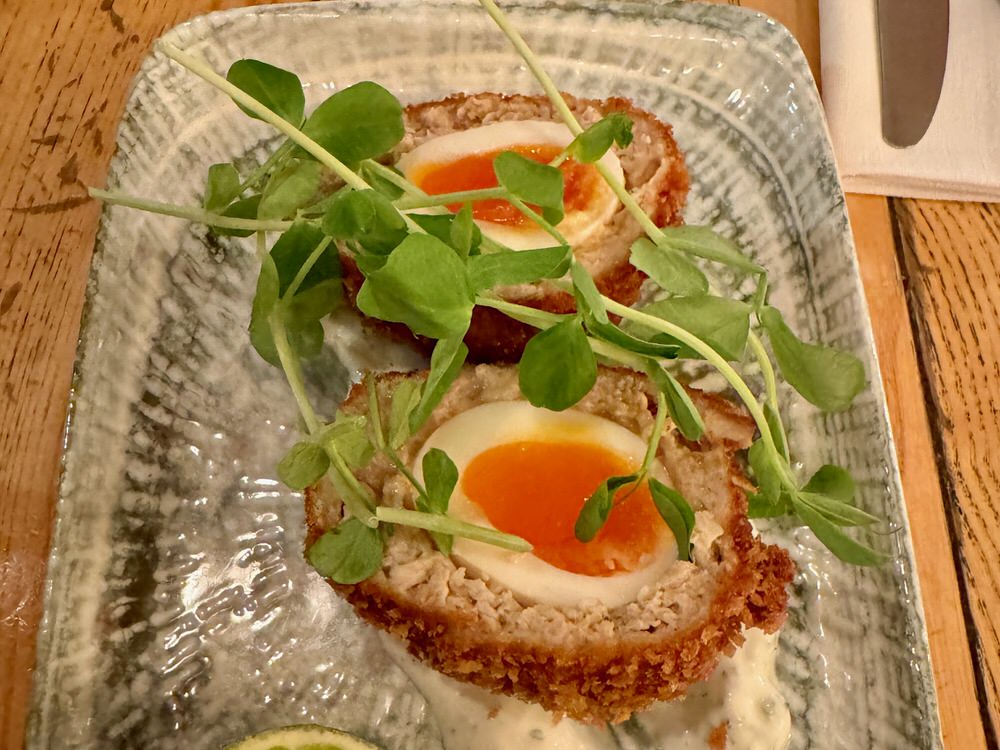
Scotch eggs are another British treat that are perfect as either as an appetizer, a little snack, or to throw in your picnic hamper. To make a Scotch egg you take a soft-boiled egg, wrap it in bulk pork sausage, roll it in breadcrumbs, and toss it in the deep frier.
The eggs are pulled from the fryer as soon as the sausage is cooked through, leaving the egg yolk still runny. With the runny yolk, Scotch eggs are “self-saucing” although they’re often served with chutney, mustard, or some sort of aioli.
This is a fun treat to try while in England. The flavor combinations are endless; we had a Jamaican jerk flavored egg as an appetizer at a pub dinner. You can also find them at market food stalls like in the Borough Market.
8. Sunday Roast with Yorkshire Pudding
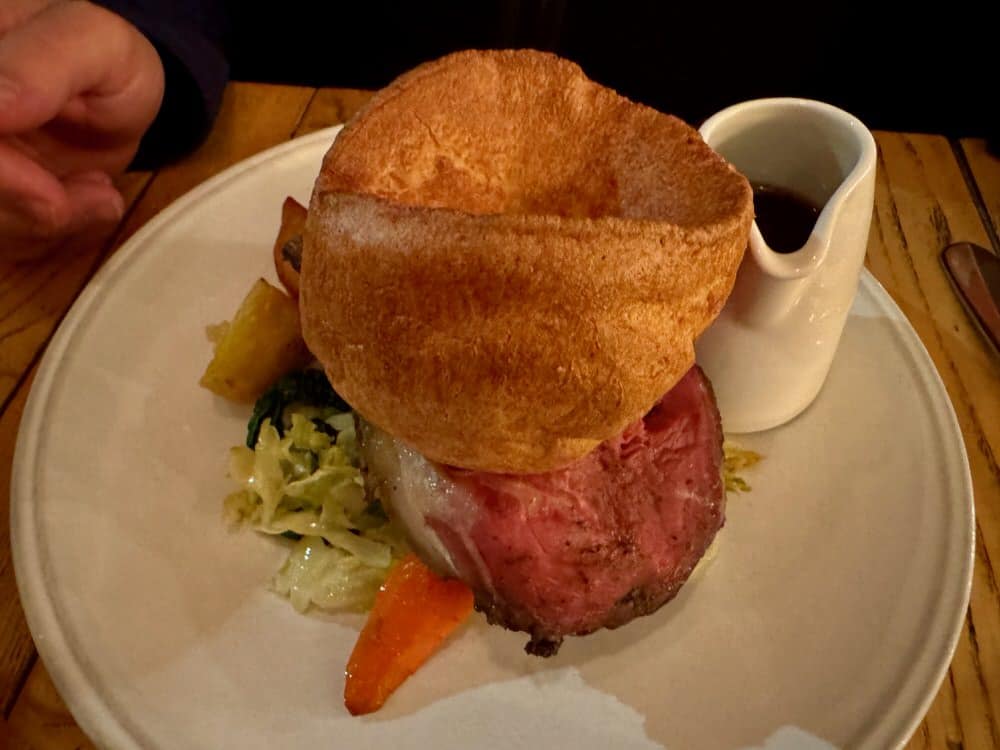
A traditional British meal you won’t want to miss is the Sunday roast. To indulge, head to your nearest pub for a traditional roast meat dinner. If you’re American, this meal may remind you a bit of what we often eat at Thanksgiving or Easter.
As the name implies, this meal centers around a slice of roast meat – usually beef, but sometimes chicken or lamb are also offered – served with gravy, roast or mashed potatoes, vegetables (cabbage and carrots are most common, but you could also get squash, peas, cauliflower, rutabaga, etc.), maybe some stuffing, and a helping of Yorkshire pudding.
What’s a Yorkshire pudding? It’s basically a massive popover. Traditionally, once the roast beef had finished cooking, you’d remove the beef from the baking pan and then put the pan back into oven and heat until the drippings are almost smoking.
At that point you pour a batter of milk, flour, and eggs on top of the oil and baked until you have a golden, puffed-up pancake very similar to a Dutch baby but tasting like a popover. The result is a delicious crispy on the outside, soft in the middle side dish that pairs well with roast meat and a slather of gravy.
If you want to try your hand at Yorkshire puddings at home, I’ve had good luck with Gordon Ramsay’s recipe.
9. Toad in the Hole
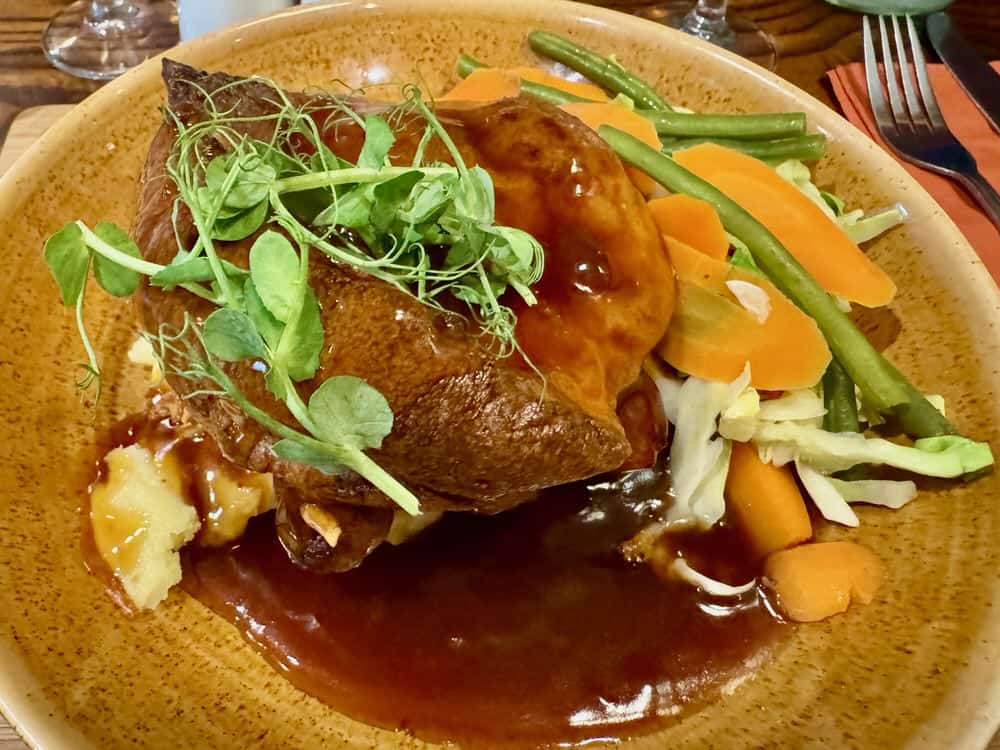
Growing up in northern Minnesota, we called an egg cooked in a circle cut out from a buttered piece of bread, toad in the hole. Just an FYI, if you order toad in the hole in England, that’s definitely not what you’re getting. Instead, you’ll be served couple pork sausages stuck in the middle of a Yorkshire pudding.
With a drizzle of gravy and a side of mashed potatoes and veg, Toad in the Hole is quintessential pub fare. Although I’ve only seen it prepared with the sausages laid lengthwise, apparently it got its name because some cooks would cut the sausages in half and set them up right in the pan. When the pudding puffed up as it baked, it looked like little toads sticking their heads out of a pond!
10. Jellied eels
Want to eat local? You can’t do much better than a serving of jellied eels! These are synonymous with London’s East End, which historically was lower class, with most folks working on the docks.
For years, eels were the only edible thing that could survive in the very polluted Thames River. To take advantage of these free calories, Eastenders would chop up the eels, boil them with some herbs, and then let them cool in a jar. Since eels naturally contain a lot of gelatin, the eels end up preserved in their own gel. These became a very popular side dish at the various pie and mash shops around the East End where workers would pop in for a cheap lunch.
Is it an acquired taste? Not really. They’re actually quite mild and you might want to jazz up your serving with some vinegar and pepper. What turns most people off is the goopy texture.
I’ll admit, I’ve never tried these – mostly because I sadly have spent very little time in London’s East End – but I’ll try anything once. If you’re feeling adventurous, pop into an eel and pie shop in the East End like M. Manze, G. Kelly, or Arments Pie and Mash.
11. Cask ales
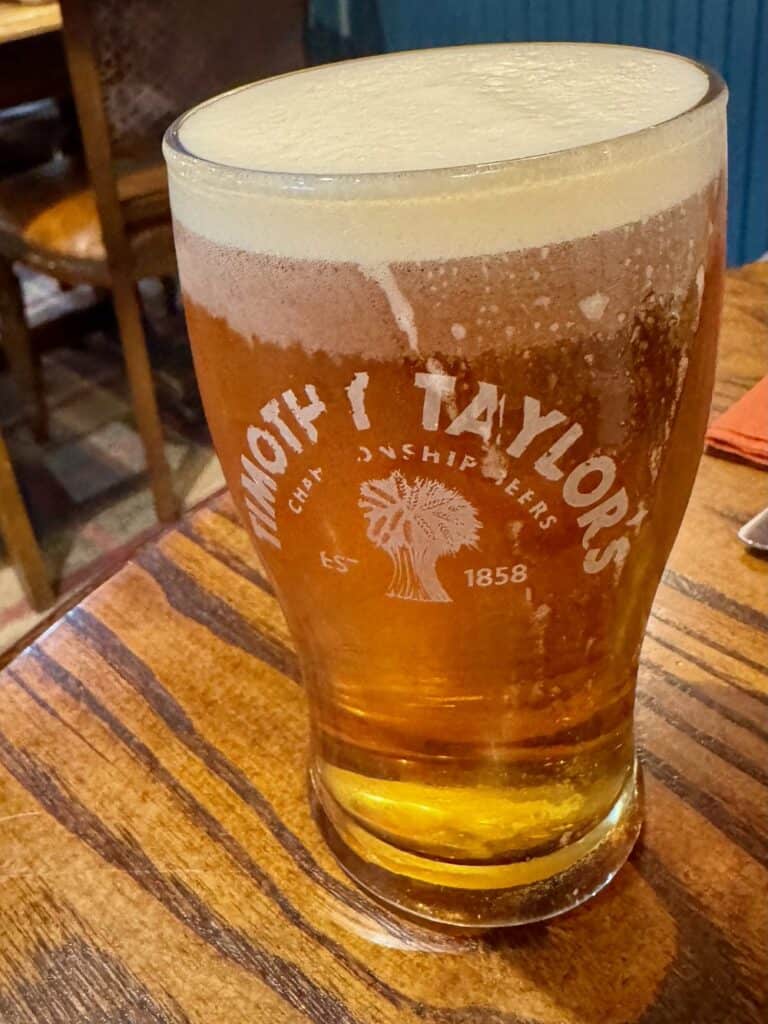
If you’ve heard Americans complain that Brits serve all their beverages at room temperature, you may have run into someone who ordered a cask ale at the pub.
Sometimes called “real ale,” cask ales are unfiltered, unpasteurized brews made with “traditional ingredients” and served from the container (or cask) that they do their second ferment in. (Most beers are moved from their second fermentation container and then re-carbonated before serving.) Cask ales are usually dispensed using a hand pump to preserve their natural carbonation which can make them feel a little “flat” to the American palatte.
If you want to dip your toe into the world of cask ales, an easy place to start is Timothy Taylor’s Landlord. This beer is ubiquitous in Yorkshire and is a malty, drinkable ale. One thing about cask ales is that their flavor adapts over time. I found the pint of Landlord I drank at a pub quite bitter. I much preferred the bottled Landlord I bought at the local Sainsbury’s, probably because the bottling creates a much more consistent product.
12. Gin

If there’s one drink that irrevocably linked with British culture; it’s gin. Although months probably developed this clear, juniper infused liquor somewhere in the northern Europe for “medicinal purposes” in the 13th century, it’s been Britain’s tipple of choice since the late 1600s. There was even a gin craze in the early 1700s!
I do like gin, but it’s not exactly a sophisticated liquor. Since it can be made with barley that’s too low in quality for beer and doesn’t need to be aged, it’s a cheap and accessible liquor for both producers and consumers. There’s a reason gin always has juniper or other botanical infusion; it would be extremely harsh without those added flavors!
Gin remains a popular British drink. You can find well known brands like Beefeater, Gordon’s, and Tanqueray behind every pub bar. These days the most popular way to drink it is as a gin and tonic which the Brits developed as a way to increase their tonic water consumption in India since the quinine in tonic water was believed to be a malaria preventative. (FYI: this doesn’t actually prevent malaria – but it is a refreshing drink!)
Personally, my favorite way to enjoy gin is a dirty martini. The dirty martini I had at Fish & Forest in York with olive oil and black pepper was exquisite!
13. Tea
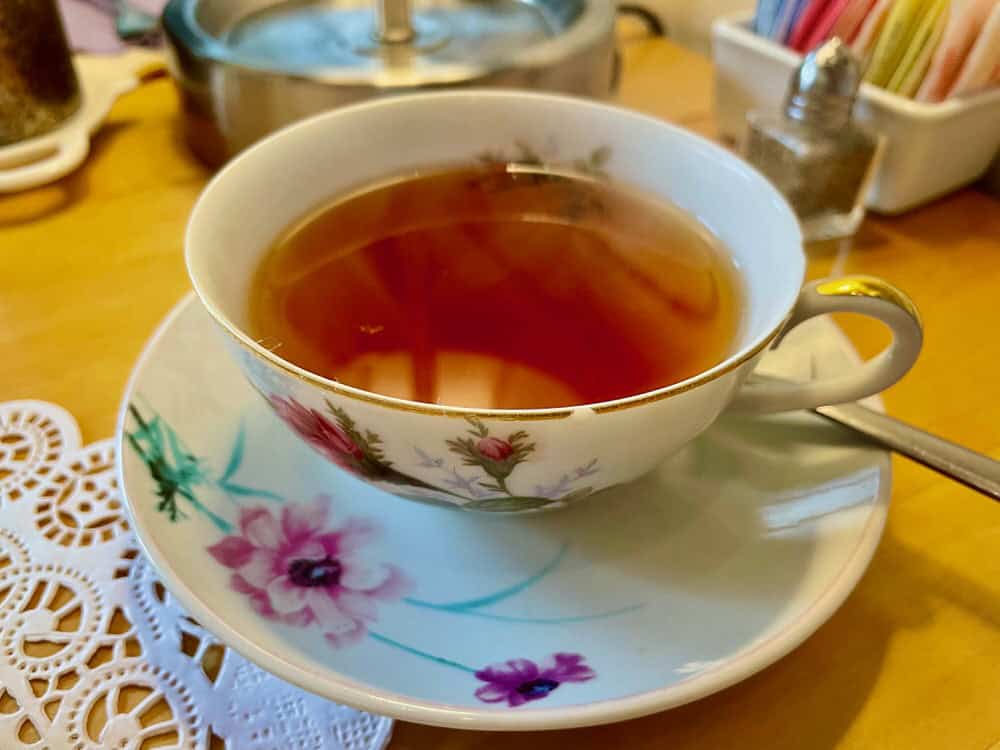
Of course, you can’t round up the best of British foods and not mention tea.
The Brits were introduced to tea in the 17th century and they’ve never looked back. They most commonly drink strong black tea like Twinings’ English breakfast, Tetley’s, Yorkshire, or PG Tips, which are all blends of Assam, Ceylon, and Kenya teas. It’s extremely common to add milk and/or sugar to your tea; in fact, they look at you a little funny if you take your tea straight!
My personal favorite British tea is Lady Grey, which has the same flavors as Earl Grey, but more delicate and, dare I say it, drinkable. (Earl Grey can get awfully perfume-y.) On my last trip to London, I really struggled to find Lady Grey in the grocery stores, but I did manage to track it down in bulk at the Twinings flagship store on the Strand.
If you’re a coffee drinker – fear not. Coffee and espresso are very popular in the U.K. so you won’t have any problem tracking down your morning cup of joe.
14. Sticky toffee pudding
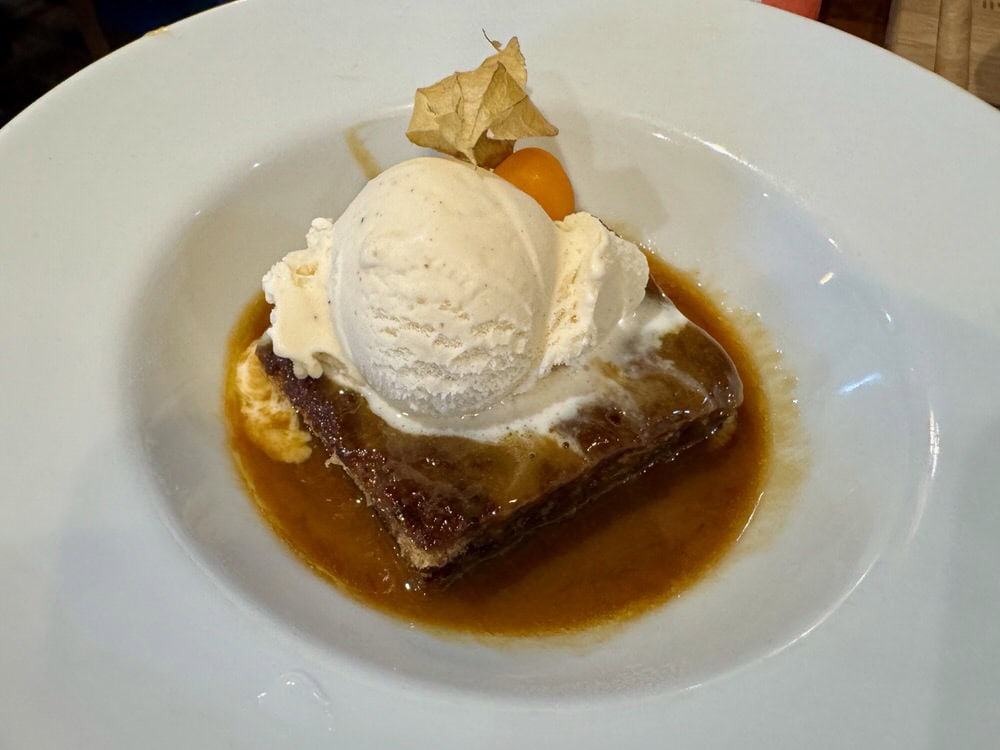
I’ll admit, I went on a bit of a sticky toffee pudding bender on my latest trip to England.
Also, if you retain anything from this blog post, I hope it’s that the Brits play hard and loose with the term “pudding.” In America, a pudding is strictly a milk-based dessert eaten with a spoon, but in the British Isles it can mean a breakfast sausage, a side dish to a roast dinner, or in the case of sticky toffee pudding, any dessert.
Sticky toffee pudding features a soft, warm date cake that’s drizzled with warm toffee sauce. The key difference between toffee and caramel sauce is that toffee sauce is made with brown sugar while caramel sauce uses white sugar. I only enjoyed my sticky toffee puddings with a vanilla ice cream, but it’s not uncommon for it to be served with custard or whipped cream.
If you want to make it for yourself at home, check out Smitten Kitchen’s recipe.
15. Cheese
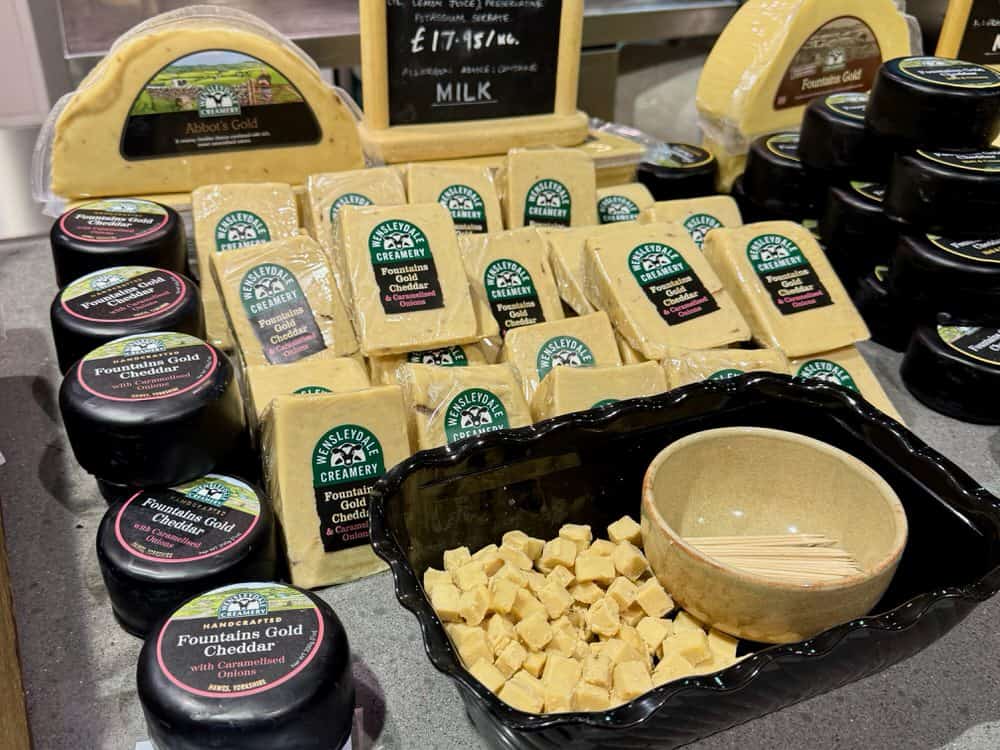
If there’s one thing that British do very, very well, it’s cheese.
After all, this is the birthplace of everyone’s favorite cheese: cheddar. Other cheeses worth sampling include stilton, Wensleydale, Cornish Yarg, Cheshire, Derby, Lancashire, and Red Leicester. While there are some exceptions, for the most part, the cheese are named after the region of the United Kingdom where they’re produced.
A favorite place to buy and sample cheese in London is Neal’s Yard Dairy in the Borough Market. They also have other shops around the city including in centrally located Covent Garden.
If you have the opportunity during your visit, I highly recommend getting some British cheese directly from the source. Our stop at the Wensleydale Creamery during our day touring through North Yorkshire was memorably delicious and our purchases there made great souvenirs.
16. Mincemeat pie
I’m not sure there is a British food that’s more confusing to Americans. Here’s the deal, if you went to an English butcher shop and asked for a pound of mince, they would give a pound of ground beef; what we often call hamburger. If you went to an English bakery and asked for a mincemeat pie, you’d be given an individual sized pie that’s filled with a compote of spiced dried fruit.
Especially popular around the holidays, you can find mincemeat pies in grocery stores and bakeries all over the U.K. The filling is made using a mixture of dried fruits – usually raisins, sultanas, currants, apples, and citrus peel -, warm spices like cinnamon and cloves, and traditionally a little beef suet, although modern mincemeat is generally vegan.
17. Scones with clotted cream
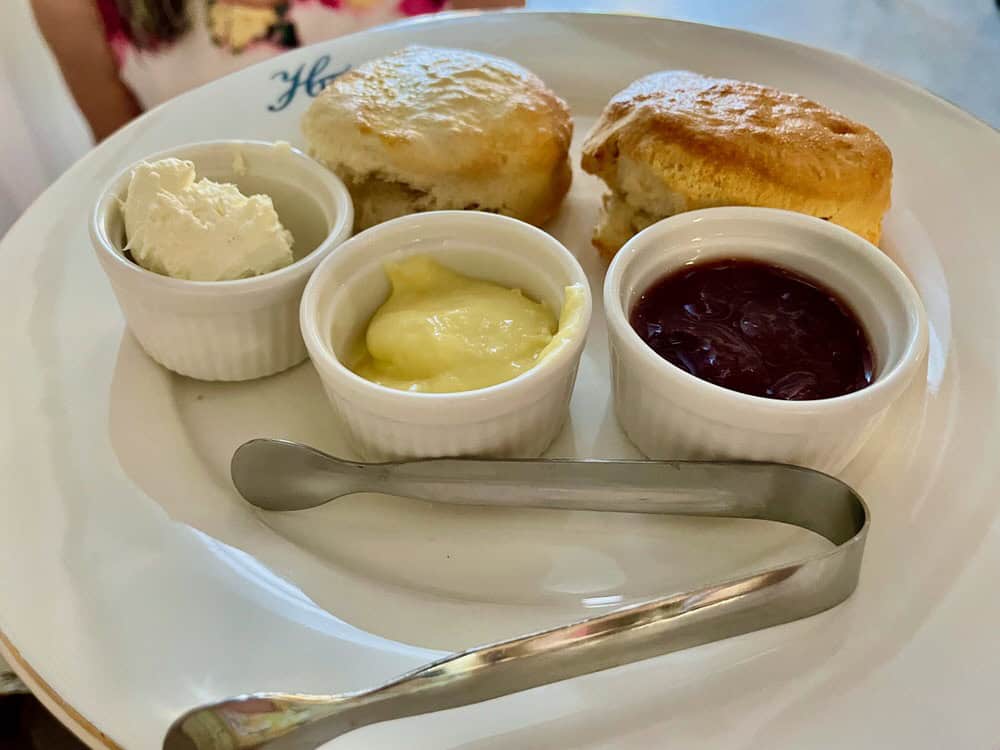
Scones are basically just a baking powder biscuit, but they’re lightly sweet and have a lower fat content. Unlike North American scones which we frequently cut into wedges and shove full of additions like chocolate, berries, cheese, or herbs, British scones are always round. The only additions you can expect in British scones are some currants.
You can find scones all over in the British Isles; at bakeries, in grocery stores, and of course, as a staple on a British tea tray. For the most delicious way to enjoy a scone, indulge in the English tradition of cream tea, which is popular afternoon pick-me-up.
For cream tea, split your scone in half and top it with some jam (strawberry is most common) followed with a healthy dollop of clotted cream. Clotted cream originated in Devonshire and uses a heating process to create luscious, spreadable cream that’s a consistency past whipped cream but pre butter. Wash down with your tea of choice and repeat as necessary.
The best way to get your hands on some scones in London is to book an afternoon tea. The Ritz, Harrods, and the Shangri-La in the Shard are all great options. You’ll enjoy a tea of your choosing and be served a light meal of finger sandwiches, scones with jam and clotted cream, and a selection of little cakes, cookies, and sweet treats.
FYI: As a Americans, we love calling afternoon tea “high tea,” but high tea actually just means “supper.” Basically, an afternoon tea is a “low tea” because it’s often eaten in a garden or lounge in “low chairs” while a high tea is a meal served at a table with high backed chairs.
18. Crumble
The Brits love a sweet treat and a popular dessert you’ll see on many pub and restaurant menus is the crumble.
This simple dessert features a fruit filling of berries, stone fruits, apples or basically whatever you like. (In the U.S. we’d generally call these “crisps.”) The filling is topped with a sweet buttery oat and/or nut topping and baked until the fruit bubbles and the top layer browns. It’s often served warm with ice cream, custard, or whipped cream.
Currently the most famous crumble in the U.K. is Humble Crumble which serves individually sized crumbles that can be customized with various toppings like nuts, crushed meringue, and even rose petals. You can most famously visit Humble Crumble in the Borough Market, but they have several shops around London, including in Camden and Covent Garden.
Bonus: My favorite U.K. grocery store items
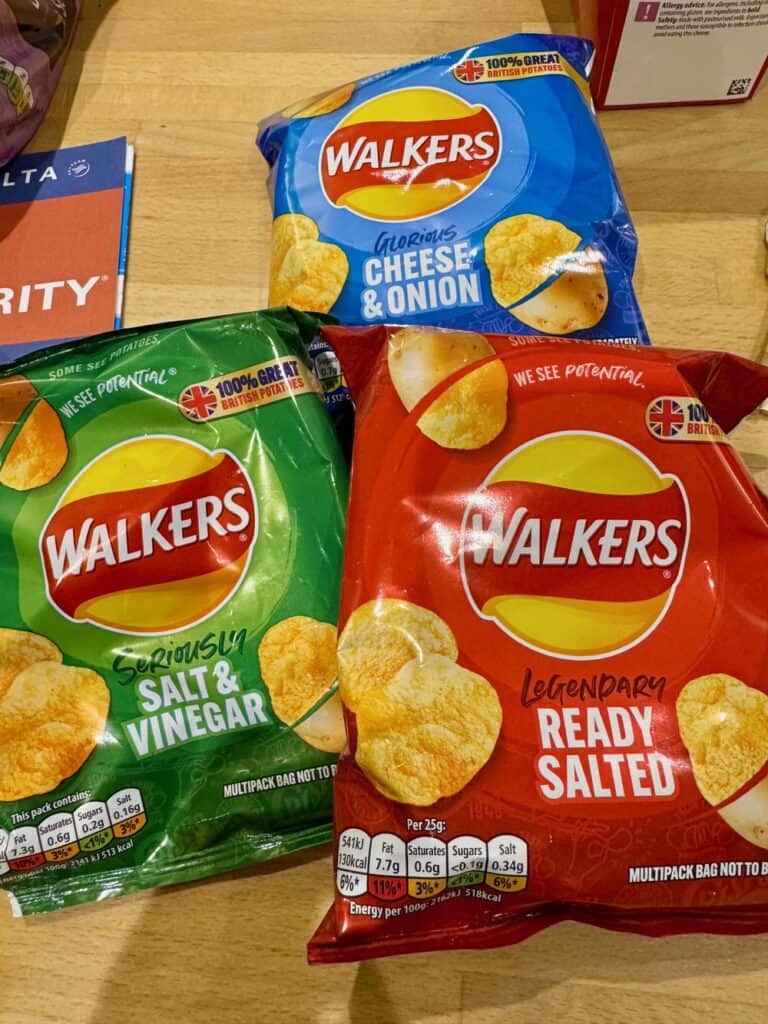
Maybe this is embarrassing to admit, but as someone who has lived in both Ireland and England, the first place I want to go when I arrive to the British Isles is the grocery store. There are just so many British grocery items that are uniquely delicious and incomparable to anything you can get in the states.
If you ran into me at the local Tesco and Sainsbury’s, here’s what you’d spy in my shopping basket.
- McVitie’s Hobnobs – I have yet to find a person who doesn’t rave about these crispy oaty cookies topped with a thin layer of milk chocolate. Absolutely stunning with a mug of tea.
- Starbars – Any Cadbury chocolate is a very good piece of chocolate, but my all-time favorite Cadbury chocolate bar is the Starbar. With chocolate, caramel, and peanuts, these are basically an elevated Snickers bar without nougat and with more crunchy peanuts.
- Malteasers – Yes, these are just chocolate covered malted milk balls, but they just hit different. I once ate an entire sharing size bag of these in an Irish movie theatre.
- Ribena – The Brits love blackcurrant flavor and this blackcurrant juice based drink really stands out as a uniquely British treat. While there are ready drink Ribenas out there, most commonly you buy this as a concentrate and then mix it with water to taste. To be clear, you don’t make a pitcher of Ribena and keep in your fridge like you would with Kool-Aid or lemonade here in the States. You mix up each individual serving.
- Meal deals – England runs on sandwiches. Pop into any grocery, convenience, or even drug store and you’ll find coolers lined with pre-made sandwiches that have been cut in half and packaged in flat-bottomed triangle shaped containers. Most grocery stores, along with Boots (a chain drugstore), offer a meal deal which includes your choice of sandwich, crisps, and drink for a low price of about £5. It’s a great, cheap lunch option!
- Walkers Crisps – I don’t know what it is, but the British make exceptional potato chips. (Maybe it’s the potatoes?) The cheese and onion kind are my favorite, because you also get classic flavors like salt and vinegar, or the often commented on, prawn cocktail flavor. (You’ll still need to head to Canada to get your hands on some ketchup chips.)
- Jacob’s Cream Crackers – These are actually Irish, but they’re ubiquitous in British grocery stores. It’s hard to imagine a less exciting cracker; think a very large saltine but without being salty or flaky. I don’t know why I love them so much, but you cannot beat them a slice of aged cheddar cheese.
Conclusion: Eat your way through England with relish
It won’t take you long after arriving in England to realize that the squawking about English food being bad is much ado about nothing. As this list shows, from breakfast to dinner and everything in between, you can be sampling uniquely delicious British food all day long.
While some British delicacies like beans with breakfast, jellied eels, and mincemeat pie can take a little getting used to, dishes like fish and chips, sticky toffee pudding, or chicken tikka masala are instant hits with foreigners. Don’t forget to wash down your meal with a favorite British beverage of choice like a cask ale, gin and tonic, or a strong cup of black tea.
British food traditions like Sunday roast and afternoon tea are musts for the curious culinary travelers as well. You can’t beat heading into the local pub for a meat pie and a pint to close out a day of sightseeing.
If you follow this list of what to eat in England, I think I’ll convert you into an English food lover as well. You’re sure to have a delicious visit. Happy eating!
 |
 |