This post may contain affiliate links. When you purchase something through these links, I receive a small commission that helps me create this blog’s content. There’s no extra cost to you. Read my privacy policy to learn more.
Published 2/10/2026
Complete Guide to the Best Things to do in London’s Notting Hill Neighborhood
Of all of London’s many neighborhoods and boroughs, Notting Hill may be the easiest to love.
This west London community’s slightly quirky village vibe has been its hallmark long before the famous 1999 Hugh Grant/Julia Roberts romcom film, Notting Hill, cast this fun (and funky) neighborhood in a global spotlight.
My personal love affair with Notting Hill started on my very first trip to London when I spent 10 days based in a Pembroke Grove hotel near Notting Hill Gate. On my most recent London visit, I didn’t hesitate to make Notting Hill our base for my spouse’s first time in England.
In this guide, I’m spilling on everything that makes Notting Hill so special including the best things to do, famous streets and attractions (hello Portobello Road!), favorite restaurants and shops, and where to stay if you too decide to make this dynamic neighborhood your temporary London home.
Whether you’re wondering if Notting Hill is a good place to stay or just want to know if it’s worth including on your London itinerary, I’ve got you covered with tips, hidden gems, info on how to get to Notting Hill, and even a self-guided Notting Hill film location walking route to use during your visit.
Let’s get exploring charming Notting Hill!
What Notting Hill is known for
- Portobello Road
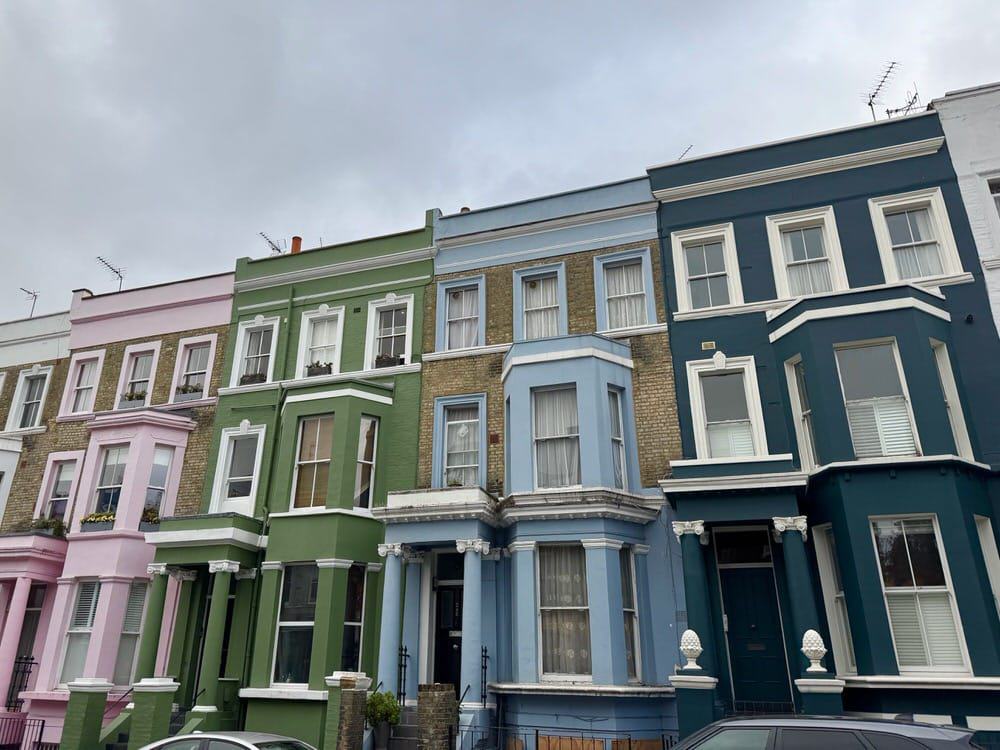
- Colorful houses
- Independent shops and restaurants
- Green spaces
- 1999 rom/com Notting Hill filming locations
What so special about Notting Hill?
No doubt the 1999 film of the same name is a huge reason why Notting Hill remains one of London’s most famous neighborhoods. But long before the neighborhood was irrevocably linked with Hugh Grant and Julia Roberts, there was plenty to recommend Notting Hill to London visitors and residents alike.
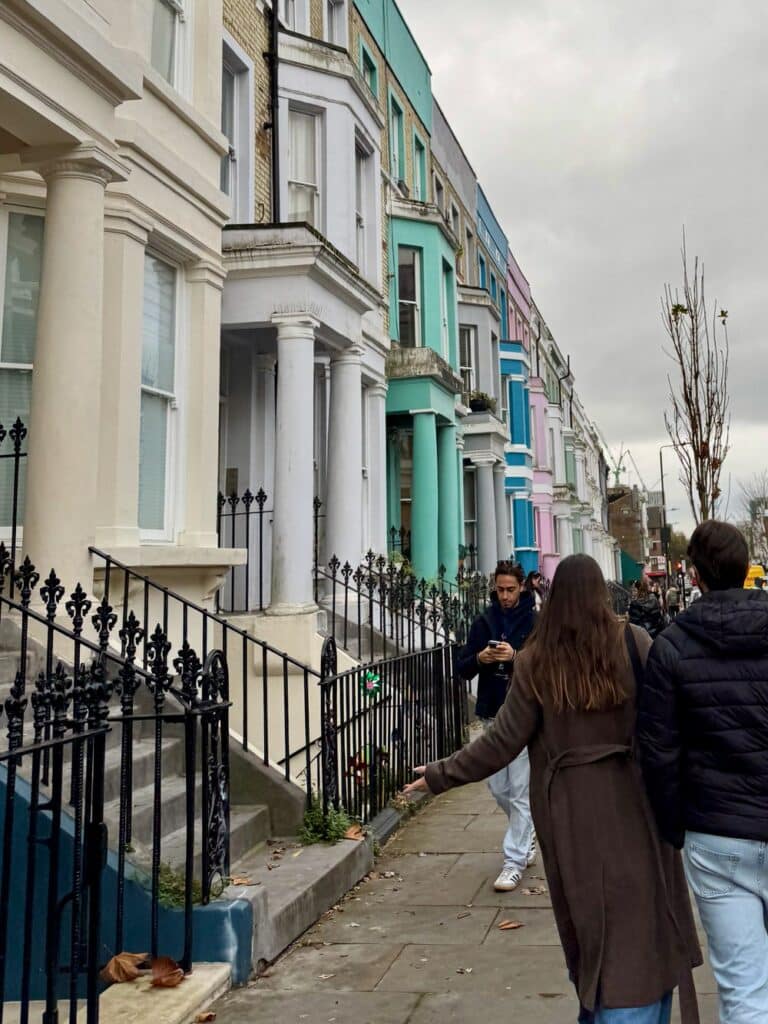
This is the neighborhood where residents think nothing of painting their typical Victorian terrace houses all the colors of the rainbow and that hosts a Caribbean carnival inspired event each August. There were also some issues with race riots in the 1950s when this neighborhood was essentially a slum, but you know, onward and upward!
Notting Hill has somehow managed to maintain its quirky, independent vibes while still offering access to familiar and convenient chains. You’re never more than a 5–8-minute walk to a little commercial district where you can grab a pint with locals or a Starbacks, pick up some groceries or drop off your dry cleaning.
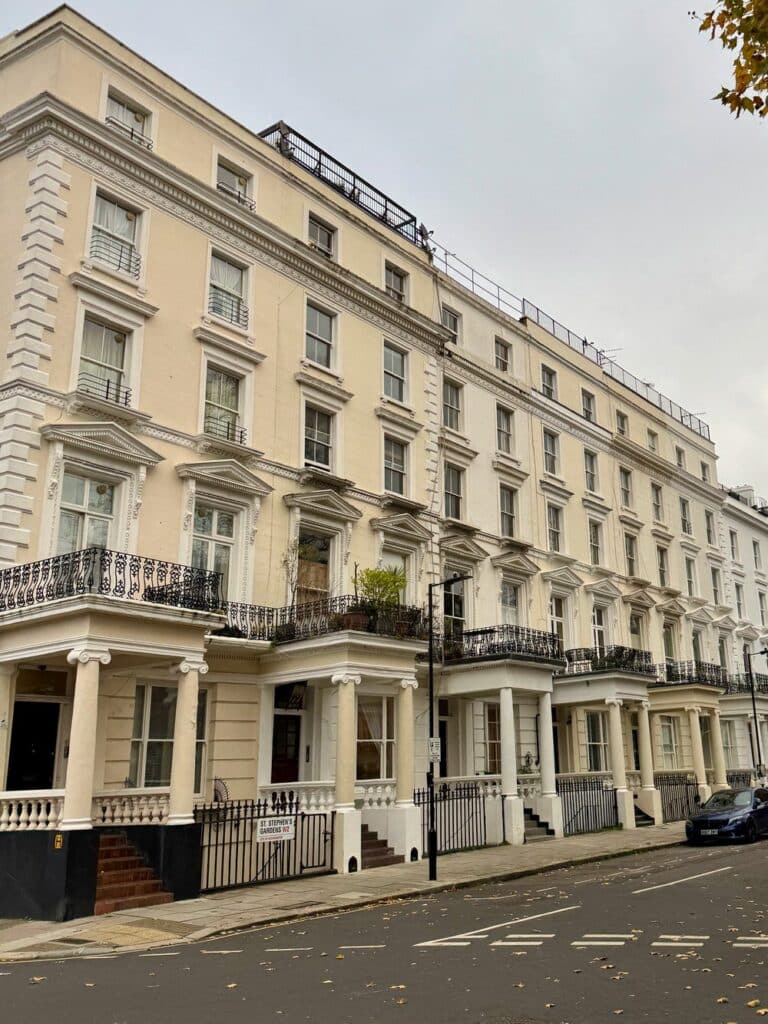
With its high concentration of schools and a mixture of Georgian and Victorian townhouses, mews houses (converted stables), and 20th century housing projects you might be tricked into thinking this is a middle-class neighborhood. But one peek at Notting Hill’s house prices tells you that residents are definitely affluent, just not particularly posh.
This is a safe, clean neighborhood where I thought nothing of walking the dark, quiet streets after a night of theatre. Private gardens dot Notting Hill’s residential area and you’re within walking distance of Kensington Gardens and Holland Park. A quick Underground ride gets you to some of London’s most famous sites in minutes.
Is there actually a hill?
Yes there is! Although I always find it difficult to sense topography in urban settings, you’ll notice a decided hill starting on Portobello Road that climbs towards Ladbroke Grove. St. John’s Church, a Victorian stone Church of England parish church, sits on the hill’s pinnacle at 152 Lansdowne Crescent.
 |
 |
Best Things To Do in Notting Hill
Portobello Road Market

Far and away, Portobello Road is Notting Hill’s largest attraction. If you’re familiar with the Disney classic Bedknobs and Broomsticks, you might know this as “the street where riches of ages are stowed.”
Portobello Road is a north/south Notting Hill thoroughfare that originally connected London residents with country farms which has hosted a farmer’s market since Victorian days. Antique dealers move in during the 1940s and today you can buy antiques, food, handicrafts, junky souvenirs, and basically anything else under the sun. A dedicated clothing market, known as Portobello Green Market, can be found near the Westway underpass.
You might start noticing vendors as early as the intersection of Westbourne Grove if you’re coming from the south. The stalls continue for more than a half mile to the intersection with Golborne Road. Stalls start opening around 8 a.m. and usually close between 5-6 p.m.
Saturday is the only day of the week when all vendors are set up and is easily the market’s busiest day. I wouldn’t worry too much about timing your visit perfectly. This is also where you’ll find the neighborhood’s highest concentration of cafes, restaurants, and shops, there’s always something fun to get up to on Portobello Road.
Most people seem to access the market from the south via Notting Hill Gate, which gives you a nice stroll through the neighborhood. However, if you want to get right into the market action (and avoid some of the opportunistic souvenir/vape shops), I recommend disembarking the Tube at the Ladbroke Grove stop on the Hammersmith & City/Circle Line.
Bookshops
When Richard Curtis made the romantic lead – William Thacker – in his Notting Hill screenplay a bookseller along Portobello Road, he didn’t do so just because it’s such a humble, wholesome profession. Notting Hill actually has a fairly high concentration of independent bookshops.
William’s bookstore was inspired by the Notting Hill Bookshop which is still going strong today at 13 Blenheim Crescent. Another favorite place to browse for your next read in Notting Hill is Daunt Books at 21 Kensington Park Road.
There is no actual Notting Hill Travel Bookshop, although you won’t struggle to find the storefront used for William’s bookshop in the film. The space is now a run of the mill souvenir shop with a Notting Hill film poster plastered in its front window.My favorite Notting Hill bookshop is Books for Cooks (4 Blenheim Crescent). As the name implies, this shop specializes in cookbooks. They even have a test kitchen at the back of their little store where they try out recipes from the books on their shelves!
The Coronet
One of Notting Hill’s most beloved buildings is The Coronet, an 1898 theatre located near Notting Hill Gate on Bayswater Road. Notting Hill residents have rallied around this beautiful historic theatre several times to save it from demolition during various road construction projects and other neighborhood “revitalization” initiatives.
Originally a theatre where King Edward VII was a frequent audience member, the space has actually spent most of its 130-year history as a cinema. In fact, you might remember it as the place in Notting Hill where William has to wear his prescription scuba goggles to watch a movie with Anna after he misplaces his glasses!
The space has undergone a major revitalization in the last decade or so and now features a steady lineup of films, dance, theatre, talks, exhibitions and more. There’s sure to be something going on that warrants you swinging during your time in Notting Hill.
If you want to have the fun of going to the movies in Notting Hill wearing prescription scuba goggles, head to the Electric Cinema, a 1910 movie theatre right on Portobello Road.
The Tabernacle
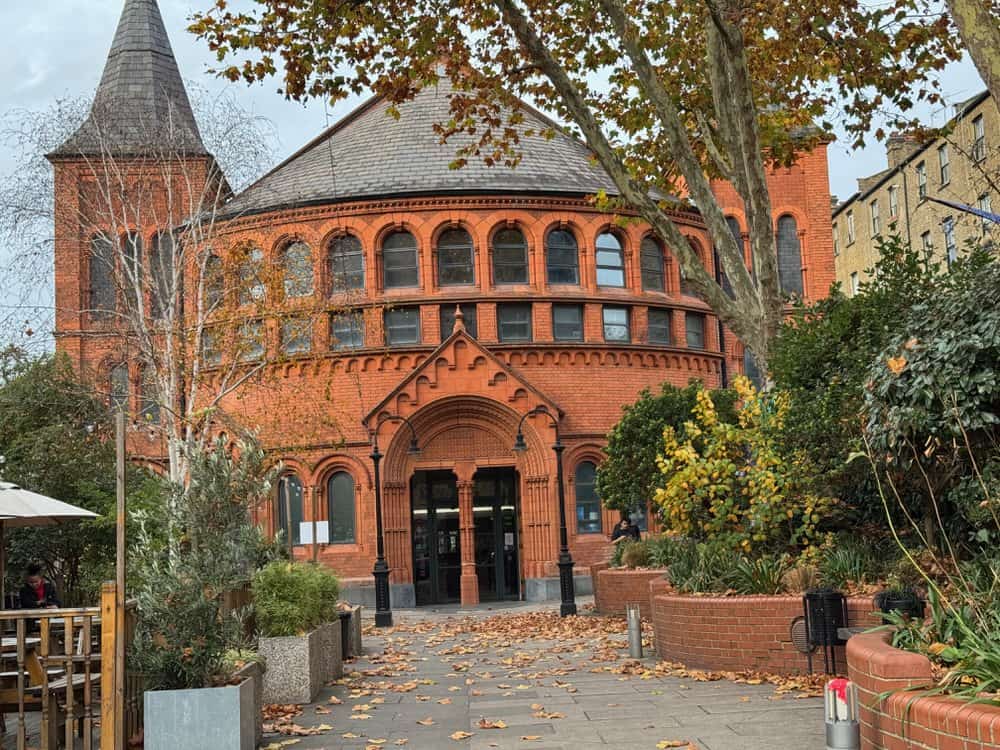
Another event center in Notting Hill is the Tabernacle. This beautiful red brick building once known as “The Taj Mahal of North Kensington” was originally a non-sectarian evangelical Christian church in the 1800s and transitioned into community art centre in the 1970s.
Located in Powis Square, just east of Portobello Road, the space is used for talks, films, theatre performances, concerts, and more. It’s also where you’ll find community dance and music classes. A restaurant and bar operate on site serving up food and drink with Caribbean flair every day.
Museum of Brands
Notting Hill is no South Kensington; you’re not going to find many museums here.
Appropriately, the one museum that calls Notting Hill home is a quirky celebration of consumerism. The Museum of Brands tells the story of the evolution of Britian’s consumerism from Victorian times to modern day. Expect a lot of vintage product packaging, advertisements, and magazines as you move through the museum’s “Time Tunnel.”
Although the museum’s founder has a special interest in grocery store items, the museum focuses on how history has treated toys, fashion, cars, travel, and all other consumables in British society. While it might not be the most interesting museum for non-Brits, if you have a soft spot for marketing, you’ll definitely want to check it out.
Grand Union Canal
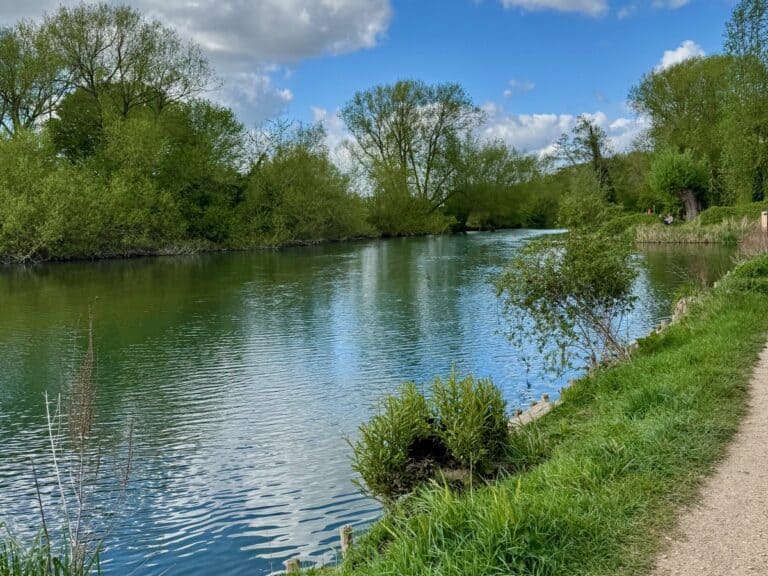
I don’t associate Notting Hill with water, but the Grand Union Canal – which connects to the more famous Regent’s Canal – actually forms the northern boundary of the Notting Hill neighborhood.
In fact, our vacation rental host recommended heading to Little Venice and taking a canal boat to Camden Lock as one of her top activities to do in east Notting Hill. (I’ve taken a canal boat from Camden Town to the London Zoo before and I’m not sure the experience even cracks my top 25 London experiences so needless to say, we ignored this well-meaning recommendation.)
But I was intrigued to find out you can actually go paddleboarding and kayaking on the canal. Just head up Ladbroke Grove to Active 360 Canalside Activity Centre. You can rent paddleboards, kayaks, and canoes for a self-guided canal adventure or join a tour or plastic clean up paddle to make the London waterways nicer and cleaner for everyone.
Favorite Restaurants
 |
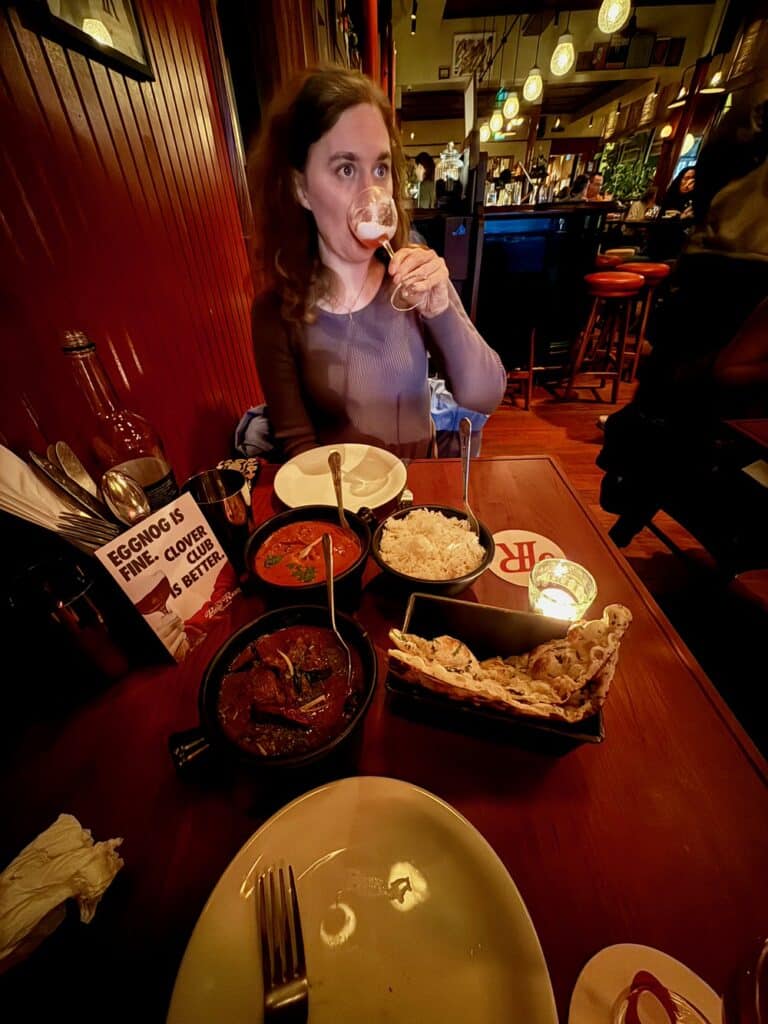 |
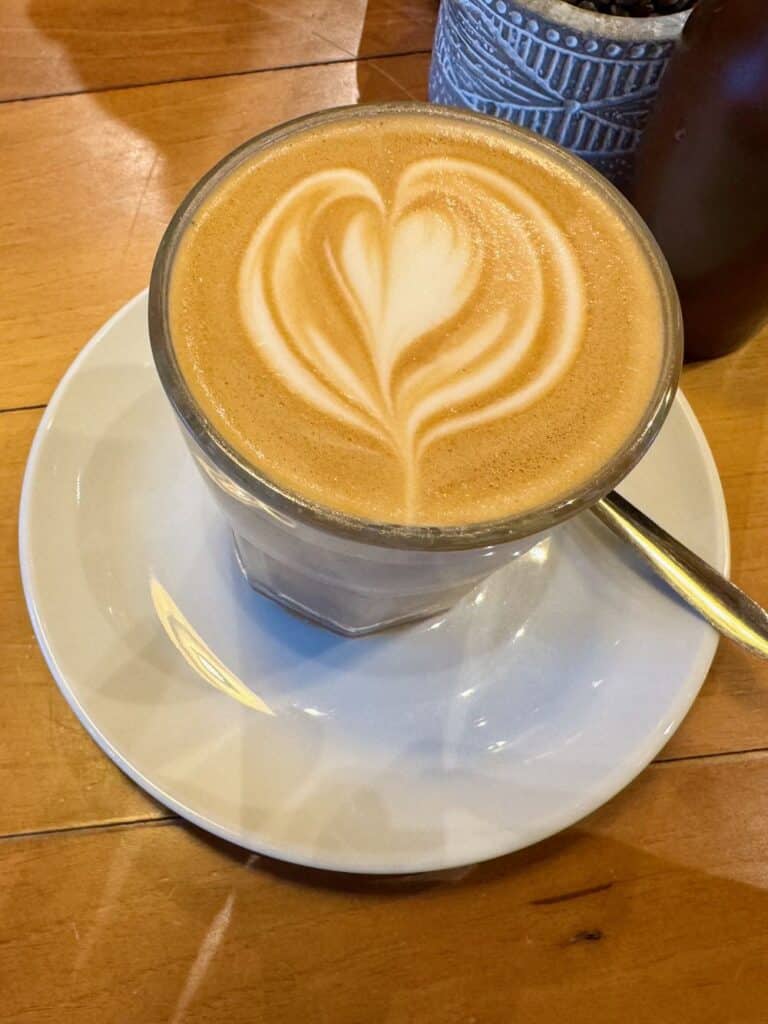
One of the best things about visiting, staying, or living in Notting Hill is its thriving restaurant scene. We barely scratched the surface during our visit, but here were some of our favorite places we grabbed a bite.
Pepperon Café – We loved the coffee and breakfasts here. It’s a great brunch spot. An added bonus is that you’ll likely be greeted by a friendly chow dog at the door. (72 Lancaster Rd)
The Cow – This gastropub is a very popular local hangout with a petite upstairs dining room. The oysters were amazing! (89 Westbourne Park Rd)
The Pelican – Dining in this atmospheric Victorian pub was like stepping back in time, although both the drink and food selections are modern and inspired. (45 All Saints Rd)
Dishoom Permit Room – Easily one of the best meals we ate in London. It’s recommended that you order a bunch of different dishes to share since dishes come out of the kitchen as they’re finished. Next time I’ll hit them up for breakfast! (186 Portobello Road)
Tonkotsu – We loved this bustling little ramen counter. The perfect spot was a cozy lunch in the heart of the Portobello Road bustle. (7 Blenheim Crescent)
The Ledbury – While we didn’t dine here on our visit, this Michelin-starred eatery known for its tasting menus and wine list is considered one of Notting Hill’s top restaurants. (127 Ledbury Road)
Other places on our list that we didn’t get a chance to try:
- Sunday in Brooklyn
- Granger and Co.
- Med Sallah Viet
- The Good Oak
- Buns from Home
Famous Streets
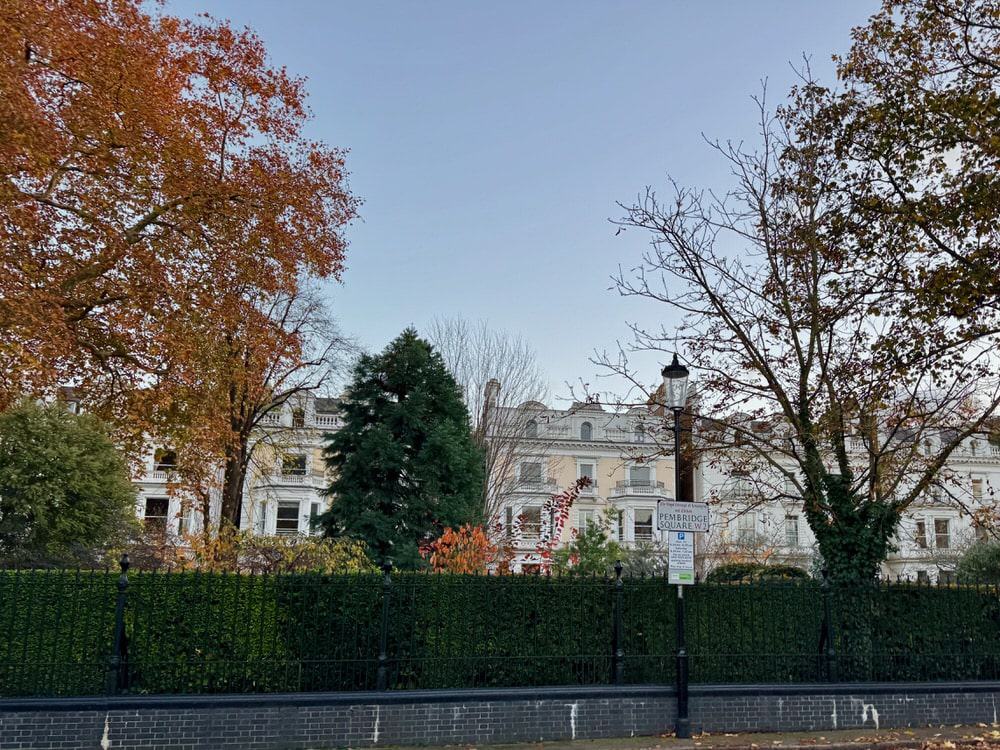
Portobello Road – If you only walk down one street in Notting Hill, you want it to be this one. One of the most famous roads in all of London, Portobello with its antique dealers, market vendors, colorful houses, and independent shops and restaurants is a perfect slice of Notting Hill life.
If you’re looking for Notting Hill streets lined with colorful houses, check out Westbourne Park Road, Elgin Crescent, and St Lukes Mews. Please remember that these are real people’s homes. A quick snapshot isn’t going to ruffle any feathers, but don’t do a whole photo shoot in front of someone’s front door or even worse, walk through their gate and pose on their steps.
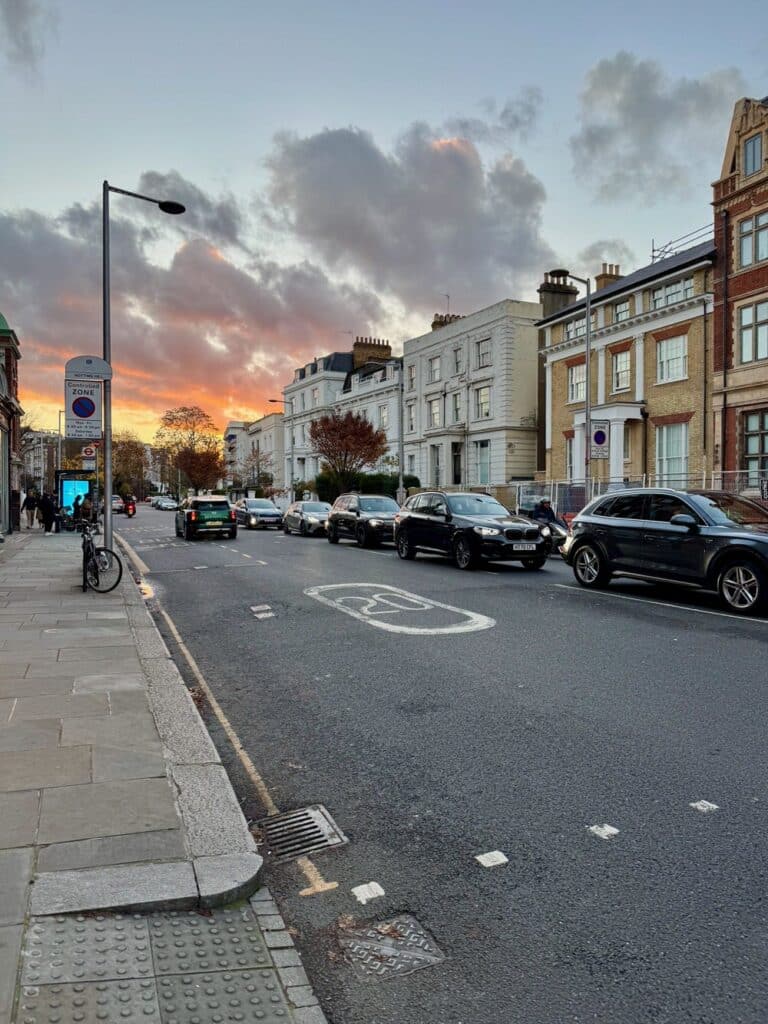
Bayswater Road – This busy road was originally built by the Romans and forms the southern boundary of Notting Hill. It provides access to Kensington Gardens and with its high concentration of commercial chains, it’s the best place to head for a big grocery shop. You’ll also find several embassies, including Czechia’s, on the road’s south side.
Ladbroke Grove – This lovely tree-lined residential road takes you past the highest concentration of Notting Hill’s famous private community gardens. Homeowners around these green spaces all have keys to access these private parks.
The Westway – A major elevated motorway, the Westway runs along the northern edge of Notting Hill. While I’m not sure it’s worth renting a car in London for this, Notting Hill residents consistently say it’s one of the best places to catch a London sunset!
Famous residents
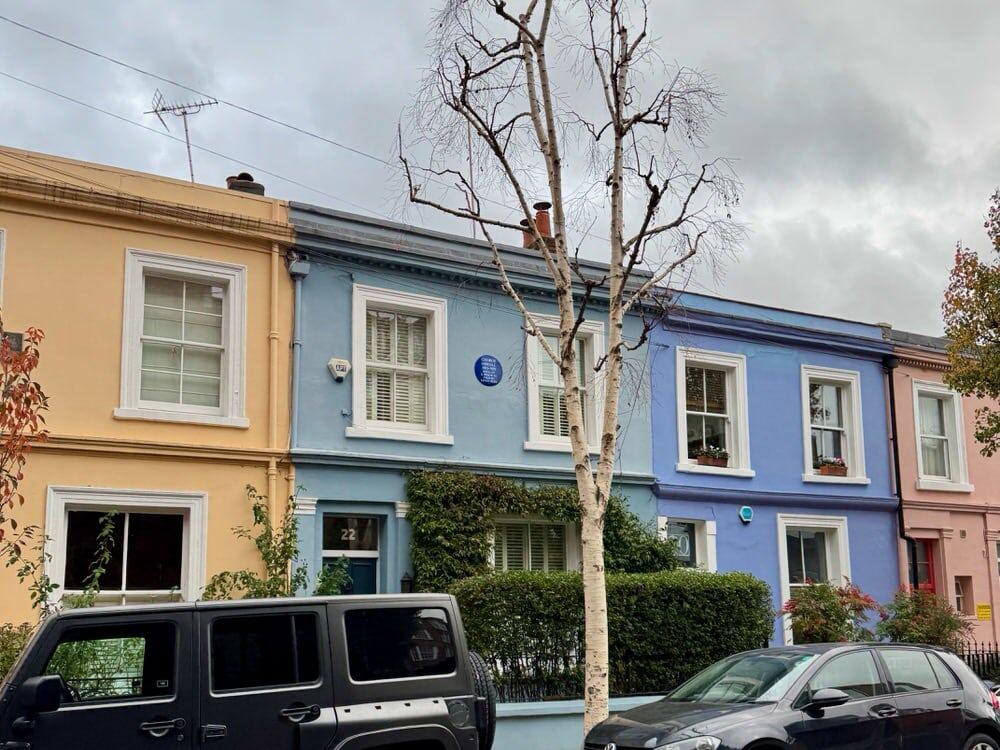
As you walk around Notting Hill, you’ll spy plenty of blue plaques near the second story of homes, indicating that someone famous once lived at this residence. A whole host of disparate individuals have called Notting Hill through the years – a true reflection of the neighborhood’s affluent Victorian beginnings and post-WWII descent into slums before drastic gentrification in the 1980s.
- Brian Jones of the Rolling Stones lived near the Tabernacle on Powis Square in early 1960s.
- Jawaharlal Nehru – the first prime minister of India – lived at 60 Elgin Crescent as a young adult.
- George Orwell – author of 1984 – spent the winter of 1927 at 22 Portobello Road.
- Emmeline and Sylvia Pankhurst – the famed British suffragettes – lived at 50 Clarendon Road.
- Sir William Ramsay – the chemist who discovered noble gases – spent 15 years at 12 Arundel Gardens.
How to get to Notting Hill

Notting Hill is located in the northwestern corner of central London. If you’re visiting Kensington Palace or Gardens, you easily wander into this neighborhood on foot.
Closest train station
If you’re arriving to the U.K. via Heathrow Airport, take either the Elizabeth Line or Heathrow Express to Paddington and then make a quick connection via the London Underground/Tube to reach Notting Hill.
Underground stops
Notting Hill Gate (Central, District, and Circle Lines): Most convenient underground station for visiting central London’s main attractions.
Westbourne Grove (Hammersmith & City and Circle Lines): Connect to popular train stations including Paddington, Euston, and King’s Cross
Ladbroke Grove (Hammersmith & City and Circle Lines): Closest stop to Portobello Road Market
Bus Routes
- 7 – Hammersmith to Oxford Circus via Paddington Station
- 23– Westbourne Grove to Aldwych via Piccadilly Circus
- 27 – Hammersmith to Chalk Farm, via Paddington Station
- 28 – Wandsworth to Kensal Rise, via Kensington High Street
- 52 – Willesden to Victoria, via Notting Hill Gate and Kensington High Street
This is just a handful of the many, many London bus routes which pass through Notting Hill.
Self-guided Notting Hill film locations walking tour

When I lived in London, my housemates and I once spent a delightful Sunday walking around Notting Hill tracking down film locations connected with the famous Hugh Grant and Julia Roberts 1999 romcom. Despite the movie being more than 25 years old, the film has had remarkable staying power and you’ll still find many nods to it throughout the neighborhood, particularly along Portobello Road.
To follow this route through some of the film’s most iconic scenes, I recommend taking the Tube to Ladbroke Grove on the Hammersmith & City/Circle Line and then meandering south through the neighborhood before reaching Notting Hill Gate. Don’t forget to stop for a cappuccino (or orange juice if you want to “go crazy”) at one of the many coffee shops you’ll pass!
Portfolio – This gift shop at 105 Golborne Road on the far north end of the Portobello Road Market was the location of Max’s failed restaurant. It’s really not a great place for a restaurant . . . .
Notting Hill Travel Bookshop – There is no Notting Hill Travel Bookshop, but the filming location for William’s store (142 Portobello Road) is now a gift shop with a large Notting Hill movie poster in the front window. To visit the shop that actually inspired the movie’s bookstore, head to The Notting Hill Bookshop (13 Blenheim Crescent).
Blue Door – The famous (infamous?) blue door that leads to William and Spike’s flat is located at 280 Westbourne Park Road. Sadly, you’ll know you’re in the right place when you spot the Starbucks on Portobello Road.
214 Westbourne Park Road – While this is now a Poke House restaurant, in the late 90s it was the vacant property where William douses Anna in orange juice for their meet-cute.
Lansdowne Road – William’s friends, Bella and Max, live in one of a row of colorful houses on Lansdowne Road. The houses are repainted frequently, so don’t expect the same colors as you see in the film!
Rosmead Gardens – This is indeed a private garden. I do recommend reenacting the famous “whoops-a-daisy” break-in scene for a photo. However, keep your clamoring around the gate brief and obviously don’t actually climb into the garden. (How would you get out?)
The Coronet – Located at the southern end of the Notting Hill neighborhood on busy Bayswater Road, this Victorian theatre is where William goes to the movies wearing his prescription scuba goggles.
Where to stay in Notting Hill
Most Notting Hill hotels are located in the southern part of the neighborhood near Bayswater Road and the northwest corner of Kensington Gardens. Some of your best options in this area are:
For lodging more centrally located to Notting Hill hot spots like Portobello Road, look into:
I know local residents often aren’t big fans, but I think Notting Hill is the perfect place to stay in a vacation rental and that’s exactly what we did.
With any London neighborhood there’s always some confusion on where the official boundaries are. Considering Notting Hill’s name recognition, you always want to double check that a vacation rental branding itself as a “Notting Hill” location is actually reasonably close to the neighborhood’s best attractions.
Personally, when looking at vacation rental properties, I define Notting Hill as the area north of Bayswater Road, south of the Westway, and east of Clarendon Road. As you move east, Notting Hill blends in almost imperceptibly with neighboring Bayswater which in turn blends into Paddington which are lovely places to stay in and of themselves, but definitely not Notting Hill.
 |
 |
Conclusion: Experience the best of Notting Hill
With great access to London’s extensive transportation network and a fun, funky village vibe that sets itself apart from any other part of London, I think that Notting Hill is the perfect place to base your next trip to England’s capital.
Beyond its best known attraction, Portobello Road Market, Notting Hill offers a thriving art scene as well as countless independent shops and restaurants. If you’re a fan of the popular 1999 romcom named for the London neighborhood, indulge yourself in tracking down some of the most iconic filming locations including bookshops and the infamous blue door.
I hope this guide to Notting Hill helps you make the very most out of your time in this vibrant London neighborhood. You could truly spent your whole life in Notting Hill (and some people do!) and still find delight and hidden gems.
If I missed any other questions you have about what to do and see in Notting Hill, feel free to email me and I’ll get right back to you and add my answer to this post.
 |
 |