

This post may contain affiliate links. When you purchase something through these links, I receive a small commission that helps me create this blog’s content. There’s no extra cost to you. Read my privacy policy to learn more.
Published: 3/18/2025
What Places To Put On Your Normandy Trip Itinerary
If you’re considering a trip to Normandy, but not sure what to do in this French region offers, I’m sharing all my favorite things to do here from my recent trip through northern France in November 2024.
While not quite as popular as Paris and the French Riveria, Normandy features prominently on many Americans’ bucket lists. Accessible from Paris in about a 1.5 hour train ride, Normandy is an easy region of France to explore and fall in love with. It’s also home to the second most popular tourist destination in all of France: Mont St. Michel. (Paris is #1.)
For many Americans, Normandy is sacred land. Thousands of Americans fought and lost their lives in World War II’s Battle of Normandy. Even if you don’t personally a connection to Normandy, you probably know someone who does. Case in point: two of my great-uncles fought here; one of them was killed and is buried in the Brittany American Cemetery.
But World War II connections are far from the only reason to travel to Normandy. With medieval abbeys, delicious regional cuisine, charming pastoral villages, and dramatic coastline, you definitely don’t just have to be a Band of Brothers junkie to enjoy a trip to Normandy. (That said, I highly recommend watching that WWII miniseries before your travels.)
In this post, I’ll give you a list of what I consider the 10 best things to do in Normandy. I’ll also highlight some of my favorite cities, towns, and sites. This quiet corner of France is home to some of the most pivotal events in human history. I’ll show you how to follow in the footsteps of Vikings, conquerors, saints, Impressionist artists, and more.
Read on to discover what to do in Normandy, France!

10 Best Things To Do in Normandy
Need quick inspiration for your Normandy itinerary? Here’s a list, in no particular order, of my favorite things to do in Normandy.
- Walk on the D-Day Beaches
- Explore Rouen’s medieval Old Town
- Hike out to Mont Saint-Michel
- Explore the Cote D’Albatre
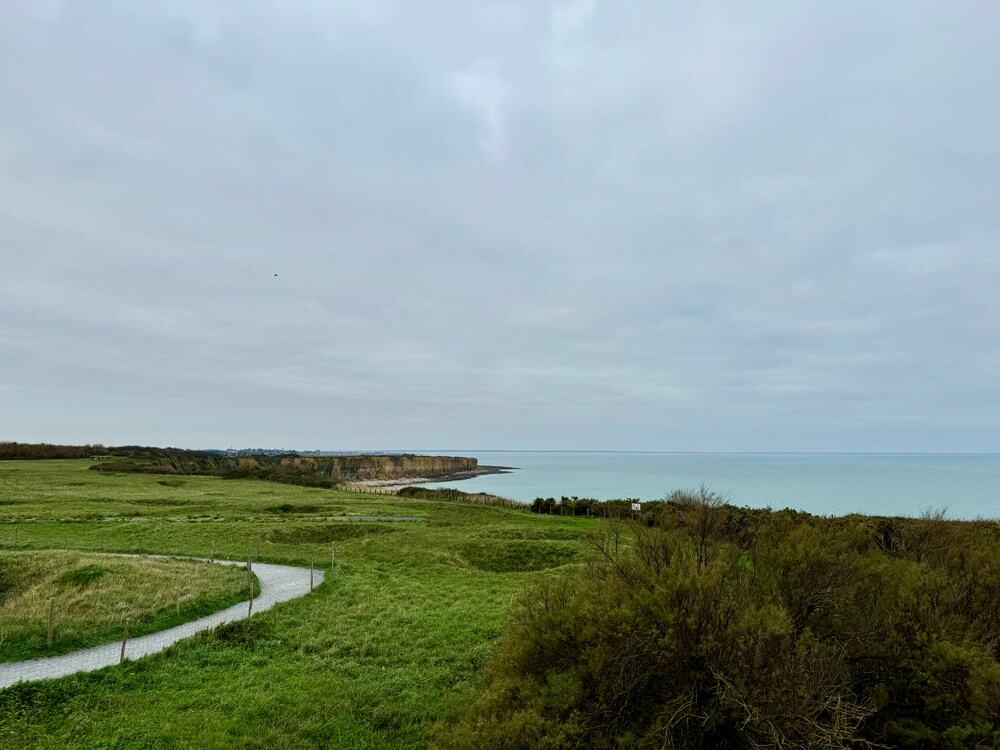
- Go to Pointe du Hoc
- Enjoy the regional cuisine
- See the Bayeux Tapestry
- Wander around Honfleur’s Le Vieux Bassin
- Visit Claude Monet’s home in Giverny
- Pay your respects at the Normandy American Cemetery
What To Do in Normandy, France
1) Visit the D-Day beaches
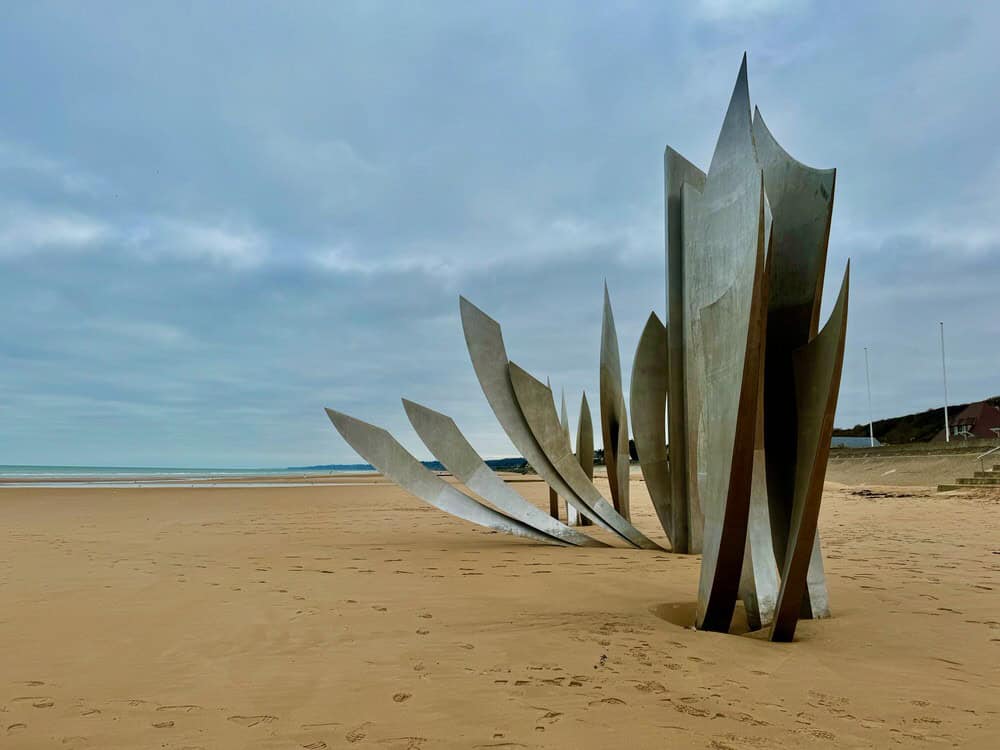
If you’re an American considering a trip to Normandy, your travels were probably somewhat inspired by the D-Day landing beaches and the Normandy American Cemetery. Honestly, I can’t imagine traveling to Normandy and not seeing these sites. They’re truly some of the most poignant places you can visit as an American.
Depending on your interests, you can easily devote an entire day or even week to seeing Normandy sites associated with World War II. As you might expect, the area around the beaches is teeming with museums all claiming to give the definitive history of Operation Overlord and the Battle of Normandy. One of the most highly recommended is the Memorial de Caen.
I actually thought the best museum was the Normandy American Cemetery Visitor Center. There’s no admission fee and the exhibits are both informative and succinct. I especially appreciated the exhibit that shares the live stories of some of the servicemen and woman buried in the cemetery.
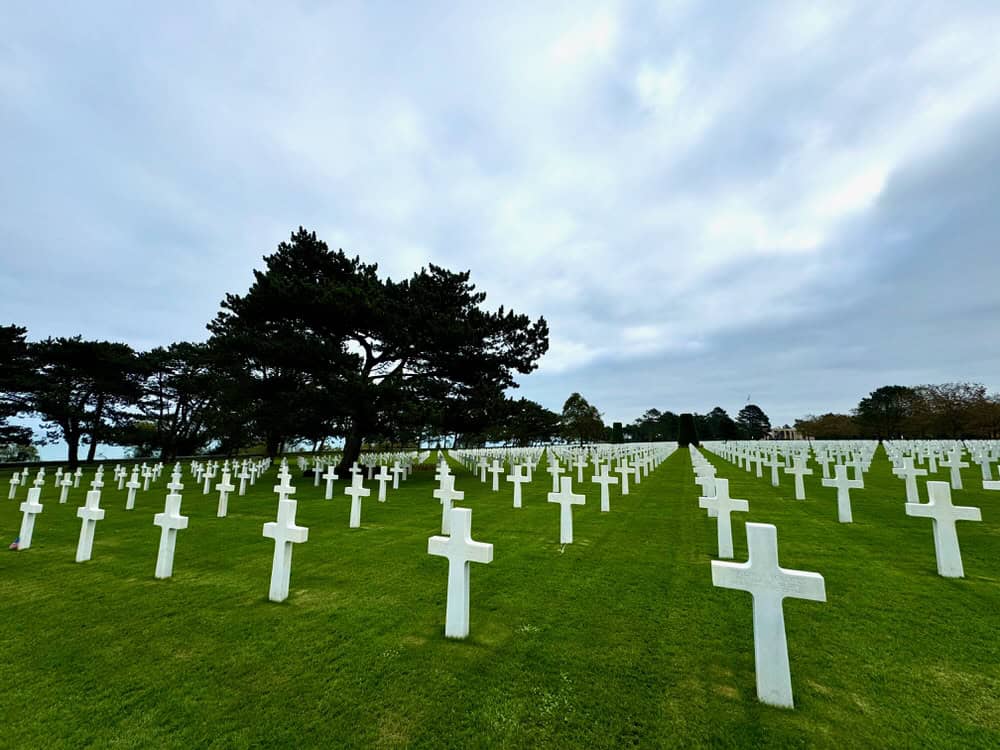
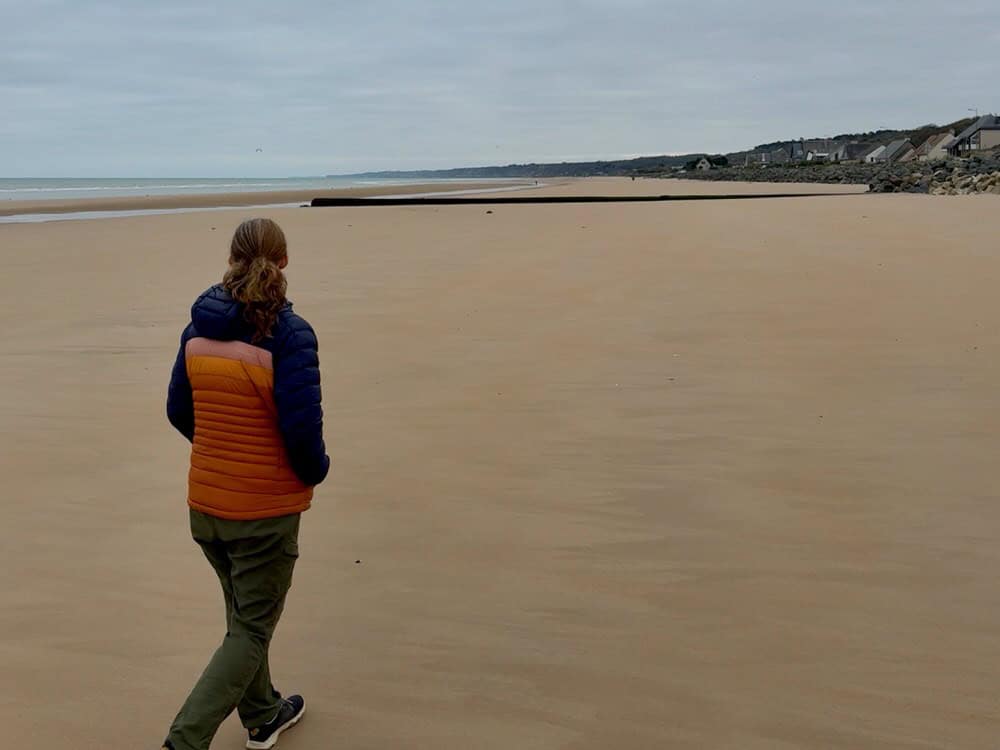
If you only have time to visit one of the D-Day beaches, make it Omaha. You can see, but can’t access this beach from the cemetery. It’s about a 10-minute drive from the cemetery to the beach access in Saint-Laurent-sur-mer. You’ll know you’re in the right spot when you spot the distinctive “Les Braves” sculpture rising out of the beach.
Honestly, I was gobsmacked by this beach’s beauty. While it might feel a little dissonant to see families picnicking or dogs chasing balls on the sands where thousands of soldiers died, if it’s sunny summer day by all means, pack a chair and beach read and join them! After all, this is what our ancestors fought for!
2) Be charmed by its little towns
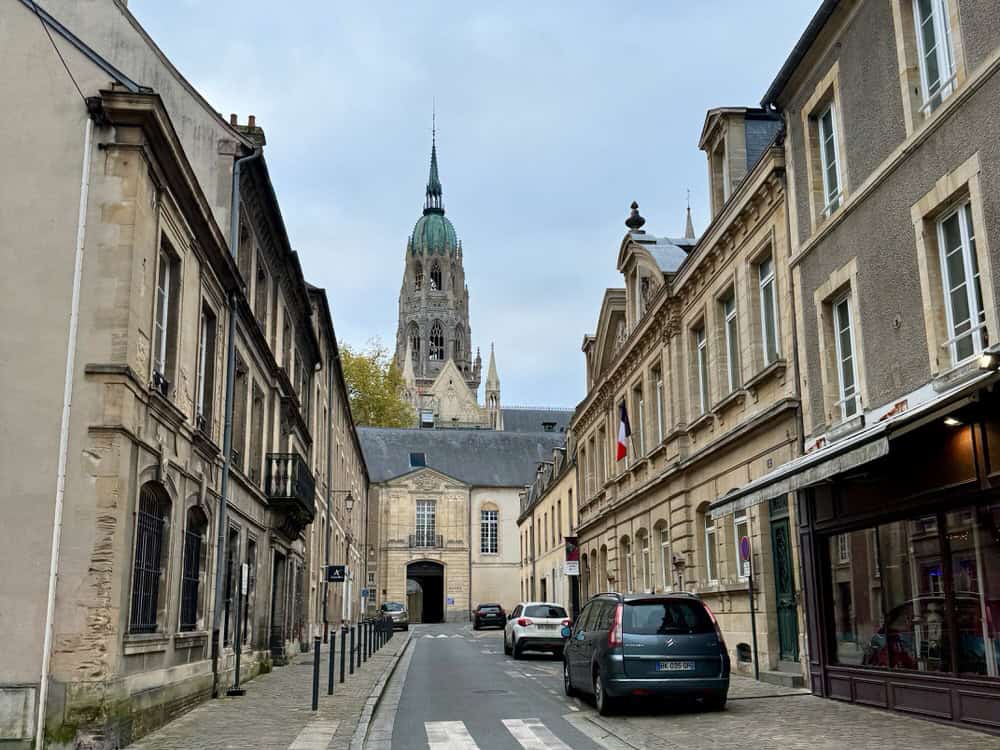
While Normandy has a few decent sized cities – Rouen, Caen, and Le Havre to name a few – the region is best known for its lush rolling fields crisscrossed with stone fences and dotted with charming villages. To really know Normandy you’ll want to rent a car so you can drive its country lanes and enjoy Norman small town life.
If you have time to explore just one Normandy small town, you can’t do much better than Bayeux. This medieval village of about 13,000 residents dates back to Roman times. Today, it has the unique distinction of being the first French town liberated after June 1944 D-Day invasion.
While many visitors chose to visit Bayeux because of its proximity to the D-Day beaches and Normandy American Cemetery, the town itself has a lot to offer. No visit to Bayeux is complete without a visit to its Romanesque/Gothic cathedral that dates back to the times of William the Conqueror.
If the name “Bayeux” seem vaguely familiar, you might remember learning about the Bayeux Tapestry in a high school history class. This massive piece of embroidery (and I mean massive; it’s about 230 ft long) documents the Norman invasion of England in 1066 and dates back to the late 11th century. You can (and should, IMHO) view the original tapestry in the Bayeux Tapestry Museum in town.
3) Follow in the footsteps of Impressionist artists

Honestly, it feels like you can’t throw a stone in Normandy without hitting a landscape that Monet painted. This is the region where the Impressionist art movement began. You’ll find countless museums and memorials to the French Impressionists throughout Normandy.
The most obvious Impressionist destination in Normandy is Monet’s home and gardens in Giverny. Monet spent the second half of his life here. His water garden in particularly inspired many paintings including the famed water lilies series. Sadly, the Giverny house and gardens are only open from April – October, so I couldn’t visit on this trip.
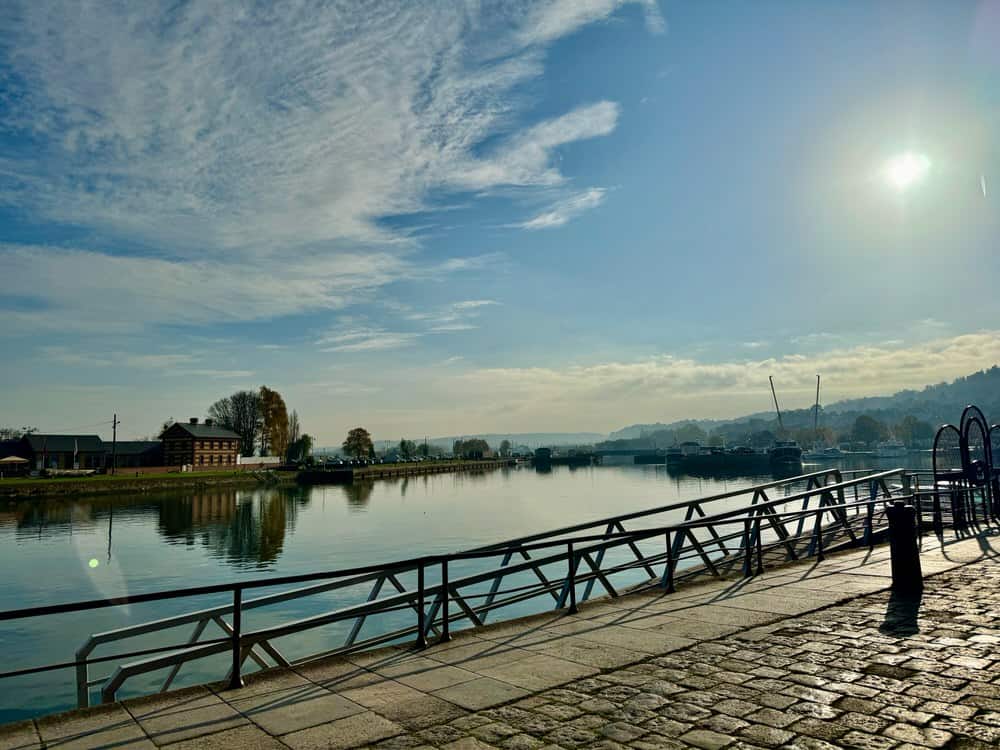
Another must-see Normandy destination with Impressionist connections is Honfleur. When you stroll through this picture-perfect former Normandy port city, with striking scenes like Le Vieux Bassin, it’s easy to see why local artist and early Impressionist Eugene Boudin was drawn to painting the outdoor landscapes around him.
Boudin in turn suggested Monet try his hand at outdoor landscapes. You can visit the Eugene Boudin Museum in Honfleur’s city center to see his artwork and learn more about his life. Boudin’s contemporary, the composer Erik Satie, was also from Honfleur and the museum often has exhibits on Satie as well.
If you’re familiar with Impressionist artwork, you can visit the artists’ inspirations at the Cliffs of Etretat or Rouen Cathedral. The Rouen Musee des Beaux Arts also a couple excellent galleries devoted to the Impressionists.
4) Wander the Cote d’Albâtre
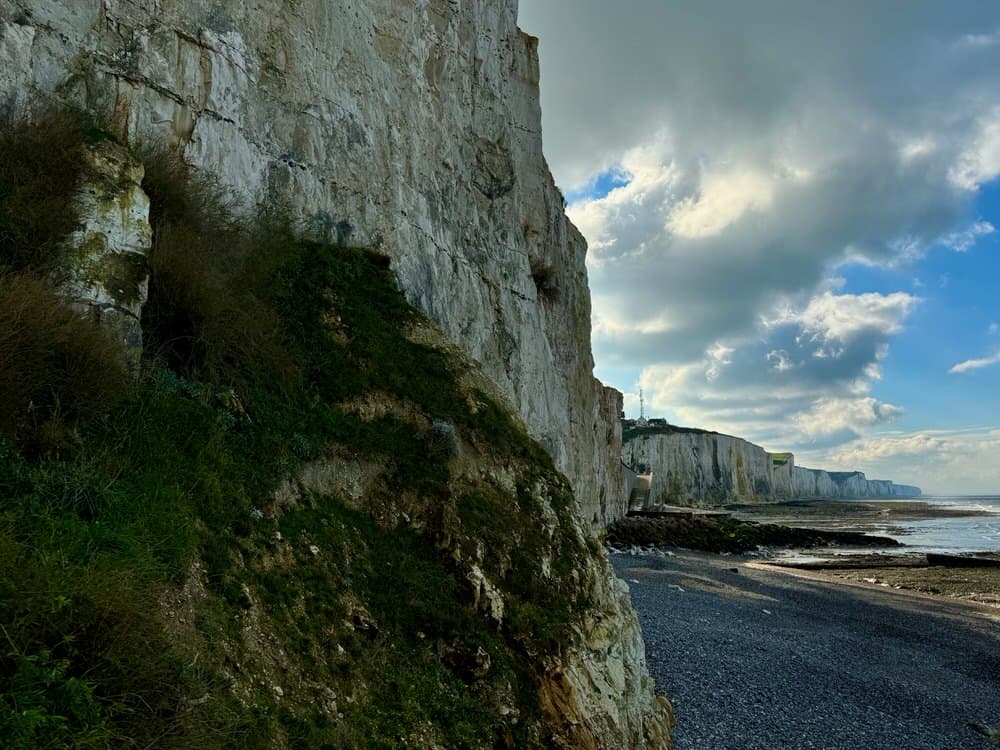
You’ve probably heard of the White Cliffs of Dover, but did you know that the exact same cliffs exist on the other side of the English Channel? France’s Cote d’Albâtre (Albaster Coast) is a stunning 80 miles of white chalk cliffs that stretch from Le Havre to the Bay of Somme.
The most well-known section of this coastline is at the small seaside village of Etretat which sits about 45 minutes northeast of Honfleur. Impressionist artists like Monet painted the Etretat coast’s striking sea arches many, many times. A popular vacation spot for centuries, Etretat has serious tourist trap vibes. As striking as its cliffs were, I’m not sure I’d return.
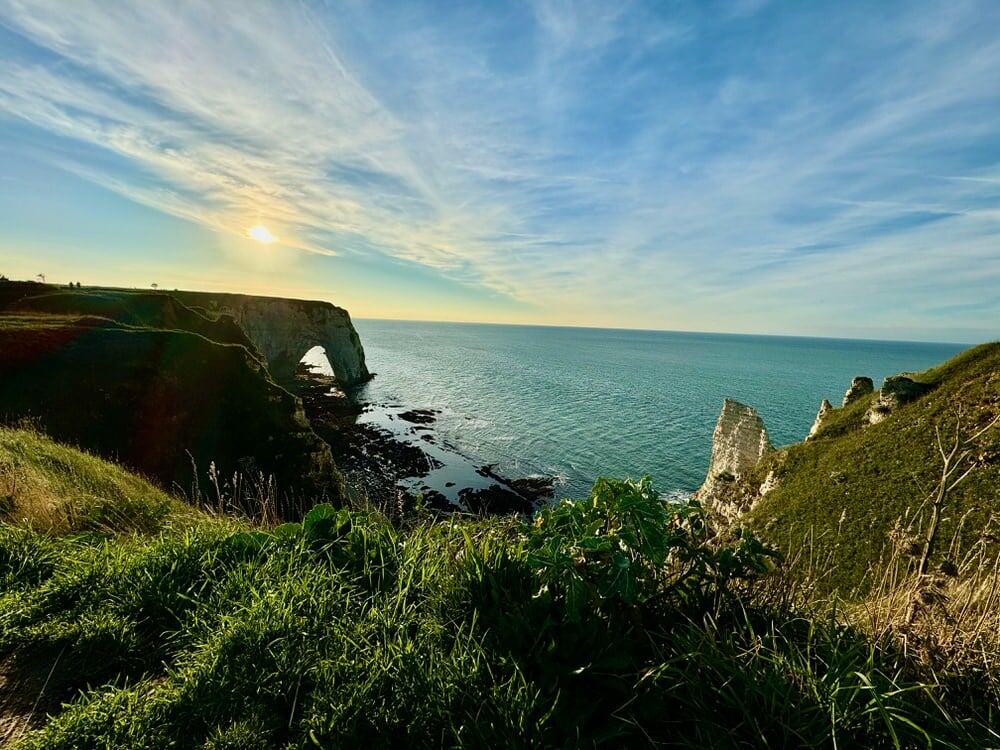
Instead, I’d recommend headed further east along the coast to hit up a slightly less popular seaside town like Dieppe or Ault. (Yes, I know Ault is technically this is in Picardy, not Normandy.) Wherever you decide to visit the Albaster Coast, be sure to spend sometime tromping on the GR 21 Sentier des Falaises path that traverses the cliff tops to get a real sense of the cliffs’ magnitude.
After seeing these cliffs in person, you’ll certainly appreciate why the British and American forces decided to invade where they did in Normandy!
5) See Mont Saint-Michel
If a single face could launch a thousand ships when it came to the Trojan War, than a single photograph can definitely inspire an entire trip.
I had that experience when I opened my middle school geography book to a two-page photo spread of Machu Picchu and I had it again the first time I saw a photo of Normandy’s Mont St. Michel. In fact, I dare you not to get “I want to go to there” vibes when you see a photo of Mont St. Michel.
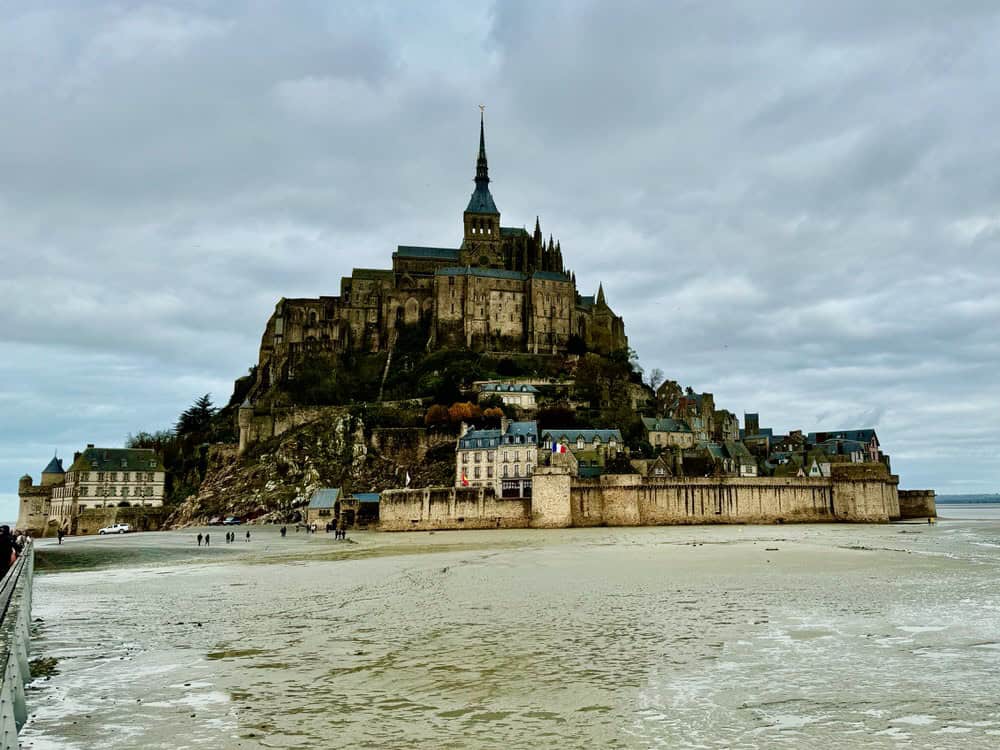
It’s easy to see why Mont St. Michel is the second most visited tourist destination in France. This medieval abbey dates back to the 7th century. The entire tidal island in the English Channel’s Mont Saint-Michel Bay looks like it belongs in a fantasy world. You either take a free bus shuttle out to the island or make the two-mile (oneway) walk out to the island on a new-ish causeway.
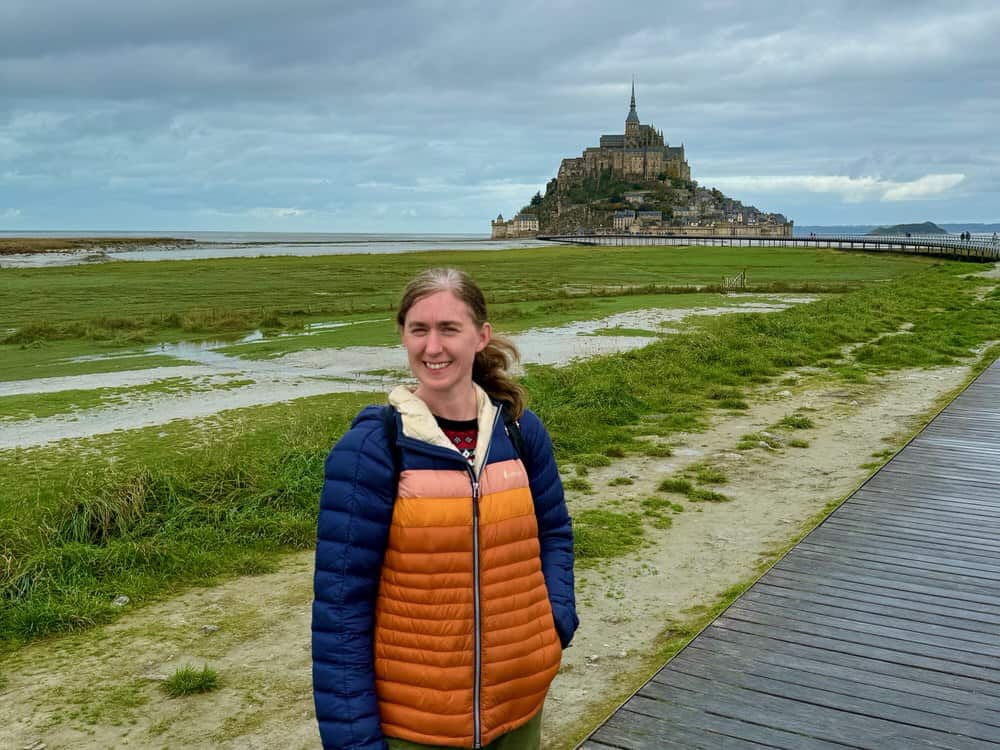
Regardless of how you reach the island, it’s definitely “leg day” if you’re planning to visit the abbey at the tippy-top of the island. A total of about 200 steps take past the island’s souvenir shops and restaurants to the abbey’s entrance. Another 150 stairs wait for you inside.
Honestly, there’s not much interpretative material in the abbey. If you can’t bring yourself to listen to another audioguide, you may prefer to skip the tour of the abbey’s interior.
What you really came for was the view of the abbey rising out of the tidal flats. But considering what a lovely flat walk it is out to the island, I definitely recommend grabbing a Nutella crepe from the creperie right near the island’s main gates and taking a little spin about the ramparts to get some nice views of the bay and countryside.
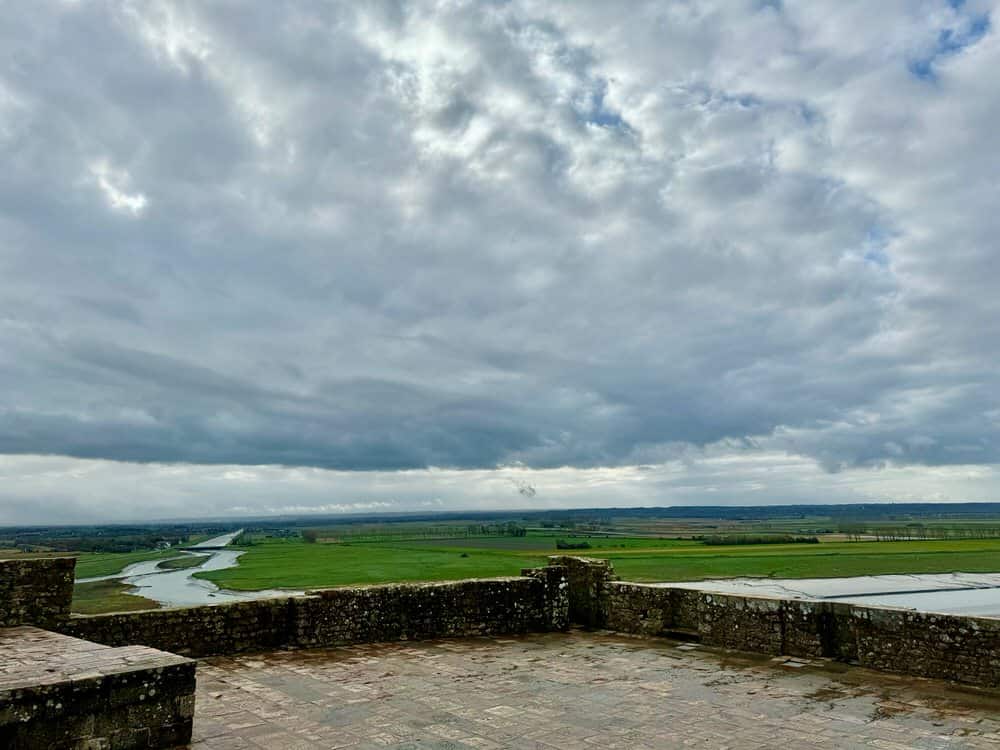
It’s somewhat disputed whether or not the Mont is in Normandy or Brittany, but since it’s clearly on the east side of the Couesnon River that serves as the boundary between Brittany and Normandy, I think it’s clearly in Normandy.
6) Explore Viking connections
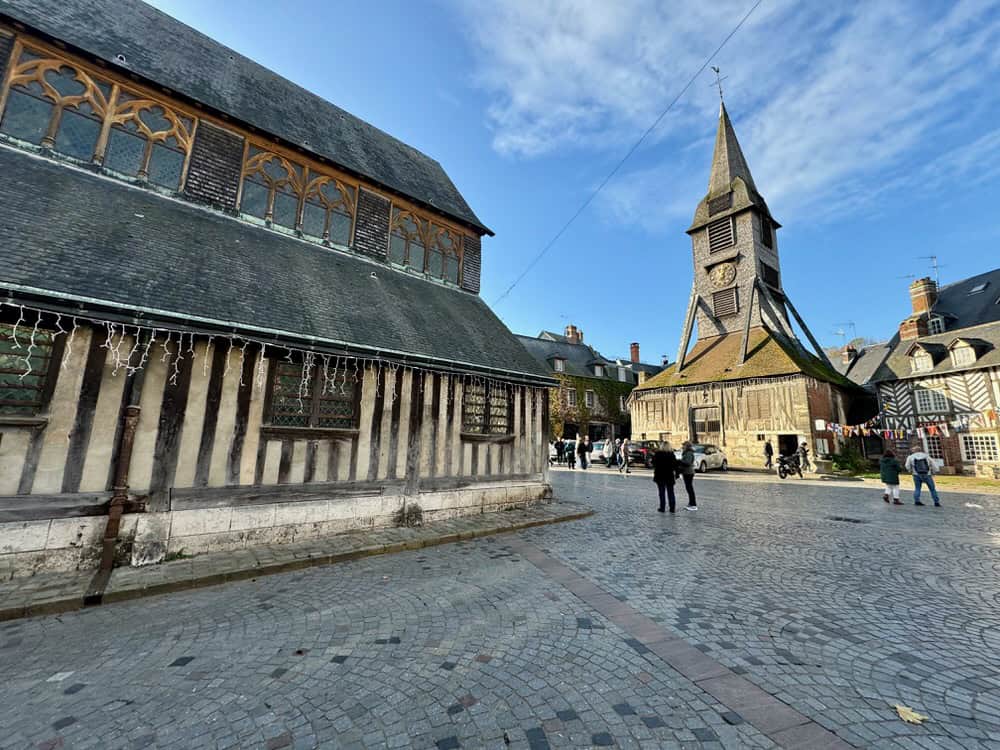
Normandy draws its name from the Viking invaders who started settling in northern France in the early 9th century. (Norman = North Man.) You can’t visit Normandy without acknowledging the region’s Viking connections.
A replica of La Mora, the Viking style ship that William the Conqueror sailed during his invasion of England in 1066 is currently being rebuilt along the Honfleur waterfront. Interestingly, this boat is modeled after the boats depicted in the Bayeux Tapestry! The Cité Immersive Viking in Rouen offers a deep dive into northern France’s Viking heritage.
As a lifelong Minnesota resident (Skol Vikings!) I wasn’t particularly drawn to doing a deep dive into all things Viking while in France. However, I do think as an American it’s important to remember how much people are always moving around in Europe, even to this day.
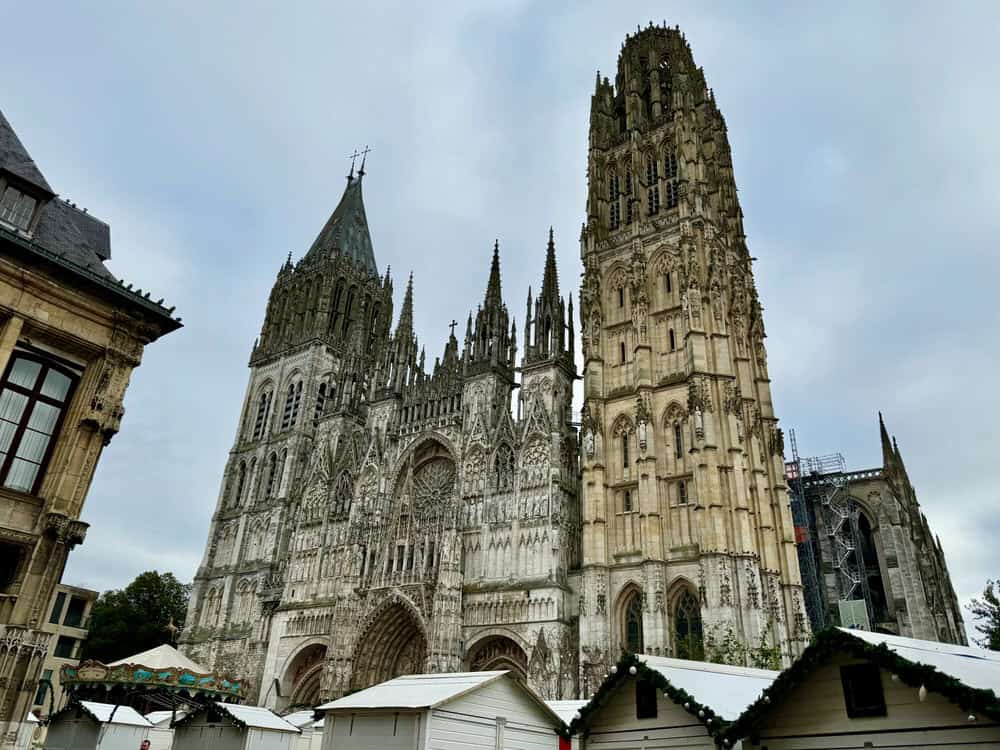
7) Discover Rouen’s Old Town

There are so many reasons to visit Rouen, the capital of Normandy. As an UNESCO City of Gastronomy, it’s a great place to start sampling Normandy cuisine. Coincidentally, it’s also where Julia Child ate that first, life-changing meal in France.
With a dominating cathedral, more than 2000 half-timbered buildings, a perfectly preserved medieval clock, and pedestrian friendly cobblestone streets, it’s easy to feel whisked back in time in Rouen. If you can, try to visit on a market day.
You can’t visit without learning at least a little about France’s best known patron saint, Joan of Arc. 19-year-old Joan was burned at the stake in Rouen in 1429. I highly recommend a visit to Historical Jeanne d’Arc located in the former archbishop palace behind the cathedral to learn her story and understand her enduring significance to France.
8) Sample local cuisine

If you don’t come home from your trip to Normandy without a taste for galettes washed down by a mug of cider, I’m not sure what you got up to.
Norman cuisine is somewhat unique in France because it’s the only French region that doesn’t produce grapes. Instead of vineyards, Normandy is dominated by orchards which produce apples, pears, and other fruits that are turned into jellies, jams, tartes, ciders, and the region’s celebrated apple brandy: calvados.
With its ample shoreline along the English Channel, Normandy is also an excellent place to indulge in seafood like oysters, lobsters, or a regional stew known as Marmite Dieppoise. This is also the birthplace of camembert cheese and several other delicious soft cheese. Galettes, savory crepes made with buckwheat, are a popular quick Normandy nosh all day long.
Don’t forget to indulge in the delicious cream produced by Normandy cows. The cream is put to especially good use in caramels d’Isigney and the region’s specialty pastries.
Other Things To Do in Normandy
Conclusion: Why You Should Explore France’s Normandy Region
As you can see, there are countless reasons to visit Normandy, France.
From World War II history to Viking invasions, this region has a unique and fascinating history. You’ll also be able to follow in the footsteps of Impressionist artists, sample delicious food and drink, and see striking seaside cliffs and pastoral landscapes.
Whether you prefer bustling cities like Rouen or laidback small towns like Honfleur or Bayeux, Normandy is rich in historic half-timbered buildings, impressive cathedrals, and medieval town centers. Some must-see Normandy sites include the D-Day beaches, Mont Saint-Michel, the Bayeux Tapestry, and the Cote d’Albâtre.
I hope you’ll consider adding Normandy to your French travels. If you have any questions about this beautiful region of northern France, don’t hesitate to reach out.
 |
 |