This post may contain affiliate links. When you purchase something through these links, I receive a small commission that helps me create this blog’s content. There’s no extra cost to you. Read my privacy policy to learn more.
Published: 3/26/2025
See the Best of Northern France in 10 Days
I spent months researching the best places in northern France as I crafted this week and a half road trip through Normandy and Picardy. With fantastical medieval abbeys, stunning coastline that enchanted Impressionist painters, and countless historic sites, northern France had been calling my name for years.
For a destination so rich in things to do, it took careful planning to maximize our time without overextending ourselves. Eventually I settled on an itinerary that had us starting and ending in Rouen, then using a rental car to travel to some of northern France’s most famous towns and destinations.
This itinerary takes you from Sainte-Mère-Église and the D-Day beaches to Mont St-Michel and the Cliffs of Etretat. We toured 1916 Battle of the Somme memorials and visited my great-uncle’s grave in the Brittany American cemetery. Along the way, we sampled the best Normandy foods, looked for seals, saw the Bayeux Tapestry, and crossed the Pont de Normandie between Le Havre and Honfleur.
In this post I’m sharing our complete 10 Day Northern France itinerary so you can see exactly what we got up during our November 2024 visit to Normandy and Picardy. I’ve included what we did, where we ate, and where we stayed. I’ve also included how much time we spent in the car each day to you plan your own French road trip.
Let’s dive right in to planning your own northern France adventure!
Our Complete 10-Day Northern France Itinerary

Map of Our 10 Day Travels in Normandy and Picardy, France
Day One: Arrive Rouen

As western Europe’s largest country, there’s a lot to see in France!
Even with having 10 free days at our disposal, Verdun was simply too far east to include in the itinerary. I dismissed my hopes of getting Bastogne, Belgium as soon as I actually looked at a map. After sketching out many potential road trip routes, I decided Rouen, the capital of France’s Normandy region, was a logically starting point.
Not only did this small Viking city have plenty of amenities and things to do during our first jetlagged days in France, it was also centrally located, allowing us to do a round-trip car rental. When we landed at Paris’s Charles de Gaulle airport, we headed straight to Gare Saint-Lazare in central Paris to catch a train to Rouen.
Waypoints: After a quick nap, we did a casual walk through the cobblestone, pedestrian-only streets of Rouen’s Old Town. We passed by some of the city’s best known cities including Place du Vieux Marche where Joan of Arc was burned at the stake in 1429, the Cathedral de Notre Dame, and the famous medieval clock Le Gros-Horloge.
Eats: We headed down to the hotel bar for a quick cocktail and teeny sandwich. In hindsight, it would have been better if I’d made the earliest possible reservation at one of Rouen’s many excellent restaurants (this is an UNESCO World City of Gastronomy after all) a couple days in advance and just gone for it even in our jet-lagged state.
Stay: Thankfully, our room was ready at the Hotel de Bourgtheroulde when we stumbled in in our semi-conscious state in the early afternoon. This 15th century mansion located on the edge of Rouen’s pedestrian only Old Town is surprisingly modern hotel with great amenities and staff.
Time in transit: Approximately two hours train ride from Paris Saint-Lazare to Rouen Rive Droite station on a regional Normandy train (NOMAD).
Day Two: Rouen

With nothing on our agenda, we spent a pleasant day exploring Rouen’s Old Town on foot. Rouen is a lovely city to wander through. With its more than 2000 half-timber buildings (many reconstructed after World War II), it’s a visual delight for American travelers.
Waypoints: We browsed the Sunday Saint-Marc Market, learned about Joan of Arc at the Historical Jeanne d’Arc exhibit, and went inside the city’s striking Cathedral of Notre-Dame. In addition to seeing the tower where Joan of Arc was imprisoned (Tour Jeanne d’Arc), we also got our first taste of Normandy’s Impressionist art legacy at the city’s Musée des Beaux-Arts.
Eats: Le Petit Bar, a small speak-easy near the river, was the perfect place for a pre-dinner cocktail. We enjoyed our first prix-fixe menu at Pascaline, a favorite spot in Rouen for homey French cuisine.
Stay: Hotel de Bourgtheroulde
Day Three: The Somme Battlefields

We picked our rental car on the outskirts of Rouen and headed east towards the Picardy region of northeastern France. This was my first time driving outside of North America and since we picked up the car on a national holiday (Armistice Day), it was a very gentle introduction to international driving: we essentially had the roads to ourselves.
Waypoints: We first stopped in the town of Albert. This former World War I British garrison town is home to the Somme 1916 Museum and an impressive Basilica. We continued on to the Thiepval and Beaumont-Hamel Newfoundland memorials which are located on the front line of the 1916 Battle of the Somme.
Eats: Since we were in a fairly rural corner of France, we picked up groceries in Albert to prepare dinner in our vacation rental.
Stay: Our home for the next two nights was Aux Cabanes, a charming, Scandinavian style rental cottage in a field outside of Grand-Laviers near the Bay of Somme. Hosts Francois and Nicolas were so kind and helpful!
Time in transit: We drove about 2 hours from Rouen to the town of Albert, then another 1.25 hours from the Somme sites to our rental in Grand-Laviers. At around 3.5 hours of driving, this was the longest haul of the trip.
Day Four: Bay of Somme and Côte d’Albâtre
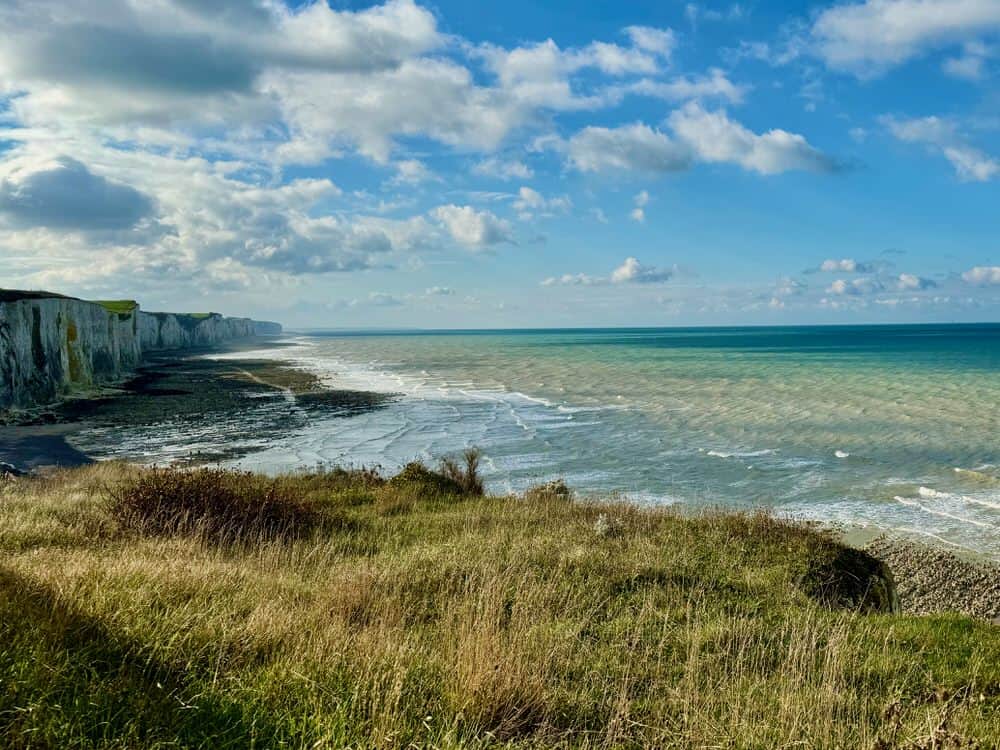
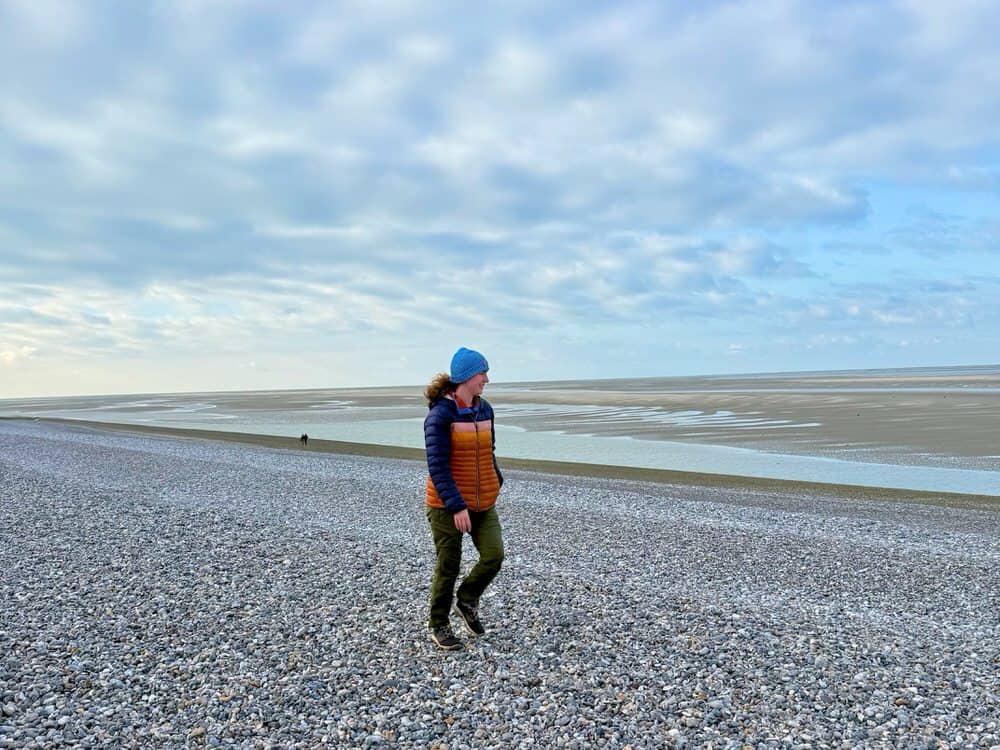
This day definitely took us the farthest off the beaten path in northern France. While northern France is a fairly common vacation destination for British tourists who drive over via the ferry between Dover and Calais, we found ourselves firmly planted in farmland. With no obvious must-see attractions, we set out to explore the relatively nearby seaside.
Waypoints: We parked in the quiet, decidedly “close for the season” seaside town of Ault. There we accessed the Ault-Bois de Cise walking loop. This easy 2.8 mile cliff top walk uses the coastal path to reach the neighboring town of Bois, then loops back on a paved bike trail. We got an up close and personal look at both livestock (cows) and crops (potatoes).
After exploring the Plage d’Onival public beach in Ault, we hopped back in the car to reach Pointe du Hourdel at low tide. We hoped to spot the resident seal colony, but we weren’t nearly as lucky as we were in San Simeon. We did find some stunning view of the tidal flats and even possibly stumbled upon a remnant of Hitler’s Atlantic Wall.
Eats: For dinner, we probably should have headed to the well-reviewed Au Coin De La Baie restaurant that we could have walked to from our rental. However, we’d been plagued with credit and debit card issues since arriving in France, so instead headed to the large supermarket in nearby Abbeville to grab dinner ingredients and test out their ATM.
Stay: Aux Cabanes
Time in transit: It was about a 40 minute drive to Ault, another 40 minutes to reach Pointe du Hourdel, and then about 20 minutes back to our rental in Grand-Laviers.
Day Five: Etretat
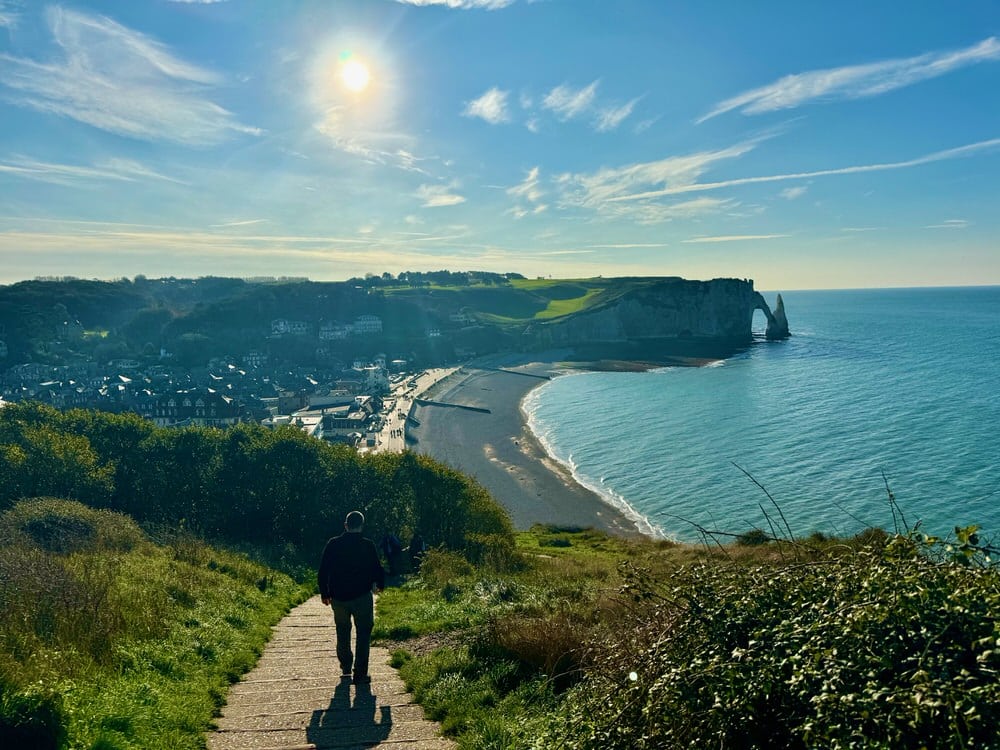
After our first glimpse of France’s Côte d’Albâtre (Albaster Coast) at Ault the day before, we left Picardy and returned to Normandy to visit the most famous section of this 80-mile stretch of chalk cliffs. Etretat is an extremely popular seaside vacation that’s long attracted famous visitors including writers, nobility, and perhaps most famously, Claude Monet.
Waypoints: We spent the afternoon strolling through the small coastal town. Favorite stops included Plage d’Etretat, Les Jardins d’Etretat, and the Monument Nungesser et Coli. The weather was exceptionally nice for November in Normandy and we enjoyed stunning, sun-soaked views of the famous sea arches and cliffs.
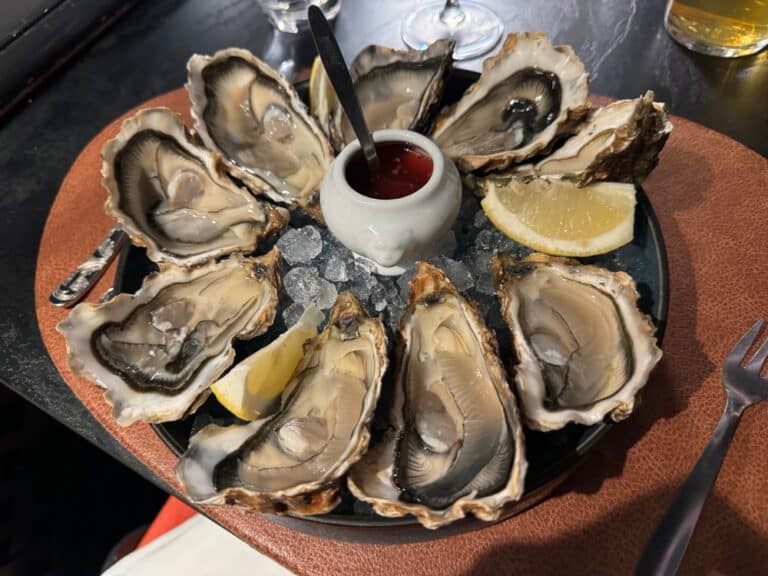
Eats: We made reservations at the Dormy House Restaurant which just might win the award for the most expensive and least interesting dining option in town. I loved getting to try local oysters though and the cheese course was another highlight.
Stay: We stayed at the rather British, Dormy House, perched on the town’s western cliffs. I’d hoped we could access the coastal path on top of the cliffs directly from the hotel, but construction work forced us to walk back down to the beach. While our room had a lovely view, I still wished we’d continued on to Honfleur for the night.
Time in transit: It’s approximately a two-hour drive (via the autoroute) from Grand-Laviers to Etretat.
Day Six: Honfleur and Caen
We started this day with a visit to one Normandy’s seaside darlings: Honfleur. Once Normandy’s main port, this charming medieval town sits at the mouth of the Seine. With its often photographed “Le Vieux Bassin,” it felt like we’d walked into a Bing wallpaper background! Our late morning visit seemed to coincide with “tour bus” o’clock as river cruise guests were guided through Honfleur’s Old Town highlights.
We stopped briefly in Caen, the capital of the Calvados region of the Normandy region of France (whew!), then settled for the night (and the next several days) in beautiful Bayeux.
Waypoints: Our day started with a drive across the Pont de Normandie. This massive cable stayed bridge over the mouth of the Seine was briefly the largest cable-stayed bridge in the world. Today, it’s one of only three bridges across the Seine between Rouen and the English Channel: a span of 80 miles!
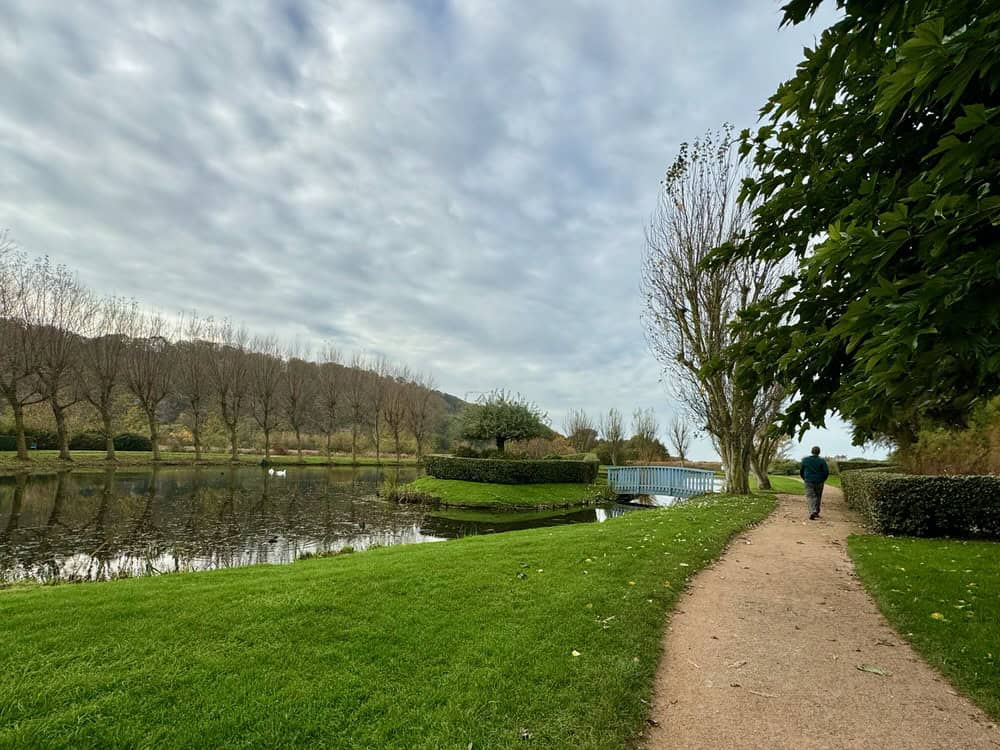
In Honfleur we snapped the mandatory photo of Le Vieux Bassin, then poked into Eglise St. Catherine. This medieval church was famously built by shipbuilders whose attempt at a cathedral looks remarkably similar to an upside down ship. The highlight of our visit was watching fishing boats navigate the lock system on Honfleur’s canal and a walk through the city’s large green space: Naturospace with its “Garden of Personalities.”
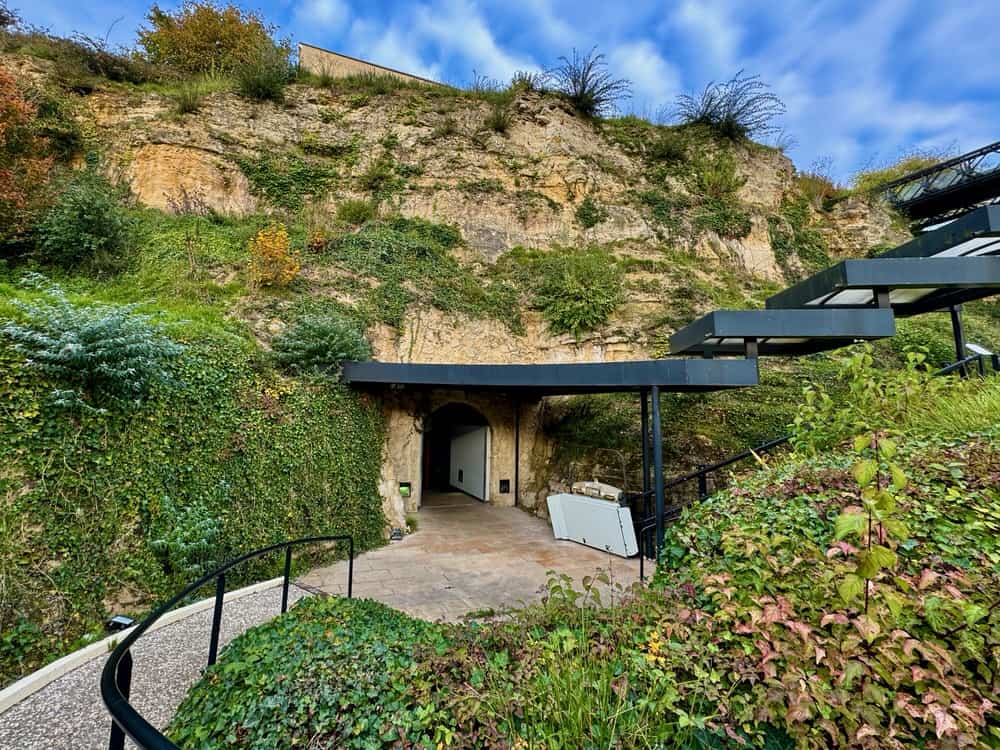
In Caen, we visited Memorial de Caen, a large war museum known for its World War II exhibits. It’s built over German general Richter’s underground bunker which for me was the most interesting part of the visit.
Eats: We enjoyed dinner at one of Bayeux’s best rated restaurants: La Bonbonne.
Stay: We settled into a Bayeux VRBO located right in the town center. With its own private courtyard and a view of the town cathedral’s spires, we instantly felt right at home. Amusingly, the host gave me a tour of the house completely in French. I only caught approximately 5% of what she said, but I really appreciated her tenacity!
Time in transit: It was about a 50 minute drive from Etretat to Honfleur, another hour to Caen, and a final 25 minute drive to Bayeux for a total of about 2.25 hours in the car.
Day Seven: D-Day Beaches
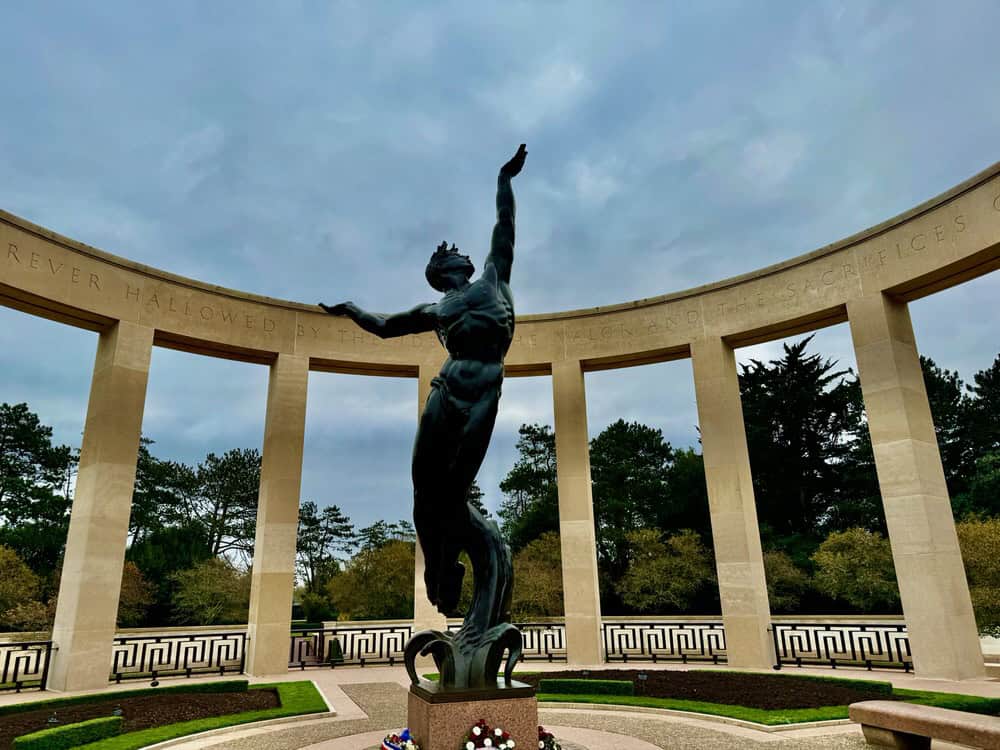
In many ways, this felt like the day the entire trip rotated around. For Americans, I’m not sure there’s a more sacred place on foreign soil than the Normandy American cemetery and D-Day invasion beaches.
Waypoints: Our first stop of the day was the Normandy American Cemetery. We spent about an hour here and especially enjoyed the Visitor Center. We continued on to beautiful Omaha Beach and then took in Pointe du Hoc’s bunkers and cliffs. An unexpected highlight was driving past many orchards and manor houses as we traveled between World War II sites.
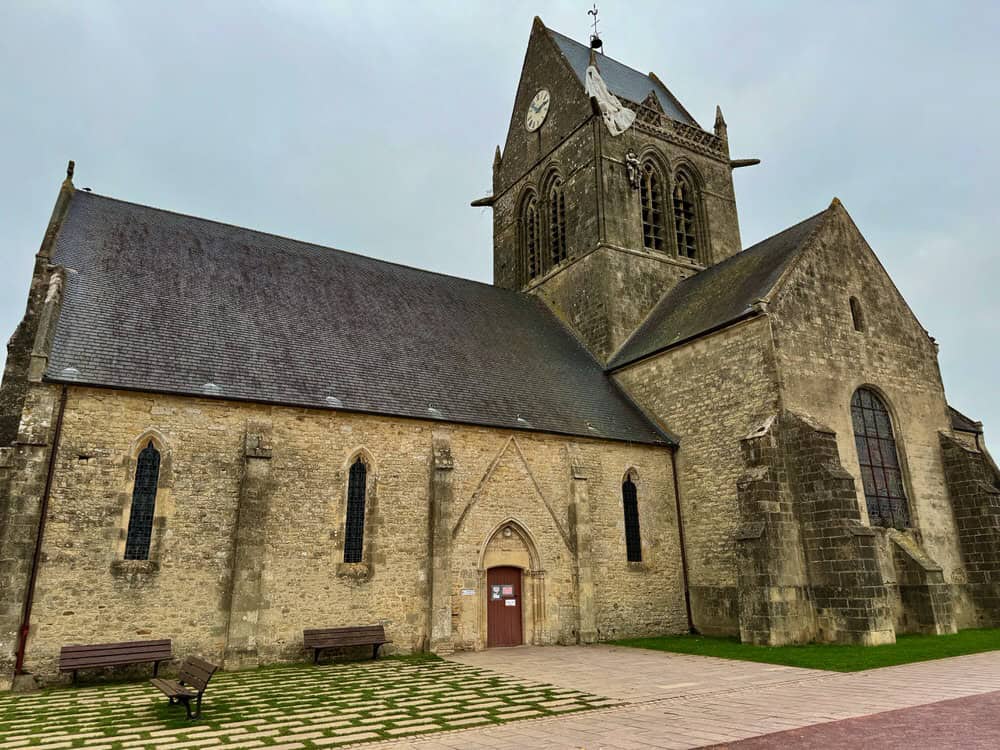
We also stopped briefly at Sainte-Mere-Eglise on the Cotentin Peninsula to see its famous church belltower that snagged a U.S. paratrooper during the D-Day invasion. The church now emphasizes this event as an extraordinary act of peace. After playing dead for several hours, German soldiers took the paratrooper as prisoner rather than killing him.
Eats: To be honest, about a week into this trip, we both realized we were just never going to sync up with French dinner times. It was actually kind of freeing to head to Le Saint-Jean for a very early (by French standards) dinner of beers and stone-oven baked pizzas.
Stay: Bayeux VRBO
Time in transit: It’s about a 25 minute drive from Bayeux to the Normandy American Cemetery. From there, it’s another 20 minutes to Pointe du Hou and another 30 minutes Sainte-Mere-Eglise. All totaled, we spent about a little under two hours driving.
Day Eight: Bayeux
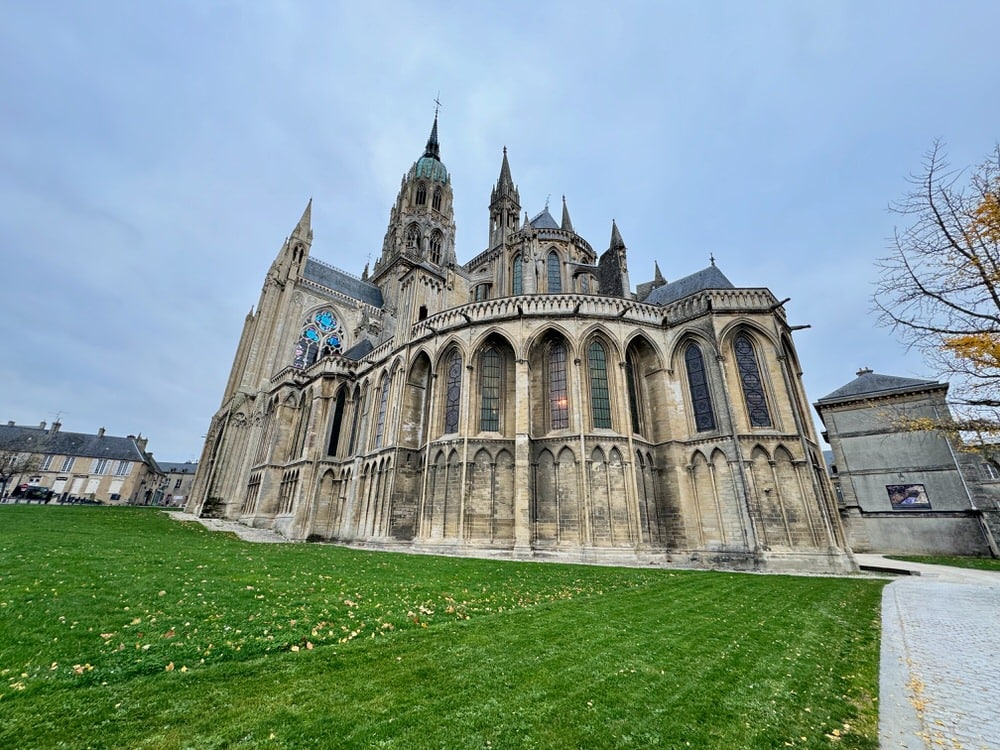
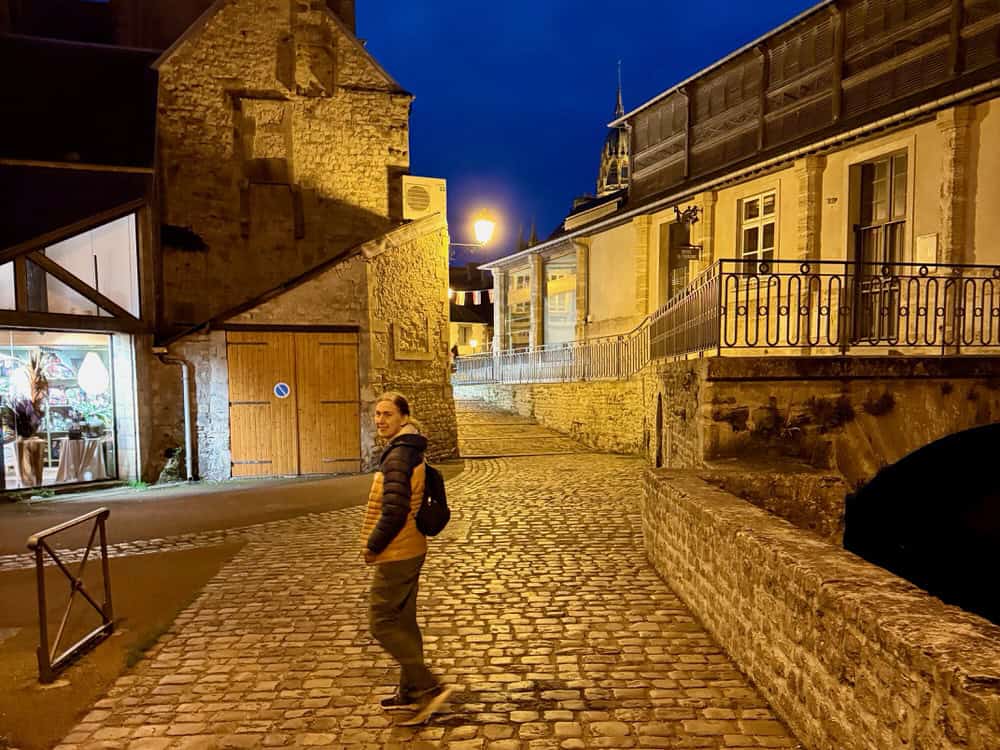
Everyone you meet who’s been to Normandy seems to have a soft spot for Bayeux. It’s true, this small town with its perfectly preserved medieval center is easy to love. We’d been spending an average of at least two hours in the car each day so it was especially lovely to explore this small town on foot and let the rental car chill in the municipal lot all day.
Waypoints: Unfortunately Andy was under the weather this day, but I had a great day taking in all the best Bayeux sites including the cathedral, Bayeux Tapestry Museum, St. Patrice Market, the Conservatoire de la Dentelle (where you can watch lacemakers working on bobbin lace), Bayeux War Cemetery, and the MAHB museum.
Eats: I had a lovely late morning pick-me-up snack at La Patisserie de Guillaume. For dinner, I grabbed a variety of galettes to-go from Creperie L’Insolite.
Stay: Bayeux VRBO
Day Nine: Mont Saint-Michel
This was our final full day with a rental car and we set out pretty early to visit a couple destinations that have been sitting on my travel Pinterest board for a good decade.
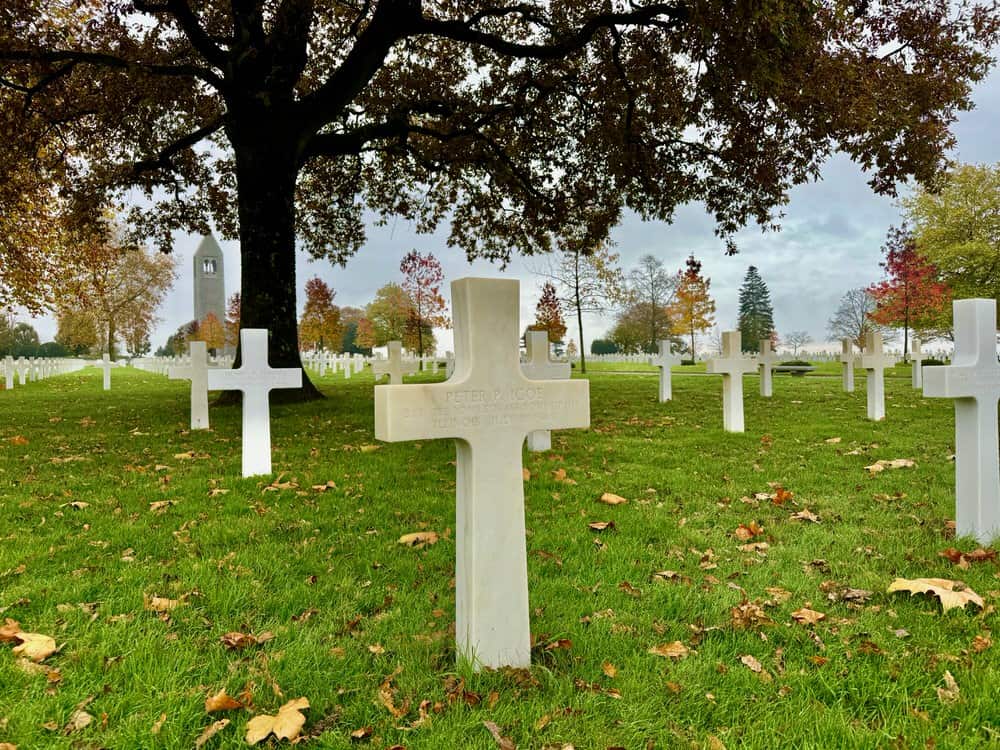
Waypoints: Our first stop was arguably the most important stop of our entire trip. We drove through rural, Normandy farmland to reach the Brittany-American Cemetery. Sometimes referred to as America’s “forgotten WWII cemetery,” this is the final resting place of more than 4000 U.S. servicemen from World War II.
One of them is my great-uncle Peter who was a navigator in the 466th Bomb Group. He was killed in a bombing mission over west Normandy in July 1944 at age 21. It took us a minute to locate the grave, but we eventually found it at the base of a large tree. It’s a very peaceful place overlooking the Normandy pastures and woods.
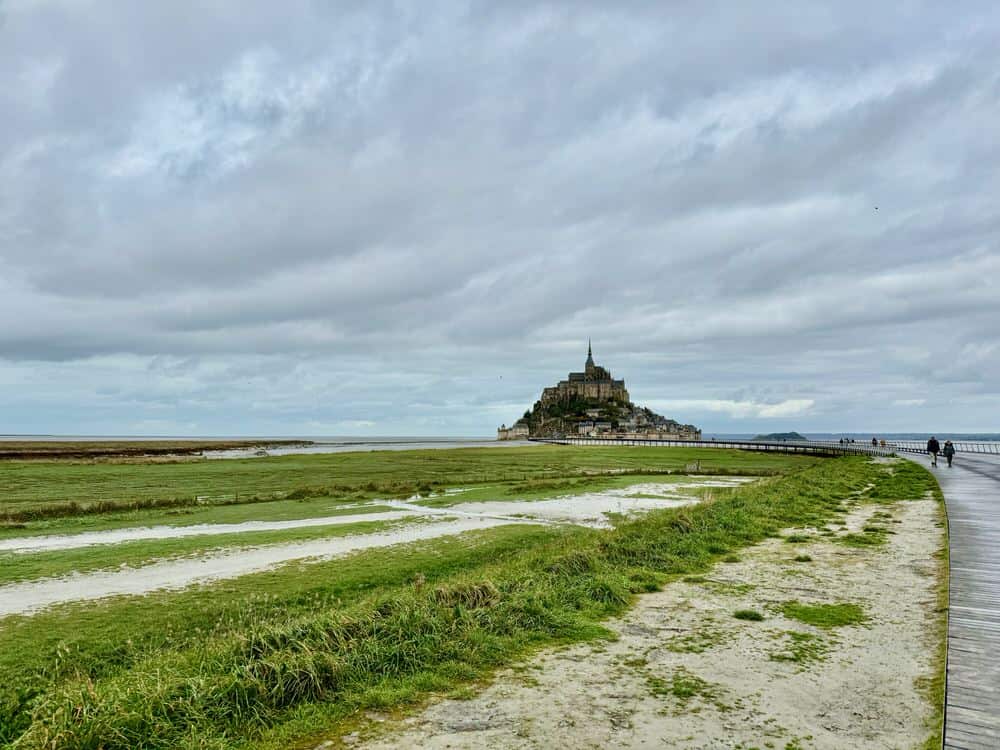
Back when I lived in London, I spent Easter weekend in Penzance, Cornwall and hiked out to Mount Saint Michael. Ever since I’ve been keen to see the even more majestic French counterpart: Mont Saint-Michel. Today was finally the day! We hiked the two-mile long causeway out to the island, then climbed 350 steps to the top of the abbey. The stunning views were excellent distractions from just how much cardio we were getting.
Eats: I didn’t want to leave Bayeux without trying the town’s specialty pastry, an almond meringue called the Saint-Eve, so I popped into La Patisserie de Guillaume to pick up one along with a chocolate slice. After spending all day on our feet, we opted for an easy (and calorie dense) dinner to go from Kebab Bosphore.
Stay: Bayeux VRBO
Time in transit: Both the Brittany-American Cemetery and Mont Saint-Michel are neither close or far away from Bayeux. In total, we drove a little over three hours.
Day Ten: Return to Rouen and depart for Paris
We saved our most difficult driving of the trip for our final morning with the rental car. While navigating the industrial outskirts of Rouen in a rainstorm wasn’t my favorite experience, we returned the car without incident and easily snagged a rideshare into Rouen’s Rive-Droite train station in the heart of Old Town.
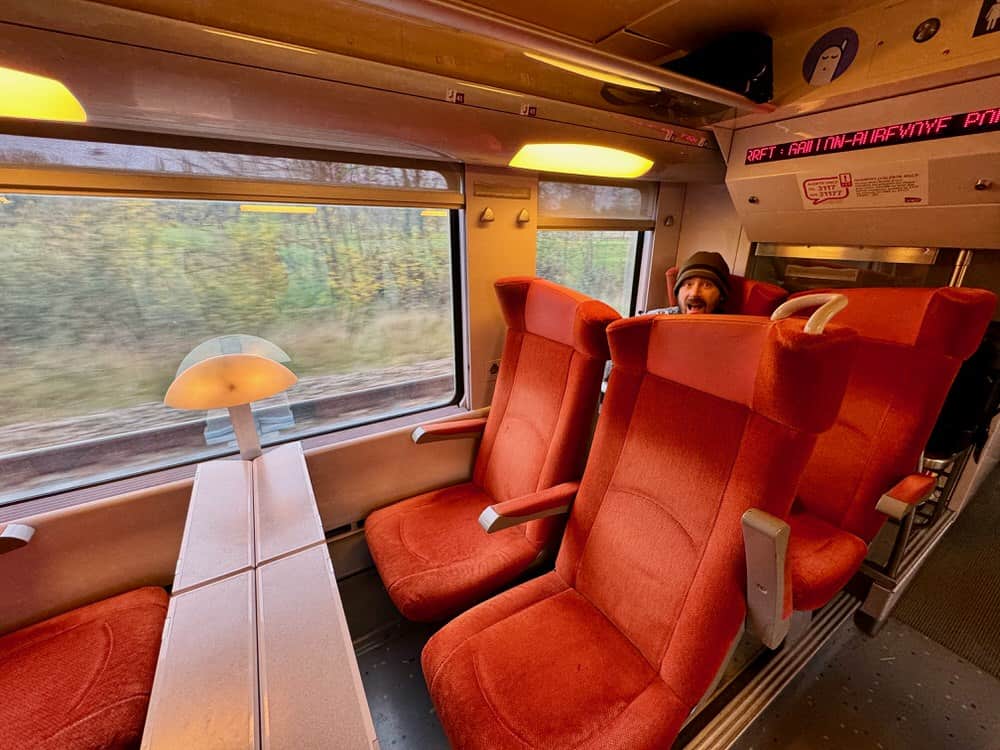
Interestingly, our train back into Paris took a completely different route than our train to Rouen. We traveled mostly along the Seine to reach Paris’s Gare Saint-Lazare where we disembarked to start three days in the French capital.
Time in transit: It was a little less than a two-hour drive from Bayeux to Rouen, then a 1.5 hour train ride from Rouen Rive Droite to Gare Saint-Lazare in central Paris.

How To Get Around Northern France
As you can see, we mostly depended on our rental car for this itinerary. Many of the sites we wanted to see (Somme battlefields, Etretat cliffs, D-Day beaches, and Mont St-Michel, to name a few) simply aren’t accessible by train. Without a car of our own, we would have also needed to depend on buses or tours to see everything we did in these 10 days.
Since we were hitting points both east and west of Rouen, this city was the most central place to return the car at the end of the road trip. However, if you’re skipping the Somme and instead plan to spend your entire trip in Normandy, west of Rouen, you wait to pick up your rental until Caen or Bayeux. (I’d still include Rouen on your itinerary; just use the train to get further west in Normandy before renting a vehicle.)
If you’re nervous about driving in a foreign country, I have an entire post about what it was like to rent a car in France that will answer all your questions and put many fears to rest. I also liked having a car because it made packing much easier; fewer worries about heaving heavy suitcases into small overhead shelves on trains.
Train travel is great in all of Europe, including northern France. Since all the city centers are very pedestrian friendly, you could certainly do much of this itinerary using only public transportation. However, it will be a little more logistically challenging and much harder to travel at your own pace.
Conclusion: What To Do and See During 10 Days in Normandy and northern France
We truly crisscrossed northern France in 10 days to see the very best sites in this region. I’m really pleased with how much we did and saw, all while spending less than three hours driving each day.
If you’re interested in sites related to both World Wars, I think our itinerary is a great way to dip your toe in this history. But our trip definitely wasn’t just focused on war history. It also included other absolutely Normandy must-sees including the Bayeux Tapestry, Mont St-Michel, Honfleur, and Rouen’s Old Town.
Some of my very favorite things we did included hiking on the coastal path on the chalk cliffs near Etretat and Ault, watching for seals in the Bay of Somme, visiting the Brittany-American cemetery, and sampling various Normandy ciders.
If you’ve been contemplating a trip to northern France, I hope this post helped you see just how much the Normandy and Picardy regions have to offer and how easy they are to explore. Northern France has so much to offer; I think you’ll surprised by how quickly you fill 10 days in this beautiful part of Europe.
 |
 |