

This post may contain affiliate links. When you purchase something through these links, I receive a small commission that helps me create this blog’s content. There’s no extra cost to you. Read my privacy policy to learn more.
Published: 4/8/2025
A Dreamy Christmas Market Trip Using Only Public Transportation
Want to visit the Christmas markets in Europe but nervous about creating your own itinerary? I’ve been there.
For the better part of a decade, I’ve been scheming how to make a December trip to western Europe to experience the epic Christmas market culture in France, Germany, Switzerland, and many other countries. When my sister-in-law and I narrowly missed spots on Helene in Between’s Christmas market cruise last year (holy cats those sell out fast!) we decided to create our own self-guided tour of Europe’s best Christmas markets.
Not only did we pull it off, we spent considerably less money by creating our own itinerary, had completely autonomy about what we saw and did, and were able to travel to Europe’s most celebrated Christmas markets in France, Germany, and Switzerland using only public transportation. That’s right – no rental car needed for this week-long Christmas market itinerary!
This was honestly one of the most fun European experiences I’ve ever had. I’m so excited to share our exact itinerary, the logistics involved, how much we spent, and my best tips and packing tricks so you can design your own perfect Christmas market experience.
Let’s jump right into creating the European Christmas market trip of your dreams!
Our Full One-Week European Christmas Market Tour
We spent a full week in Europe last December (along with two travel days) and saw some of the most beloved markets in western Europe all without a rental car.
Christmas Markets We Visited:
- Basel, Switzerland
- Colmar, France
- Freiburg, Germany
- Ravenna Gorge, Germany
- Paris, France (Tuileries Gardens)
- Zurich, Switzerland
Read on for our complete itinerary.
Day One: Arrive Paris; Train to Basel
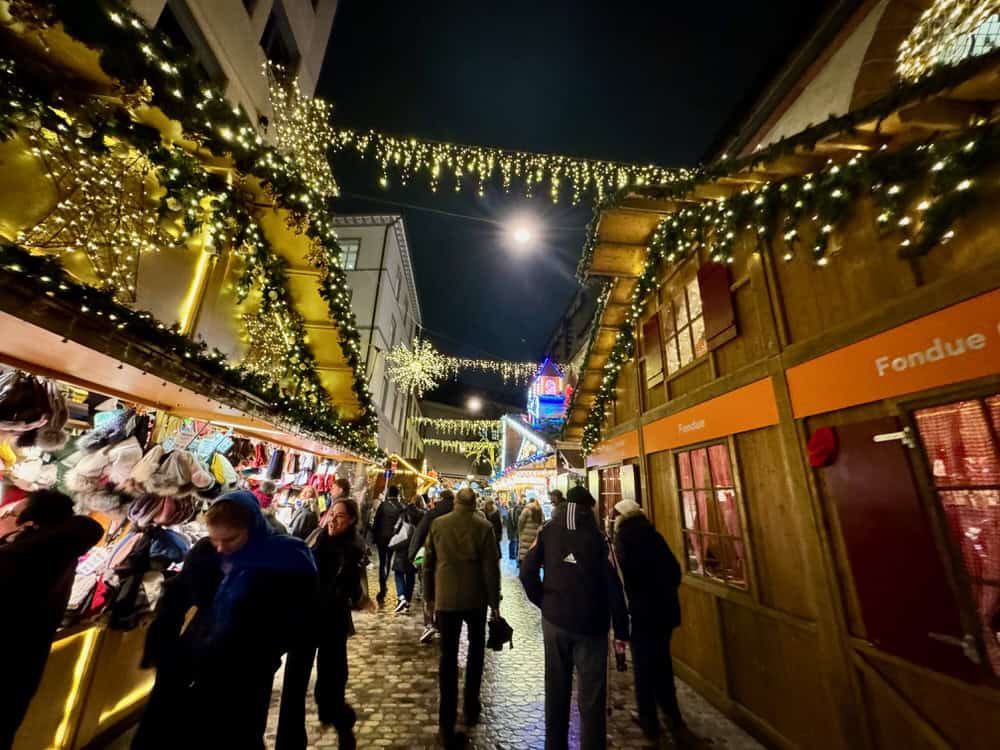
We originally planned to fly into Zurich, Switzerland, but changed course when the airline kept adding layovers. Instead, we grabbed the same direct flight from Minneapolis to Paris that I’d been on less than a month earlier. This allowed us each to fly from our home airports (Duluth and Grand Rapids, MI) with just one layover.
Paris really isn’t a conventional choice for starting a Christmas market trip, since neither it nor London are known for having particularly good markets. For a direct flight from North America into the heart of Christmas market country, Frankfurt or Munich would be better choices. That said, Paris worked great for us!
Waypoints: We took the train from Paris to Strasbourg. This train required seat reservations on top of our Eurail pass and as soon as we were on board, we understood why. This train was packed! It definitely reaffirmed our decision to travel with small suitcases that fit in the overhead luggage racks.
Despite changing trains in Strasbourg, France, the “Christmas Capital of the World,” we didn’t take a stopover to explore the town’s many “Marches de Noel.” Instead, we continued to Basel via a regional train.
Once we’d checked into our Basel apartment, we hopped on the Basel tram to Barfüsserplatz for our first Christmas market experience. Despite the jetlag, we managed to grab dinner at the market and scored our first gluhwein mug.
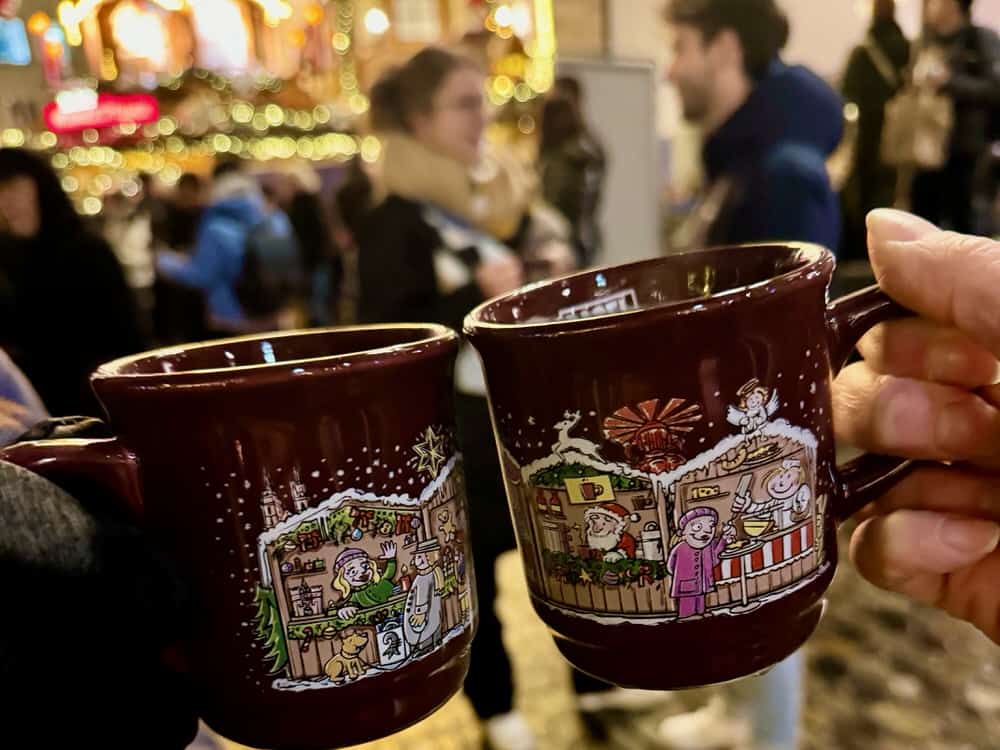
Stay: Picco Picasso Apartment Basel – This petite two-bedroom apartment near the train station worked so well for us. With a full kitchen, washer and dryer, and nice living room, we loved having a place to “come home” to each day. We especially appreciated that it was right on the tram line.
Day Two: Basel, Switzerland and Colmar, France
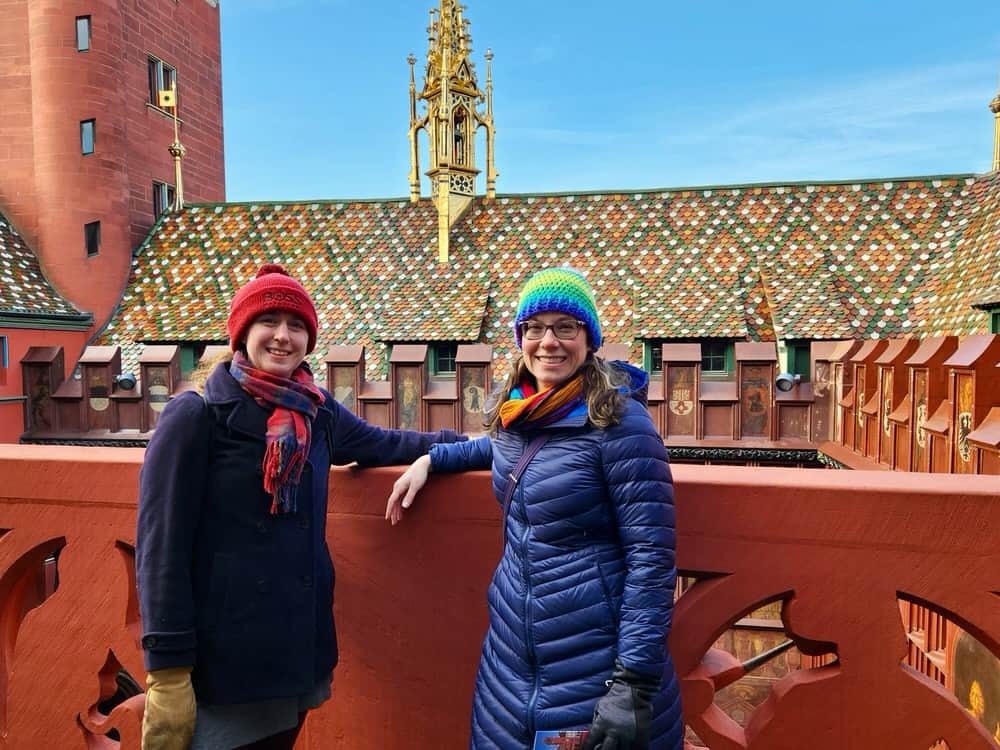
We inadvertently put a lot of steps this day! We had a full day in Basel and then decided to pop into France to see one of the most beloved market towns of the Alsace region: Colmar.
Waypoints: Our day started bright and early with a 9 a.m. walking tour of Basel’s Old Town. While the tour itself was a bust, we certainly got well-acquainted with the streets of central Basel! (Possibly too well-acquainted . . . .)
Once we ditched our sweet, but clueless tour guide, we continued playing it risky by heading to the Spielzeug Welten Museum. This museum completely devoted to children’s toys (think dolls, teddy bears, miniatures, etc.) has real potential to be creepy, but despite how dubious it sounds, it was really quite delightful.
We decided to catch an afternoon train to Colmar, France, about a 45 minute train ride away. A mid-week visit is definitely the way to go with this popular French market.
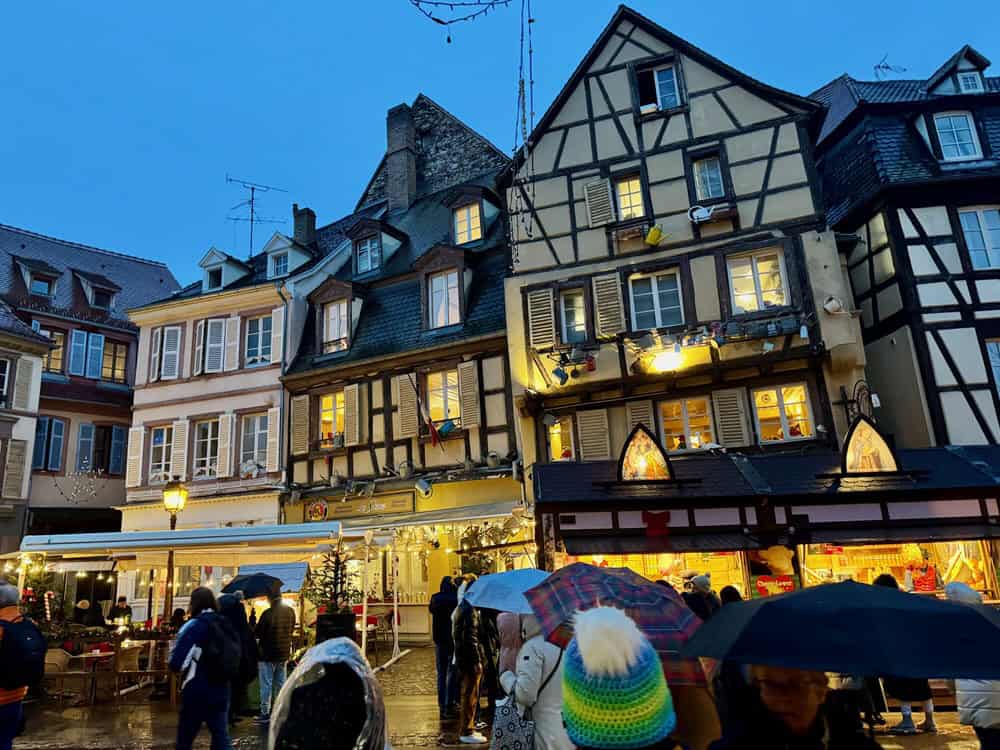

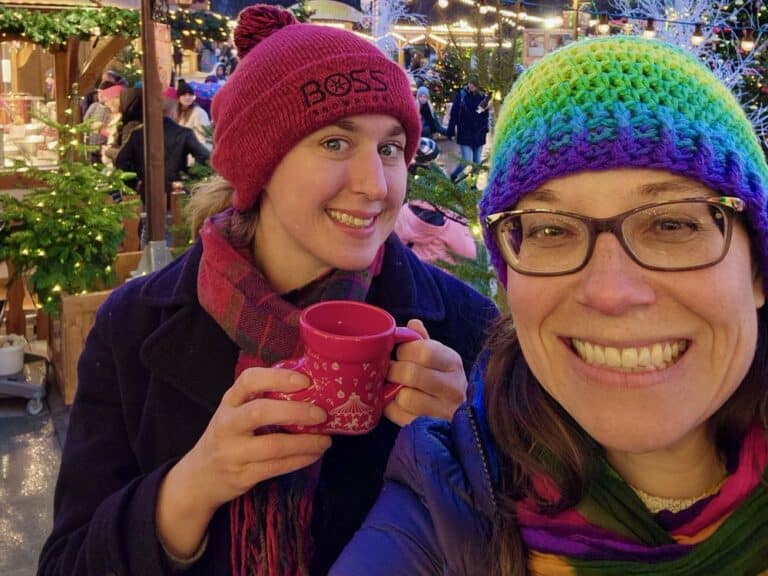
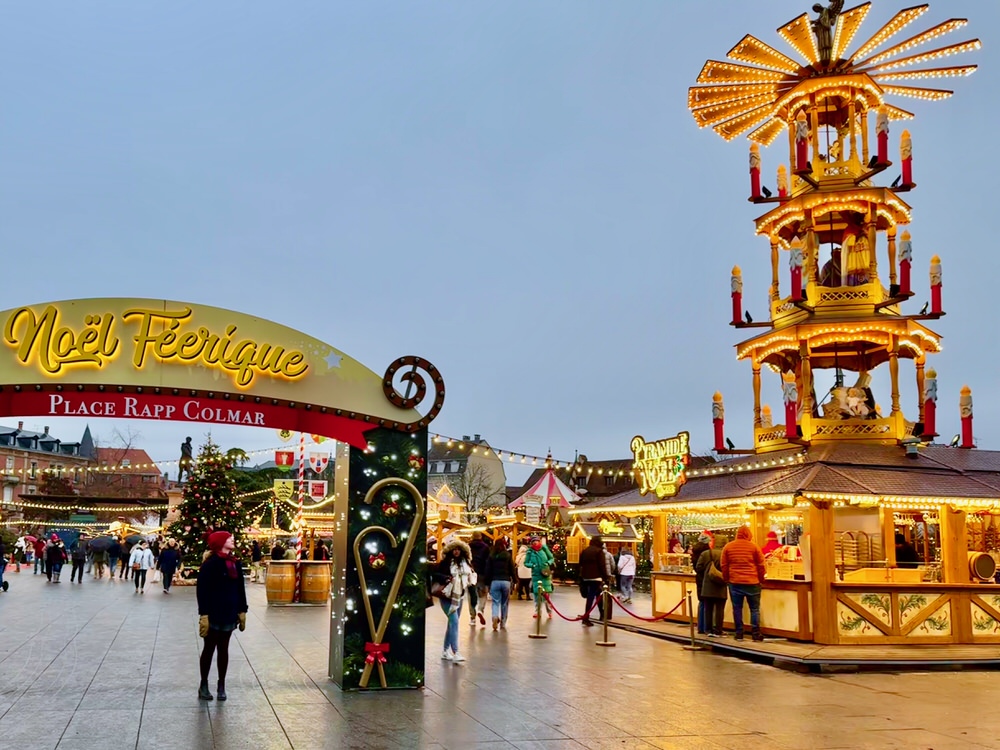
We spent a magical three hours enjoying our first taste of raclette, doing some Christmas shopping, and even riding some of carnival rides in the Noel Ferrique in Place Rapp. While it is often bemoaned that France serves its vin chaud in plastic cups, we managed to score ceramic boot mugs at the carousel bar in the Noel Ferrique.
Eats: We stopped for lunch at 1777 Kaffee/Restaurant in one Basel’s many courtyards.
Stay: Picco Picasso Apartment Basel
Day Three: Freiburg, Germany and Ravenna Gorge
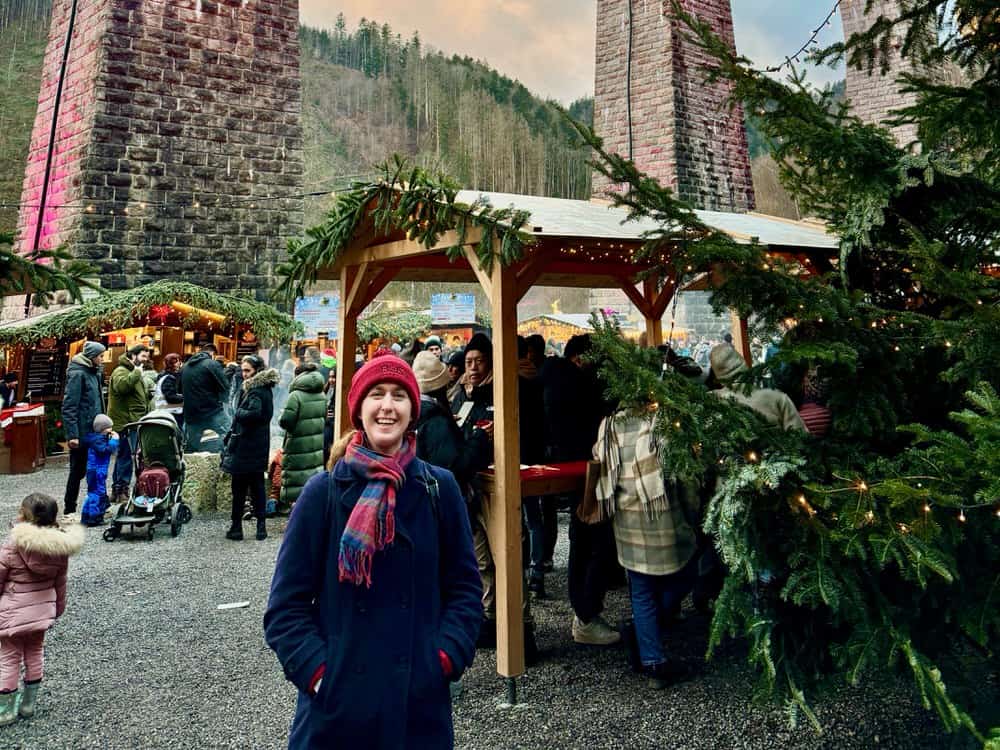
Christmas markets are best enjoyed on a whim, but today we had a set time we need to report to a German Weihnachtsmarkt in Baden-Württemberg.
Ravenna Gorge is a weekend-only Christmas market that goes for four weekends starting in late November. It’s the only Christmas market I know that requires entrance tickets. The tickets go on sale in mid-October (in 2024, they dropped on October 14) and they pretty much sell out in 24 hours.
I grabbed tickets for the only available slot that would work for us which happened to be a Friday 4 p.m. entrance time. I actually think this was an ideal time slot because we got to watch the sunset at this special market tucked in the midst of the Black Forest about a 30-minute drive east of Freiburg.
Waypoints: Since we had a free morning in Basel, we visited the city’s most celebrated museum: Kunstmuseum. I was tickled to find one of Monet’s paintings of Etretat in this art museum which has both modern and classic collections.
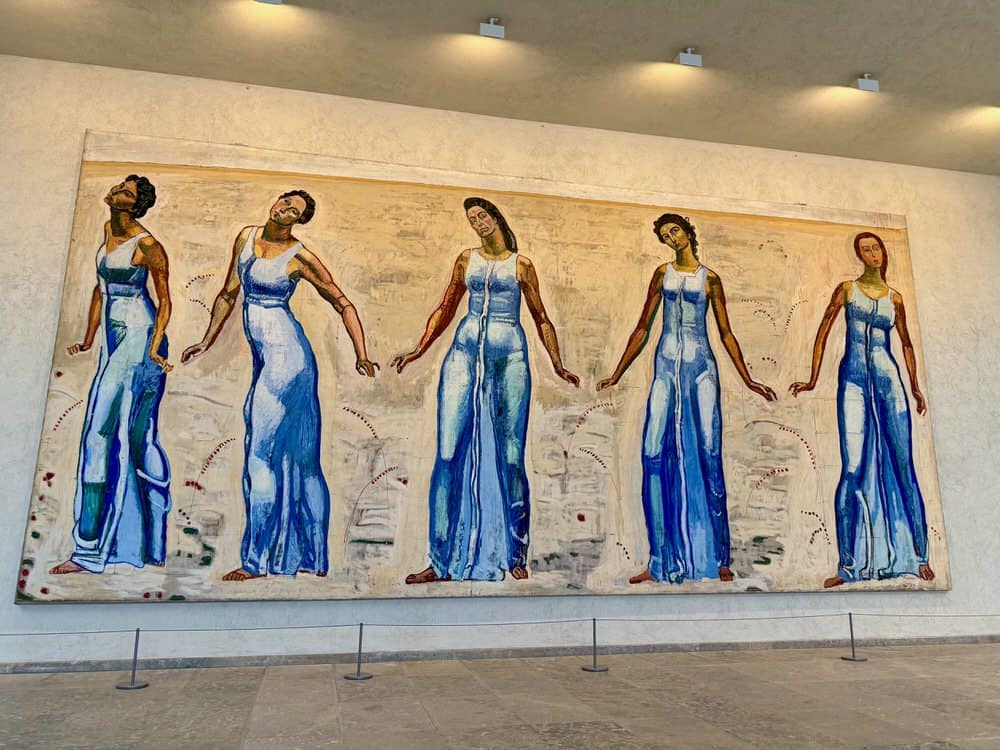
We then spent the rest of the day coming and going to the Ravenna Gorge Christmas market. This involved a train ride to Freiburg, Germany, followed by a bus shuttle (included in our ticket price) to a small hiking area in the Black Forest.
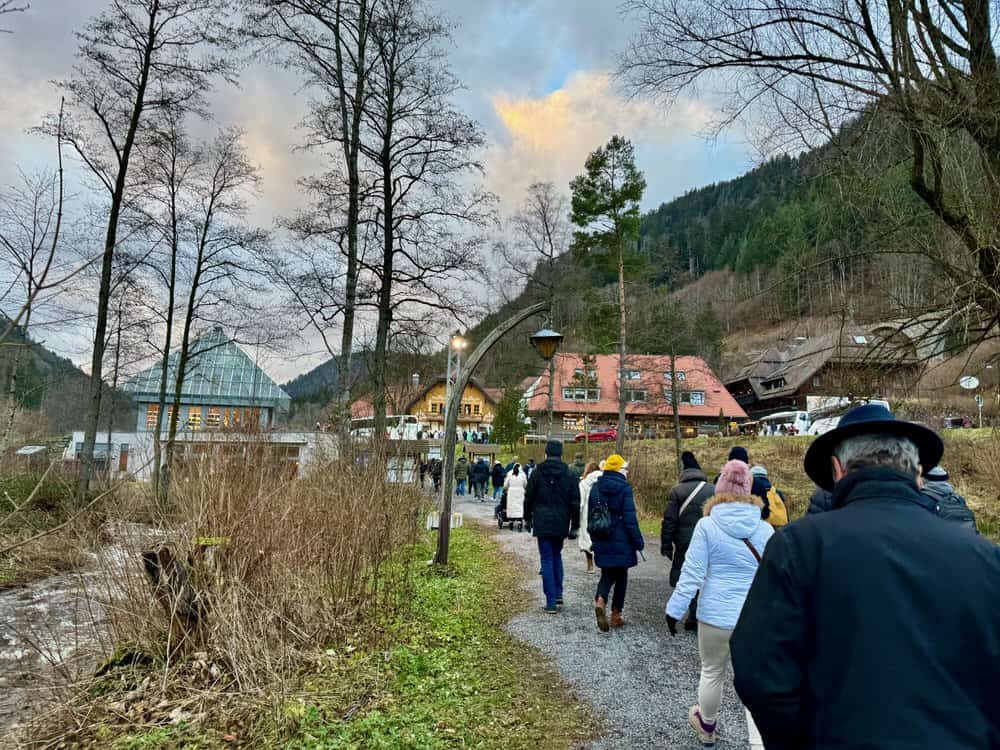

Is Ravenna Gorge Christmas market worth all the logistical challenges? Amanda from A Dangerous Business has a great guide to this market to help you decide if you want to include it on your itinerary.
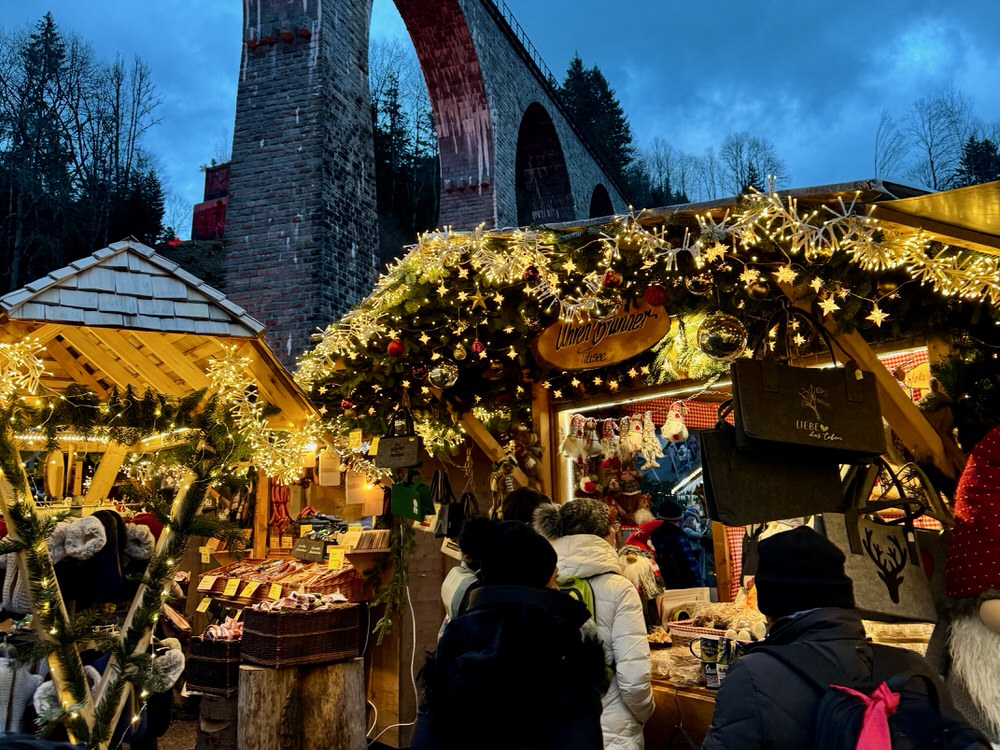
Honestly, for a ticketed event, I thought it was way too crowded. Annoyingly, heavy traffic slowed our shuttle bus, cutting into our two-hour visiting window. But, as you can see from the pictures, it’s pretty hard to have a bad time at a Black Forest Christmas market. They say Germans do Christmas markets best and after this experience, I’m prone to agree!
Due to train schedules, we had about an hour and a half to kill in Freiburg before we could head back to Basel, so we hit up the town’s highly rated markets. Unfortunately, as this was a Friday night, the markets, while charming, were absolutely packed. We grabbed a hot chocolate (and a mug – natch) and basically hightailed it back to the train station.
Day Four: Basel, Switzerland
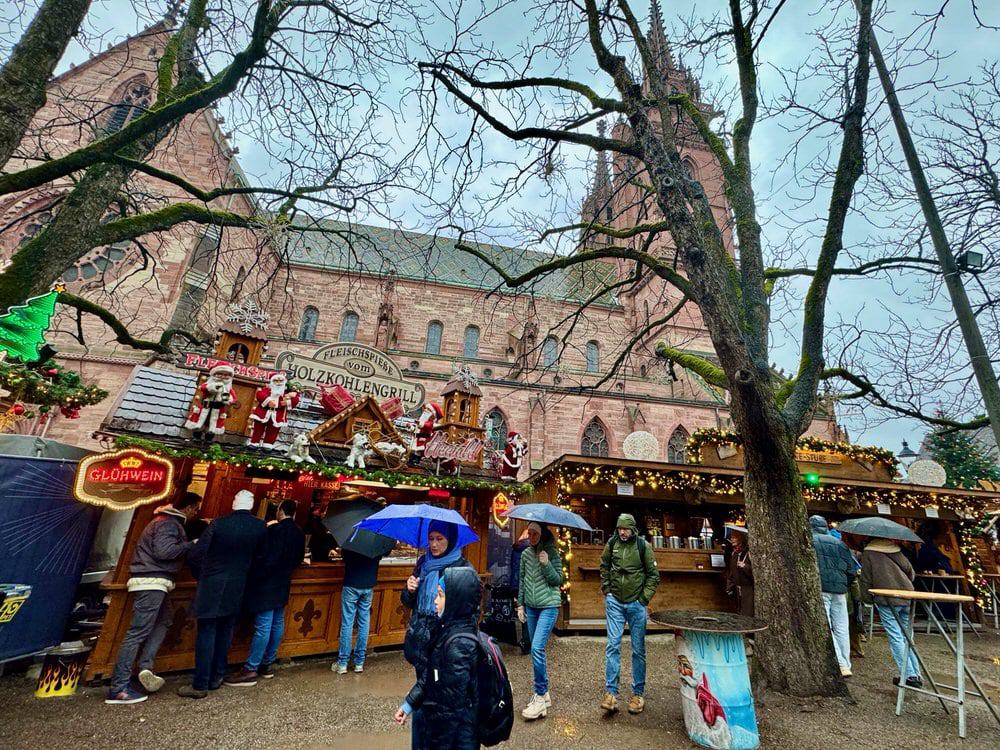
After hitting the Christmas markets pretty hard, we needed an “at home” day in Basel. The weather was quite cool and rainy, but we made the most of it.
Waypoints: To avoid the weekend crowds, we did some Christmas shopping at markets right when they opened at 11 a.m. We also visited the Basel Historical Museum (Barfuesserkirche) which is basically encircled by the markets.
Afterwards, we made a point of swinging into the Basel Town Hall to write our holiday wishes in the Basel Wish Book. This tradition dates back to 1993 and are preserved in the city’s records. It’s truly heartwarming to see wishes of good will written in all different languages.
We also randomly stumbled upon a Santa parade of Harley Davidson motorcycles across the Mittlere Brücke bridge. This annual event is known as the Harley Niggi-Naggi.
Eats: We enjoyed a delicious luxury hot chocolate in the bar at Hotel Les Trois Rois. When in Switzerland, you must do fondue. We had a wonderful experience at a small family run restaurant near the train station.
Day Five: Zurich, Switzerland

We had initially planned to head back to Germany to visit the markets in Heidelberg this day. But after our cozy day in Basel the day before (and our very busy day in Freiburg and Ravenna Gorge before that) the thought of being on a train for 2+ hours each way seemed a little much. Instead we opted to stay in Switzerland and check out the markets in Zurich.
If I’d done even two more minutes of research, I probably would have proposed that we head to Lucerne instead. While I’m glad we saw Zurich, I definitely understand why it has the reputation of being “too rich; too quiet.” Also, and this is the real tragedy, it was like pulling teeth to find a ceramic gluhwein mug in Zurich!
Waypoints: Zurich’s Christmas markets were very tidy and festive, but they were the only Christmas markets we encountered on this trip that were truly copy and paste. While there are various markets sprinkled throughout Zurich’s Old Town, each market features the exact same vendors, very similar to how New York City does its Christmas markets.
Their real cardinal sin however was that most Zurich markets served their gluhwein in paper cups. However, we did find simple ceramic mugs in the market near Fraumünster Church.
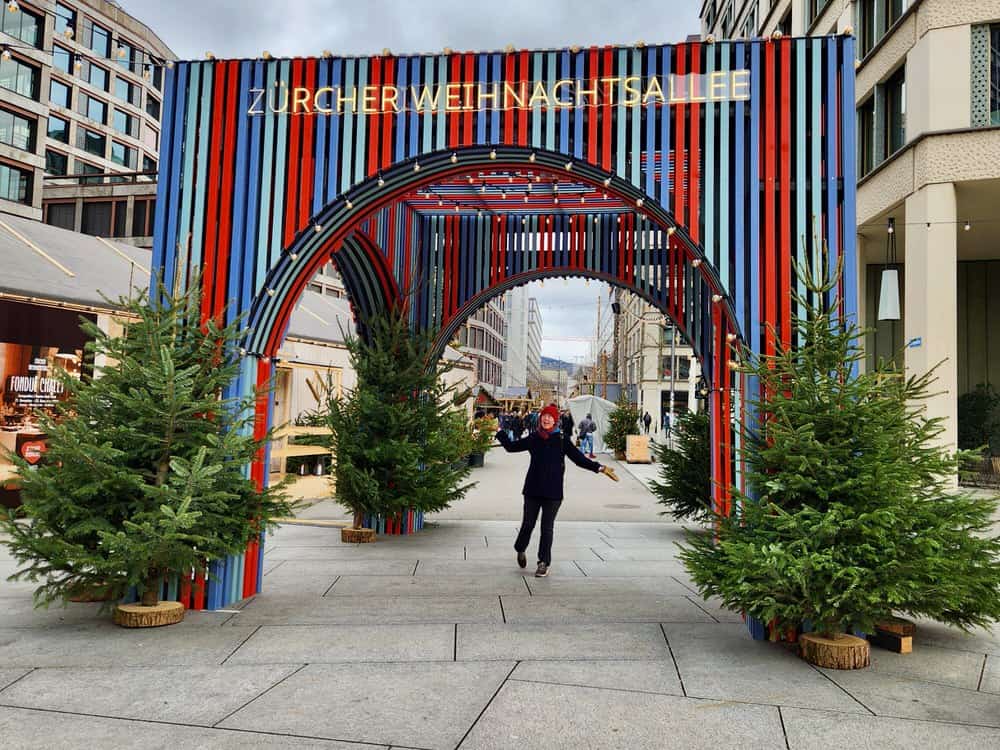

Another Zurich market highlight was the Singing Christmas tree. I feared this would be some sort animatronic horror, but it’s actually a steeply tiered stage decorated like a treee and used for concerts and community sings. (Oh fer cute!) We caught a singalong performance that was vaguely Christmasy but also included a lot of ABBA and Ben E. King.
Day Six: Train to Paris, France
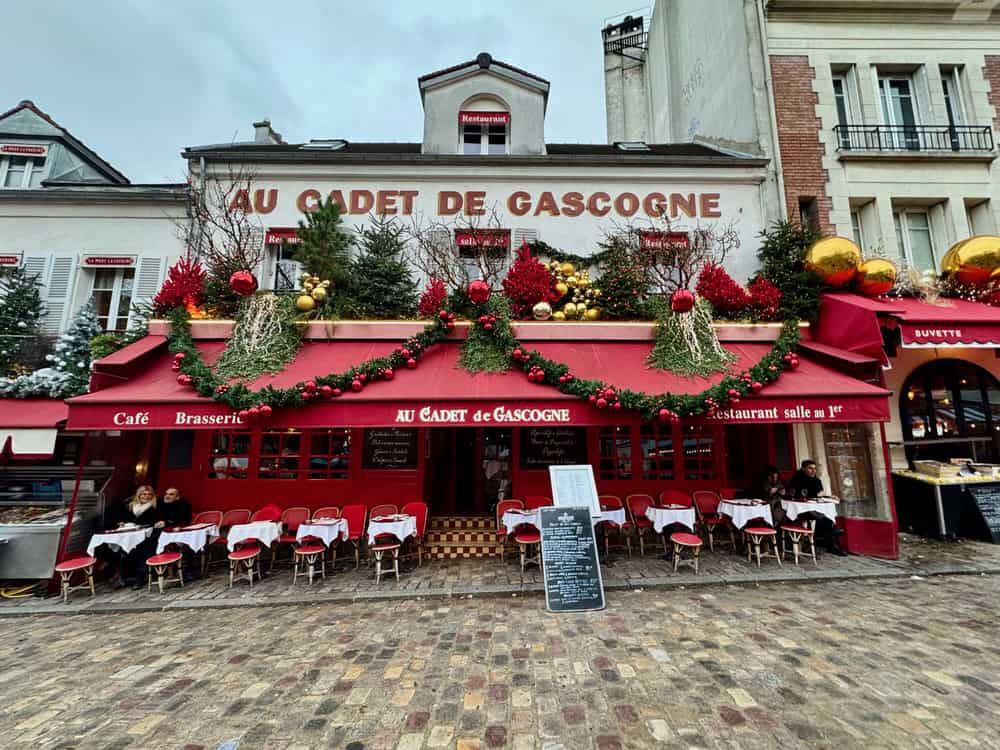
We were very sad to leave our cozy apartment in Basel, but we wanted to take advantage of flying in and out of Paris by ending our week in the French capital. While Paris isn’t known for its Christmas markets, the City of Light definitely has some delights for Christmas-minded travelers.
Waypoints: We took a regional train from Basel to Strasbourg, then changed onto a very crowded train bound for Paris’s Gare de l’Est. After dropping our luggage, we went on a self-guided walk of Montmartre past the Sacre Coeur, Place du Tertre, Moulin de la Galette, and the Moulin Rouge. (You can see our exact route in my 3-Day Paris itinerary.)
A quick change and we headed out to Place Vendome and the Ritz Paris. A lengthy afternoon tea in Salon Proust, followed and then we did a little window shopping in the Ritz Galleria before heading up to Galleries Lafayette to check out the department store’s stunning window displays and Christmas decorations.
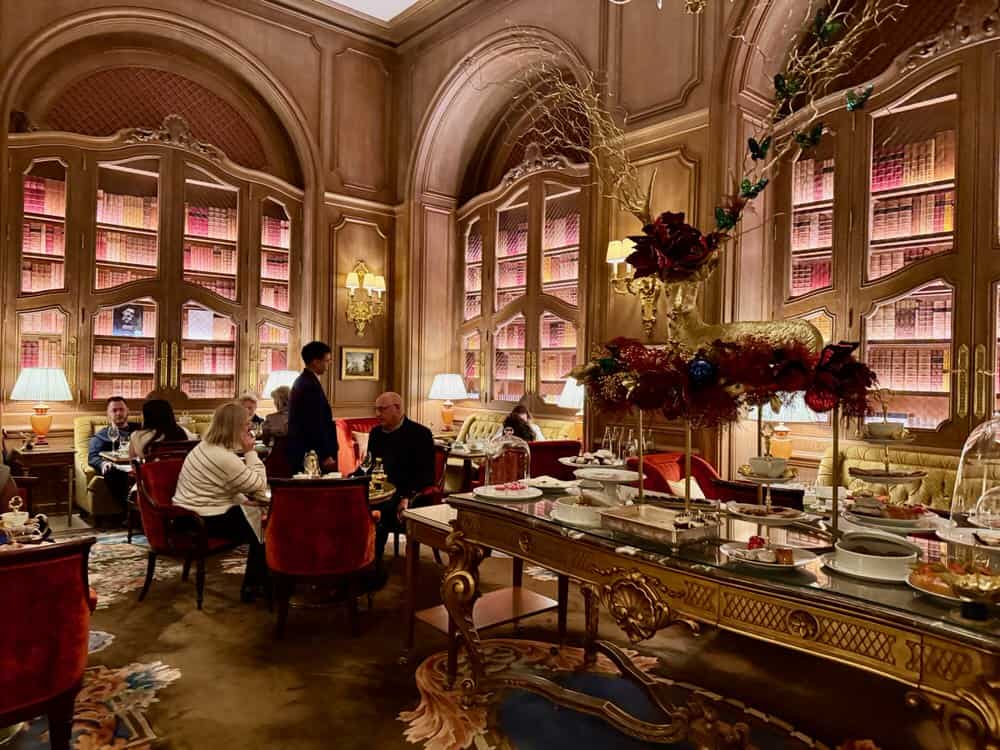
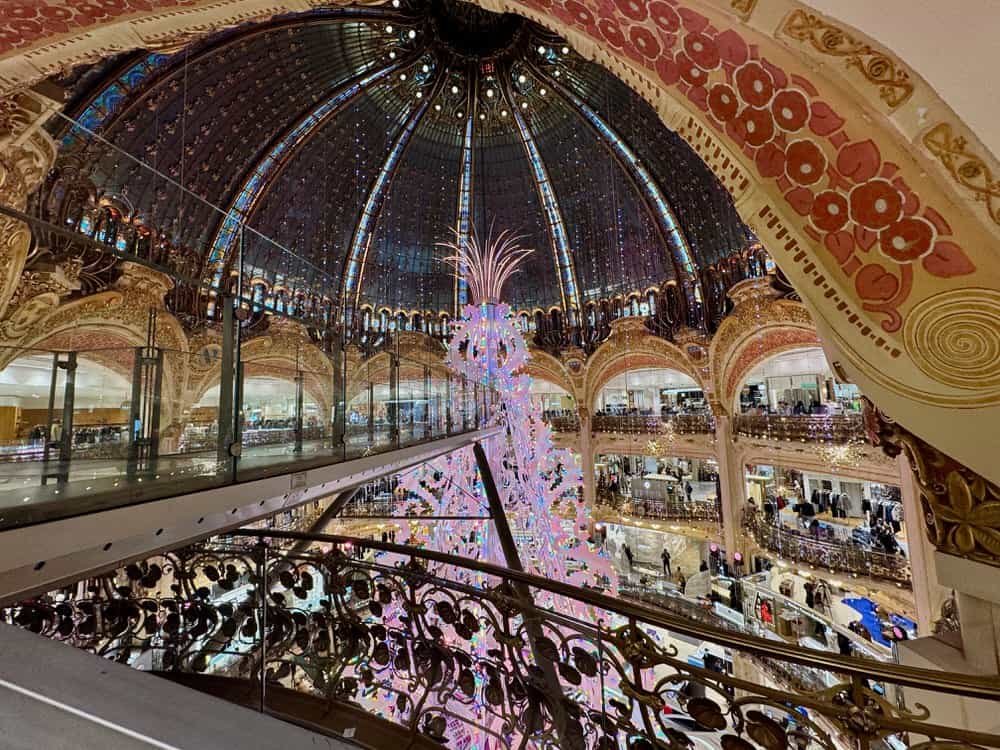
Eats: We indulged in a Christmas tea at the Ritz. French teas are very sweet and we had 11 sweets, tea, and champagne to work our way through. We then had a perfectly adequate salad afterwards at Café de l’Opéra near Galleries Lafayette.
Stay: It’s so overwhelming to find a place to stay in Paris, but with a stroke of luck, I remember that my friends Jenny and Leah (of Azores and Carolinas fame) stayed at Hotel Magenta 38 on Boulevard de Magenta during my very first trip to Paris in 2005.
As it happened, this budget hotel was still operating and proved the perfect Paris base since it was within walking distance from both Gare de l’Est and Gare du Nord, which we used to return to Charles de Gaulle Airport.
Day Seven: Paris, France
This day wasn’t particularly Christmasy, although we did have a pleasant stroll through the Tuileries Gardens Christmas market right when they opened for the day. It was really lovely to be alone in the market and watch it come to life.
Waypoints: We started our day at Arc de Triomphe, then made a short stroll down the Champs Elysees to the George V metro station. We exited the metro at Place de la Concorde and made our way through Tuileries Gardens Marche de Noel.

After a hot chocolate break, we continued across the Seine to the Musee D’Orsay. A spontaneous stop at Shakespeare and Company followed by a little shopping in Le Marais were true highlights.
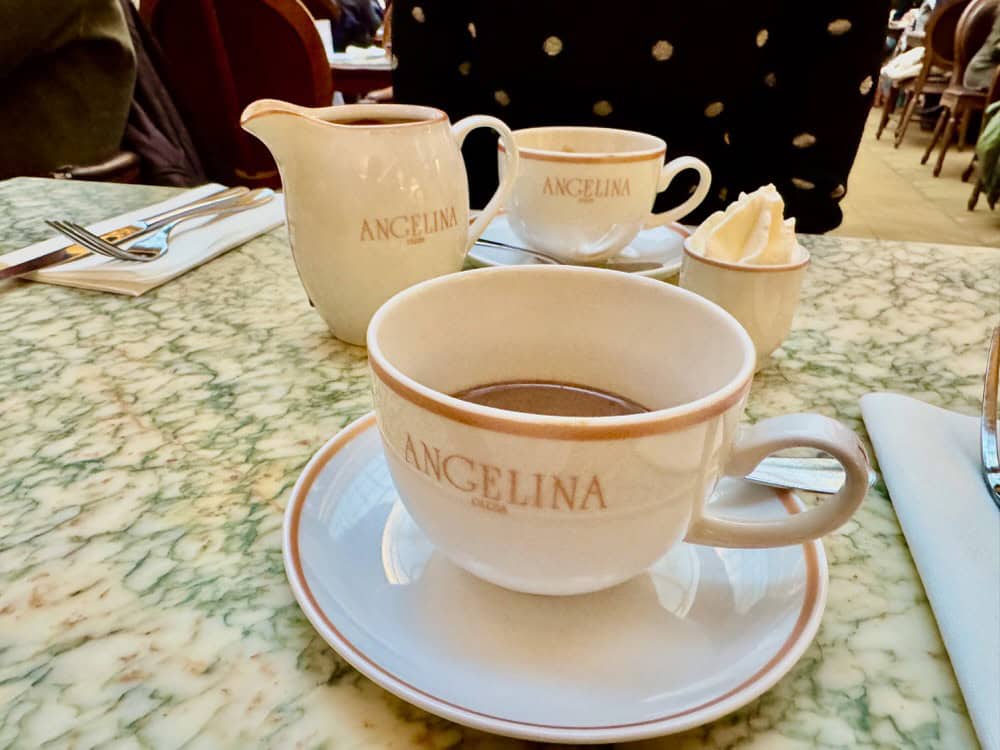
Eats: We had to try the viral hot chocolate at Angelina. While the hot chocolate was tasty, I was more excited about their brunch offerings! After a full day on our feet, we enjoyed an early dinner at Café Hugo in Le Marais.
Stay: Hotel Magenta 38
Is Basel a good city base for a Christmas markets trip?
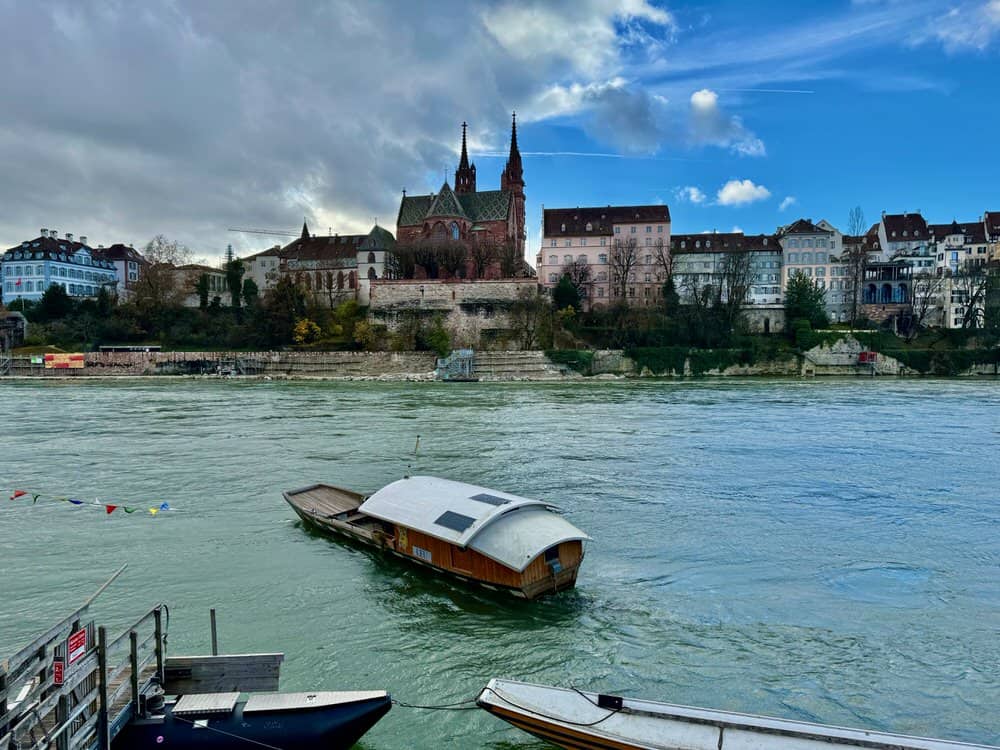
I think so! Basel’s Christmas markets are generally considered the best in Switzerland so it felt like the perfect Christmas destination. We knew even on days we decided not to travel to other market towns, we had world class markets to explore. We also found so many fun Christmas things beyond the markets to do in Basel.
Because Basel is flanked by Germany and France, the city was an excellent base for exploring markets in three European countries all celebrated for their Christmas markets. It provides especially great access to France’s Alsace region.
Switzerland is generally considered one of the most expensive European countries to visit, so Basel probably wasn’t the most budget friendly choice. However, because we prepared our own breakfast and ate most other meals at the markets, we avoided a lot of Switzerland’s spendy pain points.
Another unexpected perk of staying in Basel proper was that our apartment host gave us each a Basel Card. This visitor pass for all registered hospitality guests in the city includes free public transportation. We quickly became pros at using the city trams. It also gives you half price admission to almost all of the city’s 40+ museums.
How we traveled between Christmas markets
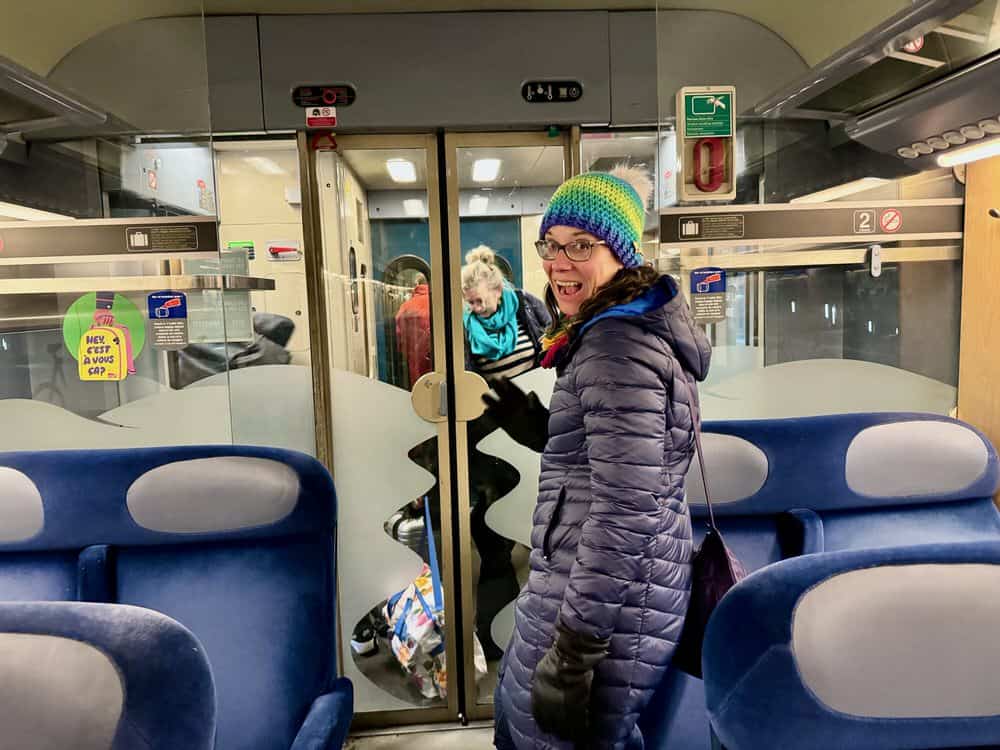
We purchased a 2nd Class 5-Day Flexi Eurail pass for this trip. This pass lets you ride any train with seat availability (in second class) for any five days during a one-month period. Once you activate your pass for a day, you get unlimited train travel for that day. The Eurail app and website aren’t the most user-friendly, but you get used to it quickly.
Why use a Eurail pass?
I decided on the pass because it allowed flexibility in our departure and return times. If I bought tickets for all our train journeys in advance with set departures and returns, I foresaw a scenario where we unnecessarily raced back to the train station or simply buying new tickets because we wanted to stay somewhere longer than I’d originally anticipated.
Since most regional trains (like those between Colmar, France and Basel, Switzerland) are never full, the pass allowed us to hop onto whichever train was leaving next. We did learn that, at least on the Swiss rail lines, they really want you to activate your ticket on the Eurail pass app for the train at least a minute before its departure time.
For busy train routes (i.e. Paris to Strasbourg) the Eurail app will require you to pay a small extra fee for a seat reservation. There is no workaround for this additional fee and it’s critical that you reserve your seat well in advance because these trains were full.
Both of us love traveling by train, so this was truly delightful way to see several markets without jostling with luggage.
We did discover that a one-hour train ride each way was the farthest we wanted to travel. Despite us both really wanted to head up to Heidelberg, the 2+ hour train ride just felt like too much pounding around.
How far are train stations from the actual markets?
All the markets we visited were a short walk (as in less than 10 minutes) from the train station. In the case of Zurich, one of the city’s best Christmas markets is located right in the train station.
Guide to Planning Your Own Self-Guided European Christmas Markets Tour by Train
Christmas markets are so ubiquitous in Europe that I don’t think anyone can conclusively which ones you should visit. Besides, each market has its own flare and personality and what some people love might not be for you. While I’m not prepared to say that these are the very best markets in all of Europe, they came up consistently while researching this trip.
- Vienna, Austria
- Colmar, France
- Riquewihr, France
- Strasbourg, France
- Cologne, Germany
- Heidelburg, Germany
- Munich, Germany
- Budapest, Hungary
- Basel, Switzerland
- Lucerne, Switzerland
It’s an excellent idea to add some smaller, lesser-known towns to your itinerary. These will be far less crowded and will likely feel much more magical than the crowds you’ll find in well-known Christmas market destination cities. However, they’ll also be a little trickier to reach via public transportation.
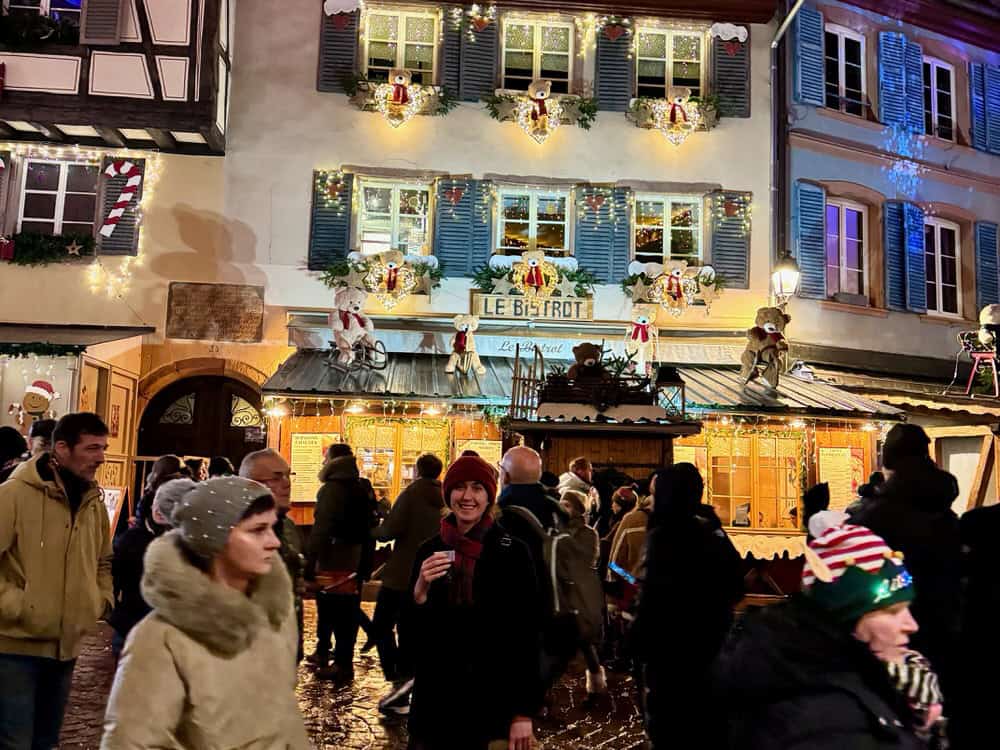
Considerations when creating your own Christmas market itinerary
When you beginning researching your Christmas market trip, you’ll quickly realize that there’s no way to see all the “must-see” markets in one trip.
In general, most people agree that Germany hosts the most charming, quintessential markets, but you’ll find markets that people rave about in France, Austria, Denmark, and more. (One country that’s actually notorious for its poor showing in the Christmas market realm is the United Kingdom.)
One of the big selling points for European Christmas market river cruises is that you only have to unpack once. However, you don’t have to float down a European river with a bunch of strangers to solve this luggage problem.
Take a page out of Walt Disney’s book and create a “hub and spoke” Christmas market adventure. All you have to do is choose a large/mid-sized European city for your base. From there, travel by train to the dozens of markets located within an hour’s ride.
This hub and spoke approach to Christmas markets could be applied all over Europe. I think it would work particularly well in Munich, Cologne, or Vienna. Personally, I think it’s important to choose a city that’s well known in and of itself for its Christmas market to make the trip extra festive. We loved our Basel, Swizerland “hub”!

My best tips for visiting Christmas markets in Europe
- Budget about 50 euros/francs per person per day to feed yourself and do a little light shopping.
- Wear a brightly colored, distinctive hat and/or scarf so it’s easy to spot other members of your group if you get separated.
- Expect crowds. If you don’t like crowds or really want to shop, go as soon as the markets open (usually late morning) and visit on weekdays.
- Waterproof shoes are a must; winter boots are optional.
- Pay attention to the weather forecast and plan accordingly. We were so glad we had rain jackets and umbrellas! We would have also benefited from some sort of zippered waterproof tote for our purchases.
- Germany is the only place we found cash only markets. Switzerland and France were more than happy to accept credit cards at all booths.
- Apple Pay and Google Pay are your friends for fuss-free payment when your hands are full of gluhwein mugs and raclette.
Essentials to pack for the markets
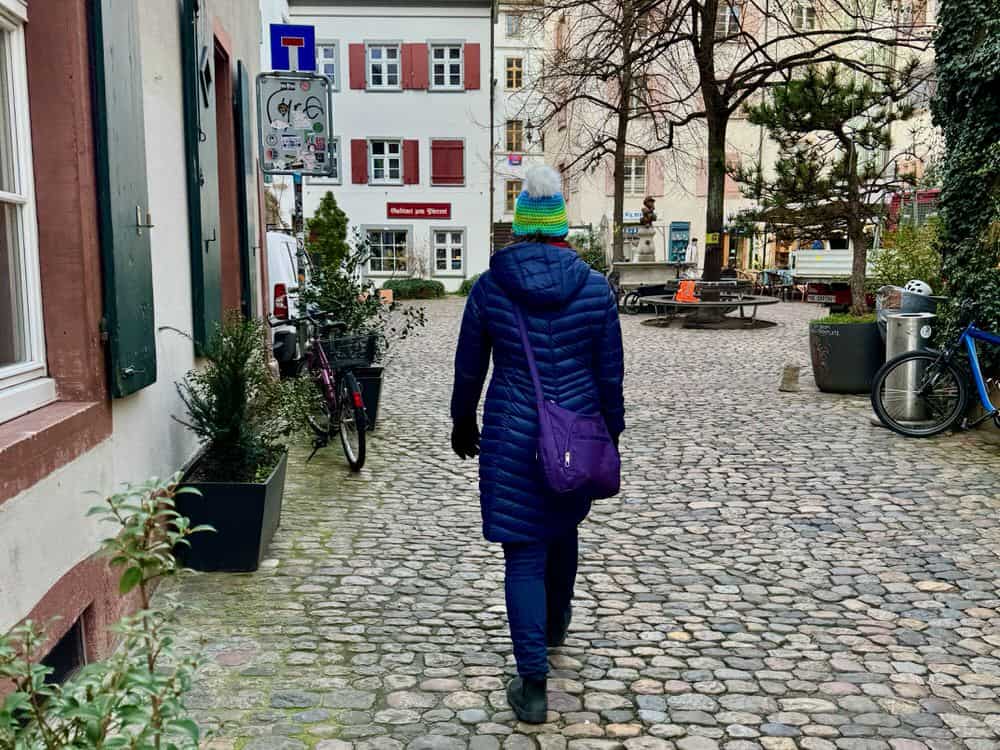
Waterproof shoes – We saw so many Americans tromping around the markets in their heavy winter boots. Not only did the boots look clunky and uncomfortable, with daily temps in the upper 30s and 40s, those boots had to be stifling!
Don’t let the words “Christmas” trick you into thinking you’ll be trudging through snow banks. You’re more likely to be skirting rain puddles! I brought two pairs of waterproof shoes: my black boots and sneakers that I also used in Normandy. My feet were never cold or wet. If there’s little to no snow in the forecast for your visit, leave the snow boots at home.
A zippered waterproof tote – As luck would have it, the day we decided to do the majority of our shopping in Basel was also the rainiest day of our visit. How I wished I had a waterproof bag that zipped shut to protect all my purchases; especially my precious paper star lanterns.
Umbrella – You might not need winter boots at the Christmas markets, but you should bring your winter coat. Since you won’t have a rain jacket at your disposal, it’s a good idea to have a small umbrella in your bag just in case you get caught in a drizzle.
Cash – Before this trip, I expect the markets to mostly be cash only, but we found credit cards readily accepted in the French and Swiss markets. However, if you’re planning to visit any German markets (and you really should!) you will want to have euros at the ready.
Toilet paper/pee cloth – It’s hard to explain just how busy the Christmas markets are. For example, the markets in Basel receive about 900,000 annual visitors in their short season. That averages out to about 35,000 daily visitors! As you might expect with that volume, the public bathrooms get hammered and it’s difficult to keep toilet paper stocked. You’ll be so happy if you have a pee cloth or a small roll of TP in your purse.
Hand sanitizer – Likewise, it’s a good idea to have a small tube of hand sanitizer in your bag, not only for bathroom breaks but also before eating.
Hand warmers – While I never wanted these for my hands, I really wished I’d thought to slip hand warmers into my jacket pocket to help extend my phone battery life. All that exposure to 30 degree weather takes its toll on your phone’s battery!
Battery pack – When your phone is your wallet, train pass, camera, and navigation, you want a sure proof way to keep it powered up so plan to keep a battery pack in your purse at all times.
Learn everything I packed in my complete European Christmas market packing list.
How to stay safe while visiting Christmas markets
Sadly, almost every year there’s a deadly attack at a European Christmas market, often in Germany and usually motivated by terrorism. I don’t mean to make you paranoid, but it’s important not to take your safety for granted, despite the markets’ cozy charm.
Here are my best Christmas market safety tips:
Be cognizant of crowds – Since most of these attacks involve people driving vehicles into the crowded market streets, one of the easiest ways to stay safe is to visit the markets at less crowded times like daylight hours or weeknight evenings. If you’re in shoulder-to-shoulder crowds, it’s a good time to call it a day.
Stay sober – No, I’m not telling you to abstain from gluhwein. Far from it! But gluhwein is often fortified with additional alcohol like rum or brandy. There’s also something about warm beverages that make it especially hard to calculate alcohol intake. It’s an excellent idea to drink in moderation so you can maintain situational awareness. You’re in a foreign country after all!
Watch out for public drunkenness – Even if you’re staying sober at the markets, that doesn’t mean everyone else is. Locals often meet up at the markets for drinks after work and sometimes things get rowdy. Pay attention to the folks around you. If they’re swaying or swerving, you don’t want to get crashed into.
Be prepared for petty theft – While we didn’t experience any petty crime during our trip, the crowded markets make life easy for pickpockets. I recommend using a crossbody bag or small theft-proof backpack. Since all western European credit card machines seem to accept mobile pay, it’s a great idea to have mobile pay set up on your phone so you don’t have to be going in and out of your bag at each stall.
What weather to expect

I’d love to tell you to plan for frosty forests and snow-capped castles and cathedrals. However, December in much of western Europe, can be quite autumnal by North American standards. Think temperatures ranging from right around freezing to the mid-40s and a fair amount of rain.
In the Alsace region where we were based, our early December visit came with one full-on rainy day and several showers on other days. Our temps ranged from the mid-30s to as high as 50!
Another important consideration is that December days are short in Europe. After all, Paris is at the same latitude as Thunder Bay, Ontario! If you’re not from Canada or Minnesota, you might be shocked at how quickly night falls. While the markets are unarguably more magical after dark, you will want to use your limited daylight wisely.
When To Go
Part of what makes the Christmas markets so busy and beloved is that the season is quite short. While every market is different, most markets open in late November or early December and close right around Christmas.
Since the markets are intended for Christmas shopping, there’s really no reason to keep them open beyond the holiday itself. A notable exception to this is in Italy and other cultures where Epiphany (January 6) is an important gift giving day.
If you want to visit when all markets are up and running, make sure your visit falls completely in December. During our trip to Milan in November 2023, we were too early for Lugano, Switzerland Christmas market, but the Como City Christmas market had just opened.
How Much Does A European Christmas Market Trip Cost?
Here’s a complete breakdown of all my expenses from my December 2024 trip. Keep in mind that I traveled with a friend which meant we split many expenses. For example, I paid for all the lodging, but she covered most meals.
- Airfare: $91.70 + points (If I’d paid in cash, this ticket would have cost about $800)
- Airport parking: $104.00
- Trains (Eurail pass + necessary ticket reservations): $416.06
- Public Transportation: $34.09
- Hotels: $1,046.69 + points (The cash covered our Basel apartment; I used points for our Paris hotel.)
- Tours / Museums: $126.18
- Food: $224.32
- Souvenirs: $264.99
- Cash Withdrawn: $116.41
- TOTAL: $2,424.44
While I’m sure I could have done this trip a little cheaper, we felt we did pretty well considering that the Christmas market cruise we were looking at started at $3500 . . . without airfare!
You could definitely save a little money by buying all your train tickets individually instead of using the Eurail pass. However, I think the savings would probably be under 50 euros.
The only other obvious place to cut expenses is with lodging, but make sure any savings don’t come at the expense of convenience. Our Basel apartment was about a 7-minute walk from the train station and that alone was priceless.
Conclusion: How To Create a Perfect Self-Guided European Christmas Market Adventure
My very advice for a European Christmas market trip is to get planning and go! Despite the crowds and rain, this was easily one of the best experiences of my life.
While I would have loved the option to visit smaller towns and less crowded markets, I was pleasantly surprised at how easy it was to see some of the very best European Christmas market using only train. I recommend choosing a mid/large European city like Basel or Munich to base out of and then use public transportation to visit neighboring markets so you don’t have to faff about with luggage every day.
I hope you feel inspired by this full week itinerary of our own Christmas market trip in France, Germany, and Switzerland. While a little advanced planning will get you into very special markets like Ravenna Gorge in Germany’s Black Forest, a Eurail pass will allow you to pop in and out of most markets on your own schedule.
Once you’ve decided on your own itinerary, don’t forget to consider my best tips, packing suggestions, and safety guidelines for visiting the markets. I’d love to help you plan your own European Christmas market adventure. Don’t hesitate to contact me with any questions you have during the planning process.
 |
 |