

This post may contain affiliate links. When you purchase something through these links, I receive a small commission that helps me create this blog’s content. There’s no extra cost to you. Read my privacy policy to learn more.
Published: 3/22/2025
Best Battle of the Somme Sites To See In a One Day Visit
Need a one-day itinerary for visiting historic sites related to the Battle of the Somme in northeastern France?
My concise, but thorough, outline of the best Somme battlefield museums, sites, and memorials will allow you to soak in the history and significance of this tragic World War I battle even with limited time.
I’ve based this guide on my first-hand experiences in France’s Picardy region – sometimes called Pays du Coquelicot, or Country of Poppies – in November 2024 during a week-long road trip through northern France. This beautiful, rural corner of northeastern France has seen a mind-boggling amount of bloodshed throughout the centuries. Now it’s known among locals as “a place for memory.”
I wrote this guide for folks with a passing interest in France’s World War I sites who want to spend a half or full day learning about them. (No doubt World War I enthusiasts who could happily spend entire weeks here will think I’ve painted in pretty broad strokes.) If you want to create a purposeful visit to the Somme and avoid aimless shuffling between the dozens of memorials that dot the Somme battlefields, my guide is exactly what you’re looking for.
Let’s dive right in so you can get on with having a meaningful and informative day visiting the Somme.
Fast facts about the Battle of the Somme
In general, I think Americans just aren’t as interested in World War I as they are in World War II. Americans avoided many of the Great War’s most deadly and haunting episodes like the Battle of the Somme. However, if you’re a citizen of a Commonwealth country like Canada, World War I remains a significant and solemn memory.
If you’re a little hazy about the specifics of the Battle of the Somme, here’s a little refresher before your visit:
- Started on July 1, 1916 and ended November 18, 1916
- The Somme is a nearby river which flows into the English Channel.
- There was a second battle of the Somme in 1918, but in general, when people referred to “The Somme,” they’re talking about the 1916 battle
- July 1,1916 is known for being one of the worst days of battle in British war history.
- On July 1, 1916, more than 19,000 British soldiers died and there were about 57,000 British causalities.
- After four and half months of fighting, there were more than a million casualties. British troops had advanced just six miles into German territory. It was a catastrophic loss of life that essentially ended in stalemate.
- The massive artillery bombardment during the week before the battle began could be heard across the English Channel in London.
- It’s the first battle that tanks were used in.
Map of the Best Battle of Somme Sites For A Quick Visit
Must-See Battle of the Somme Locations
Happily, it’s very easy to see the best Battle of the Somme sites in a compact one-day itinerary.
Sadly, this is because so many soldiers lost their lives in this tiny corner of France’s Picardy region. I recommend staying relatively nearby the night before (more on that a little later on in this post) so you can putter around all day to the memorials and museums that most strike your fancy.
If you’re pressed for time, what I’ve listed below are the Somme sites you should prioritize. You can easily visit them in a half day, but it will be a bit of rush. This is a place for quiet, thoughtful introspection, not tight timelines, so I recommend taking your time if you can.
- Somme 1916 Museum
- Town of Albert
- Thiepval Memorial
- Ulster Tower
- Beaumont-Hamel Newfoundland Memorial
- Hawthorn Ridge Carter
Town of Albert
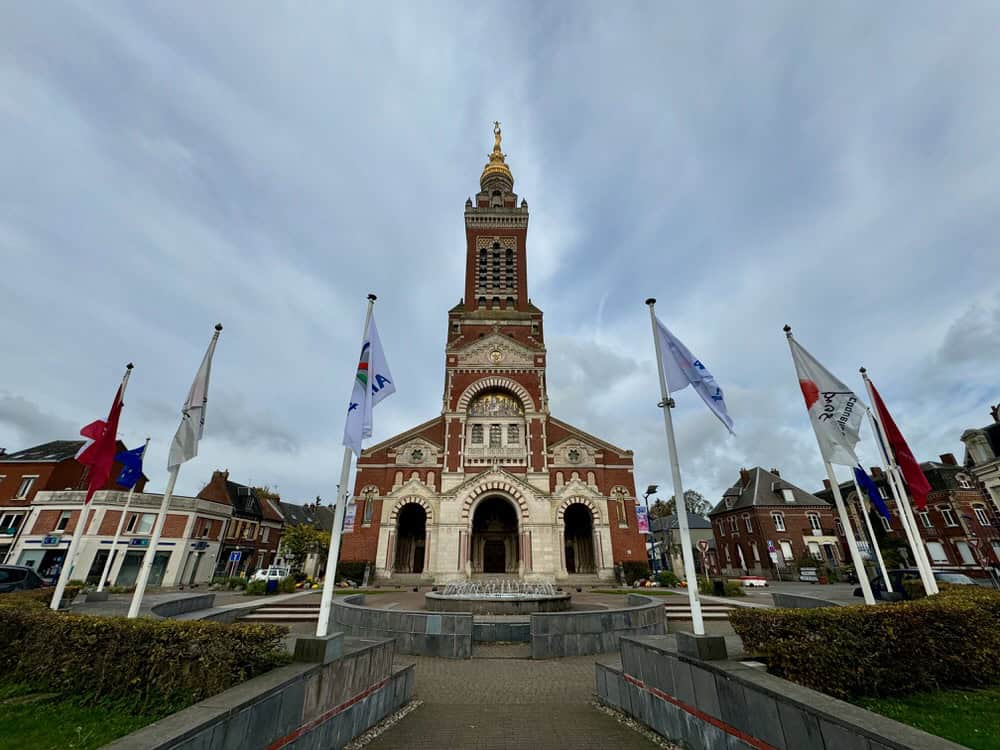
The small town of Albert (population of 9500) sits right on the main road that Allied troops used to reach the Somme battlefields. As a result, the town was destroyed and rebuilt many times over during World War I. Since the town continues to embrace World War I tourism, it’s the perfect place to start a tour of the Somme.
The focal point of the town is the impressive Basilique de Notre-Dame de Brebières. While this particular church only dates back to the 1890s, Albert has been a pilgrimage destination for Catholics since the 11th century. In fact, the town is such a common pilgrimage destination that it’s sometimes called “Little Lourdes of the North.”
During World War I, the basilica was destroyed in several bombings. The bell tower somehow remained upright. Most notably, the large gold Madonna and child statue on top of the tower tipped over a full 90 degrees, then stayed in this precarious position for several years. Some thought the war wouldn’t end until the Madonna finally fell.
When German troops took control of Albert in 1918, British troops decided to blow up the tower so it couldn’t be used for surveillance, causing the statue to finally fall. Sadly, this didn’t mark the end of fighting, but the war did finally conclude about 3 months later.

Today you’ll want to make a quick visit to the reconstructed basilica. Be sure to check out the replica Madonna that once again taken up her perch on top of the bell tower with her “flying baby”.
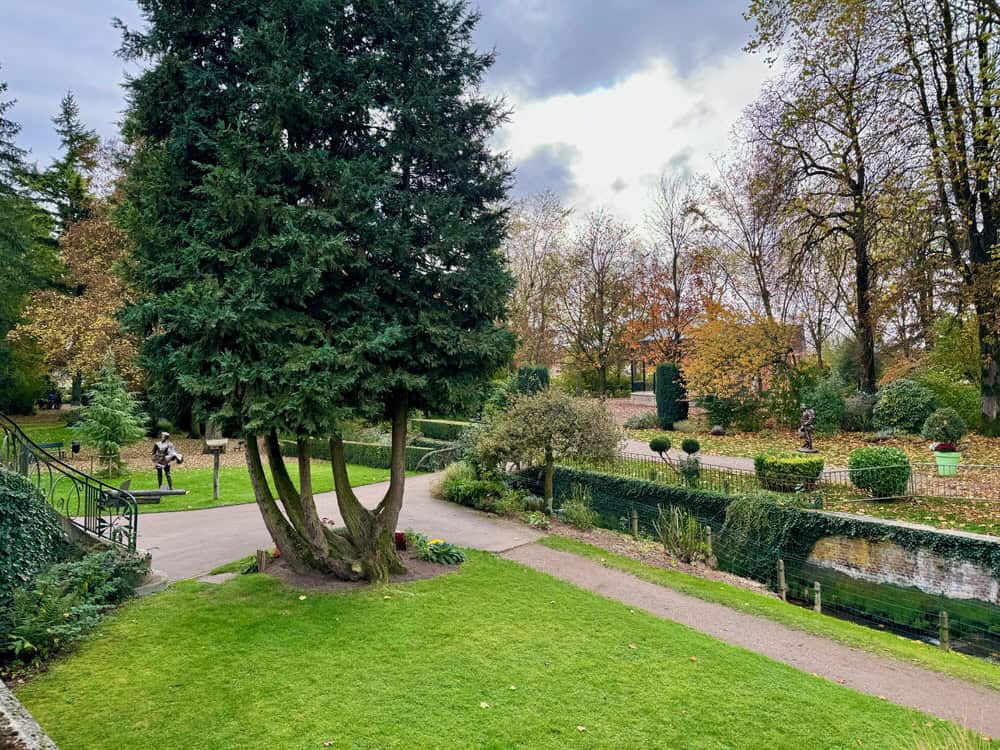
Other points of interest around town include the public gardens in the center of town. While not necessarily a peace garden, the gardens have a calm, restorative feel. You’ll find several statues related to World War I in the gardens and throughout the entire city center.
Somme 1916 Museum
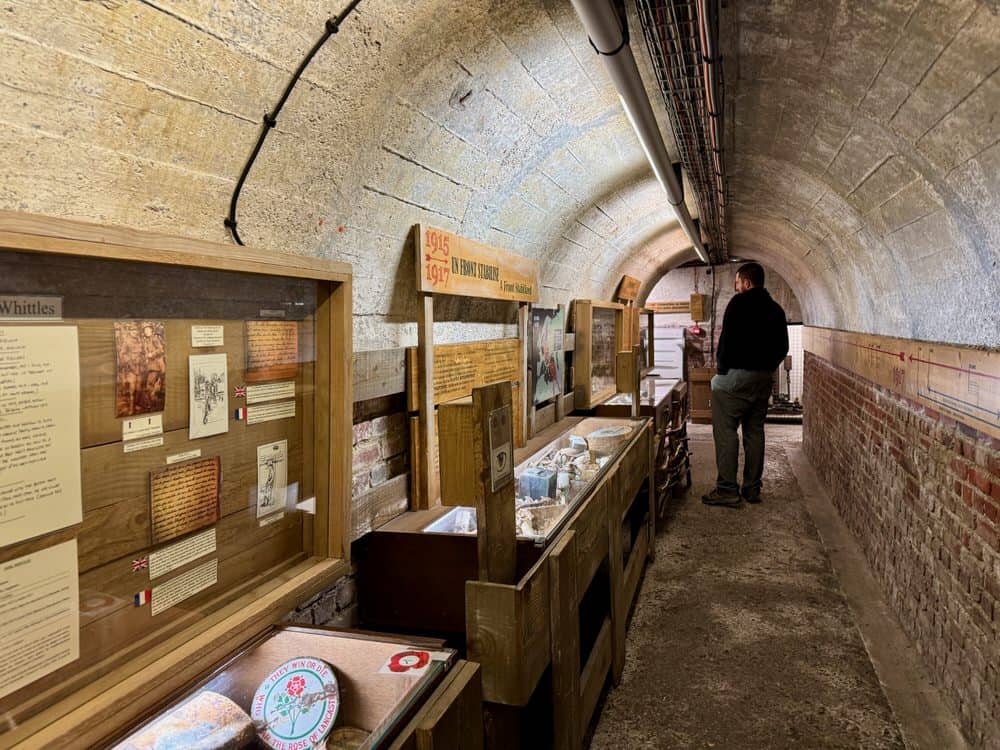
If you only have time to visit one museum during your Somme explorations, make it the Somme 1916 Museum in Albert’s town center. This is the only museum devoted solely to the 1916 Battle of the Somme. It’s also located 30 feet underground in a 750-foot long World War II bomb shelter.
At first glance, the museum might not looks like much. As we descended down into the museum tunnel, I worried that we were getting into a lot of dusty displays with cringey posed mannequin scenes. Instead, we found helpful, concise information panels and maps that really expanded my knowledge of the Battle.
The visit starts out with a video about how the various memorials on the Somme battlefields came to be established. This video’s narration alternates between playing with French or English narration. As the receptionist desk attendant said, “Maybe you’ll get lucky.” We did!
Most notable about this small museum are the very carefully preserved World War I artifacts including guns, artillery, and other items from the era.

(Also, if anyone visits the museum boutique and spots small British and French soldier figurines, would you reach out to me? It’s the one trip souvenir we seriously regret passing up.)
Thiepval Memorial

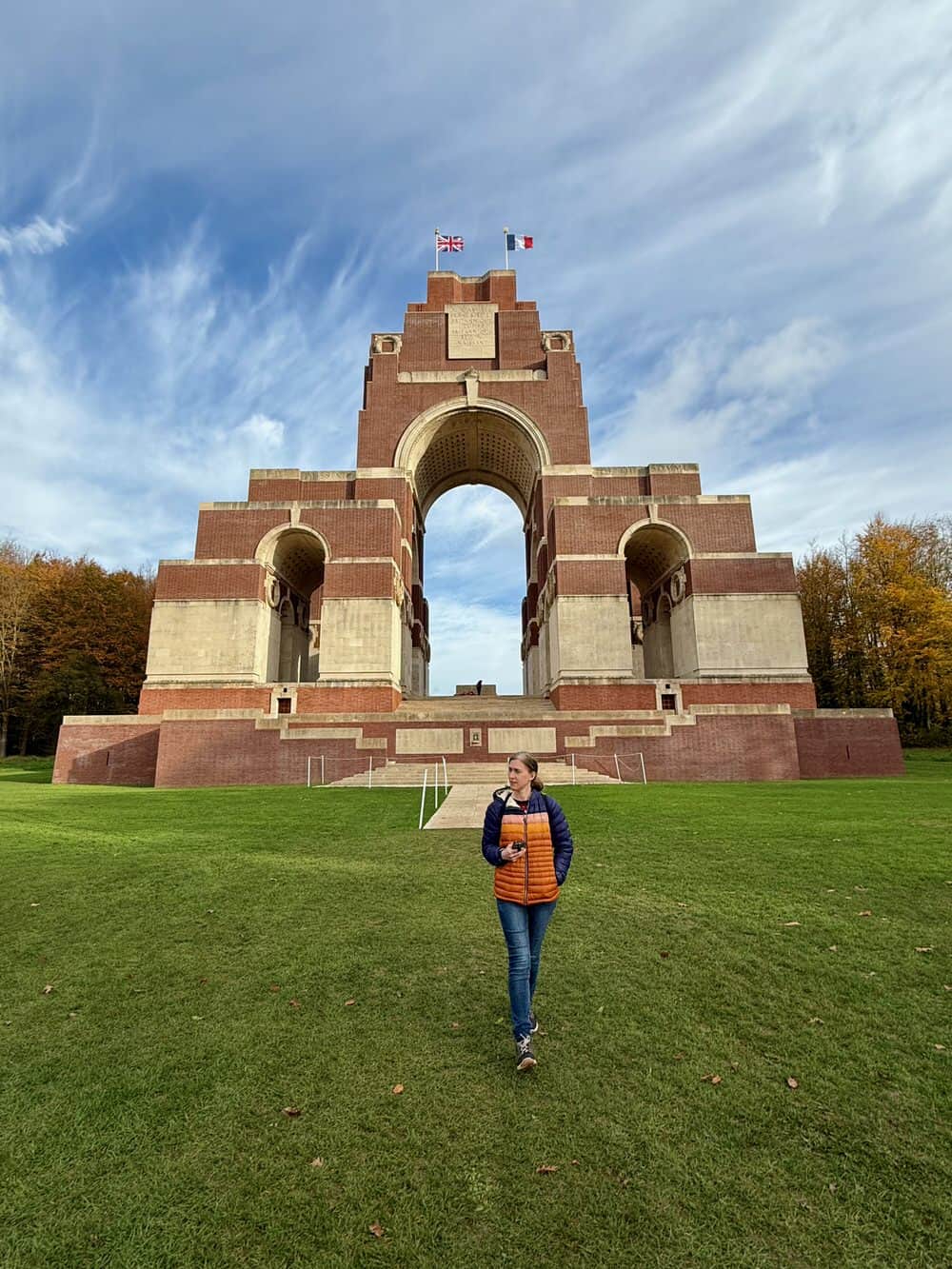
When it comes to World War I memorials, this is the big one! At 160 feet tall, the official name of this imposing stone structure of columns and arches is the Thiepval Memorial to the Missing of the Somme. It stands in the site of one of the deadliest stretches for the front line on the first day of the battle.
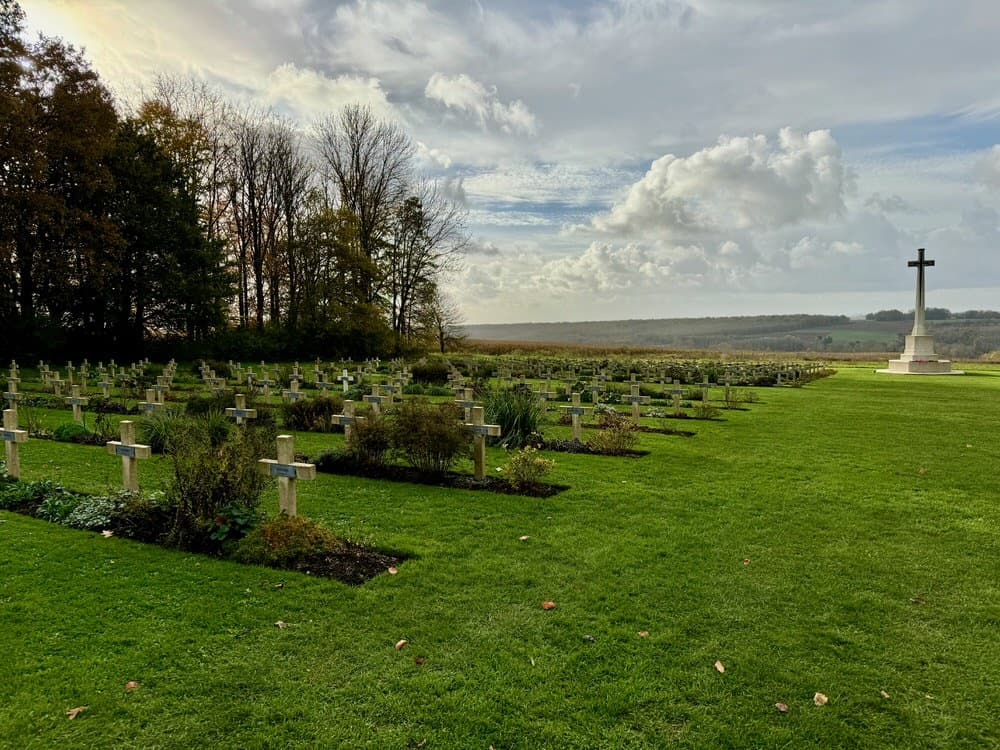
Commemorated in 1932, the memorial remembers more than 72,000 missing British and South African soldiers from the Somme. Their names are individually carved into the monument’s 16 ground level piers. The site is also home to an Anglo-Franco cemetery where 300 Commonwealth and 300 French soldiers are buried.
If you’ve already visited the Somme 1916 Museum in Albert, you may prefer to skip the visitor center. Informational plaques (in both French and English) around the grounds to make it easy to understand what you’re looking at even if you (like us) bypassed the visitor center museum exhibits.
Since the tall memorial is located on a small rise in the countryside, it can be spied from quite a distance as you approach it. While the top of the memorial surely offers fabulous views of the surrounding countryside, there is no public access inside or observation deck at the top.
While you don’t need to spend a lot of time here, I found the graves and massive monument very moving. The hope of the Commonwealth War Graves Commissions which manages the site is that you won’t only remember the battle and people lost, but also reflect on the alliance between France and the United Kingdom that continues to this day.
Ulster Tower
You’ll pass this striking grey stone tower on your way from Thiepval to Beaumont-Hamel. Sometimes referred to as Tour d’Ulster, it’s is a replica of Helen’s Tower in County Down, Northern Ireland.
Dedicated in 1921 to the men of Officers and Men of the 36th (Ulster) Division and all other forces from Northern Ireland, the tower has the distinction of being the first official Battle of the Somme memorial completed. It stands on land that France gave Northern Ireland at the war’s end.
While we chose just to drive by, there is a small café and museum exhibit area. In June, this is one of the spots where poppies bloom around the Somme Battlefields.
Beaumont-Hamel Newfoundland Memorial

Believe it or not, we flew over 4000 miles from Minnesota to France and ended up in Canada. (Yes, the country that I live four miles away from.)
Just like the Ulster Tower, the land this memorial stands on isn’t French. Newfoundland purchased the land in 1921 to erect the memorial. When Newfoundland became part of Canada in 1949, Veterans Affairs Canada took over management and now when you visit, you’re actually visiting Canada.
When we entered the memorial grounds, a young woman greeted us in French. As soon as she realized we weren’t fluent, she switched to English with a decided Ontarian accent. Both Beaumont-Hamel and Vimy Ridge are staffed by Canadian university students. As a northerner myself, hearing that familiar voice made the experience much more poignant.
Beaumont-Hamel was one of the deadliest places to be on one of the deadliest days of the war. Of the more than 800 Newfoundlanders who fought there on July 1, 1916, only 68 were able to attend roll call the next morning. The rest had been killed, wounded, or were missing.
Even if you don’t have time to go through the visitor center, at least plan to take a self-guided stroll on the paths crisscrossing the memorial park’s 74 acres. You’ll find monuments to the 51st (Highland) Division and 29th Division as well as a cemetery for some of the troops who died on July 1, 1916.
More so than any other place where we stopped, this site reminded me of visiting Gettysburg. The battlefields are so well preserved that you really get a sense of how the battle unfolded and the obstacles the troops encountered.


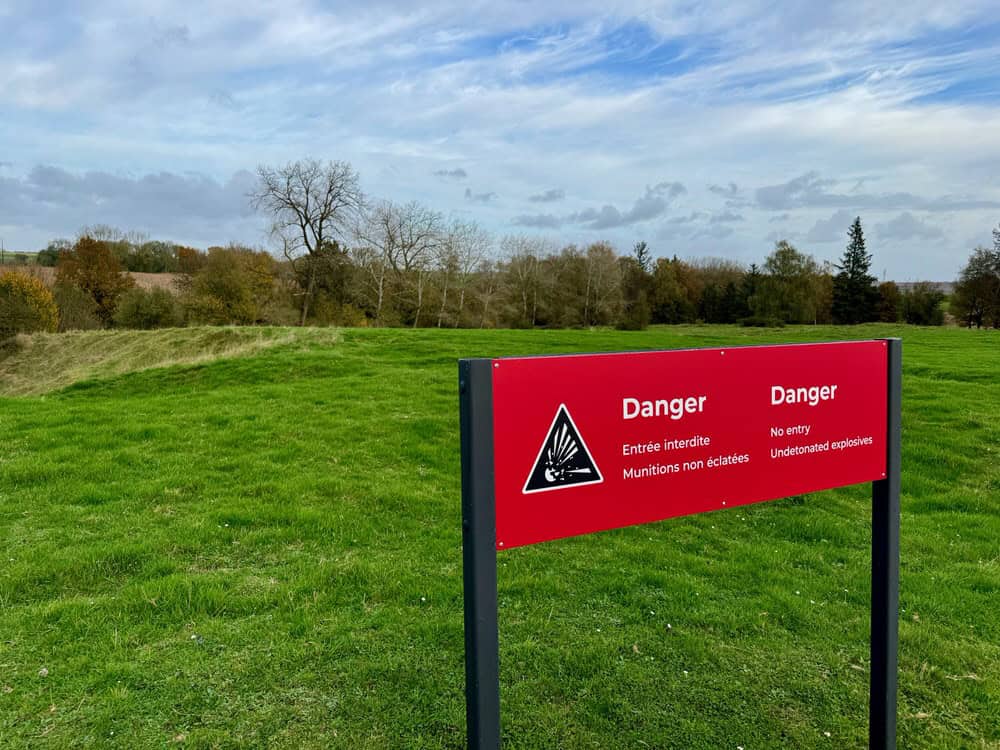
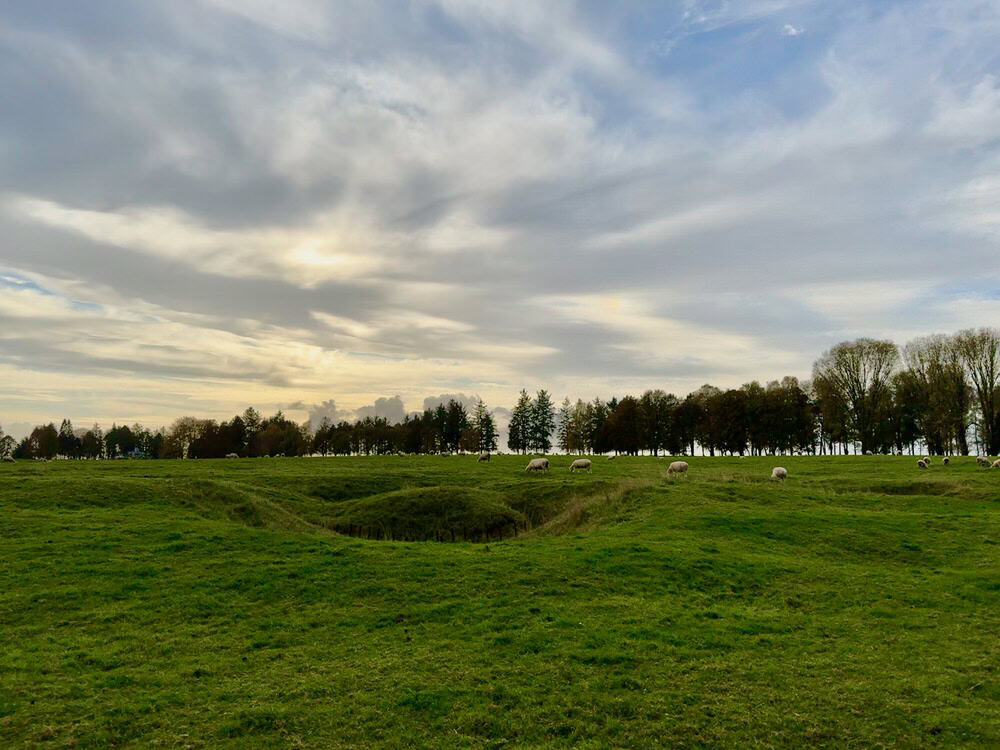
Most notably, this site is one of the few places where you can see remains of the actual trenches. Not surprisingly, the French people were eager to get on with the job of everyday life at the war’s end; most of the trenches were converted back into farm land. It’s even common to see sheep grazing around unexploded ordinance warning signs here.
Hawthorn Ridge Crater
This large crater near Beaumont-Hamel was created minutes before the Battle of the Somme officially started at 7:30 a.m. on July 1, 1916. It’s said that the explosion at Hawthorn Ridge was the first action of the Battle of the Somme. (This is also said about the explosion of Lochnagar Crater, so take this with a grain of salt.)
Right before “the big push,” when troops started to engage each other, the British/Commonwealth detonated 19 large mines they had planted in German territory. They hoped was the explosions would disperse German troops, maybe destroy some barbed wire, and generally ease the British advance into Germany territory.
As you might have guessed given that Day One ended with 57,000 causalities, these mines weren’t nearly as helpful as planned. Instead, they created massive obstacles for the advancing British troops. Even worse, Germans had enough time between the explosions and the actual advance to refortify these positions.
Other Helpful Information For Visiting the Somme
Other Somme Sites You Could Add to This Itinerary
There are so many more memorials and important locations around the Somme. If this itinerary leaves you wanting more, considering adding stops at a few of these places.
Pozieres Memorial – This memorial to British and South African soldiers also includes a large Commonwealth cemetery.
Mametz Wood – A striking Welsh red dragon memorial dedicated to 38th Welsh Division of the 1916 Battle of the Somme.
Australian National Memorial – Also often referred to as Villers-Bretonneux Memorial this is the main memorial for fallen and missing WWI Australian soldiers. The site honors nearly 11,000 Australians who are missing from the 1916 Battle of the Somme.
South African (Delville Wood) Memorial – A memorial to all South African forces, not just those involved in World War I.
New Zealand Forces Memorial – This memorial to New Zealand soldiers stands near where New Zealand forces joined the Battle of the Somme in September 1916.
Fricourt – More than 17,000 German soldiers, most of them casualities of the Battle of the Somme, rest here. The Red Baron was briefly buried here before being transferred to his family plot in Berlin.
British Tank Corps Memorial – This memorial stands near the very first place where tanks were ever used in warfare during the Battle of Flers-Courcelette in September 1916.
Lochnager Crater – The largest of 19 mines that were detonated in German territory right before battle started.
Other interesting nearby WWI sites
If you’re planning to spend several days in Picardy, there are many more World War I sites – not necessarily connected to the Battle of the Somme – you could visit.
The Remembrance Trail: Albert to Peronne – A 60-mile trail that takes you past the Somme most pivotal sites including Thiepval, Beaumont-Hamel, Chapelle du Souvenir Français in Raucourt, and the Museum of the Great War in Peronne.
Red Baron crash site – Although this stop is really just a small roadside pullover and sign, you might be curious to see where the most famous World War I aviator met his demise. When you visit you can decide whether or not you think the Red Baron really took off the top of a nearby chimney in the crash or if that’s just a hypothetical story.
Vimy Ridge Memorial – Vimy Ridge is Canada’s national memorial to World War I. This memorial appears on the Canadian $20 bill. It is about an hour’s drive northeast of the Somme sites included here.
Other Things To Do When You Visit the Somme

When to Visit the Somme
These memorials are designed to be very accessible. For example, the Thiepval Memorial is open 24/7. (Note: this is not true of the visitor centers.) As a result, you can have rewarding visit to the Somme battlefields any time of year. However, there are a few considerations when planning your visit:
Many memorial visitor centers are closed on Mondays.
Most Somme memorials have two annual ceremonies. The first is held on July 1 to mark the anniversary of the battle’s beginning. The second is on November 11, Armistice Day. Note: Armistice Day is a national holiday in France.
If you want to time your visit to see the famous poppy fields that became a symbol of remembrance and resilience following the Great War, you’ll want to visit in June. The poppies can be seen around the Ulster Tower as well as on the embankments along the Remembrance Trail.
Reach out to the local tourism bureau before your visit to check in on how the bloom is progressing. Unlike tulips, poppies only last about 3-4 days, so it’s a short but sweet season.
Resources for planning a trip to the Somme
You might want to throw a couple of these books into your suitcase to reference before and during your visit to the Somme.
|
Major and Mrs. Holt’s Battlefield Guide to the Somme Generally considered the definitive guide to planning an in-depth visit to the Somme Battlefields. |
This is another excellent resource for Somme visitors. |
Despite being a work of fiction, this is novel is one of the best ways to understand Canadian involvement in World War I. |


Where To Stay when visiting Battle of the Somme sites
If you’re planning to spend a full day exploring the Somme battlefields, I recommend spending both the night before and of your visit in Amiens. This small French city sits about a 30-minute drive west of Albert. There’s a lot to recommend Amiens including attractions like its Gothic cathedral and its unique floating gardens.
It’s worth noting that the area immediately surrounding the Battle of the Somme is quite rural. While you could certainly stay in Albert or Bapaume, you will have the most dining and lodging options if you stay in Amiens.
Since we were just passing through the Somme on our northern France road trip, we actually spent this night at Aux-Cabanes in Grand-Laviers near the Bay of Somme. I highly recommend this peaceful, pastoral lodging!
Conclusion: What To See at the Somme Battlefields In A Day
When we checked into our vacation rental after our day at the Somme, we explained where we’d been and one of those hosts said, “Ah, that’s a place for memory.” I think that’s such a lovely way to explain the Somme battlefields today. Although this monumental battle was fought more than a century ago, it’s imperative that we remember the sacrifice made here.
As you can see, if you only have one day you can devote to visiting sites from the Battle of the Somme, I recommend basing your day around Albert. This town served as a British garrison town during World War I and is home to the definitive museum about the 1916 Battle of the Somme: Somme 1916 Museum.
After you’ve brushed up on your World War I history at the museum, be sure to visit the town’s rebuilt basilica and then head into the surrounding countryside to visit a few of the many monuments and memorials.
I recommend both Thiepval Memorial, Beaumont-Hamel Newfoundland Memorial, and at least one of the mines created by the British army right before fighting began on July 1, 1916. (The Hawthorn Ridge crater is the most convenient to the other recommend sites.) Ulster Tower is also located right between Thiepval and Beaumont-Hamel.
Just as we return to places like Gettysburg and the D-Day beaches, we must continue to return to the Somme to remember the horrors that humans can orchestrate and lives lost far too soon because of it.
I hope this post helps you create a fulfilling, memorable visit to the Somme!
 |
 |