
This post may contain affiliate links. When you purchase something through these links, I receive a small commission that helps me create this blog’s content. There’s no extra cost to you. Read my privacy policy to learn more.
Published 3/4/2026
How to Spend Three Wonderful Days in Copenhagen, Denmark
Whether you’re planning a weekend trip to Copenhagen or only have three days as part of a longer tour of Scandinavia and western Europe, I’ve created an itinerary that gets you to all the very best bits of the Danish capital city fast.
Because if I know one thing about you, it’s that you’re headed to Copenhagen with intention and purpose. I spent almost two decades watching Copenhagen get knocked off the top of my travel bucket list because of its off the beaten track location. An hour flight from Amsterdam, a five-hour train ride from Stockholm, you don’t end up in Copenhagen unless you have a reason.
And there are so many reasons to want to be in Copenhagen. When I finally visited for a week in December 2025, this maritime city with its canals, connections to Hans Christian Andersen,castles, and cozy cafes proved to be the delight I’d always imagined.
I’ve boiled down all my Danish experiences into a perfect 72 hours in Copenhagen. Along the way we’ll visit the second oldest amusement park in the world, find the best views in the city, do a little thrifting, and even stay at an amazing Bali inspired hotel. Of course I’ve made sure you have plenty of time to indulge Denmark’s amazing beer and pastries.
Let’s dive right in so you can make the most of Copenhagen in just three all too short days.
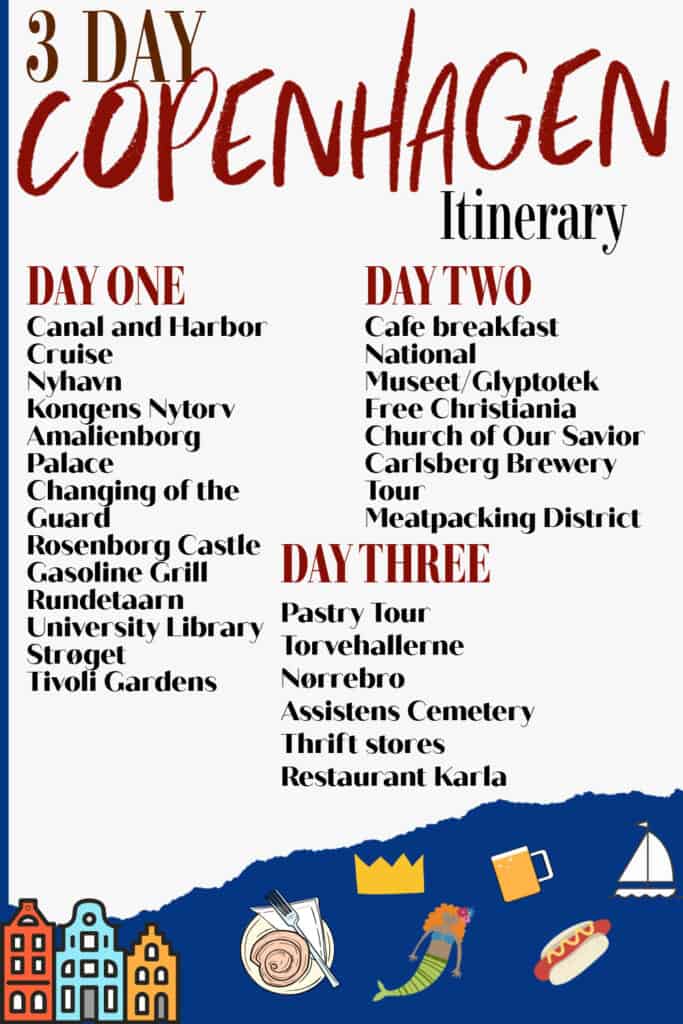
Day One: Copenhagen Landmarks
Morning
Canal and Harbor Cruise
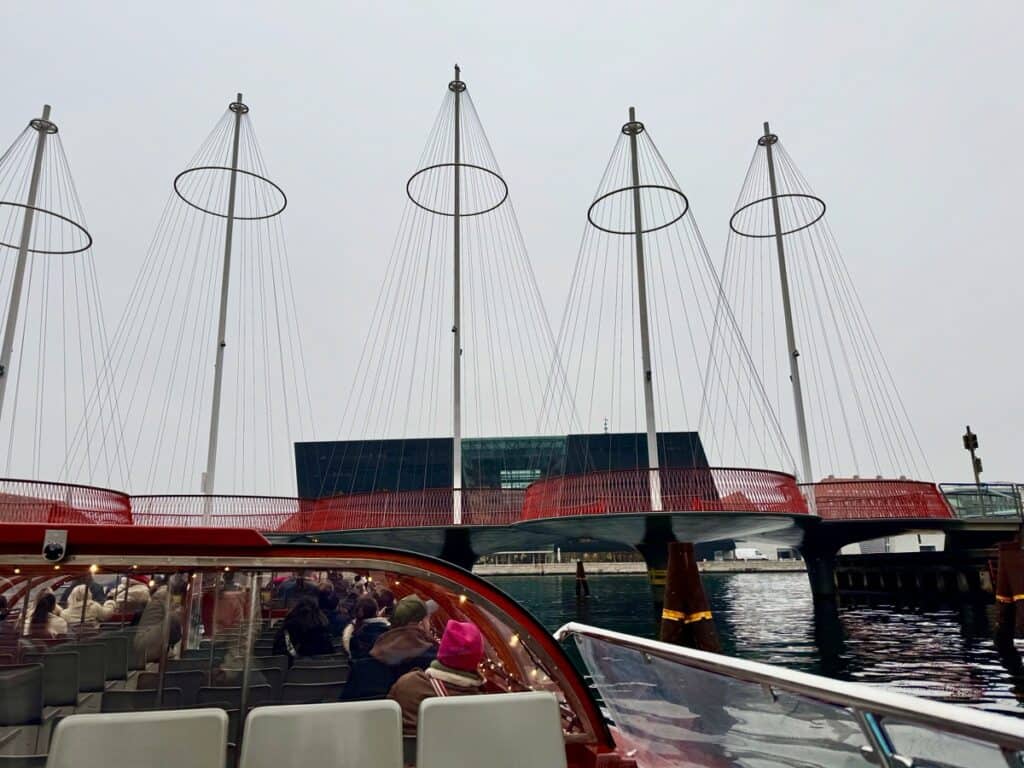
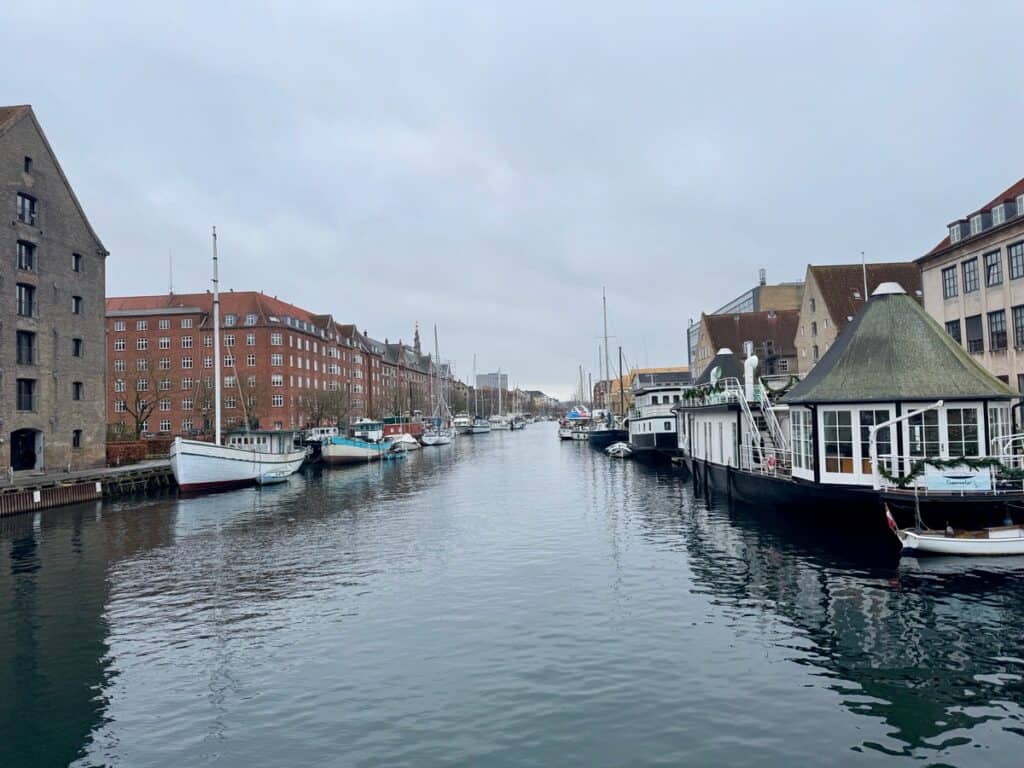
The Danes are a seafaring people who actually fielded the world’s largest navy until the British famously claimed the title in the Napoleonic wars. Copenhagen itself is located on a series of islands on the Oresund Strait between the North and Baltic Seas. To “meet Copenhagen” it only makes sense to get in a boat for a tour of the city’s canal and harbor.
While there are tours of various lengths, we opted for a one-hour cruise for a quick crash course in Danish history and Copenhagen landmarks. Just a heads up that while you absolutely will see the famous Little Mermaid statue on the cruise, it will be the backside.
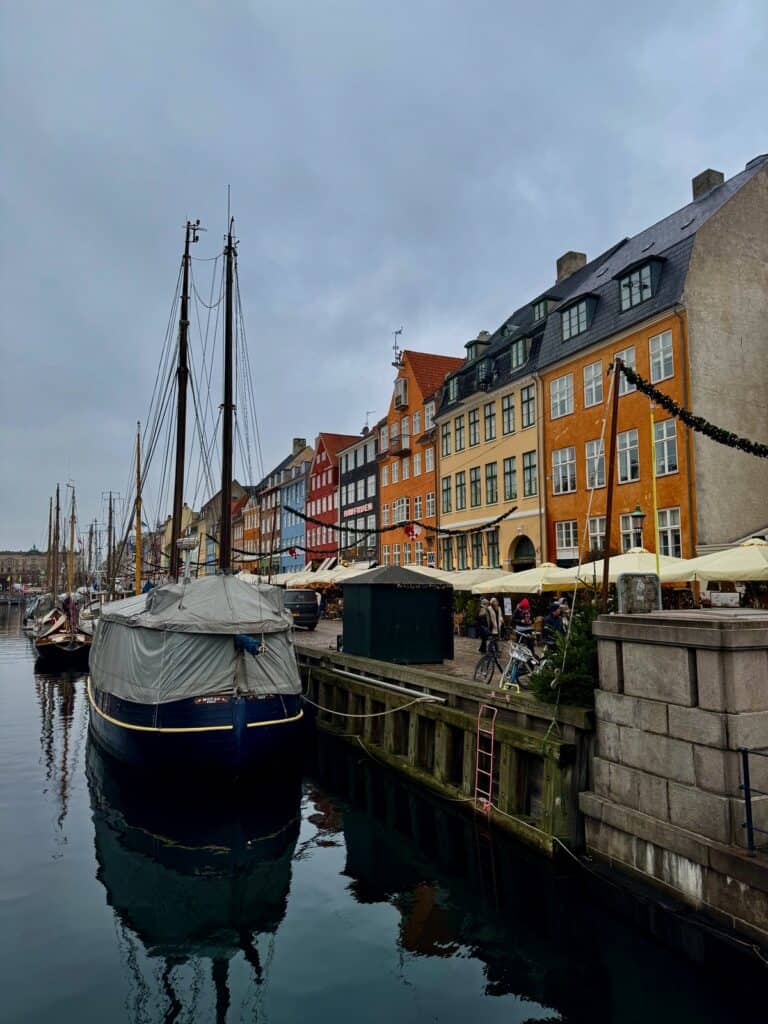
Nyhavn
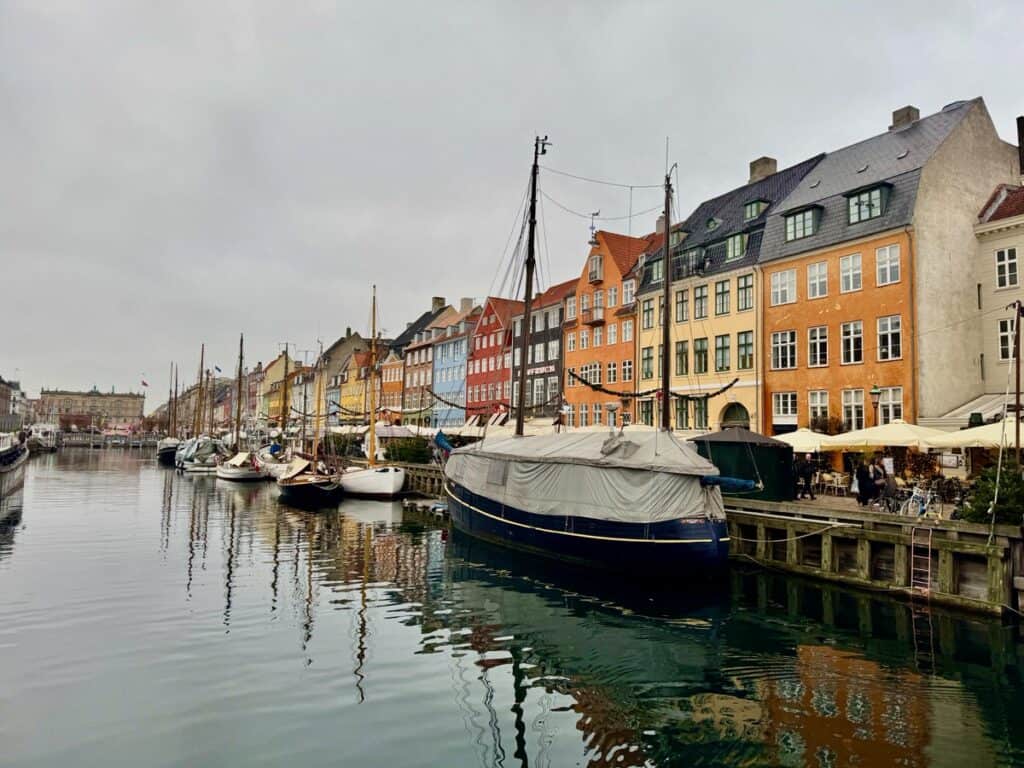
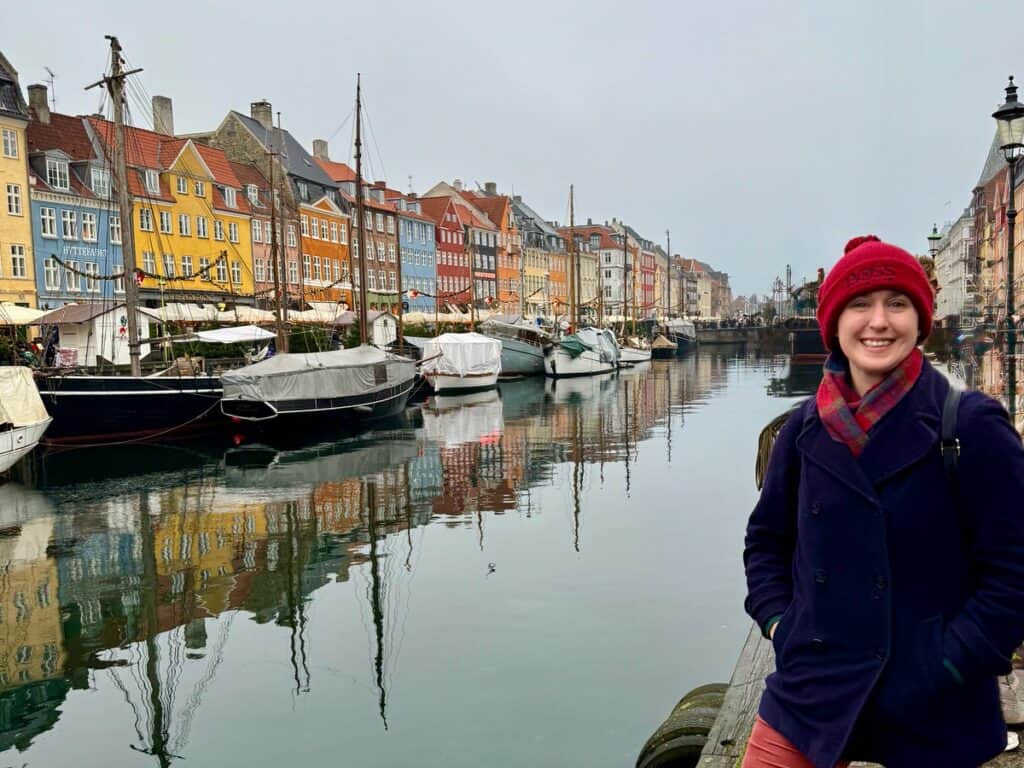
Depending on which cruise you select, you may be returned right to Nyhavn, which is the scene of Copenhagen that most people imagine when they think of the Danish capital. There are restaurants, shops, and street vendors here, but the main thing you want here is your photo.
Kongens Nytorv
Just a short walk from Nyhavn, you’ll find Kongens Nytorv, or the King’s New Square. This fancy public square is surrounded by upscale establishments like the Hotel D’Angleterre, the Danish Royal Theatre, and Magasin du Nord department store. This is a very busy, touristy area, be mindful of your belongings. In the winter, a skating rink dominates the square.
Even if you’re not wanting shop, pop into Magasin du Nord to peek at the bedroom where Hans Christian Andersen stayed when this building was Hotel du Nord. Just inquire with the third floor cashier if you want to see this hidden gem. If you’re feeling hungry, this is a great place to pick up one of Copenhagen’s famous hot dogs.
Amalienborg Palace
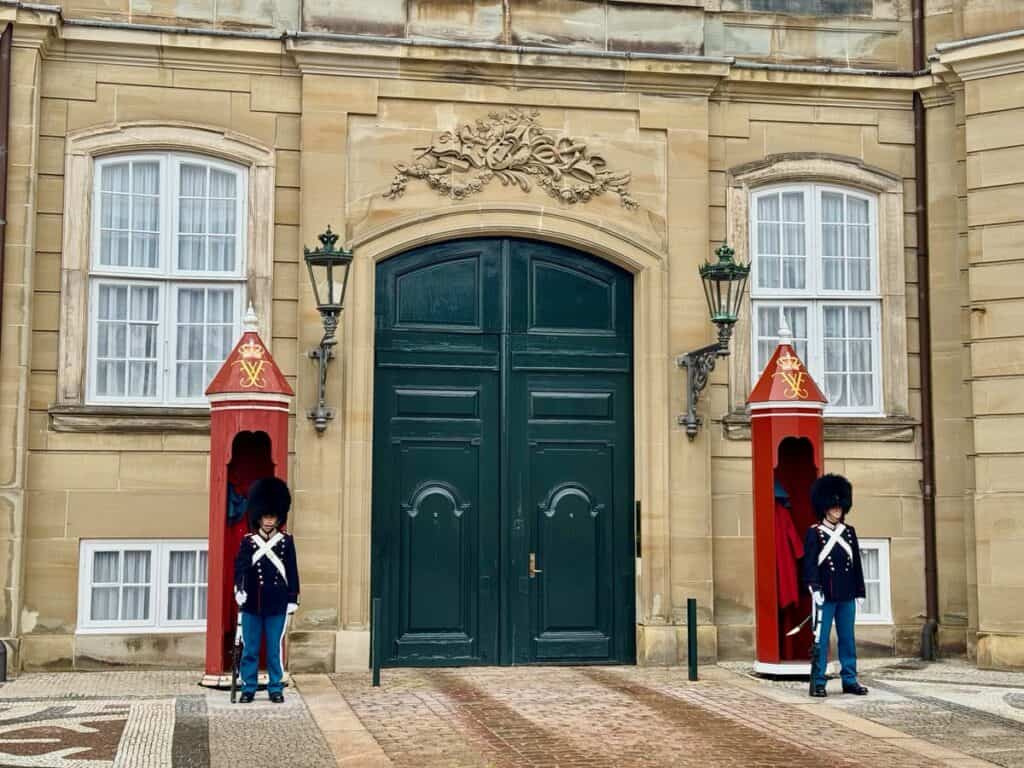
If we’ve timed everything right, from Kongens Nytorv you make the quick 10-minute walk up to Amalienborg Palace just in time for the changing of guard at noon. This daily ceremony takes a lot of notes – right down to the hats – from the ceremony of the same name at Buckingham Palace in London.
After the changing of the guard ceremony, the old guard processes from Amalienborg – the current Danish royal residence – to their barracks at Rosenborg Castle. Amalienborg is the royal family’s winter residence so you may see a modified ceremony if you visit in the summer months when the royals aren’t at home.
While you’re in the area pop inside the impressive marble church (St. Frederik’s Church) that overlooks the palace complex or grab a cardamom croissant from the nearby Hart Bageri.
Lunch at Gasoline Grill
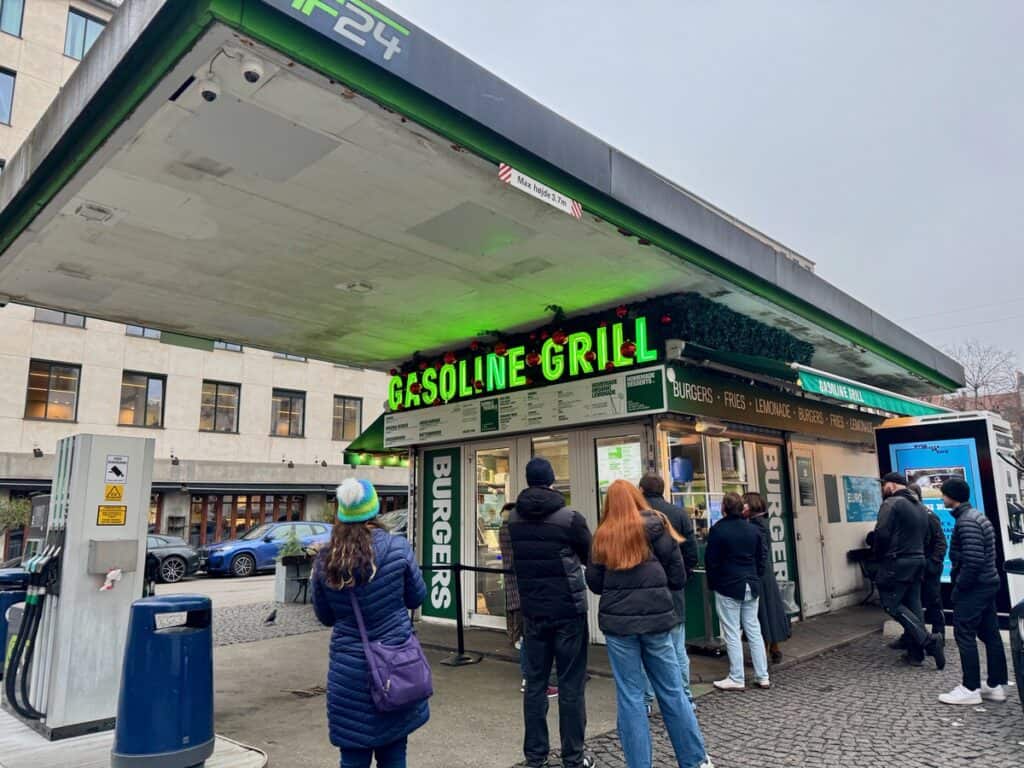
Gasoline Grill is a popular hamburger shop with multiple locations around central Copenhagen. The flagship restaurant is located at Landgreven 10 which, for our purposes here, is conveniently located in between Amalienborg Palace and Rosenborg Castle. I highly recommend swinging by this still operational gas station for a burger lunch.
Maybe I was just really hungry, but this was an impeccable burger and fries. Just a heads up, they only have outdoor seating.
Afternoon
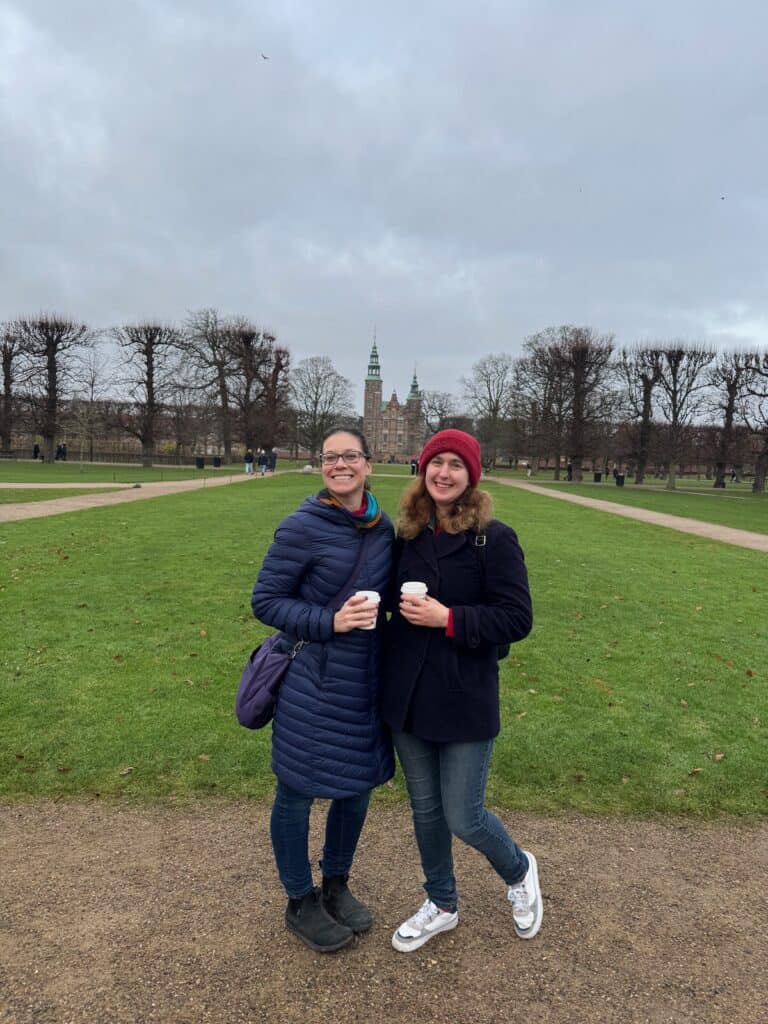
Rosenborg Castle
 |
 |
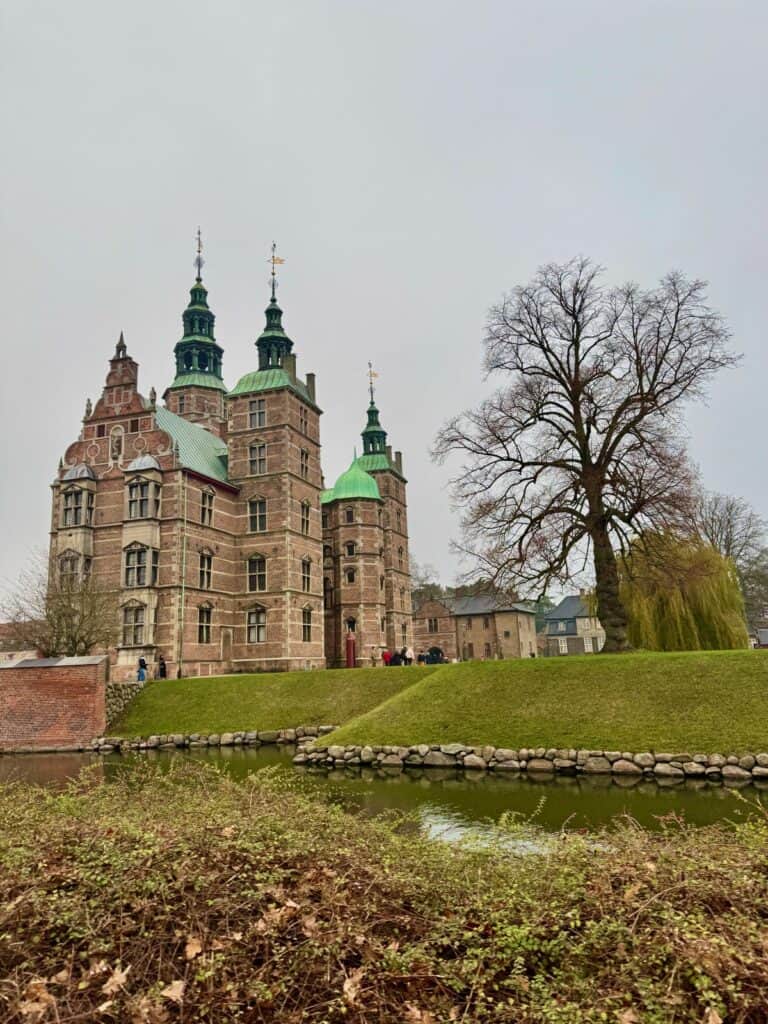
This is one of King Christian IV’s many, many projects around Copenhagen. Although the royal family no longer uses this castle, it’s a lovely (if not a bit poorly lit) stop since you have access to the entire castle which is filled with paintings, furniture, and other royal possessions.
As you tour the floors, you’ll gain a lot of insight into the royal family’s successes and scandals as well as their rather twisted senses of humor. Case in point: the creepy joke chair on the third floor. The castle is surrounded by moat and the King’s Garden (Kongens Have) which I recommend strolling through at least once during your time in time.
Rundetaarn
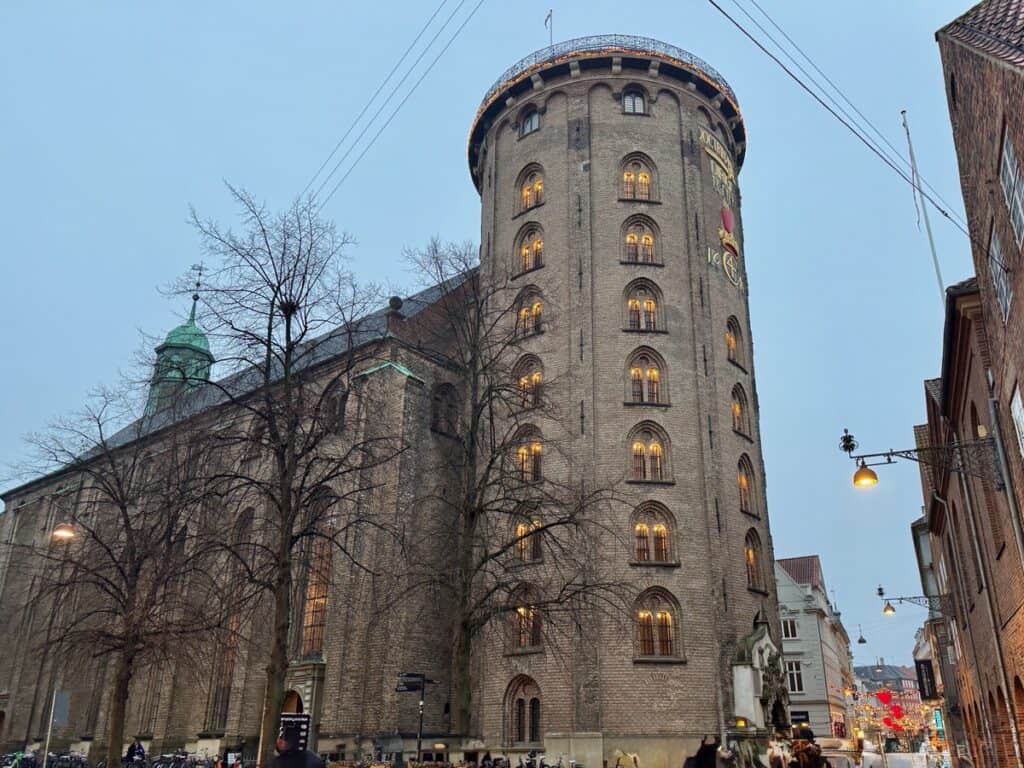
This distinctive red brick round tower is another one of King Christian IV’s many fingerprints around Copenhagen. It is the oldest functioning observatory tower in Europe and was built in the early 17th century to give University of Copenhagen astronomers an excellent view of the night sky.
Visitors today can take advantage of its excellent 360 view. You’ll also find art exhibits and a gift shop in the adjacent former Library Hall that’s accessed about 2/3 of the way up to the observation platform. Access to the observation deck is via a wide cobblestone path that spins 7.5 times around the center of the tower.
University Library
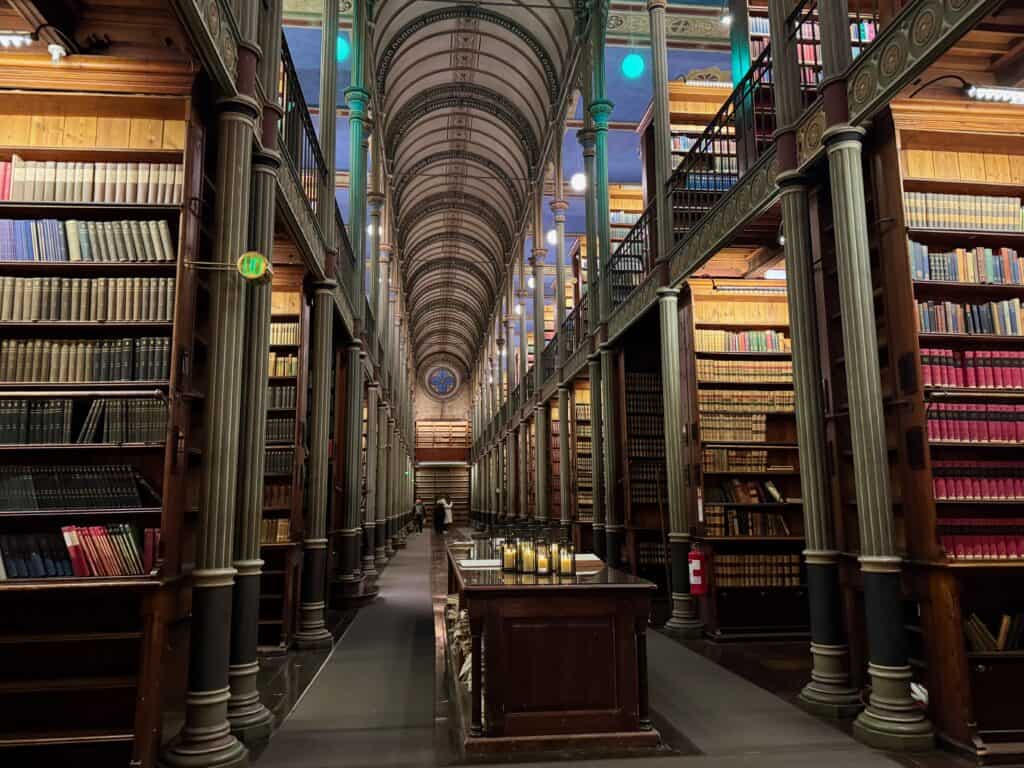
Another Copenhagen landmark associated with the University of Copenhagen is the old library. This beautiful red brick Neo-Gothic building ceased being used as a library in 2009. Now it’s a tourist attraction where youwander through the rows of books, browse a small gift shop, and get a guided tour of the university’s historic quadrangle.
The book hall has definite Beauty and the Beast vibes and feels very similar to the library at Dublin’s Trinity College. While books on the shelves do belong to the University, it’s pretty odd assortment. I randomly found the entire multi-volume proceedings of the 1934 United States Congress on one shelf!
On the upper level of the book hall, you’ll find exhibits tucked among the bookshelves about some of the University of Copenhagen’s most accomplished graduates.
Strøget
If you’ve ever enjoyed strolls on pedestrian only shopping streets in Milan, Rouen, and or heck, even Miami, you can thank Denmark!
Strøget, which runs from Kongens Nytorv through Gammeltorv to Copenhagen City Hall, was established as a pedestrian only thoroughfare in 1962 making it one of Europe’s first pedestrian shopping streets. You’ll likely end up on it several times on your visit because it’s so convenient. It’s also an excellent place to pick up some Danish souvenirs like LEGOs.
While we didn’t have a lot of energy for shopping by this point in the day, Ashley and I started a tradition of popping into a Flying Tiger Copenhagen at least once during our European adventures starting in Lugano, Switzerland and we weren’t about to break this trend when we were actually in Copenhagen!
Evening
Tivoli Gardens
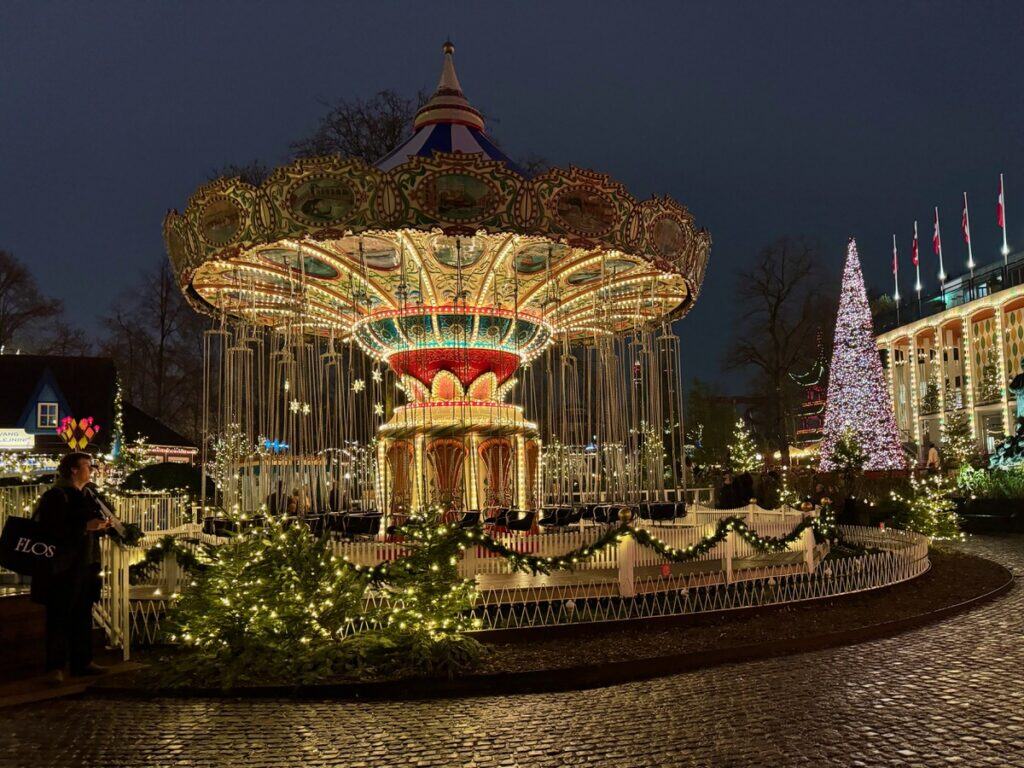
This small amusement park in the heart of Copenhagen is the second oldest operating amusement park in the world. It’s said that Walt Disney was inspired to open Disneyland after his visit to Tivoli and the parallels between Disney and Tivoli are pretty uncanny.
Tivoli covers just one single city block and has 25-30 rides . . . depending on how you count. You’ll find modern rides for thrill seekers, classic throwback rides for less adrenaline driven, carnival games, a haunted house, even a kids’ playground area. There are also more than two dozen restaurants on site. In the early winter, Tivoli also hosts a Christmas market.
I worried that Tivoli would feel like a money grab, but I loved it and would have returned multiple times during our trip if time had allowed. I highly recommend the famous Rustschebanen, a 111-year-old wooden rollercoaster that’s operated by a brakeman in the front car.
Pro tip: If you only plan to go on a couple rides, you don’t need to buy a pass or even an individual ticket. Just stand in line, tell the ride attendant you need a ticket, and you can use contactless pay to hop right on.
Day Two: Copenhagen Highlights
Morning
Cozy breakfast at a café
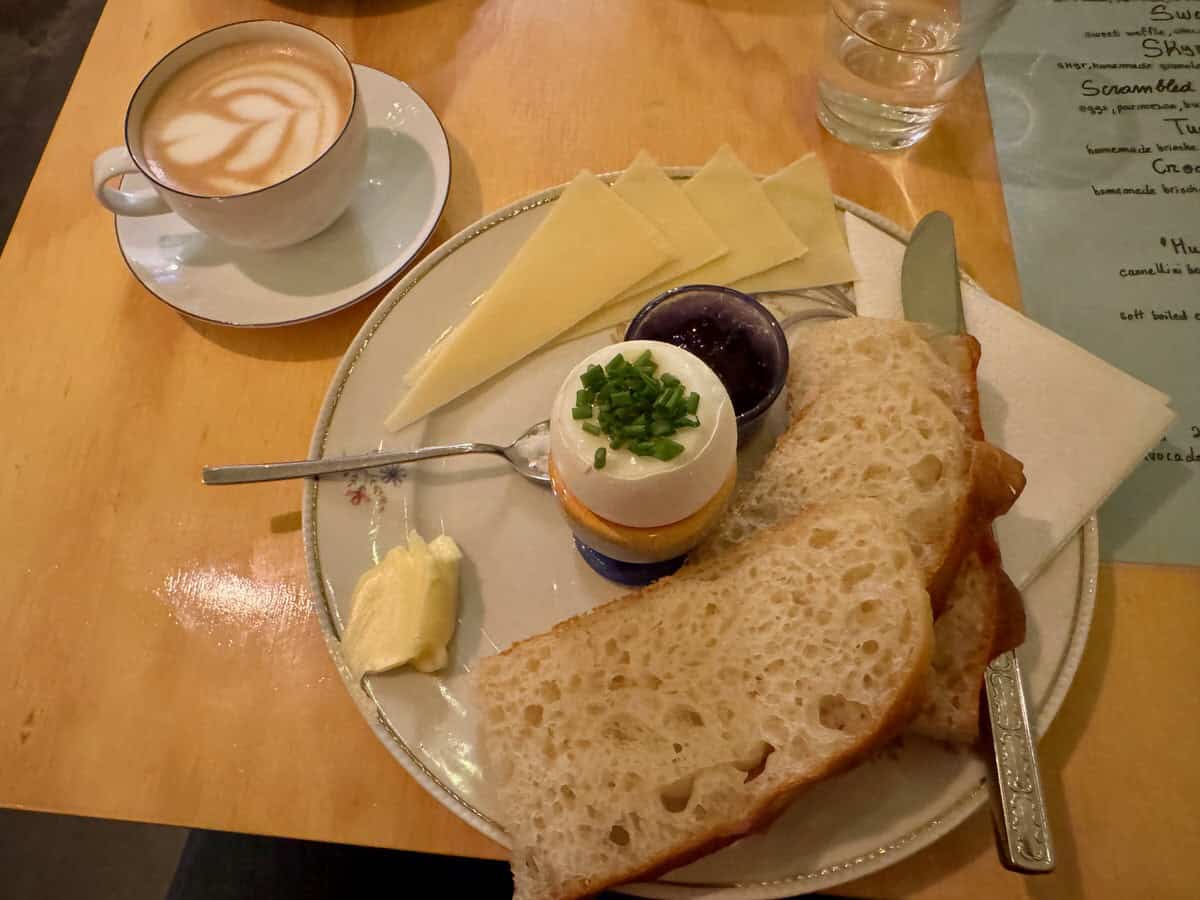
In the last decade or so, the Danish concept of hygge (pronounced hoo-guh) has really taken off in North America. While there’s no direct translation for hygge, it refers to a general feeling of coziness which Danes cultivate through warm lights, comfort food, and time for real connection with others.
There’s no better place to experience hygge than in one of the city’s many independent cafes.
I recommend heading to a café and ordering their morning plate which often includes some sort of assortment of freshly baked bread, cheese, soft boiled eggs, and/or yogurt. We really enjoyed our café experiences at Risteriet and Alaska Kaffe.
National Museum or Glyptotek
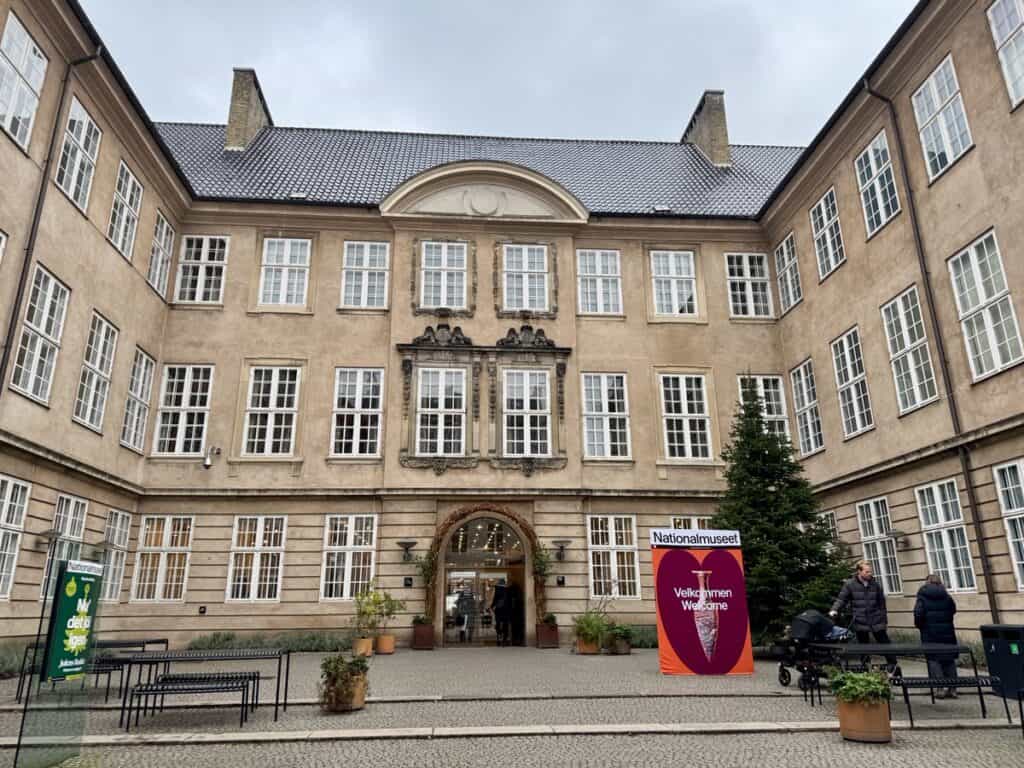
We went to National Museum of Denmark (National Museet) on a whim and were blown away by the exhibits. We started out in the Viking Sorceress (Völva) exhibit which immerses you in ancient Denmark through visual and audio effects as well as animated videos and ancient artifacts. It was such a delightful stop learning about Viking history and Danish culture.
If you’re not into history, consider going to the nearby Glyptotek instead. This is Copenhagen’s most celebrated museum. Inside you’ll find the massive art collection of Carl and Ottilia Jacobsen of the Carlsberg beer empire.
Afternoon
Freetown Christiania
 |
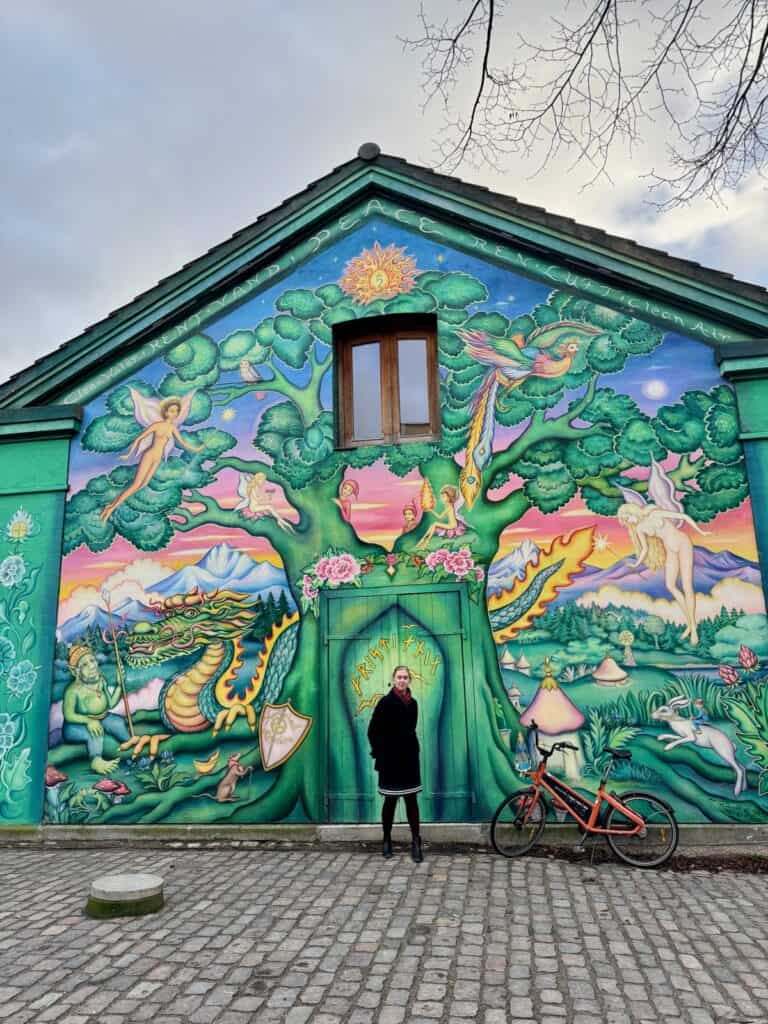 |
One of the most unique neighborhoods in Copenhagen is Free Christiania. Established in 1971 on an island just south of central Copenhagen, it’s a counter-culture community for those wanting to live outside of conventional society: aka, it’s a hippie commune. It has a bit of cynical reputation among locals as being the place where people who don’t want to work go to smoke pot.
While this 19 acre community considers itself its own entity in no way connected with Copenhagen, Denmark, or the European Union, we were kind of surprised by how commercial the community felt. There are tons of little cafes and shops, many selling artwork and second hand items. With its Dambo Troll and focus on harmony and creativity, it has strong Seattle vibes.
You’re free to pass through and observe the community, but it’s expected that you’ll uphold the principles of love and respect for all during your visit.
Climb the Church of Our Savior Spiral Spire
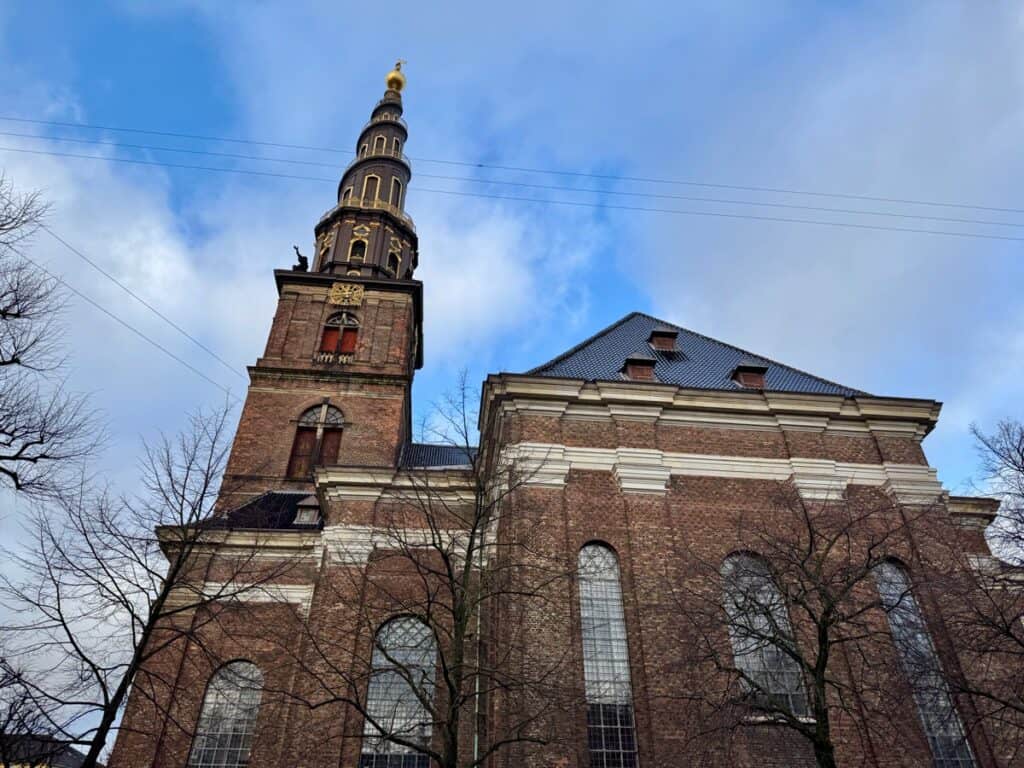
One of the most distinctive church spires in Copenhagen is the twisted spire on the Church of Our Savior in Christiana. It kind of looks like a narwhal horn or wedding cake! You can climb to the very tip of this Baroque era spire thanks to the 150-step exterior spiral staircase that wraps around it.
Since the mid 1700s, climbing the 400 steps to the top of the spire for a panoramic view of Copenhagen, the Oresund Strait, and even Sweden, has been a very popular tourist activity. Just be aware that safety features haven’t advanced much since the 1700s here, so maybe make sure your affairs are in order before you head up.
While your ticket is timed, there’s no process in place for making sure you don’t meet folks going the opposite direction on the very narrow steps. We were shocked by how many people we ran into.
Pro tip: You really do need to buy tickets online in advance. I thought we could just swing by when I saw good availability online but they ended up being sold out when we arrived at the front door.
Carlsberg Brewery Tour
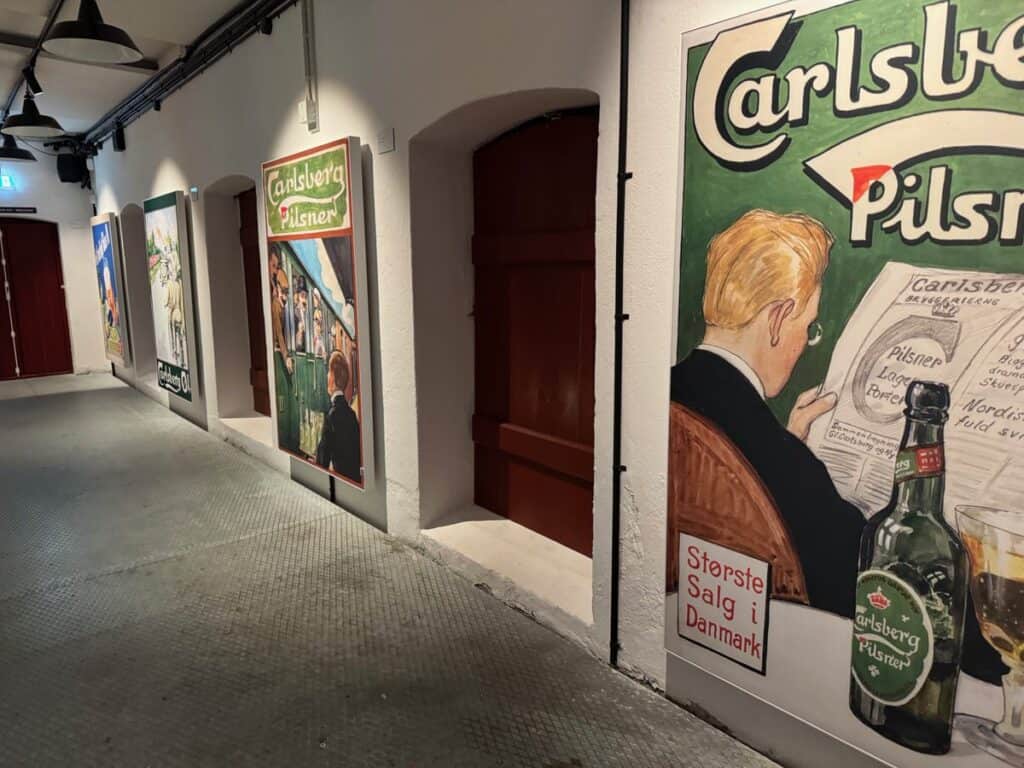
Is this a tourist trap? Yeah, probably. Is it fun? Absolutely!
If you’ve spent any time in Europe, you know how ubiquitous Carlsberg beer is. At the brewery you learn about the innovation techniques that made Carlsberg so popular and successful. You’ll also hear a lot about the massive influence the Jacobsens – founders of Carlsberg – had on Copenhagen culture.
We did the exhibition (self guided museum experience) and also a beer tasting. If I could do it again, I’d skip the beer tasting.
It legit took us 1.5 hours to go through the exhibits (I can tell no lie, it really took this long) and a tiny beer at the start and a full-sized beer of your choice in the on-site bar are complimentary with your exhibit ticket. That was plenty of Carlsberg for us!
Evening
Dinner in the Meatpacking District
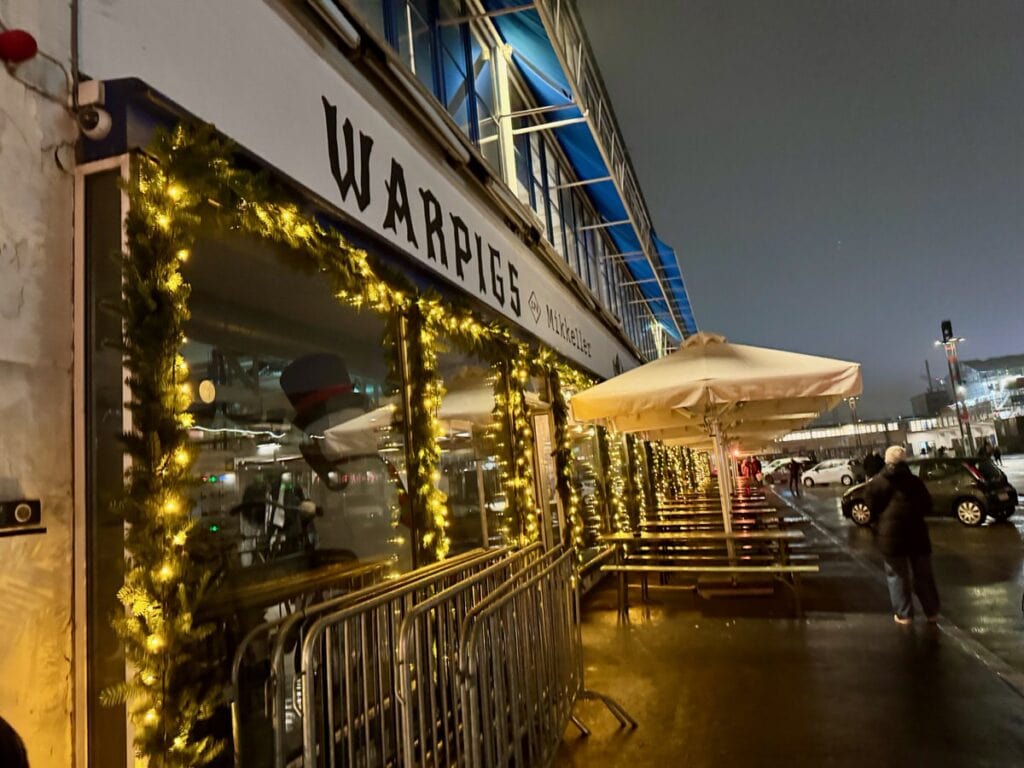
In between Carlsberg Brewery and Copenhagen Central Station you’ll find the old meatpacking district. What was once the epicenter of stinky, but necessary industry, is now home to some of the hippest restaurants, bars, and nightclubs in Copenhagen, including the Michelin-starred Kødbyens Fiskebar.
We were randomly starving after our brewery tour and the Texas style BBQ at Warpigs Brewing was exactly what we needed.
Note: you will probably feel like you’re wandering around in the middle of nowhere as you access these restaurants. The industrial vibes are still very strong and it’s not particularly well lit. We felt perfectly safe, it’s just a little discordant to be wandering around deserted industrial lots and then happening upon a bunch of very busy, bright restaurants!
Day Three: Neighborhoods
Morning
Pastry Tour
I hemmed and hawed on whether or not to include this tour since you will have already passed through most of the places included on the tour like Nyhavn, Christiania, Kongens Nytorv, etc. Ultimately I felt like I was just punishing you if I didn’t recommend you spend two delightful hours on your final morning sampling five of the most iconic Danish pastries.
If you’re pressed on time, this tour is one of the best ways to include a lot of bakeries and pastries in your visit. Come with an empty stomach!
Afternoon
Torvehallerne
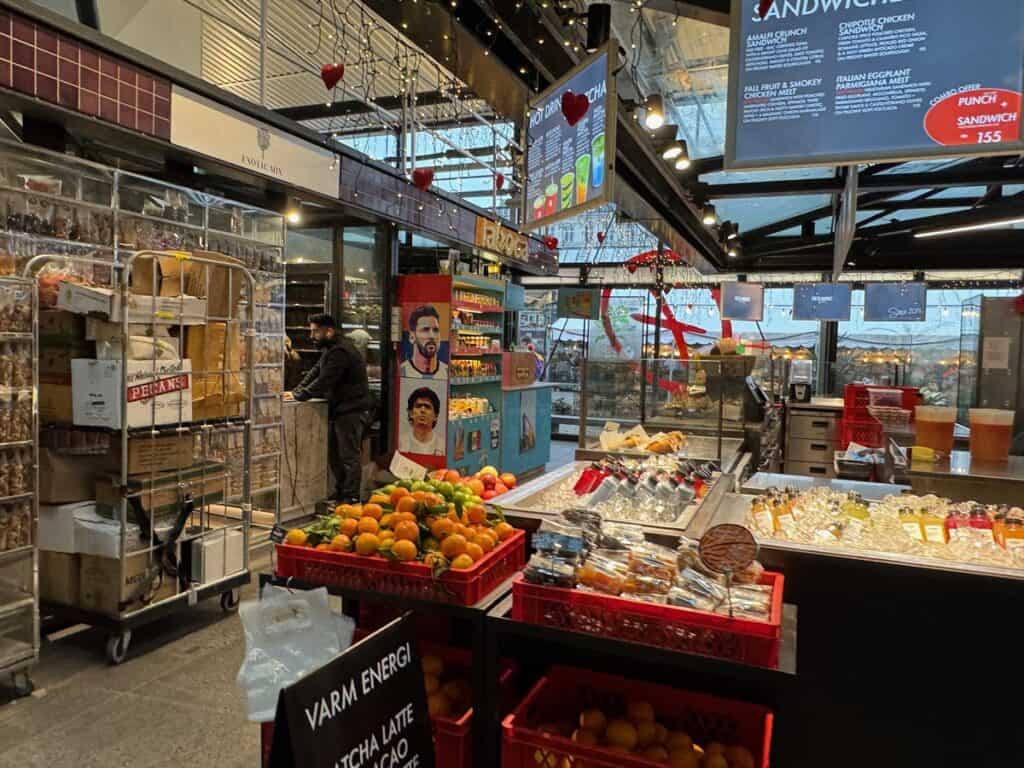
This food hall was designed with Copenhagen visitors in mind, but the quality of the vendors is so high that locals love it as well. (At least those who don’t complain that it’s overpriced . . . .) More than 80 vendors utilize this market place and there’s emphasis placed on Danish goods so it’s the perfect place to sample staples of Scandinavian cuisine.
I recommend grabbing a lunch of smørrebrød, the famous Danish open-faced sandwiches, and maybe a coffee and spandauer pastry. It also an excellent place to pick up favorite Danish souvenirs like cheese, tinned fish, and snaps/aquavit.
Norrebro Neighborhood
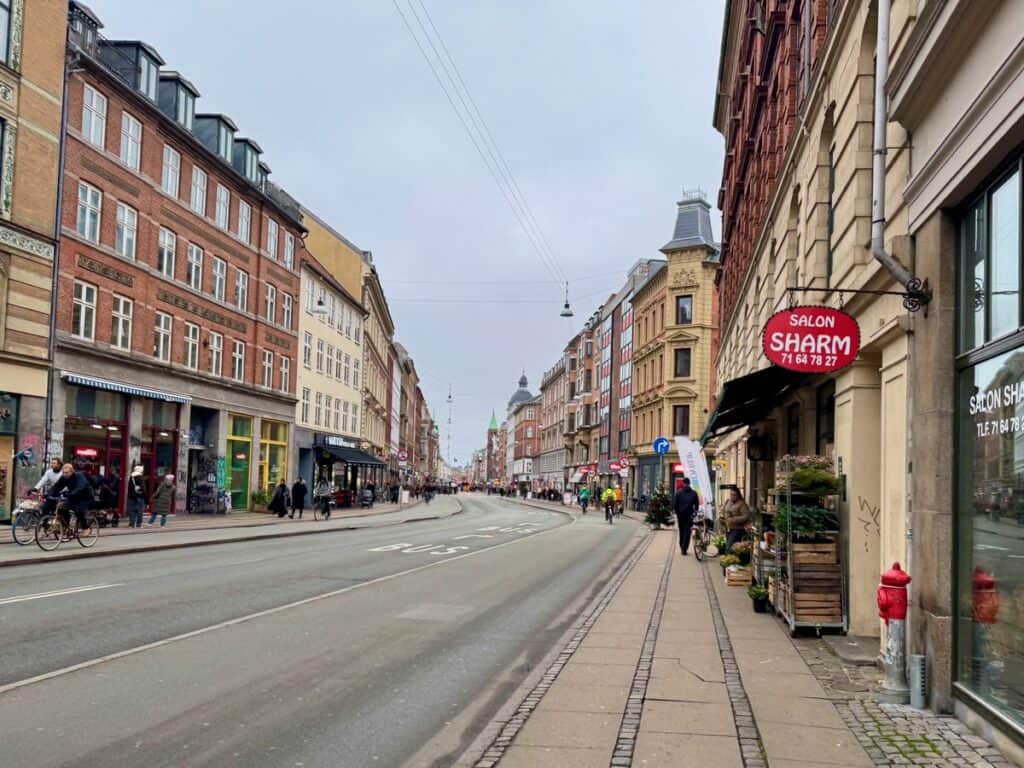
Copenhagen is so much more than just the landmarks, restaurants, and shops of the central city. To really get to know Copenhagen you’ll want to venture into one of the neighborhoods that truly make this city special and unique.
The artsy, hip Norrebro neighborhood just north of the Copenhagen lakes is the perfect place to while away your final afternoon. The actual University of Copenhagen (not just the historic buildings you find in central Copenhagen) is located here so it feels very young and happening.
Andersen & Maillard
One of Copenhagen’s most celebrated bakeries, if you’re not sick of pastries yet, you’ll want to swing into this Norrebro’s institution for one of their square croissants like their brunviger-inspired cardamom croissants. If you simply can’t with another pastry, you could pick up some packages of their specialty coffee to take home.
Assistens Cemetery

Copenhagen isn’t particularly well-known for its parks and green spaces, but Assistens Cemetery has been a popular place to take a stroll since the early 19th century. This still functioning cemetery covers a significant portion of Norrebro is a veritable who’s who of famous Copenhagen residents, including the graves of Hans Christian Andersen and Soren Kierkegaard.
Thrifting in Norrebro
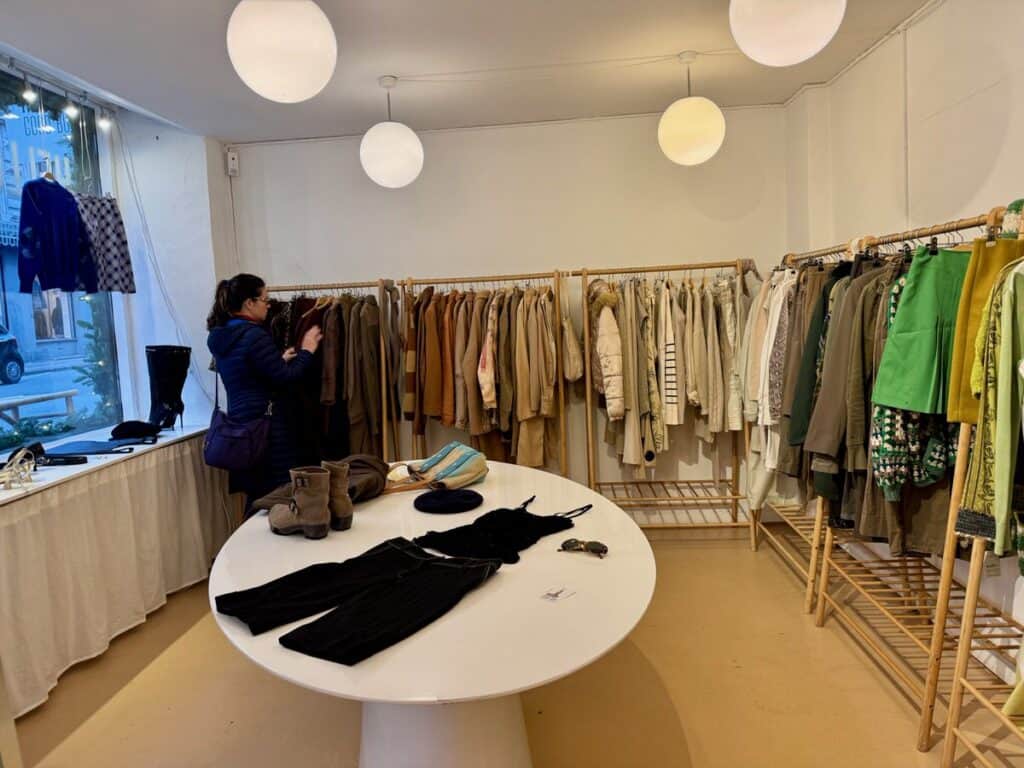
Danes are very eco-conscious so it only makes sense that thrifting is a popular Copenhagen pastime. (Just keep any suitcase space limitations in mind as you shop!) They are particularly concentrated around the southern end of Nørrebrogade, the main shopping street in Nørrebro. We really liked Hello Good Buy, Something Else, and Second Wardrobe.
Evening
Traditional Scandinavian Dinner
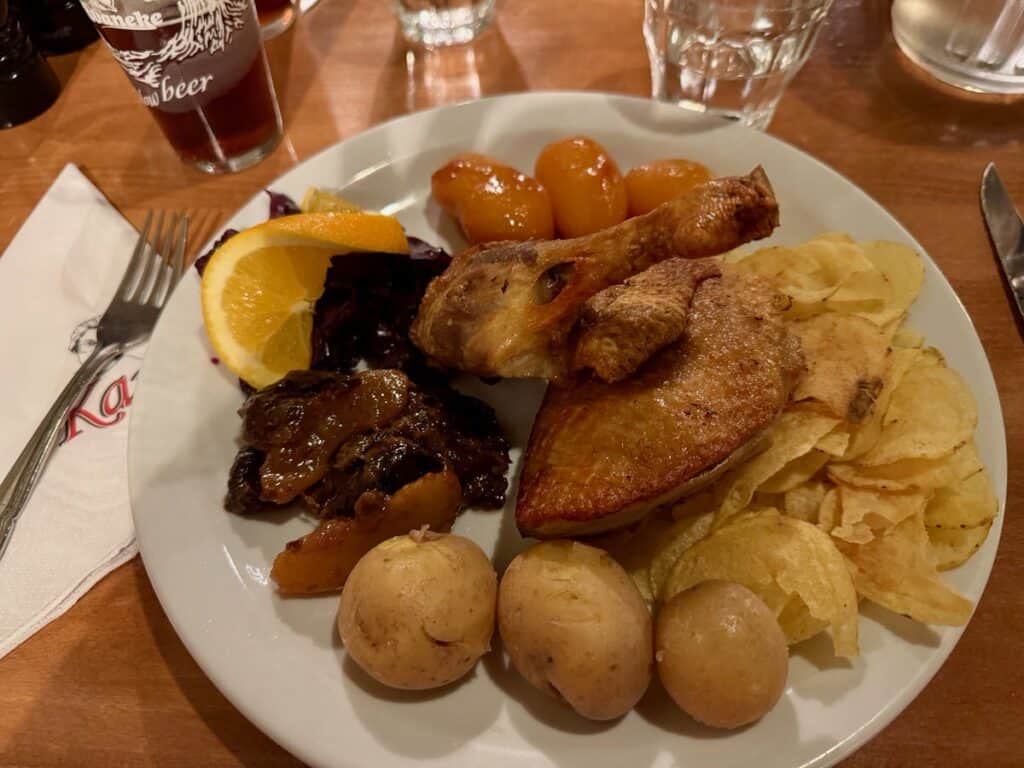
We wanted to enjoy some traditional Danish food to close out our time in Copenhagen and that lead us to Restaurant Karla. The restaurant prides itself for serving Danish home cooking that Danes might associate with their grandparents. Expect lots of potatoes, cabbage, and pork!
The portions are hefty so good luck saving room for dessert, especially if you opted to accompany your meal with a seasonal beer.
Copenhagen Travel Guide

How To Get Around
For our visit, we utilized a mixture of walking, metro, and trains.
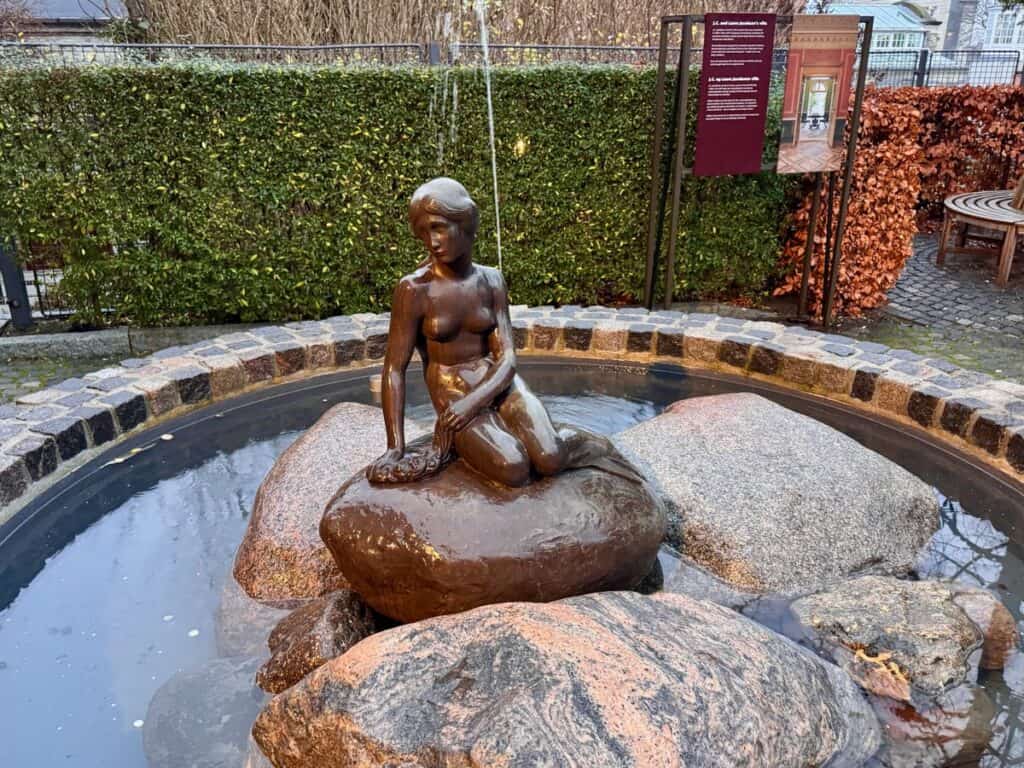
Copenhagen has made a lot of urban design choices (i.e. the Stroget pedestrian shopping street) to make the city very pedestrian friendly. Even so, Copenhagen’s best attractions (like Carlsberg Brewery and the Little Mermaid) are fairly spread out. If you plan to only travel by foot you will miss some real highlights.
The metro is very easy to access, but it can be hard to find a working ticket booth. (They’re usually in the top level of the metro station.) Once you locate a ticket booth, I recommend buying a city pass so you don’t have to seek out a ticket booth every time you want to catch a train. You can use the metro to get to the airport, so you might factor that into what length of pass you buy.
The metro definitely isn’t the most economical way to get around Copenhagen. That would be a bike! Many hotels and rentals provide complimentary bikes or rentals. Honestly, we were hesitant to hop on a bike because of how many bikes are out and about; we thought we might not be able to keep pace!
There are rideshares like Uber and Bolt available. You can also use the public buses.
These options work well for exploring central Copenhagen and adjacent neighborhoods. However, if you get out into the true suburbs, you will start to need a car. I really wanted to see the Dambo “Six Forgotten Giants” trolls in western Copenhagen but there wasn’t a way to see them by train or bike. The best options are a rental car or tour.
Where to stay

Eric Vokel Copenhagen Suites – Located right next to Copenhagen Central train station and Tivoli Gardens, this is the perfect spot to stay if Copenhagen isn’t the only city on your itinerary. You’ll enjoy excellent access to the airport, metro, and trains to Sweden and beyond.
Just a heads up, a two-bedroom suite is only about the size of a standard hotel room, but we really appreciated having our own private spaces and the amenities of an apartment like a full-sized coffee maker, washer/dryer combo, and a dining table. The storage lockers that can be used both before check-in or after check-out were so helpful!
Manon Les Suites – Want to escape to Bali while in Denmark? We absolutely loved this spa hotel located just north of central Copenhagen not only for its gorgeous pool, but also its sauna and thoughtfully designed rooms. It is quite pricey, but well worth the splurge. We had enough points to stay one night and how we wished we could have stayed longer!
Hotel Kong Arthur – This is a very comfortable hotel located just north of central Copenhagen. For whatever reason, it seems to really appeal to English speakers; we ran into so many Brits! The rooms are pretty small (typical for European hotels), but they were clean and comfortable. Sadly, we didn’t take advantage of the on-site spa, but we certainly enjoyed the complimentary happy hour.
What To Know Before a Trip to Copenhagen
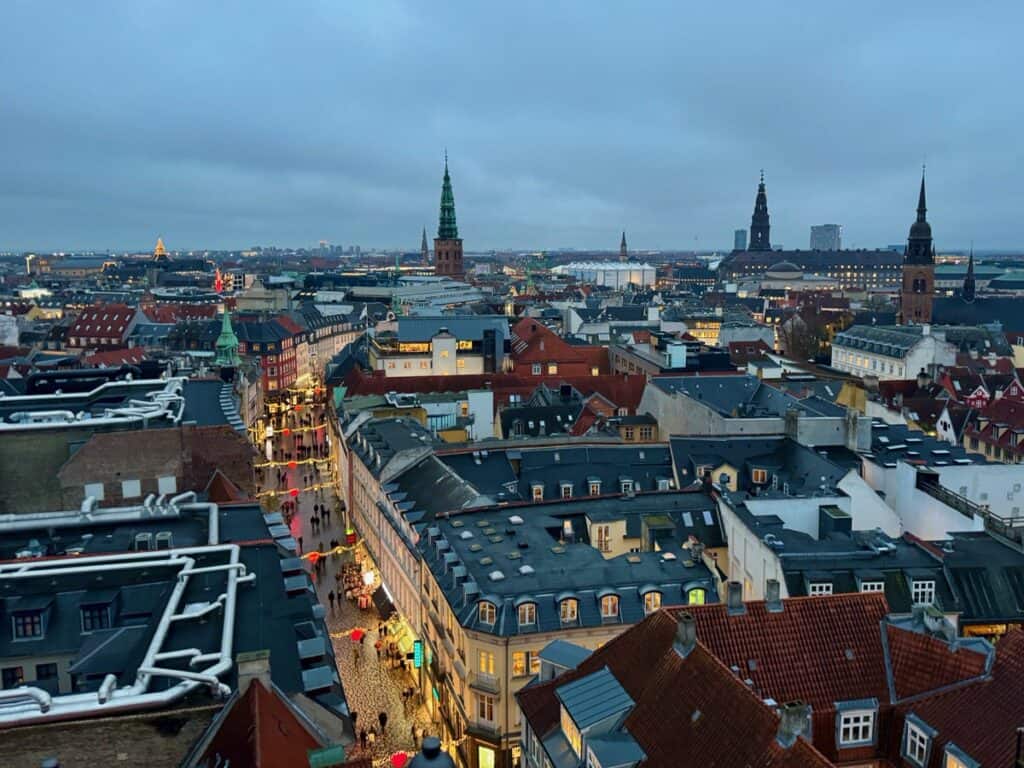
Cost
The biggest thing to prepare for is the expense. We quickly realized as we were pricing out hotels that this was going to be our most expensive European adventure to date. (And that was after basing in Switzerland for our Christmas market trip the year before!) Everything – food, attractions, hotels, public transportation – was the most expensive I’ve seen in Europe, including London.
That said, you do get what you pay for. Denmark is such a lovely, clean, comfortable country to visit. It’s a great opportunity to put all those airline miles and credit card points to work!
Currency
Denmark is part of the European Union, but they do not use the euro as currency. Instead they use the Danish kroner which converts to about 6 kroner to 1 U.S. dollar. I found this conversion a little difficult to do in my head which probably also contributed to everything feeling more expensive than in our travels around Italy and France.
Daylight
We visited in the first week of December and while I understood that Copenhagen was quite a bit farther north than my northern Minnesotan home, I didn’t fully grasp that until our first morning in town when we realized that the sun was coming up around 8 a.m. and starting to set around 3 p.m. Winter days are very short in Copenhagen and you quickly become accustomed to doing things in the dark.
On the flip side, if you visit in the summer you’ll probably be shocked by how long the days are.
Language
Danish children are taught English in school starting around age six, so this is a very easy country to visit if you only speak English fluently. We found almost all informational signs printed in both Danish and English and everyone we interacted with could switch seamlessly between English and Danish.
We only picked up one Danish word during our visit: “hej” which sounds like “hi” and means “hello.” (I know, we really stretched ourselves there.) Another helpful word to know is “tak” or “thank you.”
 |
 |
Conclusion: Discover the Best Things to do in Copenhagen in Three Days
For me, finally making it to Copenhagen after so many years spent hoping and dreaming about it was so magical.
I hope that this guide helps you feel the same way as you explore Copenhagen’s streets and canals to explore this Scandinavian city’s wildly varied attractions from royal residences to world-famous breweries to hippie communes, thrift shops and theme parks.
Whether you come to Copenhagen for the hygge, the history, or the food, I think this itinerary hits all the highlights in just three short days. While it’s difficult to take a budget trip to Scandinavia, Copenhagen truly pays back in dividends of clean streets, delicious food, excellent shopping, and easy to use public transportation. It’s well worth saving up for!
I hope you have the best time in Copenhagen. Don’t hesitate to reach out if you need any more recommendations or guidance as you plan your trip!
 |
 |