This post may contain affiliate links. When you purchase something through these links, I receive a small commission that helps me create this blog’s content. There’s no extra cost to you. Read my privacy policy to learn more.
Published: 1/19/2024
15 Milan Landmarks That Tell The City’s Story
I’ve rounded up the most important historical sites and landmarks in Milan that you must see during your visit.
If you’re like me, going to Milan is a trip of a lifetime; you’ll want to squeeze all of the city’s highlights onto your itinerary. The Milan buildings and sites in this post aren’t just interesting and pleasing to look at: they also tell Milan’s story.
As Italy’s second largest city, Milan is the financial center of the country, although Americans usually most associate the city with its high-end fashion houses like Armani and Dolce & Gabbana.
However, there’s a rich history often hiding in plain sight in this busy, modern city. You just need to pop into Milan’s cathedrals, museums, and neighborhoods to find it.
I visited Milan in November 2023 as part of a northern Italy and Switzerland trip. The landmarks I’ve included range from Milan’s most famous sites like the Duomo Cathedral to personal favorites slightly off the beaten track. I definitely recommend using Milan’s metro system to travel to any landmarks outside of the city centre.
Don’t worry, there’s also a Milan landmark map so you can pinpoint each one’s location.
1. The Duomo
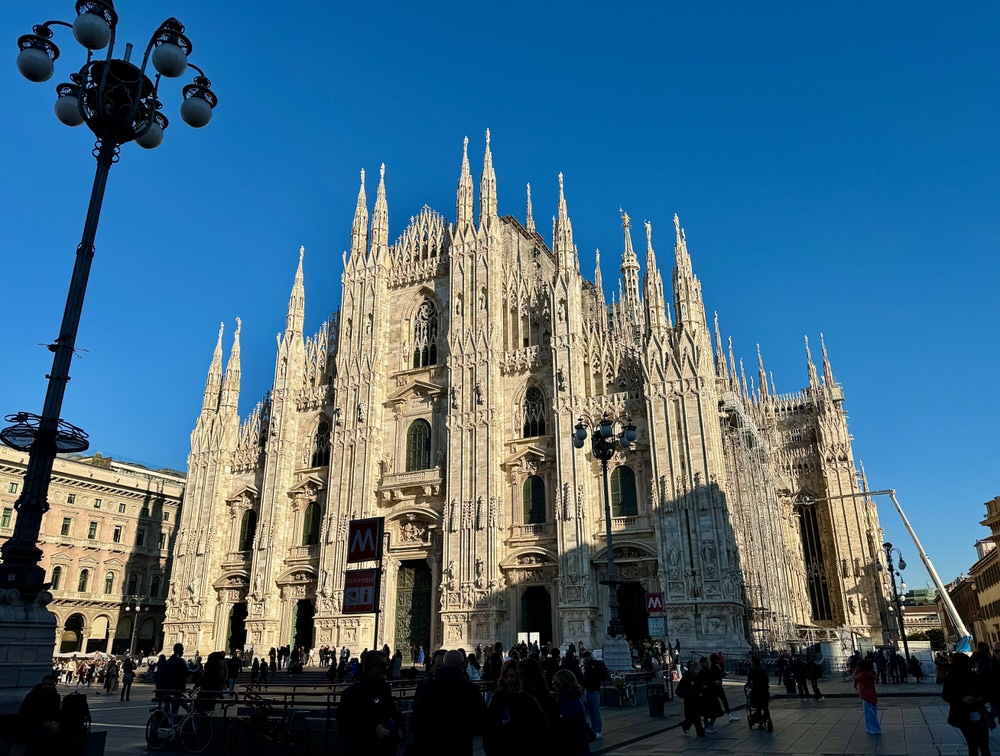
Milan’s Duomo – officially the Metropolitan Cathedral-Basilica of the Nativity of Saint Mary – is the centerpiece of the city. If there’s one Milan landmark on every visitor’s list, it’s this colossal church located in the city centre.
Construction started on the Duomo in the late 14th century and officially ended in the 19th century after Napoleon commanded that the cathedral be completed when he crowned himself King of Italy. However, between restoring marble damaged by pollution and various other repairs, work on the cathedral remains ongoing.
While the Duomo is spectacularly beautiful inside and out, I highly recommend doing a rooftop tour so you can get an up-close look at the building’s intricate arches and statues. The “forest” of saints near the roof peak is my very favorite.
2. La Scala Opera House
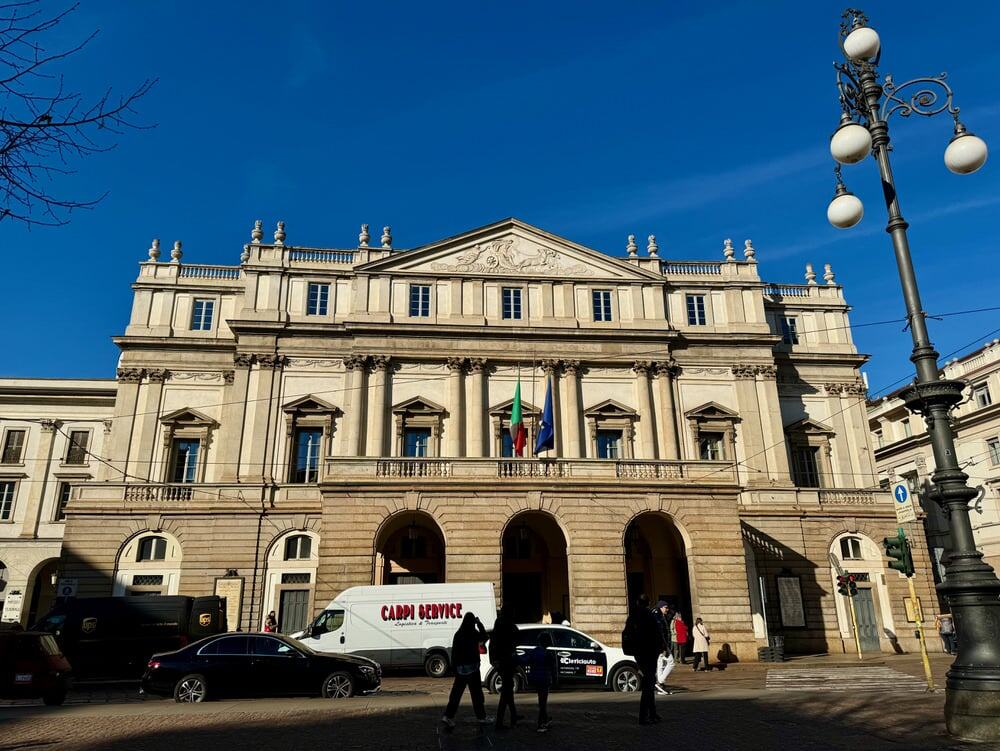
Behind a somewhat nondescript exterior lies Milan’s most important cultural landmark: La Scala Opera House. It might not be an archiectural wonder, but this bastion in the global opera scene has stood just behind the Duomo since 1778.
While almost any tour of Milan will swing by the Teatro alla Scala as it’s officially known, the best way to experience La Scala is to attend an opera, ballet, or concert there. Just keep in mind that the seats were definitely designed for 18th century individuals. This 5’ 6” American barely fit! However, the amazing performance and beautiful interior more than made up for uncomfortable seats.
3. The Last Supper

Many people are surprised to learn that one of the most famous paintings in the world, Da Vinci’s Last Supper, is located in Milan rather than Rome or Vatican City. You’ll find it in a Dominican refectory adjacent to the church of Santa Maria delle Grazie.
I honestly didn’t expect to be so moved when I saw the masterpiece in person. When Da Vinci painted the masterpiece he used a new painting technique that started deteriorating after just five years. Then, after centuries of not so careful art preservation by the Dominican monks, a bomb blew off the roof above the painting in WWII. Yet somehow, miraculously, we can still view it more than 500 years later.
If you want to see the Last Supper, you definitely need to plan in advance. Tickets are released in batches for a two-month stretch several weeks beforehand and they sell out quickly. There doesn’t seem to be much rhyme or reason as to when the tickets are released, so it’s best to monitor their website regularly about three months before your trip.
I recommend doing the guided tour in English if you can work it into your itinerary. We learned so much and it really heightened my appreciation for the piece.
If you miss the memo about planning ahead, there are many Milan tours that include a viewing of the Last Supper. This is definitely a Milan landmark you don’t want to miss!
4. Leonardo’s Horse
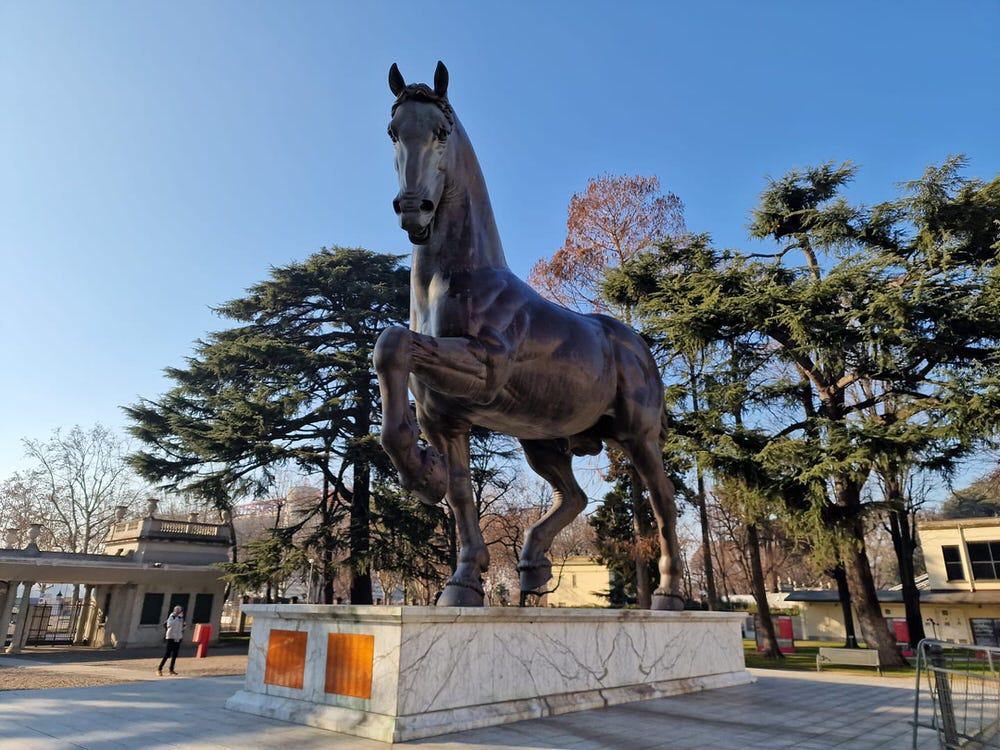
A little further afield from central Milan is another Leonardo Da Vinci masterpiece: Leonardo’s Horse. This Milan landmark is both new and old. In the 1480s, the Duke of Milan commissioned Da Vinci to make this 26 ft tall bronze horse, but for a myriad of reasons, he only ever produced a clay model. French soldiers destroyed the clay version less than 20 years later.
Finally, in the late 1990s, Da Vinci’s plans and sketches were used to cast the long-ago dreamed up horse. Leonardo’s Horse now stands in front of Milan’s Hippodrome of San Siro. Because this horse racing facility is nearly five miles outside of central Milan, we weren’t able to squeeze it into our very busy Milan itinerary, but we’d actually both seen the horse before!
When the bronze horse was cast in 1999, the sculptors actually made two horses. The second horse stands in Frederik Meijer Sculpture Gardens in Grand Rapids, MI.
5. Navigli Canals

These canals just southwest of Milan’s centre might make you think of Amsterdam or Copenhagen, but they actually tell an important piece of Milan history.
Milan’s a pretty unique city in that it isn’t built around a body of water. To compensate for this, a network of canals began to spring up in the Middle Ages. In particular, the canals were used to move marble from Lake Maggiore (one of the five lakes in the Italian lake district) for the Duomo construction.
Over time, as modes of transportation changed, most of these canals were covered by roadways. But you can still see remnants of the canal system throughout Milan, particularly in Navigli. In addition to the landmark canals, you’ll also find a lively nightlife, great traditional restaurants, shops, and galleries in Navigli. The canals are especially striking after dark.
6. Galleria Vittorio Emanuele II

This large, two-story, glass covered shopping arcade has been a Milan landmark since the 1800s. A very Victorian looking structure, Galleria Vittorio Emanuele II might remind you a bit of London’s Burlington Arcade. Today it’s home to restaurants, bars, and high-end shopping boutiques like Prada and Louis Vuitton so it’s a great spot to get a bougie souvenir.
Since it’s directly adjacent to Piazza del Duomo – aka, the busiest part of Milan – it’s almost always crowded, especially on weekends. We’d heard good things about Gallery Meravigli Bistrot and want to check out Bar Camparino, but fighting our way through the masses didn’t seem worth it. Still, due to its central location, you’ll probably pass through the Galleria several times during your Milan visit.
Don’t miss the Galleria’s mosaics. In particular, you want to seek out the bull in the floor just off the arcade’s center. It’s said that spinning around on the bull’s balls on your heel will bring you good luck and prosperity. I don’t know about the riches, but we each took a spin as soon as we arrived in Milan and we enjoyed exceedingly good luck during our entire trip.
7. Castello Sforzesco

Another Milan landmark you probably won’t miss is the Castello Sforzesco. This massive fortress dates back to the Middle Ages. The prominent Renaissance ruling family of the Milan, the House of Sforza, built the current castle.
It’s absolutely free to wander the castle grounds and check out the ramparts, moat, and impressive architecture. If you’re especially curious about Renaissance Milan, check out the Sforza Rooms which are filled with artifacts from the influential family.
Not unlike the Leonardo’s Horse, the iconic Filarete Tower at the castle’s southern entrance isn’t as old as it looks. The tower collapsed in the early 1500s after French soldiers used the space to store gunpowder. It was finally replaced with a replica in 1905.
8. Arco Della Pace

If Milan’s Arco Della Pace (Peace Arch) reminds of Paris’s Arc de Triomphe, there’s a reason for that.
This beautiful, decorative arch -also known as the Porta Sempione– was commissioned by Napoleon after the French invaded Milan. It takes the place of a city gate that stood here when Roman walls surrounded the city.
Today it’s a striking and somewhat surprising Milan landmark. It’s well worth the walk through Parco Sempione to see its intricate reliefs and statues up close.
9. Parco Sempione

Perhaps because of the lack of water features, Milan isn’t a city known for its parks and green spaces like New York or London. But you will find one lovely large park behind Castello Sforzesco. Studded with statues, a network of walking paths, and a small pond, Parco Sempione is the perfect escape from the hoards in the nearby Piazza del Duomo.
This sprawling public green space isn’t the result of excellent city planning. Long used as military parade grounds, during Napoleonic times there was a plan to use the space for a large building complex. Luckily for Milan residents and visitors, this never happened. I think the green space is infinitely nicer than any building!
10. Bar Basso

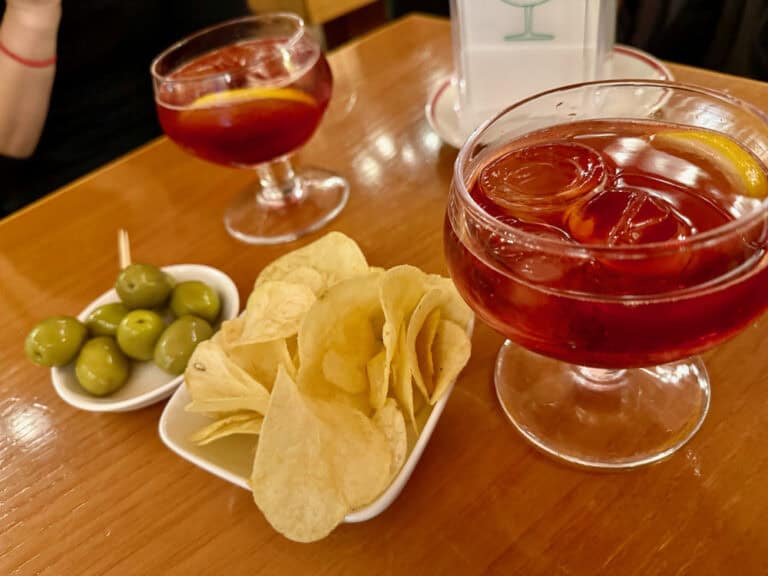
This Milan landmark doesn’t feature impressive architecture or great views, but it does have plenty of cultural significance. Bar Basso, a traditional cocktail bar in the Citta Studi district of Milan, is the inventor of the Negroni sbagliato. You might remember when this cocktail – made from Campari, sweet vermouth, and sparkling wine – had a moment a few years back.
Although the bar’s signature cocktail only dates back to the 1970s, Milan itself is also the inventor of aperitivo culture. Almost every Milanese restaurant and bar has an aperitivo time (like an American happy hour) where you can order cocktails and receive complimentary snacks which range from olives and potatoes served at Bar Basso to full-on buffets.
Although it will take a Metro ride or taxi to reach Bar Basso from central Milan, it’s well worth swinging by to take in a Milanese cultural institution.
11. Chiesa di San Bernardino alle Ossa
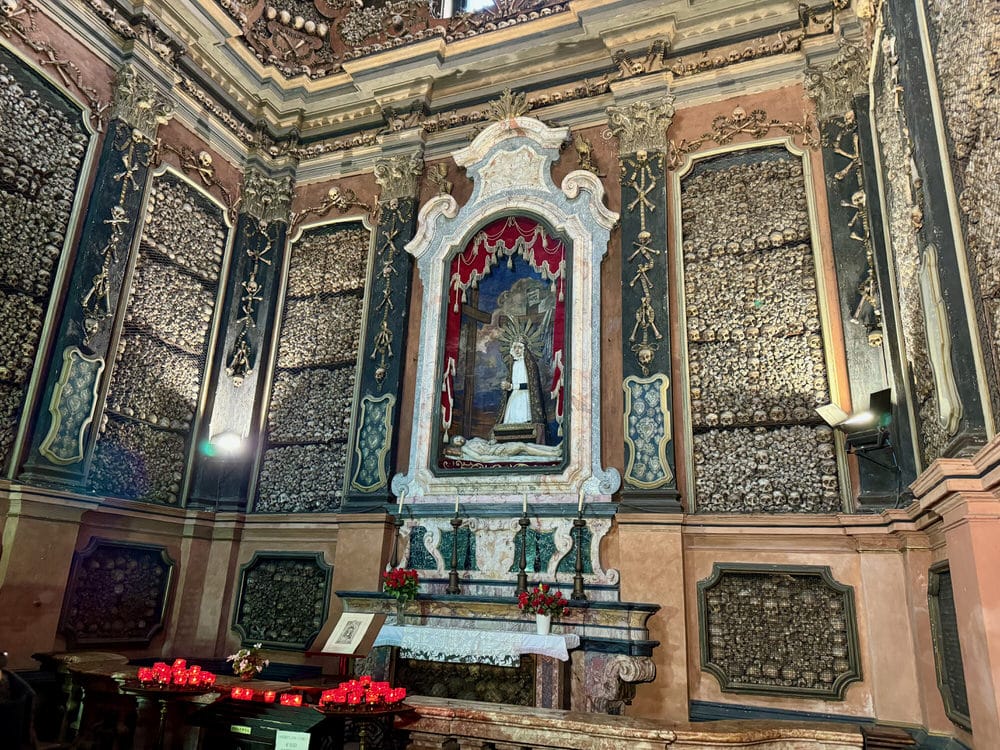
Considered one of Milan’s hidden gems, Chiesa di San Bernardino alle Ossa is a quick walk from the Piazza del Duomo. It’s best known for its bone chapel, or ossuary, which is decorated with thousands of human skulls and bones.
Although this can seem pretty shocking to Americans, these examples of memento mori (“remember your death!”) are pretty common in Catholic culture. The Capuchin crypt in Rome is another example of the Catholic church using human bones to remind parishioners of their imminent demise and reunion with their Maker.
The ossuary of San Bernardino is a powerful sight, especially in the wake of a global pandemic. While you only need about five minutes for this stop, I’m happy we were able to find a spot for it in our packed Milan itinerary. It’s definitely Milan landmark you won’t forget!
12. Milano Centrale
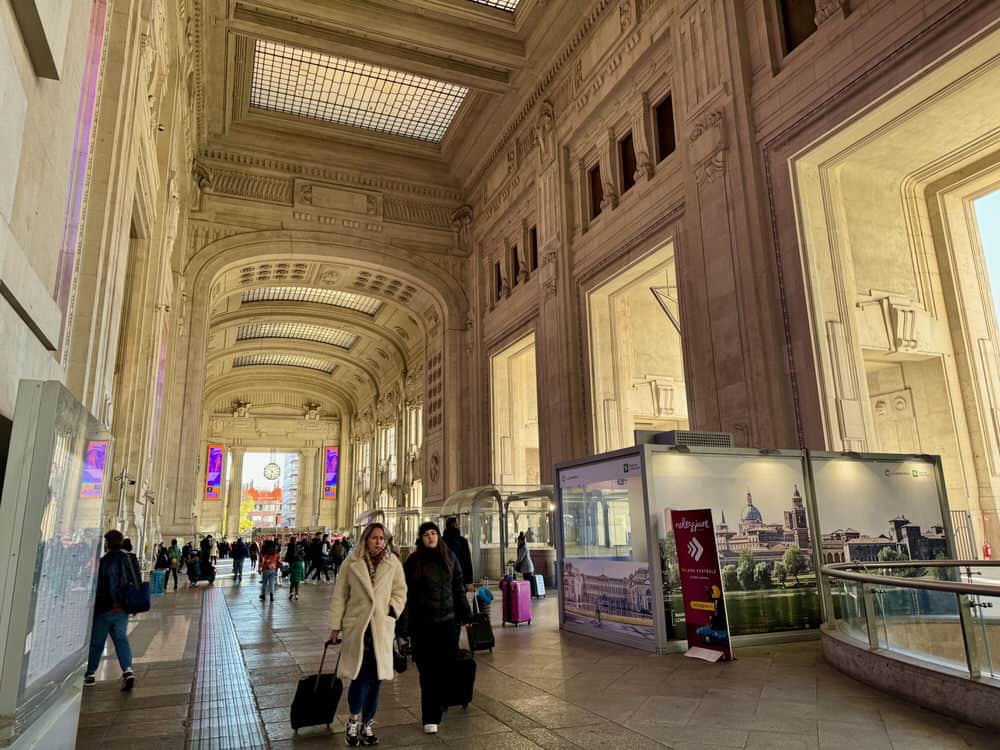
If you’re headed out of Milan to say, Lugano (or really anywhere beyond the Milan suburbs), you’ll get to visit Milano Centrale, arguably one of the most impressive train stations in the world.
Decades in the making, the massive central train station had many creative cooks in the kitchen during the design process. However, the person whose influence you’ll most sense in the station is Mussolini. The Italian dictator want to make sure the station demonstrated the power of fascism.
Today, most people just hurry through the mighty station in search of their departure platform, but it’s worth pausing a minute to take in the grandeur. If you have extra time, head down to the Memoriale della Shoah. This Holocaust memorial remembers the Jews who were departed to concentration camps via a secret underground train track in Milano Centrale.
13. Orto Botanico di Brera

Tucked behind the Pinacoteca di Brera art gallery is Orto Botanico di Brera. This small botanical garden is completely free to visit. Although the garden was fairly barren during our late November visit, I think it would also be a lovely, quiet spot to enjoy lunch after a busy morning of Milan sightseeing.
It’s thought that Mendel might have visited the garden during a trip to Milan in 1863. If he did, he would have seen the two gingko trees that still grow in a far corner of the garden.
14. Bosco Verticale
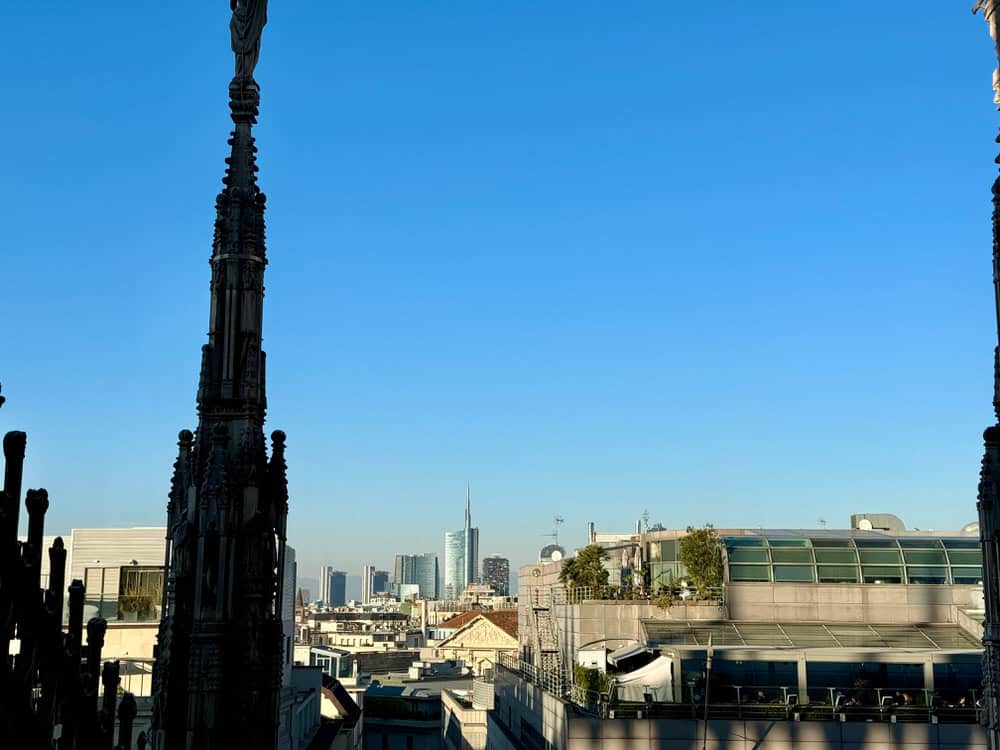
Milan’s landmarks aren’t all old. Bosco Verticale, or Vertical Forest, is two skyscrapers located in Milan’s Porta Nuova district. This award-winning pair of apartment buildings not only revitalized a long vacant section of the city, but also help offset the buildings’ carbon footprints. They’re also just pretty cool. Most than 16,000 plants grow around the buildings, including over 700 trees.
While we didn’t have the chance to see Milan’s most iconic skyscraper up close and personal, you can spy this tree covered buildings from the rooftop of the Duomo. You can see one of them in the center of the picture above just to the right of the tallest skyscraper.
15. Palazzo Brera

Built as a Jesuit college in the 17th century, Palazzo Brera is the heart of Brera, Milan’s art and design district. The first floor of the palazzo is home to Pinacoteca di Brera. Downstairs, you’ll find Milan’s art academy.
One of our tour guides told us that Pinacoteca di Brera has third most important collection of Italian art after the Vatican Museums in Rome and the Uffizi in Florence. Since we’d both been to first two museums, naturally we had to check out the Pinacoteca di Brera and enjoyed a pleasant hour brushing up on our knowledge of Renaissance artwork.
If art’s not really your deal, I still recommend poking your head inside the Palazzo’s courtyard to enjoy the building’s stately Renaissance inspired architecture. You can’t (and won’t) miss the somewhat ridiculous sculpture of Napoleon posing as “Mars the Peacemaker” in the courtyard.
Map of Milan Landmarks
Conclusion: 15 Landmarks in Milan You Should Visit
As you can see from these landmarks, Milan is a vibrant, varied city that offers everything from ancient historic sites to boundary pushing modern architecture. By visiting these landmarks, you learn the fascinating story of Milan as told through dukes, invasions, cocktails, and artistic masterpieces. I hope you’ll add a few, if not all of these Milan landmarks to your itinerary.