

This post may contain affiliate links. When you purchase something through these links, I receive a small commission that helps me create this blog’s content. There’s no extra cost to you. Read my privacy policy to learn more.
Published: 3/31/24
My Best Information for Key West, Florida Visitors
If you’re headed to Key West, Florida soon, this little island at the southernmost tip of the Florida Keys might surprise you.
This beach vacation darling has long been a favorite among Americans who want a Caribbean vacation but don’t want to leave the continental United States. With a city motto of “One Human Family,” Key West prides itself on its inclusive, laidback personality. But the Florida island has more than a few quirks – like extremely limited parking and frequent power outages.
In this post I’ve rounded the most surprising facts about Key West to help you prepare for your trip. You’ll learn a few fun historical facts (like when Key West did and didn’t sucede from the United States!), what plant you won’t find growing in the Florida Keys, and what’s in everyone’s plastic cups on Duval Street.
While I doubt any of these facts will deter you from heading to Key West, they will help you plan and enjoy your visit. At the very least, you’ll go into your vacation armed with some Key West trivia to impress the local tour guides and bartenders with!
10 Interesting Key West Facts
1) There are no “real” beaches

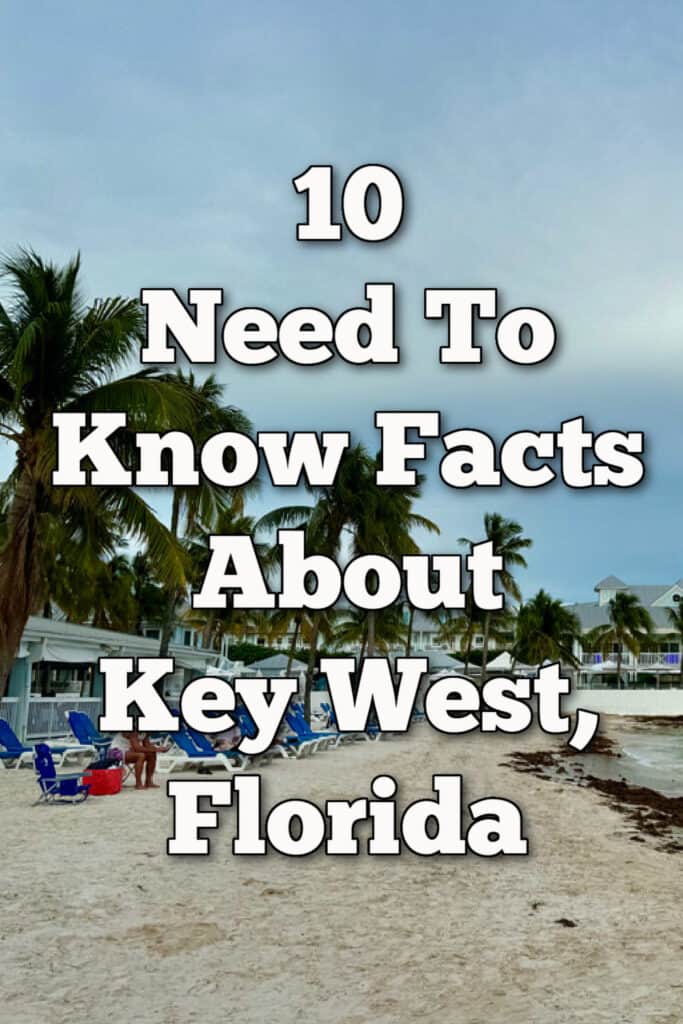
Can’t wait to grab that tropical cocktail and plop in a beach chair on a sandy Key West beach? You can absolutely do that, but you won’t be sitting on a natural beach.
This might technically be the Caribbean, but it’s no Virgin Islands. While you’ll get plenty of palm trees and iguanas, you might be surprised by how little sand there is in the Florida Keys.
Since the islands are really just big clumps of mangrove roots, there’s nothing for wave action to grind down into sandy beach. The beaches on Key West – all located on the south shore on the Atlantic side of the islands – are all manmade.
How many beaches there are on Key West really depends on how you count. Personally, I’d say the island has three distinctive beach areas: Smathers Beach, Clarence S. Higgs Memorial Beach, and Fort Zachary Taylor State Park.
The beach at Fort Zachary Taylor State Park on the far west end of Key West is generally considered the best.
2) Parking is a hassle
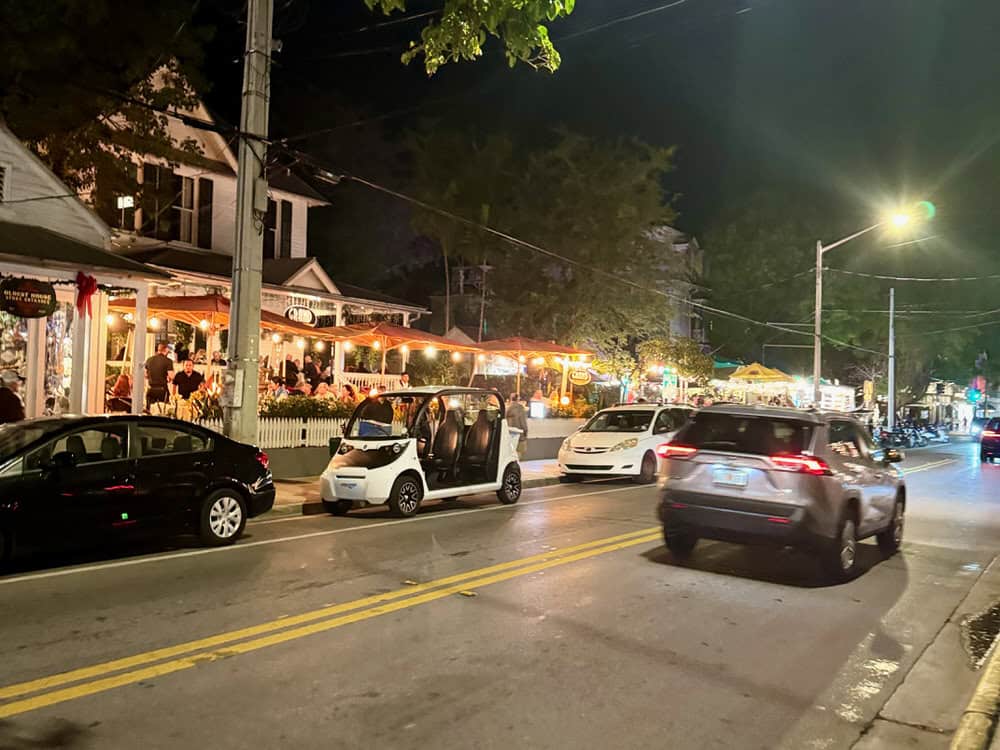
If you’ve done any research, you’ve probably heard about Key West’s parking problems. Almost everything I read warned about parking. However, others were adamant that Key West parking is an overhyped problem. Of course, the truth lies somewhere in between the two points of view.
As you might expect on an island that’s just over 8 square miles (the island is 1.25 miles wide by 4 miles long) and welcomes more than 3 million annual visitors, space for everything – parking, houses, beaches, etc. – is quite limited. To guarantee parking for Key West residents, there’s a high chance that the convenient open spot you spy requires a residential permit.
While public parking lots do exist, they’re expensive and underutilized. The pay stations didn’t work at the lot we used (forcing you to pay via app) and the whole space felt odd and neglected. Happily, we scored a free spot right in front of our vacation rental for the rest of our trip.
Personally, I found parking an unnecessary stressor. At the end of the day, it proved more of a nuisance than a real headache.
My best advice is to go without a car in Key West. (We only had one for the last three days of our trip so we could explore the Overseas Highway .) The town is very walkable and you’ll find plenty of rideshare options to get you to and from farther off destinations like the airport or Stock Island.
If you must have a car, rent the smallest car that will work for you and your group so you can squeeze into tight parking spots. While you probably can find an open free street parking spot if you hunt around, if you’re just in town for the day, I’d just bite the bullet and use one of the public lots to make the most of your time.
3) Power outages are surprisingly common

With more than 3 million annual visitors and every square inch of available real estate developed, it can be easy to forget just how remote Key West is.
However, infrastructure doesn’t lie. Key West is quite susceptible to power outages. It just takes one glitch in the line between Key Largo and Key West for the entire island, and sometimes the length of the Florida Keys, to go dark.
Like the road itself to Key West, the power lines into the island only have one way in. The lack of redundancy paired with the fact that you really can’t bury power lines in the Keys makes the power supply very suspectable to interruptions.
We experienced two power outages during our week in Key West. (The rainy, windy weather was probably a factor.) One power outage started in the early morning and lasted several hours. This outage actually effected the entire Florida Keys starting in Key Largo. A blown transformer caused another much more localized power outage a couple days later.
These outages had no negative impact on our trip, although the second power outage occurred in the middle of dinner out and wiped us out of cash. (No electricity = no credit card machines.) While every place in Key West takes credit card – one of my Key West packing tips to keep a little extra cash on you just in case this happens to you too.
If the power’s currently out in Key West, check out the Florida Keys Electric Cooperative’s outage center for updates about the situation.
4) It’s not really the most southern point in the United States

Key West makes a lot of claims that aren’t quite true. It claims it’s 90 miles from Cuba. (It’s 94 miles away.) It says it’s the southernmost point in the continental United States, but Ballast Key, located about 12 miles off the tip of Key West strongly disagrees.
Part of what makes Key West’s southernmost point claim so confusing, is that Key West isn’t really connected to the mainland. The award for most southern point on the United States mainland goes to Cape Sable, FL. If we’re talking the southernmost point in the entire United States, Hawaii is the runaway winner.
5) You can’t see Cuba

Cuba sits only 94 miles south of Key West. But sadly, even if it’s clear and you squint really hard, you won’t spy the island nation.
Now that the relationship between the United States and Cuba has softened, you absolutely can visit Cuba while you’re in Key West. However, that’s easier said than done.
There’s no ferry between Key West and Cuba. (If there was, the journey would take about 4 hours on a high-speed ferry.) However, you can charter a boat or plane to make the quick island hopper journey.
There is a pricey Cuba day trip offered through Air Key West and Our Key West. I briefly considered it, but ultimately came to my senses. If I’m going to explore Cuba, I want to do the island justice and spend at least a couple nights.
But even though Cuba is so close, yet so far, you can definitely enjoy a taste of Cuba while you’re in town. Don’t miss delicious Cuban coffee and Cubano sandwiches at various Cuban restaurants around the island. I recommend Key West Cuban Coffee on Truman Avenue.
6) Key limes don’t grow here

I know . . . what the heck? Key lime pie is literally on every single dessert menu in town and you’re telling me that all key lime juice used in Key West comes from Mexico and Central America?
Yes. Yes, I am. (If you’re already upset, this probably isn’t a great time to tell you that some restaurants might even be using regular lime juice . . . .)
Originally from Malaysia, key limes probably reached the Florida Keys sometime in the 16th century on a Spanish ship. While key limes flourished on the Florida Keys at one point, a devestating hurricane in 1926 wiped out all commercial production and was never restored.
If you’re homeowner in Key West, you absolutely could propagate key lime trees in your subtropical backyard. However, given the amount of key lime pie consumed in the Florida Keys, even if commercial production of the fruit was reintroduced, I doubt they could to keep up with demand.
7) There are no open container laws
Like Savannah, Key West is a party drinking destination. It’s not rowdy – at least not in the day and early evening – but it’s no secret that many Key West visitors have a special affinity for Jimmy Buffet and have fully embraced his “it’s 5 o’clock somewhere” philosophy.
Also like Savannah, Key West doesn’t have any open container laws. It’s perfectly acceptable for folks to stroll down Duval Street with a drink in hand. As someone from the upper Midwest, where we drink a ton, but only within the confines of establishments or homes, this behavior always jars me.
Because there’s nothing stopping people from paying for their drink and leaving with it, it’s actually pretty common to be served your drink in a disposable glass. I was really shocked by how many Key West businesses use single use plastics, especially since waste disposal on the island can’t be easy or cheap.
If you’re an unemployed bartender, Key West’s a great place to head. It’s said that Key West has the most bars and bartenders per capita in the United States.
8) Key West didn’t secede from the United States during the Civil War
Have you ever heard it said about Florida that “the more north you go, the more southern it becomes?”
In my quest to visit all 50 states in the late 2010s, I spent a fair amount of time in the American South. It struck me that places like Richmond, VA felt more southern than Key West. While I got plenty of Gulf of Mexico vibes (Key West is definitely more similar to New Orleans than Savannah), it just didn’t feel like the South.
And there’s a reason for that.
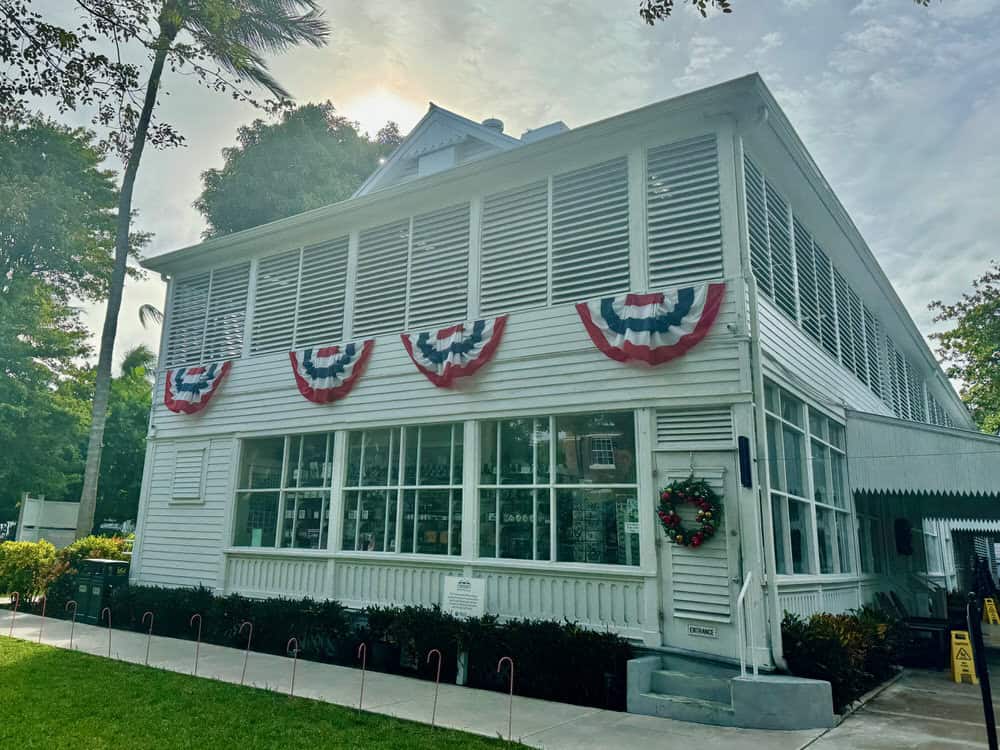
Key West never seceded from the Union during the Civil War. Key West was home to a robust naval base starting in the 1820s. For the entire four years of the Civil War, the Union Army remained in control of that base. This helped the Union block the Confederates from the Gulf of Mexico and begs the perpetual question asked by northerners, “What was South’s plan?”
9) It did secede in 1982 and dubbed itself the “Conch Republic”

Instead, Key West waited until 1982 to secede from the United States. (I told you they do things a little differently here!)
The move came in response to the U.S. Border Patrol blockade on U.S. Highway 1 south of Florida City. Since Highway 1 is the only road access to the Florida Keys, Keys officials argued they were being treated like a foreign country since the roadblock limited their access to continental America. (The blockade was part of the United States’ “war on drugs.”)
The establishment of the Conch Republic was really just a publicity stunt. However, in the decades since, both Florida Keys politicians and tourism boards have had a lot of fun with the idea of being a sovereign nation.
You’ll still find plenty of Conch Republic flags and other souvenirs all over the island. If you happen to be in Key West on April 23, you can celebrate “Independence Day.”
10) The chances of a hurricane are actually pretty rare
If you go anywhere in the Atlantic Ocean and Gulf of Mexico – from Portugal’s Azores to North Carolina’s Outer Banks – you’re probably in tune with hurricane season. I assumed a line of small islands that forms a barrier between the Atlantic Ocean and Gulf of Mexico would be hurricane ground zero. But believe it or not, Key West isn’t particularly susceptible to hurricane damage.
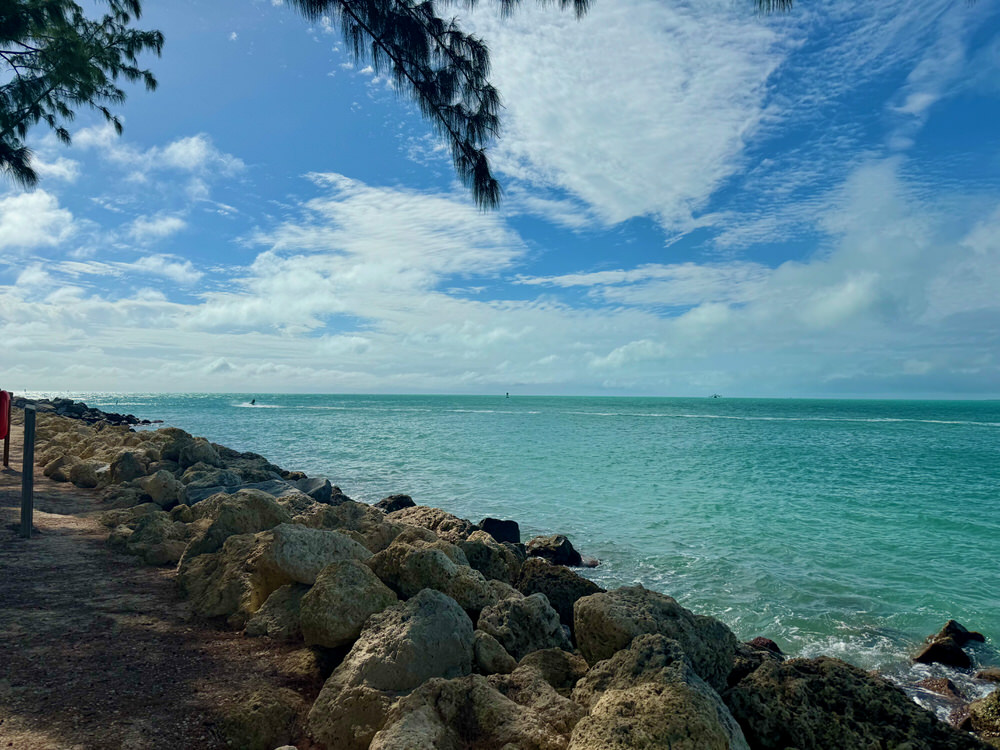
Why? The water is crazy shallow around the Florida Keys!
The deepest point on the entire 80 mile boat ride from the Key West to the Dry Tortugas National Park is only 80’ deep. That shallow water limits the storm surge that can hit the Keys during a hurricane. The mangroves also provide additional hurricane protection.
While hurricanes aren’t super common in Key West, they’re certainly not unheard of. There’s a reason all the buildings have storm shutters!
If you want to roll the dice with storms and score some sweet Key West flight and lodging deals, consider visiting sometime between late August and November. Just remember, even if Key West doesn’t see any bonafide hurricanes, this time of year will still have more rain and wind than more “prime time” Key West vacation dates.
Fast facts about Key West
• You’ll sometimes hear Key West referred to by its Spanish name “Cayo Hueso” which translates to “bone island.” The native Calusa people used the island as a graveyard.
• Key West has one of the shortest runways in the United States – it’s less than a mile long!
• While Key West was home to an important naval base in the 19th century, the waters around the island are too shallow for modern battleships. The U.S. Navy now has a naval air station on nearby Boca Chica Key.
• The USS Maine, (“Remember the Maine!”), which sunk outside of Havana, Cuba and started the 1898 Spanish/American war launched from Key West.
• Key West was home to Pan American World Airways. This airline was the largest international air carrier in the world from 1927 – 1991. Today, the airline’s original headquarters is home to First Flight Brewery.
• U.S. Highway 1, which stretches 2300 miles from Florida to the Maine/Canada border starts at the intersection of Fleming and Whitehead Streets in Key West.
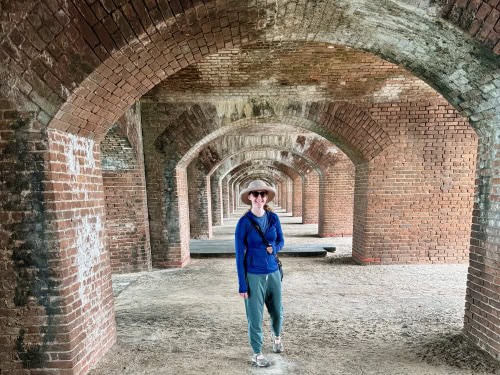
• The island is home to three Civil War era brick forts.
Conclusion: What To Know About Key West
Whether you need to know about the Key West parking situation, or you’re just curious about what factors play a part in Key West’s unique identity and history, I hope these facts about Key West help you get the most out of your visit.
As someone told me before my visit, Key West is about as close as you can get to leaving the United States without actually leaving the country. (We really need to work on the tourism board setting up a Conch Republic passport stamp site!)
Let me know what you think about Key West after you visit. If you think I left out any fun Key West trivia, send me an email.
 |
 |